Connect with us

Latest News

If we continue with traditional politics in the next Presidential Election, it will be impossible to prevent a third civil war in the country – Vajira Abeywardana

Published

on

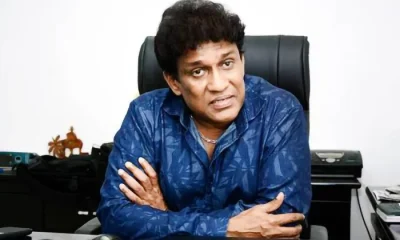
Member of Parliament, Vajira Abeywardana, said  that adhering to traditional political ideologies in the upcoming Presidential Election could risk a return to civil war in the country.

He made this statement during the press conference held today (29) at the Presidential Media Centre (PMC), themed ‘Collective Path to a Stable Country.’

Parliamentarian Abeywardana further commented,

The upcoming Presidential Election on September 21 will be pivotal in  selecting the 9th Executive President of the country. Currently, traditional political parties have struggled to maintain their influence. Historically, Sri Lanka has experienced several rebellions and civil wars, including a rebellion against the previous regime.

Given this context, the question arises: will voters use their ballots to risk a situation resembling a third civil war, or will they choose to prevent such a scenario? The decision on September 21 will be crucial in shaping the future of civil society in Sri Lanka.

If political parties continue to adhere to traditional ideologies, caste-based politics, or religious divisions, they will be held responsible for any potential third civil war. It is crucial for these parties to remember this.

During the country’s economic crisis, the opposition did not take responsibility for rebuilding. Instead, President Ranil Wickremesinghe, the sole member of the United National Party (UNP) in Parliament at the time, took on the task of securing the country’s future. On July 22, 2022, he assumed the role as the 8th Executive President and committed to rebuilding the nation.

Many reforms were introduced to rebuild the country, with the Economic Transformation Act being a key initiative. This Act is crucial and no political party can operate outside of its framework. By 2027, five years after the country declared bankruptcy, the Economic Transformation Act mandates that the country’s economic growth rate should be at 5%. This Act establishes accountability for past administrations and requires that any political party present its policies in accordance with it.

Additionally, the Economic Transformation Act aims to foster a dynamic economy that integrates domestic and international trade, industry, and positions Sri Lanka to compete with Asia and the global market.

Some political parties are still misleading the public with traditional tactics. For instance, the Budget Office Act, the Economic Transformation Act, and the Public Debt Management Act are being violated as these policies are presented to the public in contradiction to the principles of these key laws. In my view, this will prevent Sri Lanka from rebuilding effectively. For instance, the Economic Transformation Act, the Budget Office Act, and the Public Debt Management Act should remain free from political influence.

It’s disappointing that despite the unanimous support of all 225 MPs for the new Economic Transformation Act in Parliament, they publicly express conflicting views. I urge all parties to recognize the country’s situation and avoid such contradictions. They need to set aside their religious, caste and political differences and work together on a national plan for the country’s development.

President Ranil Wickremesinghe is urging all parties to support a long-term national development program, putting aside their individual policies to avoid undermining the country’s progress efforts.

We must always be truthful with the public. Some still make false claims about corruption and accuse the current administration of inaction. However, there are courts and police forces dedicated to controlling corruption, and these institutions have been strengthened. Additionally, President Wickremesinghe has implemented Asia’s most stringent anti-corruption law.

Today, some individuals are accusing others of selling the country. For example, when the Hilton Hotel was built, some claimed it was a sale, but now that the hotel is profitable, these same critics claim it as their success. Such individuals lack understanding and vision regarding economic development.

We don’t always need basic factories; countries like Korea have progressed from garment factories to manufacturing ships and airplanes. We must adapt to these new economic realities.

To build this country, we need to collaborate on a national plan spanning 6 to 15 years. This is why President Ranil Wickremesinghe is running for the presidential election as an independent candidate to achieve this goal. It’s crucial that we stop misleading the public for political gain. There is no alternative path to recovering our nation.

It is crucial for all Sri Lankans to unite and prioritize the country’s well-being. In a democracy, political parties have the right to express their opinions. However, we must avoid causing further harm to the country. Voters should approach the upcoming Presidential Election with a focus on the nation’s future, not out of hatred or revenge. This election should not be used as a means to undermine the country.



Continue Reading
Advertisement
Click to comment

Leave a Reply

Your email address will not be published. Required fields are marked *

Latest News

Rwanda to host inaugural ICC Women’s Challenge Trophy from April 18

Published

on

By

"This tournament is a testament to the growth of Rwandan cricket," the president of Rwanda Cricket Association said (Nigeria Cricket Federation)

Rwanda will host the inaugural Women’s Challenge Trophy,  which starts on April 18 in Kigali with Rwanda taking on Italy,  in the first game and Nepal  facing USA  in the second game later in the day. The tournament, which will run till May 1, also features Vanuatu, and has a total of 20 games over ten match days.

The tournament is a new one in the ICC’s calendar, organised to provide match exposure to the second rung of Associate women’s teams. The eight-team Emerging Nations Trophy, introduced last year, featured the highest-placed teams from the ICC’s five regions, and this one pits the next-highest-placed teams. The teams were confirmed based on their positions at the regional T20 World Cup qualifiers last year.

“A double round-robin format assures maximum match exposure for teams, so that participants are better prepared to play stronger opposition in the years to come,” the ICC said in a statement. “This falls in line with the ICC’s commitment to deliver competitive cricket with context for all its members as it moves to continuously grow the women’s game.”

The matches will be played at Gahanga Cricket Stadium, a facility that has two adjoining grounds which host international cricket – Gahanga Cricket Stadium Main Oval and Gahanga Cricket Stadium Oval B.

“This tournament is a testament to the growth of Rwandan cricket and would not be possible without the unwavering support of our stakeholders, partners, and the ministry of sports,” president of Rwanda Cricket Association Stephen Musaale said. “To our incredible fans: we call on you to fill the stands at Gahanga with your energy and passion. Let us show the world the warmth of Rwandan hospitality as we cheer on our team in this historic chapter of our sporting journey.”

Schedule of matches

April 18: Rwanda vs Italy and Nepal vs USA
April 19: Rwanda vs Vanuatu and Italy vs Nepal
April 21: Rwanda vs USA and Vanuatu vs Italy
April 22: Rwanda vs Nepal and USA vs Vanuatu
April 24: Nepal vs Vanuatu and Italy vs USA
April 26: Rwanda vs Vanuatu and USA vs Nepal
April 27: Rwanda vs Italy and USA vs Vanuatu
April 28: Rwanda vs Nepal and Italy vs Vanuatu
April 30: Italy vs USA and Nepal vs Vanuatu
May 1:      Rwanda vs USA and Italy vs Nepal

(The first matches will start at 9am local time and the second at 1pm local time)

Continue Reading

Latest News

Canada T20 World Cup match under ICC corruption investigation

Published

on

By

A match Canada played against New Zealand in the T20 World Cup earlier this year is under scrutiny (cricinfo)

The ICC’s Anti-Corruption Unit (ACU) is investigating allegations of corruption involving Cricket Canada, one of which focuses on a game involving Canada  from the recent men’s T20 World Cup in India and Sri Lanka.

ESPNcricinfo understands the ACU has two active investigations that span elements of Cricket Canada and allegations of breaches of the ICC’s anti-corruption code at international and domestic level as well. The existence of the allegations emerged in a documentary ‘Corruption, Crime and Cricket’, produced by the fifth estate, a Canadian investigative documentary programme. The 43-minute film, aired by the public broadcaster CBC (Canadian Broadcasting Corporation) on Friday, makes wide-ranging accusations of corruption and governance at Canada Cricket.

According to the documentary the claim of corruption at the World Cup comes from Canada’s game against New Zealand. Under scrutiny is the fifth over of New Zealand’s chase when the captain Dilpreet Bajwa  came on to bowl. Bajwa, then 22, was appoi ted captain three weeks before the tournament began.

Primarily a batting allrounder who bowls offspin, Bajwa took the ball with New Zealand 35 for 2. Canada had opened the bowling with pace in Jaskaran Singh and Dilon Heyliger, but in a poor start they conceded 15 and 14 runs respectively. They switched to spin as early as the third over, when Saad bin Zafar came on and bowled a wicket maiden. Heyliger took a wicket in the next over – the fourth – and then Bajwa came on. He began the over with a no-ball, bowled a wide down the leg side and ended up conceding 15 off the over.

The other investigation stems from a recording of a telephone call involving then Canada coach Khurram Chohan, in which he claims that senior (now former) Cricket Canada board members put pressure on him to select certain players to the national side. The audio was leaked last year and has been under ACU investigation since. The recording also contains claims of attempts to fix in matches, though those involve challenges in corroborating with actionable evidence.

“The ACU is aware of the programme broadcast by CBC,” Andrew Ephgrave, interim General Manager of the ICC’s Integrity Unit, said in a statement to ESPNcricinfo. “Consistent with its established operating procedures, the ACU is not in a position to comment on the substance of any allegations contained within it.

“Governance matters in relation to ICC Members are considered by the ICC, where they fall under its jurisdiction, in accordance with the ICC’s standard constitutional processes.

“The ICC’s Anti-Corruption Unit operates across three core functions: intelligence, prevention and education, and investigation. These functions operate concurrently and are applied wherever there is a credible basis to believe the integrity of the sport may be at risk.”

The documentary also interviews another former coach, Pubudu Dassanayake,  who makes a similar claim on undue influence being applied on him in squad selections, in his case for the 2024 T20 World Cup. The fifth estate said the board tried “to force” Dassanayake to select certain players and when he didn’t, he was told his contract would be terminated. Dassanayake is suing Cricket Canada for wrongful dismissal.

Canada’s players faced delayed payment of prize money due to them from the 2024 T20 World Cup and the documentary claims that national players were uncontracted from July 2025 and then put on small retainers for four months leading up to this year’s T20 World Cup.

The documentary also explores the links of organised crime after a former player claimed he was threatened. That investigation, Ephgrave told the fifth estate is beyond the ACU’s remit. “I am aware of some allegations. That very much is a domestic matter for whenever that is taking place. And very much a law enforcement responsibility,” Ephgrave said in the documentary.

(Cricinfo)

Continue Reading

Latest News

No date set for US-Iran talks, as Pakistan pushes to keep diplomacy alive

Published

on

By

Iranian Parliament Speaker Mohammad Bagher Ghalibaf holds a meeting with Pakistan's Chief of Defence Forces Field Marshal Asim Munir in Tehran, Thursday, April 16 [Handout/Iranian Parliament Public Relations Office]

Pakistan’s Foreign Ministry on Thursday confirmed that the United States and Iran were in discussions – through Islamabad – to hold a second meeting between their negotiators to end their now nearly seven-week war, with a fragile ceasefire announced on April 8 days away from expiring.

But it added that no date had been set for that next round of negotiations, even as Islamabad stepped up a parallel diplomatic push to keep the process alive.

“Who will come, how big the delegation will be, who will stay, and who will go is for the parties to decide,” Foreign Ministry spokesperson Tahir Andrabi told reporters in Islamabad, referring to what upcoming talks might look like. “As a mediator, it’s important for us to keep the talks confidential. We had the details and information of the talks entrusted to us by the negotiating parties.”

Speaking of the first round of talks on April 12 in Islamabad, which concluded without a deal, Andrabi said: “There was neither a breakthrough nor a breakdown.”

The spokesperson confirmed that nuclear issues remained among the key subjects under discussion, but declined to elaborate.

His comments came as Pakistan’s civil and military leadership is travelling across the region in what some observers have begun calling the “Islamabad Process”, reflecting the government’s attempt to frame negotiations as an ongoing diplomatic effort rather than a one-off engagement.

Pakistan’s Prime Minister Shehbaz Sharif arrived in Doha on Thursday, the second stop of a four-day regional tour that began with Jeddah on Wednesday, and will see him visiting Antalya next.

Meanwhile, Pakistan’s Chief of Defence Forces (CDF) Asim Munir arrrived in Teheran on Wednesday with a delegation that included Interior Minister Mohsin Naqvi.

Munir was received at the airport with a warm hug from Iranian Foreign Minister Abbas Araghchi, who said he was “delighted” to welcome the field marshal and expressed gratitude for Pakistan’s “gracious hosting of dialogue”.

On Thursday, Iranian Parliamentary Speaker Mohammad Bagher Ghalibaf, who led Tehran’s delegation at the Islamabad talks, also met Munir.

Reza Amiri Moghadam, Iran’s ambassador to Pakistan, said at an event in Islamabad that Tehran would not consider any venue other than Pakistan for talks with Washington.

“We will do talks in Pakistan and nowhere else, because we trust Pakistan,” he said.

Muhammad Faisal, a Pakistani security analyst and scholar at the University of Technology Sydney, said the parallel outreach reflected a deliberate division of labour.

“Pakistan’s strategy appears to be dual-tracked: PM Sharif is reassuring Gulf allies and attempting to build a broader support coalition, while CDF Munir is engaged in hard negotiations between the two sides to narrow gaps between Iran and the US, with an eye on extending the ceasefire and reaching a broader understanding,” he told Al Jazeera.

Reports that Munir might travel to Washington, DC after Tehran were denied by security officials, who called them “speculative”. Andrabi said he was not aware of any such development.

This handout photograph taken and released by Pakistan's Prime Minister Office on April 15, 2026 shows Saudi Arabia's Crown Prince Mohammed bin Salman (R) greeting Pakistan's Prime Minister Shehbaz Sharif prior to their meeting in Jeddah.
Saudi Arabia’s Crown Prince Mohammed bin Salman (right) greeting Pakistan’s Prime Minister Shehbaz Sharif prior to their meeting in Jeddah, Saudi Arabia on Wednesday [Aljazeera]

In Jeddah on Wednesday, Sharif met Saudi Crown Prince Mohammed bin Salman and expressed “full solidarity and support” for the kingdom following regional escalation, according to Pakistan’s Foreign Ministry. The crown prince praised what Riyadh described as the “constructive role” played by both Sharif and Munir.

In Doha, Sharif met Qatar’s Emir Sheikh Tamim bin Hamad Al Thani and discussed “the regional situation, particularly in the Gulf region”, underscoring “the importance of de-escalation, dialogue and close international coordination to ensure peace and stability”, the prime minister’s office said.

From Doha, Sharif heads to Antalya with Deputy Prime Minister and Foreign Minister Ishaq Dar. They are expected to meet counterparts from Saudi Arabia, Turkiye and potentially Egypt on the sidelines of the Antalya Diplomacy Forum on April 17.

The Antalya meeting is part of a broader diplomatic effort. Turkiye is preparing to host talks on a regional security platform involving Pakistan, Saudi Arabia and possibly Egypt, according to officials familiar with the discussions.

It would be the third such meeting in a month, following earlier rounds of talks in Riyadh and Islamabad.

The goal is to establish a platform for regular, structured cooperation on regional security issues, the officials said, stressing the discussions are distinct from current efforts to end the Iran war.

Turkish Foreign Minister Hakan Fidan confirmed that discussions were under way, but said no agreement had been finalised.

“This pact is necessary so that countries can be assured of one another,” he told the state-run Anadolu Agency on Monday.

Turkiye also reaffirmed support for the US-Iran peace process on Thursday.

“We will continue to provide the necessary support for the ongoing ceasefire to turn into a permanent truce and eventually lasting peace, without becoming more complex and difficult to manage,” the Defence Ministry said, adding that it expected “the parties will be constructive in the ongoing negotiation process”.

Pakistan’s Foreign Ministry said senior officials from the four countries had also met in Islamabad earlier this week to prepare recommendations for Antalya.

The two-week ceasefire brokered by Pakistan on April 8, which halted attacks in Iran and the Gulf, is due to expire on April 22. While still holding, it is under increasing strain.

A US naval blockade on Iranian ports remains in place, with the US Central Command saying its forces had turned away nine ships as of Wednesday.

Kamran Yousuf, an Islamabad-based journalist and expert on diplomatic affairs, said he expected the ceasefire to be extended.

“I would be really surprised if the current ceasefire is not extended. There is little appetite on both sides to go back to war. There are enough signs on the ground that if there is no deal before the truce expires, the ceasefire will be extended,” he told Al Jazeera.

Faisal offered a more cautious assessment, warning that failure to secure a second round would shift Pakistan’s role.

“Pakistan’s mediation will not collapse immediately, but Islamabad’s role will change from mediator to crisis manager. If hostilities resume, Pakistan will focus again on brokering a ceasefire,” he said.

Despite uncertainty, signals from both Washington and Tehran have remained cautiously optimistic.

White House press secretary Karoline Leavitt said further talks would “very likely” take place in Islamabad, adding, “We feel good about the prospects of a deal.”

Iran’s Foreign Ministry spokesperson Esmaeil Baghaei said multiple messages had been exchanged with Washington through Pakistan since April 12.

US President Donald Trump said on Tuesday that talks could resume within two days and that Washington was “more inclined to go” to Pakistan.

INTERACTIVE - Alternative route throughthe Strait of Hormuz - APRIL 14, 2026-1776162674

The path to a second round remains complicated by unresolved disputes.

Iran has insisted that Lebanon be included in any agreement, arguing that ongoing Israeli strikes there, which have killed more than 2,000 people and displaced 1.2 million, cannot be separated from the wider conflict.

On April 14, the United States convened a trilateral meeting in Washington with the ambassadors of Israel and Lebanon, the first direct engagement between the two sides since 1993.

US Secretary of State Marco Rubio mediated the talks, which both sides described as “productive”, but no ceasefire or follow-up meeting was agreed.

Washington has maintained that any Lebanon deal must remain separate from US-Iran negotiations, rejecting Tehran’s position. On Thursday, Israel said its Prime Minister Benjamin Netanyahu would speak on the phone with Lebanese President Joseph Aoun — but Beirut had not confirmed any plans for a telephone conversation. The two countries do not have formal diplomatic relations.

At Thursday’s briefing, Andrabi aligned Pakistan with Iran on this issue.

“Peace in Lebanon is essential for US-Iran peace talks,” he said, adding that “signs of improvement on the Israel-Lebanon front over the past two days are encouraging.”

Yousuf said a Lebanon ceasefire would send an important signal to Iran.

“Extending the ceasefire to Lebanon will be an important confidence-building measure, a signal from the US that it is serious about a second round. It will also give Tehran good reason to return to the table,” he said.

But he added that the deeper challenge remained Iran’s nuclear programme.

“The nuclear issue is at the heart of the real problem. The flurry of shuttle diplomacy initiated by Pakistan is aimed at bridging the gap between the two sides,” he said.

Grace Wermenbol, a former US national security official and senior visiting fellow at the German Marshall Fund, said Washington’s approach to Lebanon would hinge on Trump’s willingness to pressure Israel.

“A clear pathway to a cessation of hostilities in Lebanon exists,” she told Al Jazeera. “The question is whether Trump will be willing to apply the pressure necessary on Israel to halt its military offensive and allow the Lebanese government to continue its military disarmament efforts. So far, and this is also true for the months preceding the latest escalation between Israel and Hezbollah, we have not seen this pressure materialise.”

The Strait of Hormuz remains another major obstacle.

The waterway, through which roughly a fifth of the world’s oil passes during peacetime, has effectively been blocked by Iran since early in the war, except for ships belonging to countries that have struck individual deals with Tehran.

Starting Monday, the US imposed its own naval blockade on the strait, to prevent any Iran-linked vessel from passing through.

“Iran’s effective closure of the Strait of Hormuz has emerged as the primary issue in US-Iranian negotiations. Opening it is crucial to easing upward pressure on oil prices and instilling confidence in global markets,” Wermenbol said.

She added that Tehran appeared to be betting Washington would eventually back down.

“There is no easy military option here,” she said. “The only way to resolve this issue and remove the threat to maritime traffic will need to involve a diplomatic deal.”

[Aljazeera]

Continue Reading

Trending