
Features
TRUMP SHOOTS FOR PRESIDENTIAL IMMUNITY


by Vijaya Chandrasoma
The name is Trump. Donald Trump. 007 : LICENCE TO KILL
(with apologies to the real 007, James Bond)
The case for Presidential Immunity was heard by Washington DC Federal Appeals Court on Tuesday, January 9, where a three-judge panel heard arguments from Trump’s counsel and Special Counsel Jack Smith. A randomly chosen panel, which proved to be misogynist Trump’s worst nightmare: three women, one, the daughter of Asian immigrants (who “poison the blood of the American people”), the second an African American woman and the third, a 79-year-old white woman, not his type at all. A panel of ladies who will be responsible for the most important ruling in a life dripping with every category of criminal behavior.
Trump’s counsel had claimed total immunity for all actions taken by a sitting president, criminal acts which could be construed as critical for the security of the nation, even if such acts were against the law and the Constitution. Trump says he was acting within the scope of his presidential actions during the insurrection of January 6, 2021, because the violence of the attack on the Capitol occurred while he was conducting an investigation into election fraud in the November 2020 election!
When you consider this statement in the context of his pre-insurrection speech at the ellipse, when he exhorted his white supremacist terrorists to march to the Capitol and “fight like hell”, to prevent the peaceful and constitutional transfer of power; when he now refers to these terrorists who have been convicted and serving prison sentences as “hostages”; you realize how emotionally and mentally stunted this seditious lunatic really is.
The main argument of Trump’s counsel suggested that “even a president directing a SEAL Team Six to assassinate a political opponent would be an action barred from prosecution, given a former executive’s broad immunity to criminal prosecution, unless he was first impeached and convicted by Congress”.
Trump’s counsel, John Sauer, seems to be confused by the differences between political and judicial processes. As Senator Mitch McConnell argued, after he voted to acquit Trump after the Congress impeachment for inciting the January 6, 2021 insurrection, “impeachment was never meant to be the final forum for American justice”, adding, “We have a criminal justice system in this country. We have civil litigation. And former presidents are not immune from being held accountable by either one”.
As comedian Jimmy Kimmel said, “If a sitting president is legally able to assassinate a political rival without fear of prosecution, Trump had better lock the doors at Mar a Lago because “Bazooka Joe Biden” has every reason to blow it to Kingdom Come”.
The legal concept of Trump’s counsel on presidential immunity is eerily similar to the legal code of Trump’s mentor, Russian President Putin. Putin failed in an attempt to poison Kremlin critic and chief political opponent, Alexei Navalny, who is now languishing in an Arctic penal colony in Siberia, serving a lengthy prison sentence for the vague crimes of “creating an extremist community and financing extremist activities”. Presidential immunity and absence of accountability enable Putin to contest re-election in March this year, with Navalny, who has posed serious threats to his legitimacy, safely out of the way.
An argument also reminiscent of Nixon’s flawed claim in 1974: “If the President does it, it’s legal”. An assertion shot down in flames by the then Supreme Court, which compelled Nixon, after resignation, to seek a presidential pardon from President Ford (which was a part of the deal of his resignation), to avoid future criminal prosecution, which the Supreme Court had deemed to be inevitable without such a pardon.
Which begs the facetious but valid question. Would Donald Trump, a man with a penchant for divorce, have been able to shoot Melania to avoid divorce while he was president, and escape prosecution for murder after he leaves the White House? Grounds for murder? Her resistance to be raped by him, probably because of his renowned noisome body odor and other shortcomings, caused him such mental distress and physical frustration that they prevented him from performing the presidential functions necessary to maintain the nation’s security.
Although there was no legal requirement for Trump to appear at court on Tuesday, he did so willingly, in spite of constant whining that all these court dates interfere with his election campaigns, especially a few days before the Iowa primary.
Trump calculated that his appearance in court will serve him better than a campaign rally speech, as he will be able to get free international publicity by pleading his case for presidential immunity before the world media on the steps of the courthouse. And, of course, even his ridiculous arguments will be lapped up by his “base”, irrespective of judicial inaccuracies, which will enable him, once again, to raise a ton of money from his incredibly gullible supporters.
The ruling of the federal court will be appealed, either to the full Washington DC appellate court, or more likely, the United States Supreme Court. Nothing is certain in the US judicial system, but it is likely that these courts will either refuse to hear the case or throw it out for lack of credible argument.
However, Trump would have won the victory he seeks: to buy more time and gain further delays in the numerous cases against him, to achieve his ultimate and desperate goal to gain re-election in November and so either self-pardon or instruct the Justice Department to dismiss all these cases.
Trump is fully aware that this ruling on presidential immunity is vital if he is to realize his desperate bid for the 2024 presidency. His criminal complicity in and incitement of the January 6, 2021 insurrection would be the easiest of the myriad cases against him to prove conclusively, with video evidence and hundreds of witnesses scheduled to testify against him. As would be the espionage case, where he stole and abused top-secret documents belonging to the government when he was ejected from the White House. Both criminal cases which, if he is convicted, will see him in prison for the rest of his miserable life.
Trump is facing another unexpected threat to his hitherto certain nomination to the Republican candidacy in November. Last week, Nikki Haley had a surge in the New Hampshire polls and is now within seven points of Trump’s numbers, 39% to 32%, the closest any rival has ever been to him in the polls during this election cycle.
Chris Christie unexpectedly suspended his campaign last week, with a defiant and courageous speech. The only Republican who had openly and virulently attacked Trump, he concluded his speech with a veiled shot at Nikki Haley and Ron DeSantis, and those Republicans who feel that they have no other choice than a convicted felon as their candidate for the presidency.
“Anyone who is unwilling to say that Trump is unfit to be president of the United States is unfit themselves (to be president of the United States)”.
Nikki Haley and Ron DeSantis squared off at the CNN sponsored debate, moderated by Jake Tapper and Dana Bash, last Wednesday in Des Moines, Iowa. The debate provided them with their last chance before the Iowa primary on Monday, January 15, to win over Iowa voters, and emerge as an admittedly long-shot alternative to Donald Trump as the Republican presidential nominee in November 2024.
Donald Trump was also invited to participate in the debate, but he declined, as he has done in all previous Republican debates. Instead, he attended an hour-long Fox News town hall meeting in Iowa on the same night, moderated by Fox anchors, Brett Baier and Martha MacCallum. Trump was talking to a captive audience, ranting the usual drivel about his stable genius, though he did try to talk down some of the more outrageous comments he has made in recent weeks. He said “I am not going to be a dictator”, and said he “wouldn’t have time for retribution”, because he’ll be too busy Making America Great Again. Predictably, he boasted about his enormous lead in the Republican polls and had the usual crude words of insult for his rivals. There seems to be little doubt that he would be the Republican nominee in November 2024, unless there is a legal implosion which will prevent him from contesting the election.
So the real choice for both Haley and DeSantis at the CNN debate was whether to rip into each other, go after Trump with their gloves off, or both. So far, they had been just playing for second place, notably Nikki Haley, who had remained, until this debate, very coy about being selected for Trump’s Vice President spot. Trump dangled this bait during the Fox News town hall meeting, when he said that he had already made his VP choice, but refused to name the person.
Predictably, Haley and DeSantis chose mainly to stay with the first alternative, attacking each other for much of the debate. They did briefly dance around the second, getting in a few telling shots against Trump, the front runner by far for the nomination.
They both agreed that Trump should be participating in the debate, to defend his record. But they refused to be specific, saying nothing about his performance during his first term of presidency, when he mismanaged the pandemic which cost over 600,000 avoidable deaths, and added $7.8 trillion to the national debt; and the 91 felonies on which he has been arrested after his defeat in November 2020. Felonies of sedition, inciting an insurrection to prevent the constitutional transfer of power, and espionage, stealing and dealing in top-secret documents belonging to the government, to name just two.
And they failed a perfect opportunity of going after Trump, when Jake Tapper asked them both the easiest softball question, one begging to be hit out of the park.
Tapper’s question: Did they believe that Donald Trump has the moral character to be president again?
Nikki Haley waffled: “I think Trump was the right president at the right time. But I think the president needs to have moral clarity….I believe in getting things done, no vendettas, no whining, just getting things done. I think it’s time for a new generational leader that’s going to go and make America proud again, and that’s what I’m trying to do”.
Same question for DeSantis, who was a little tougher on Trump, criticizing his poor record on curbing public disorder, specifically during the Black Lives Matter riots after the brutal murder of George Floyd in 2020, broken promises on the border wall and failure to attack Washington corruption.
But if they had the slightest intention of challenging Trump for the Republican nomination, there was really only one correct answer to Tapper’s question.
Donald Trump has the moral character of an axe murderer.
Wednesday’s debate was a weak dead-heat for second place, with Haley and DeSantis limping to the finish line, the winner again being the non-participating Trump. The murky Republican nomination clouds may become a little clearer after the Iowa and New Hampshire primaries next week and January 23, respectively.
Judging on Wednesday’s performance, Trump will win Monday’s Iowa primary in a hack canter, with Nikki Hayley plugging along to a distant second. And the New Hampshire primary on January 23 will see Trump conclusively clinch the Republican nomination.










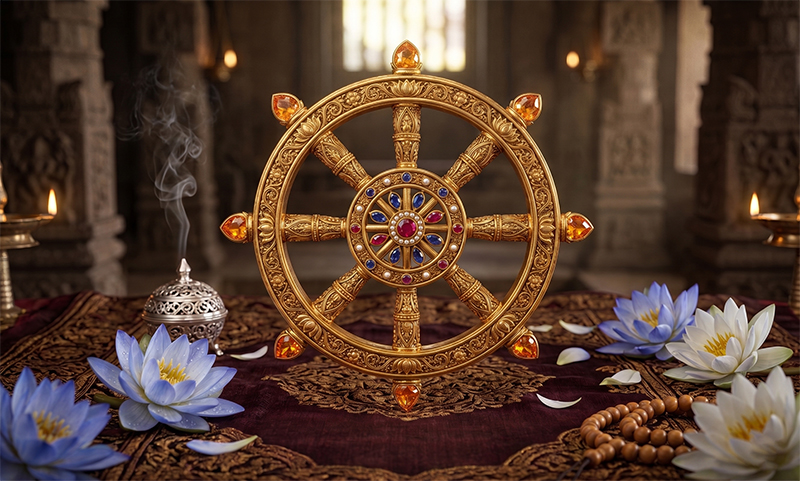
Life, by its very nature, invariably presents a myriad of challenges that are fundamental to the human experience. The various social ills that afflict humanity cannot be understood without recognizing the profound human dynamics at play. Navigating these challenges according to Buddhism involves shifting from attempting to control external circumstances to mastering one’s internal responses. Central to these challenges are certain detrimental drives stemming from pernicious distortions in the functioning of the human mind.
According to Buddhism, human suffering—both on a personal and societal level—arises from three unwholesome roots: greed, hatred, and ignorance or delusion. These roots manifest primarily as the unbridled proliferation of these negative states, serving as the foundation for our conduct. The Buddhist perspective offers profound insights for confronting these difficulties by emphasizing the nature of suffering, known as dukkha. Buddhism teaches that suffering (dukkha) is an inevitable part of life and is fueled by greed, hatred, and ignorance or delusion. This approach promotes mental transformation through mindfulness, ethical living, and the cultivation of wisdom, empowering individuals to confront their struggles with clarity and resilience.
Furthermore, accepting that suffering and difficulty are inherent parts of the human experience—while expecting life to be free of challenges—is, in itself, a cause of suffering. It is also important to recognize that all situations, whether good or bad, are temporary. This understanding helps reduce anxiety when facing difficult times, as these will eventually pass, and it prevents possessiveness during happy moments. Cultivating mindfulness (sati) and living in the present moment without dwelling on the past or worrying about the future is essential.
Understanding that all things—emotions, situations, relationships, and physical bodies—are constantly changing and in a state of flux helps reduce the fear of loss and provides comfort during difficult times, ensuring that we know pain will pass. Moreover, recognizing that the self, or ego, is not a fixed entity minimizes selfish grasping, arrogance, and the tendency to perceive challenges as personal attacks.
At the core of many human challenges lie the three unwholesome mental qualities identified by Buddhism: greed (raga), hatred (dovesa), and ignorance or delusion (avijja or moha). These states of mind serve as obstacles to spiritual progress and underlie a spectrum of harmful thoughts and actions. The Buddha employed powerful metaphors to illustrate these forces, referring to them as the three poisons or fires that ignite suffering and trap beings in the cycle of samsara.
Greed leads to insatiable desires that obscure our awareness of others’ needs, creating a cycle of frustration. Greed encompasses all forms of appetite, such as desire, lust, craving, and longing, manifesting in both physical and mental forms. It embodies the concept of grasping, leading to clinging and an inability to let go. As an unwholesome mental state, greed can become insatiable and inexhaustible. People are often drawn to pleasant things, and no amount of forms, sounds, smells, tastes, tangibles, or mental objects can satisfy their desires. In their intense thirst for possession or gratification of desire, individuals may become trapped in the wheel of samsara, overlooking the needs of marginalized groups based on religion and ethnicity (as noted by Piyadassi Thera). Those who overcome greed realize that all mundane pleasures are fleeting and transient. In a society driven by consumerism, people may find themselves endlessly chasing after things of little value, becoming enslaved by them.
Hatred is another unwholesome mental state that fosters division and conflict, distancing us from genuine relationships. It encompasses unwholesome mental states such as ill will, enmity, hostility, and prejudice. Hatred can be subtle, lying dormant in a person’s mind until it finds expression in unexpected moments. This destructive emotion can degenerate into mass-scale violence and bloodshed within society. Today, hatred and hostility against minorities based on religion and ethnicity are prevalent in many countries. People are often targeted by bigotry and hate, leading to a rise in antagonistic and derogatory behavior toward certain religious and ethnic groups. Hatred, enmity, and retaliation do not foster spiritual well-being; rather, they vitiate our own minds. Buddhists are encouraged to cultivate metta (loving-kindness). Greed and hatred, coupled with ignorance, are the chief causes of the evils that pervade this deluded world. As noted by Narada, “The enemy of the whole world is lust (greed), through which all evils come to living beings. This lust, when obstructed by some cause, transforms into wrath.”
The most profound of these afflictions, ignorance (avijja) or delusion (moha), clouds our judgment and obscures our capacity for understanding, causing us to harm ourselves and others through misguided actions. Addressing bhikkhus, the Buddha declared, ” I do not perceive any single hindrance other than the hindrance of ignorance by which mankind is obstructed, and for so long as in samsara, it is indeed through the hindrance of ignorance that humankind is obstructed and for a long time runs on, wanders in samsara. No other single thing exists like the hindrance of ignorance or delusion, which obstructs humankind and make wander forever. This unwholesome mindset generates negative speech, actions, and thoughts, perpetuating our own suffering. As stated in the Dhammapada, “All mental phenomena have mind as their forerunner; if one speaks or acts with an evil mind, suffering follows.”
Buddhism urges us to go beyond merely addressing the symptoms of our problems. Instead, it invites us to explore the roots of our suffering and examine how greed, hatred, and ignorance manifest in our lives. By uncovering these sources of distress, we can cultivate essential qualities such as compassion, loving-kindness (metta), and acceptance. These virtues are crucial for ethical engagement with significant societal issues, including environmental challenges and social inequality.
In a world marked by material prosperity and emotional chaos, many individuals may feel lost or overwhelmed. The teachings of the Buddha remain relevant today, reminding us that the origins of our struggles often reside within our own minds. By practising ethical self-discipline and steering clear of destructive emotions like jealousy, anger, and arrogance, we can transform our experiences and relationships.
Buddhism teaches that cultivating wholesome mental qualities is essential for spiritual advancement. The positive counterparts to the three unwholesome states are non-greed (alobha), non-hatred (adosa), and non-delusion (amoha). These virtues represent not merely the absence of negativity but also the active presence of beneficial qualities such as generosity (dana), loving kindness (metta), and wisdom (panna). Each of these six mental states serves as a foundation for both personal growth and societal harmony.
Human beings are often tempted by moral transgressions rooted in unwholesome qualities. Actions driven by greed, hatred and ignorance require wisdom and mindful awareness to overcome them, allowing us to see the interconnectedness of all beings and act accordingly.
As we strive to abandon these unwholesome states of mind and cultivate awareness, we contribute positively to our lives and the broader world. By embracing Buddhist teachings, we learn that transforming our minds can significantly impact our experiences and the lives of those around us. Through this mindful practice, we can aspire to create a more compassionate, harmonious existence, transcending the limitations of unwholesome mental states and fostering a deeper connection with ourselves and others.
by Dr. Chandradasa Nanayakkara

Buddhism, perhaps, is not a religion if the definition of religion is strictly applied. However, by an extension of that definition, as well as by consensus, Buddhism is considered a religion and is the fourth largest religion with about half a billion followers worldwide. Of the four great religions in the world, Christianity is still way ahead with 2.6 billion adherents, followed by Islam with 1.9 billion and Hinduism with 1.2 billion followers. In most Western Christian countries church attendances are on the decline whilst the numbers following Islam are increasing with Islamic youth displaying signs of increasing religious ardour. There are recent reports that Buddhism has also joined the ranks of shrinking religions. Is this cause for concern? Is this happening by the very nature of Buddhism?
Hinduism, the world’s oldest living religion rooted in the Indus Valley Civilization and dating back at least four millennia, is considered to have evolved from ancient cultural and religious practices than being founded by a single individual, unlike the other three religions. The Buddha differs from Jesus Christ and Prophet Mohammed in many ways, the most important being that there is no higher power involved in what the Buddha discovered.
Jesus Christ is considered the ‘Son of God’ and Christianity is built on the life, resurrection and teachings of Christ with emphasis on the belief in one God expressed through the Trinity: God the Father, Jesus the Son and the Holy Spirit. Therefore, there is no room for questioning the words of the Almighty passed through the Son.
Islam, with its Five Pillars of faith, frequent daily prayers, charity, fasting during Ramadan and pilgrimage to Mecca, is founded on revelations made by Almighty God, Allah, to Mohammed, the last of his Prophets, which are recorded in verse in the Holy Book, Quran. Muslims consider the Quran to be verbatim words of God and the unaltered, final revelation. This leaves even less room for questioning.
In contrast, the Buddha achieved everything by himself with no help from any higher source. Rebelling against some of the practices in the religion to which he was born and seeking a solution to the ever-pervading sense of dissatisfaction, Prince Siddhartha embarked on a journey of discovery that culminated in Enlightenment, under the Bodhi tree on the full moon day of the month of Vesak.
Hinduism, or Sanatana Dharma as traditionally referred to by followers, encompasses the concepts of Karma, Samsara, Moksha and Dharma with a creator Brahma, preserver Vishnu and destroyer Shiva. In addition, there are multitudes of gods serving various functions and there are ritual practices of Puja (worship), Bhakti (devotion), Yajna (sacrificial rites) in addition to meditation and Yoga. The one thing that has blighted Hinduism, on top of sacrifices, is the caste system. The uncompromising attitude of Brahmins led to the formation Sikhism as well, long after the establishment of Buddhism.
Prince Siddhartha studied under eminent teachers of the day, of which there were many, but realised the limitations of their knowledge. Having already given up the extreme of luxury, he went to the other extreme of self-deprivation which after a search for six years, he realised also was not the solution to the problem. Exploring through his mind he realised the truth and came up with the Four Noble Truths and the Noble Eightfold Path. He shunned extremes and proposed the Middle Path which seems to hold sway in many spheres of life, even today.
Buddha’s greatest achievement was the analysis of the mind and scientists are only now establishing the accuracy of the concepts the Buddha elucidated, not with the help of supernatural powers or sophisticated machinery at the disposal of modern-day scientists but by the exploration of the mind by turning the searchlight inwards.
Having discovered the cause of universal dissatisfaction and the path to overcome it, the Buddha walked across vast swathes of India, most likely barefoot, preaching to many, in terms they could understand, as evidenced by the different suttas illustrating the same fact in different ways; to the intelligent it was a short explanation but for others it was a more detailed discussion.
In sharp contrast to all other religious leaders, the Buddha encouraged discussion and challenge before acceptance. What the Buddha stated in the Kalama Sutta, acceptance only after conviction, laid the foundation for scientific thinking.
The Buddha, being a human not supernatural, never claimed infallibility as evidenced by his agreement with his father King Suddhodana that ordaining his son Rahula without permission was a mistake and took steps to ensure that this did not happen again. In fact, the entire Vinaya Pitaka is not an arbitrary rule book laid down by the Buddha, but are the rules the Buddha laid down for the Sangha, based on errant actions by Bhikkhus. Long before the legal concept of retroactive justice was established, the Buddha implemented it in the Vinaya Pitaka.
In an interesting video on YouTube titled “Nature of Buddhism”, Bhante Dhammika of Australia (https://www.youtube.com/watch?v=KY8WfGJq2FI) discusses some unique aspects of Buddhism. Some religions are ‘high demand’ religions where the followers are required to strictly adhere to certain rules which is not the case in Buddhism and he opines that this has led to the gentleness of Buddhists, at times leading to even being lackadaisical! Interestingly, as a widely travelled person, he describes his personal experience of the change of people’s attitudes on going from places with Buddhist influence to others. Speaking of Sri Lanka, where he spent many years, he commends the traditional hospitality as well as lack of cruelty to animals. He refers to “Law based religions” where some things are compulsory whereas in Buddhism there is no compulsion. Buddha was not a lawgiver but recommended good behaviour, giving reasons why and encouraged thinking. Some religions are exclusivist, claiming that there is nothing in other religions. Buddhism is not and Bhante Dhammika refers to an incident where the Buddha encouraged a disciple who converted from Jainism to continue to give alms to his former Jain colleagues.
Have all these strengths of Buddhism become its weakness and the reason for the shrinking number of followers? Had Buddhism demanded more from followers would it have flourished better? Is the numbers game that important? These are interesting questions to ponder over and I am sure, in time, researchers would write theses on these.
Whilst total numbers may diminish in traditional Buddhist areas, more people in the West are recognising the value of the philosophy of Buddhism. Mindfulness, a concept the Buddha introduced is gaining wide acceptance and is increasingly applied in many spheres of modern life. Perhaps, what is important is not the numbers that practise Buddhism as a religion but the lasting influence of the Buddha’s concepts and foundations he laid for modern scientific thinking and analysis of the mind!
By Dr Upul Wijayawardhana


 It would not be particularly revelatory to say that the US is plagued by ‘gun violence’. It is a deeply entrenched and widespread malaise that has come in tandem with the relative ease with which firearms could be acquired and owned by sections of the US public, besides other causes.
However, a third apparent attempt on the life of US President Donald Trump in around two and a half years is both thought-provoking and unsettling for the defenders of democracy. After all, whatever its short comings the US remains the world’s most vibrant democracy and in fact the ‘mightiest’ one. And the US must remain a foremost democracy for the purpose of balancing and offsetting the growing power of authoritarian states in the global power system, who are no friends of genuine representational governance.
Therefore, the recent breaching of the security cordon surrounding the White House Correspondents’ Dinner in Washington at which President Trump and his inner Cabinet were present, by an apparently ‘Lone Wolf’ gunman, besides raising issues relating to the reliability of the security measures deployed for the President, indicates a notable spike in anti-VVIP political violence in particular in the US. It is a pointer to a strong and widespread emergence of anti-democratic forces which seem to be gaining in virulence and destructiveness.
The issues raised by the attack are in the main for the US’ political Right and its supporters. They have smugly and complacently stood by while the extremists in their midst have taken centre stage and begun to dictate the course of Right wing politics. It is the political culture bred by them that leads to ‘Lone Wolf’ gunmen, for instance, who see themselves as being repressed or victimized, taking the law into their own hands, so to speak, and perpetrating ‘revenge attacks’ on the state and society.
A disproportionate degree of attention has been paid particularly internationally to Donald Trump’s personality and his eccentricities but such political persons cannot be divorced from the political culture in which they originate and have their being. That is, “structural” questions matter. Put simply, Donald Trump is a ‘true son’ of the Far Right, his principal support base. The issues raised are therefore for the President as well as his supporters of the Right.
We are obliged to respect the choices of the voting public but in the case of Trump’s election to the highest public position in the US, this columnist is inclined to see in those sections that voted for Trump blind followers of the latter who cared not for their candidate’s suitability, in every relevant respect, and therefore acted irrationally. It would seem that the Right in the US wanted their candidate to win by ‘hook or by crook’ and exercise power on their behalf.
By making the above observations this columnist does not intend to imply that voting publics everywhere in the world of democracy cast their vote sensibly. In the case of Sri Lanka, for example, the question could be raised whether the voters of the country used their vote sensibly when voting into office the majority of Executive Presidents and other persons holding high public office. The obvious answer is ‘no’ and this should lead to a wider public discussion on the dire need for thoroughgoing voter education. The issue is a ‘huge’ one that needs to be addressed in the appropriate forums and is beyond the scope of this column.
Looking back it could be said that the actions of Trump and his die-hard support base led to the Rule of Law in the US being undermined as perhaps never before in modern times. A shaming moment in this connection was the protest march, virtually motivated by Trump, of his supporters to the US Capitol on January 6th, 2021, with the aim of scuttling the presidential poll result of that year. Much violence and unruly behaviour, as known, was let loose. This amounted to denigrating the democratic process and encouraging the violent take over of the state.
In a public address, prior to the unruly conduct of his supporters, Trump is on record as blaring forth the following: ‘We won this election and we won by a landslide’, ‘We will stop the steal’, ‘We will never give up. We will never concede. It doesn’t happen’, ‘If you don’t fight like hell, you’re not going to have a country anymore.’
It is plain to see that such inflammatory utterances could lead impressionable minds in particular to revolt violently. Besides, they should have led the more rationally inclined to wonder whether their candidate was the most suitable person to hold the office of President.
Unfortunately, the latter process was not to be and the question could be raised whether the US is in the ‘safest pair of hands’. Needless to say, as events have revealed, Donald Trump is proving to be one of the most erratic heads of state the US has ever had.
However, the latest attempt on the life of President Trump suggests that considerable damage has been done to the democratic integrity of the US and none other than the President himself has to take on himself a considerable proportion of the blame for such degeneration, besides the US’ Far Right. They could be said to be ‘reaping the whirlwind.’
It is a time for soul-searching by the US Right. The political Right has the right to exist, so the speak, in a functional democracy but it needs to take cognizance of how its political culture is affecting the democratic integrity or health of the US. Ironically, the repressive and chauvinistic politics advocated by it is having the effect of activating counter-violence of the most murderous kind, as was witnessed at the White House Correspondents’ Dinner. Continued repressive politics could only produce more such incidents that could be self-defeating for the US.
Some past US Presidents were assassinated but the present political violence in the country brings into focus as perhaps never before the role that an anti-democratic political culture could play in unraveling the gains that the US has made over the decades. A duty is cast on pro-democracy forces to work collectively towards protecting the democratic integrity and strength of the US.

Maliban Biscuits, Brandix Apparels, Star Garments, Mobitel, Future Life Holdings, Alliance Insurance, Stafford Motors and CDB ‘B’ through to quarter finals

Spirit Airlines shutting down after rescue talks collapse

Jacobs’ blazing 62* counters Shoriful three-for as New Zealand level series

Chamari Athapaththu’s all-round heroics carries Sri Lanka to 3-0 sweep of Bangladesh

US said to be withdrawing 5,000 troops from Germany over Iran war spat

Bangladesh eye rare double-series win over New Zealand in rainy Dhaka

‘Dates have the highest sugar content to fight Coronavirus’

Sunday Island 27 December – Headlines

#SundayIsland 17th December – Headlines

Sunday Island – 28th March

Sunday Island Headlines – 21 March

Sunday Island – 21st February – Headlines
-
 News4 days ago
Treasury chief’s citizenship details sought from Australia
-

 News6 days ago
BIA drug bust: 25 monks including three masterminds arrested
-

 Business7 days ago
Nestlé Lanka Announces Change in Leadership
-
 News7 days ago
Hackers steal $3.2 Mn from Finance Ministry
-

 News3 days ago
Rooftop Solar at Crossroads as Sri Lanka Shifts to Distributed Energy Future
-

 News6 days ago
Banks alert customers to phishing attacks
-
 News5 days ago
Govt. assures UN of readiness to introduce ‘vetting process’ for troops on overseas missions
-

 Business5 days ago
ADB-backed grid upgrade tender signals next phase of Sri Lanka’s energy transition