
Foreign News
Spirit Airlines shutting down after rescue talks collapse


Spirit Airlines is shutting down as a business after failing to secure a $500m (£368m) bailout from the Trump administration.
The budget airline was in talks with the US government about a rescue deal which would have saved it from collapse.
But discussions collapsed and the carrier said in an announcement on its website on Saturday that with “great disappointment” the airline had “started an orderly wind-down of our operations, effective immediately”.
Spirit was emerging from its second bankruptcy filing in recent years before the US-Israel war in Iran, but the resulting surge in jet fuel costs pushed it over the brink.
All upcoming flights with Spirit have been cancelled.
In Saturday’s statement, the airline said it would automatically process refunds for any flights purchased through Spirit with a credit or debit card to the original form of payment.
Guests who booked flights via a travel agent should contact the travel agent directly to request a refund.
Compensation for those who booked flights using a voucher, credit, airline points or any other method will be determined at a later date through the bankruptcy court process.
The airline said it was unfortunately not able to reimburse guests for other related costs such as emergency hotel stays or replacement flights associated with cancelled trips.
Spirit’s customer service is no longer available, the airline said early on Saturday, but customers with questions can contact the carrier’s claims agent.
The airline’s demise was so abrupt that it has left some ticket holders in the lurch.
One Spirit customer, Yash Kothari, told the BBC’s US partner CBS News that he didn’t learn about the airline’s shutdown until he arrived at Philadelphia International Airport for a flight at 05:45 local time (09:45 GMT) on Saturday.
“The email came in at 1 am, so I was unaware,” Kothari told the outlet.
Fuel costs can make up as much as 40% of an airline’s outgoings, and airlines have seen the cost of jet fuel double since the US and Israeli strikes began at the end of February.
Savanthi Syth, airlines analyst at the investment bank Raymond James, said spiralling jet fuel costs in the wake of the Iran war had proved “the final nail in the coffin” for Spirit.
Speaking to the BBC, Syth said the operator had shied away from the radical overhaul it needed during a 2024 bankruptcy procedure.
Spirit had been in the process of making the changes it needed in its current bankruptcy process, scaling back the number of flights it was offering and aircraft it owned, she said.
But its ability to survive the year was in question even before the Iran war, Syth added.
“If it wasn’t for the fuel scenario, they would have been okay through the summer, beyond the summer I would have said it was still precarious.”
Some have been cutting flights and others have hiked fares to cope. with the cost increases. At the same time, the head of the International Energy Agency (IEA) has warned Europe could run out of jet fuel in as little as six weeks.
At the end of April, Spirit had been confident its rescue deal with the Trump administration was to be finalised imminently.
But after that deal fell through, Trump on Friday told BBC partner CBS the airline had been offered “a final proposal” to keep it in business.
The earlier plan, which would have seen the US government take effective ownership of as much as 90% of the airline, faced stiff opposition from Wall Street, Capitol Hill and even a member of Trump’s own cabinet. Transportation Secretary Sean Duffy told Reuters a rescue would amount to tossing “good money after bad”.
[BBC]


The Philippine Coast Guard says it has recovered 41 bodies from the wreckage of a ferry that caught fire this week, bringing the total death toll to 76.
More than 130 people were on board the MV June Aster when the blaze erupted on Wednesday as it neared its destination at the tourist hotspot of Coron, after departing from Manila.
The coast guard said on Saturday the number of survivors remained 43, with many receiving treatment in hospital, but 13 people remain unaccounted for.
Recovery of bodies had been hampered due to toxic fumes and lingering heat, which meant authorities were unable to board until Friday.
Geronimo Tuvilla, an official for the Philippine Coast Guard, said the priority was identifying victims and determining the cause of the blaze.
Kristine Ablana, a tourism official in Coron, said relatives were being asked to help identify family members through personal items and DNA testing.
“Once someone is able to verify that this photo or these belongings are indeed those of their relative, they will be asked to provide a DNA sample,” she said.
Coast Guard spokesperson Commodore Noemie Cayabyab said the fire began in a cargo hold before spreading.
She said survivors had described hearing a loud explosion, “the appearance of smoke and then fire. It spread very quickly”. She added that those who had made it off the ship did not have time to put on lifejackets.
A survivor who was hauled to safety on a rescue boat told the BBC he had heard frantic cries onboard when the fire erupted, and was trampled by panicked people as he tried to escape.
The ferry, built in 2002, held valid safety certificates and passed an enforcement inspection in March, but investigators are looking into potential manifest discrepancies, cargo loading integrity, and crew emergency response protocols, the Palawan Daily reported.
The vessel was carrying 117 passengers and 17 crew members.
Atienza Interisland Ferries, the vessel’s operator, has pledged full co-operation with the inquiry.
[BBC]
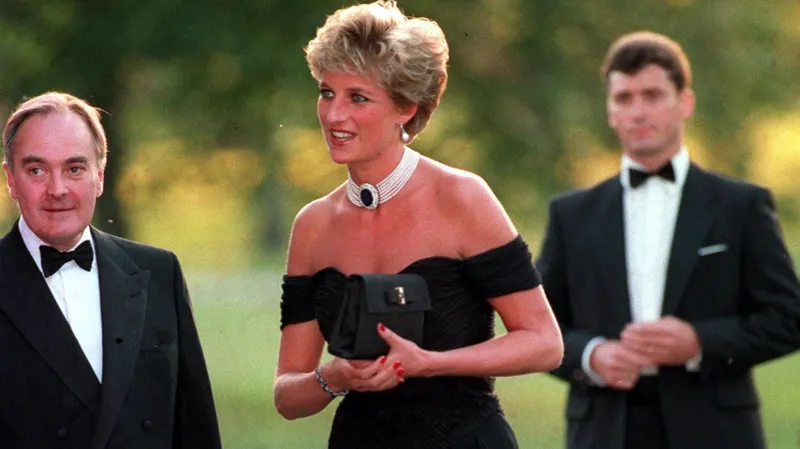
A dress worn by Princess Diana to a party in London hours after a documentary was televised in which the then-Prince Charles admitted to committing adultery during their marriage is going up for auction.
Her dramatic arrival at the Serpentine Gallery in 1994 in a custom-made black silk evening dress by designer Christina Stambolian became an iconic pop-culture moment.
The media dubbed her outfit the “revenge dress”.
Auction house Sotheby’s expects the dress to sell for up to £220,000 ($300,000) when it goes under the hammer on 9 December.
A press release from Sotheby’s said it is the first time the dress has been offered at auction since 1997, when the late princess sold 79 of her dresses to raise money for charities.
Morgane Halimi, Sotheby’s Global Head of Handbags and Fashion, said in a statement that Princess Diana “understood instinctively” that fashion can be a language in its own right.
“On her own terms, Princess Diana turned the dress into one of the most powerful messages she ever made, during one of the most scrutinised and emotionally charged episodes of her life,” Halimi said.
“She walked into a moment in which so much of her story was being told for her and, through what she chose to wear, reclaimed the narrative for herself.”

According to Sotheby’s, Anna Harvey, her stylist at the time, said Diana “wanted to look a million dollars”.
The princess made a last-minute wardrobe change for the fundraising dinner and chose the strapless evening dress by the Greek designer Christina Stambolian – which she accessorised with a royal jewel, a black clutch and black heels.
The vintage Jaguar XJ40 car that Diana arrived in at the event was sold at auction earlier this year for £66,250.
The revenge dress is expected to fetch a considerably higher price.
If it does, it will not be the first time an item from the princess’s wardrobe has sold for a significant sum.
Princess Diana’s sweater featuring a black sheep among rows of white ones was sold for £920,000 at an auction by Sotheby’s in New York in 2023.
[BBC]

A Pakistan Under-19 cricket team suddenly became the centre of focus when it was mistaken for a group of asylum seekers in Portsmouth. A group of protesters gathered outside the Marriott Hotel in Portsmouth after reports that asylum seekers were staying there. The situation had to be later diffused when it was ascertained that the hotel was hosting the Pakistan Under-19 team.
According to the Guardian, the situation became tense when a crowd gathered outside the Marriott hotel after reports that about 40 men who did not seem to be English arrived at the hotel. George Madgwick, a Reform councillor, called the hotel to mediate between the Pakistan Under-19 staff and the assembled crowd, following which the crowd dispersed.
“I spoke to the coach of the team, who was very understanding,” Madgwick told the Guardian. “I went out to the protesters and told them, ‘You’ve got it wrong guys, it’s a cricket club.’ They left within a couple of minutes. It was a massively unfortunate incident.
“From the perspective of the people of Portsmouth who are already on high alert, this was a coach from the same company which was turning up with about 40 foreign men.”
The ECB has been in touch with the Pakistan management following the incident and is reviewing security arrangements.
The Pakistan Under-19 team played a four-day game against England Under-19 in Arundel from September 2 to 5, which they lost by ten runs. The two teams faced off in a Youth ODI on September 9, with Pakistan winning by 177 runs. Pakistan’s senior men’s team are also playing the third and final Test against England at Edgbaston.
[Cricinfo]

Death toll from Philippines ferry fire rises to 76, with more still missing

Anthropic boss Dario Amodei calls for AI development to slow down

It’s spin vs spin as India and Sri Lanka battle for Asia Cup title

Atmospheric conditions are favorable for afternoon thundershowers in most parts of the Island today [13]

Gnanasara Thero absconding after SC ruling

House to debate 22A, Judicature Bill next week

‘Dates have the highest sugar content to fight Coronavirus’

Sunday Island 27 December – Headlines

#SundayIsland 17th December – Headlines

Sunday Island – 28th March

Sunday Island Headlines – 21 March

Sunday Island – 21st February – Headlines
-

 Sports2 days ago
DDS set to lose Test captaincy
-

 Features6 days ago
After the parade: What a traffic OIC’s walk-out tells us
-

 Editorial6 days ago
Arrests as theatre
-
 News5 days ago
Thailand shuts door on undesirables from Sri Lanka
-

 Latest News6 days ago
Harshitha’s composed knock seals Sri Lanka’s semi-final berth
-

 News2 days ago
Sri Lanka faces new grid challenge as rooftop solar surges: former CEB GM
-

 Business5 days ago
CEB successor company breaks into top three in competitive BESS tender
-

 News6 days ago
‘Choka Malli’ slips out of country before travel ban