
News
Sri Lanka is proof that governments use IMF bailouts to hurt political opponents


M Rodwan Abouharb, The Conversation & Bernhard Reinsberg, The Conversation
Sri Lanka received a bailout from the International Monetary Fund in March amid soaring inflation, debt and a sovereign default.In exchange for US$3 billion, the government committed to spending cuts and tax and financial sector reforms. These have prevented Sri Lankan wages from recovering after they fell by almost half in real terms during the preceding financial crisis, leading to protests in the streets of Colombo.
Sri Lankans’ experience of these measures has been far from uniform. Emerging evidence indicates that the government – led by Ranil Wickremesinghe, part of the Buddhist Sinhalese majority – has concentrated the burdens primarily on ethnic minorities, who are the poorest in Sri Lanka and typically support the opposition.
The government has sought to protect the elite, which is primarily Buddhist Sinhalese, by avoiding imposing wealth taxes and only making small increases in corporation tax. It has placed the costs of austerity on low-income people by doubling the value-added tax rate to 15%.
It has also doubled the tax that people pay on pension-fund returns. Again, this hits poor ethnic minorities hardest because they frequently earn too little to pay income tax.
Unfortunately, this experience is part of a worldwide pattern. Our new book, IMF Lending: Partisanship, Punishment and Protest, shows how governments lump the burden of adjustment on opposition supporters while shielding their own backers – in other words, using IMF programmes for political gain.
IMF programmes and past research Scholars have long noted that IMF restructuring programmes create winners and losers, but always in relation to different sectors of the economy. For example, the fact that programmes attempt to strengthen exports has been shown to favour farmers and business owners over urban middle-class state employees like civil servants.
The problem with purely comparing sectors is highlighted when you look at citizens’ experiences. One segment of the survey data we used in our research, covering nine countries in Africa, showed that three out of 10 civil servants actually thought IMF reforms made their lives better, while a similar proportion observed no difference.
Admittedly this data is from 1999-2001, since none of the more recent surveys that we used asked this question, but it raises an important point: if IMF reforms are entirely bad for the civil service, why are so many civil servants upbeat about the effects? Politics is likely to be the missing piece of the puzzle.
An extensive academic literature already shows that governments often use their discretion to play politics over development loans. For example, a recent study found that projects funded by Chinese money are more likely to be undertaken in the birth region of a political leader.
With IMF programmes, it’s commonly assumed that they narrow borrowing governments’ policy options, but that is an oversimplification. Borrowers certainly have less overall freedom over economic policy, but they maintain broad discretion in how they implement loan conditions. Our study is the first to quantify how they use this discretion and examine the consequences for protests within the countries in question.
Our study
We collected individual survey data from over 100 countries from four widely used sources: Afrobarometer, Asian Barometer, Latinobarómetro and the World Values Surveys. It covers a 40-year timespan up to the late 2010s, with periods varying from region to region.
We first examined whether opposition supporters had experiences of reforms different from government supporters. Sure enough, these were indeed more negative.
We worried this might be because these people are more critical of their governments in general. So we compared countries which had just experienced a restructuring programme with others which had not, and found that sentiment among opposition supporters was much more negative in borrower countries.
The graph (above) provides an explanation, showing that opposition supporters in countries on IMF programmes suffer relatively more deprivation than government supporters compared to countries not in programmes.
This “partisan gap” was also wider in countries who went through a more burdensome recent IMF adjustment, which points to the same conclusion.
The effect on protest
We expected that this highly unequal treatment would increase the chances of protest – especially when stoked by opposition politicians. This, too, was robustly supported across the surveys.
In Africa, people who reported being worse off due to the structural adjustment programme were more likely to protest. Opposition supporters as a whole were also more likely to protest, especially if the country had just experienced a more severe IMF programme.
Again, this data was from 1999-2001. Nonetheless, the other surveys also showed that protest was more likely among opposition supporters, especially during times of high pressure for adjustment.
What can be done
Scholars normally blame the increase in inequality caused by IMF programmes on the loan conditions, but the effects are clearly amplified by governments’ policy choices. How could this situation be improved? The IMF could require borrower countries to impose loan conditions in a non-partisan way, but would probably argue that its mandate prohibits considering domestic politics. Policing this would also be very difficult and time-consuming.
An alternative would be for the IMF to tame its demands on borrower countries. This would reduce the burdens that could be inflicted on opposition supporters. Economists might warn that this could encourage countries to be more financially irresponsible. Equally, however, it ought to make it more likely that adjustment programmes will be completed, thereby making the borrowing country more economically resilient for the future. It would also avoid any adverse reaction from the financial markets against a country breaking conditions.
Another potential avenue is to let opposition parties and civil society organisations participate in bailout negotiations. This would ensure everyone “owns” the bailout, and might even make it harder for incumbent governments to exploit policy conditions for political gain.
(M Rodwan Abouharb, Associate Professor in International Relations, UCL. Bernhard Reinsberg, Reader in Politics, University of Glasgow)












By Chaminda Silva
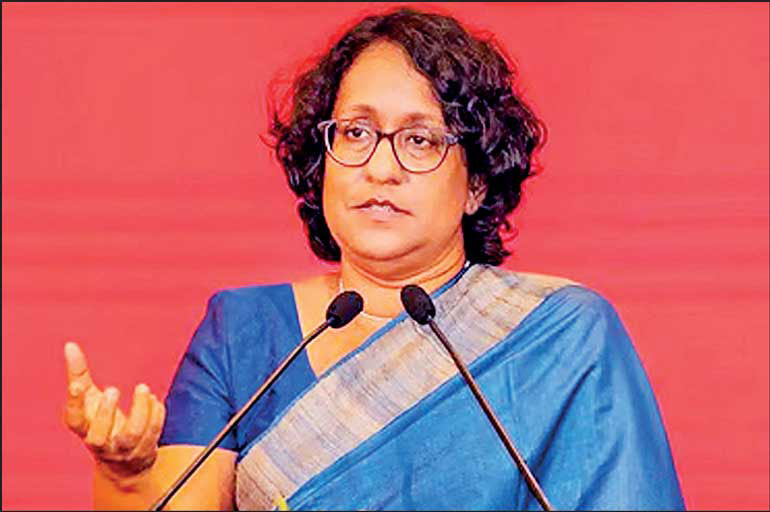
The government’s ambitious plans to overhaul Sri Lanka’s school education system and introduce new curricula could face serious implementation difficulties, with teacher unions warning that a longstanding and severe shortage of teachers remains unresolved.
The warning came as Prime Minister Dr. Harini Amarasuriya announced yesterday that new curricula would be introduced for Grades 2 and 6 next year, while also stating that the government planned to recruit around 30,000 new teachers across the education system by February.
However, the Ceylon Teachers’ Union (CTU) questioned whether the government would be able to provide the teachers required to implement the proposed reforms, claiming that the recruitment process itself had become mired in problems.
CTU General Secretary Joseph Stalin accused the government of making misleading claims about teacher recruitment and said the shortage that had affected schools for more than a year would continue into next year.
“There is currently a severe teacher shortage in the school system,” Stalin told a press conference in Colombo yesterday.
He said the government had previously acknowledged that there were about 46,000 teacher vacancies in the school system, but the figure was later revised to around 36,000.
“Those vacancies have remained unfilled for more than a year and a half. The school system has continued to operate with a severe teacher shortage throughout this period,” he said.
Stalin questioned how the government intended to introduce new curricula while thousands of existing teaching vacancies remained unfilled.
He said the Government had initially announced plans to recruit 23,000 teachers, despite the number of vacancies being significantly higher.
Although a gazette notification, relating to the recruitment had been issued, only around 17,000 applicants had been summoned for the initial round of interviews, he added.
Stalin said interviews were expected to begin in November and that appointments would, therefore, be made only from January onwards.
“If there are more than 36,000 teacher vacancies, the Government has decided to recruit only 23,000 teachers, and only around 17,000 have been called for interviews.
Who will take responsibility for the remaining vacancies?” he asked.
He said the problem was not merely one of numbers but also involved the Government’s recruitment procedure.
According to Stalin, shortcomings and ambiguities in the gazette notification issued for the recruitment examination had contributed to the present crisis.
“We primarily believe that the lack of proper procedures in the gazette notification issued for the recruitment examinations has contributed to this crisis. The ambiguities in the notification itself have led to the recruitment process becoming a major issue,” he said.
The shortage was also affecting the transfer system, Stalin mentioned.
A large number of teachers had been unable to obtain transfers because replacements were not available, with some teachers remaining at the same school for 12 or 13 years, he claimed.
As replacements had not been recruited, such teachers would have to remain at their present schools for another year, he said.
“This is a serious crisis. However, the situation is even more critical for students who are left without teachers,” Stalin said.
He also questioned the Government’s plans to close schools with fewer than 50 students.
“We suspect that this move is to take the teachers from these schools and redeploy them to other schools to fill vacancies there.”
The union’s concerns come at a time when the Government is pushing ahead with a major overhaul of the education system.
Addressing the Badulla District Women’s Conference yesterday, Prime Minister Amarasuriya said the Government would introduce new curricula for Grades 2 and 6 next year as part of its wider education reforms.
She said a new curriculum had already been introduced for Grade 1 this year, while new curricula for Grades 2 and 6 would be introduced over the next two years.
The Prime Minister said the Government was developing a new education system aimed at securing the future of all children, with the emphasis shifting away from producing students, focused solely on examinations.
The Government’s objective was to nurture a generation capable of facing future challenges successfully and confidently, she said.
The Prime Minister also announced that interviews for the recruitment of 17,000 teachers would commence on November 20.
She said approval had also been granted to recruit 2,000 academic staff members for the university system, with that recruitment process already under way.
The Government plans to recruit approximately 30,000 new teachers across the education system by February next year, she said.
A special programme would also be implemented to improve infrastructure facilities in schools, the Prime Minister added.
The contrasting positions highlight a potentially significant gap between the Government’s education reform timetable and the capacity of the existing school system to deliver it.
While the Government has set out a timetable for introducing new curricula and recruiting tens of thousands of teachers, the CTU argues that the existing shortage, delays in recruitment and unresolved transfer problems could leave schools struggling to provide adequate teaching staff when the reforms take effect.
With the Government planning to introduce another round of curriculum changes next year, the ability to fill vacancies in time could, therefore, become a crucial test of whether its broader education reform programme can be implemented as planned.
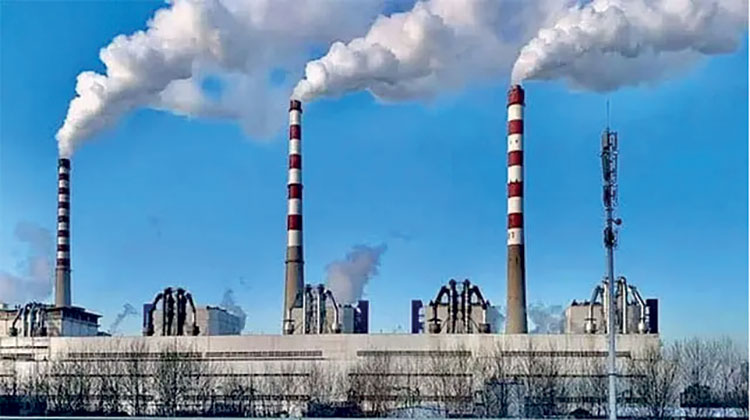
The Norochcholai coal power plant will remain disconnected from the national grid for several days following Saturday’s countrywide power failure, as authorities continue to follow safety procedures after the incident.
The National System Operator (NSO) said the 810-megawatt plant had been shut down as a precaution after the sudden power outage on October 17 and would not be reconnected to the grid until the necessary safety measures were completed.
The temporary loss of 810 MW of generating capacity would be managed through careful electricity supply arrangements to minimise the impact on consumers over the coming days, the NSO said.
It said the prevailing rainy weather was expected to help sustain hydropower generation at high levels, while a projected decline in electricity demand would further ease pressure on the system.
The countrywide blackout occurred at around 11.43 a.m. on October 17 after a generating unit disconnected from the national grid, creating an imbalance that caused the entire power system to collapse within less than 30 seconds.
Restoration efforts began shortly afterwards. By 12.11 p.m., major hydropower generating units had been brought back online and the power system was restarted simultaneously in four separate sections.
The restoration process was complicated by small-scale power generation facilities that were not under the direct control of the system control centre. However, electricity supplies were progressively restored through the activation of distribution feeders from 12.37 p.m.
By around 3 p.m., power had been restored to essential services, including major hospitals, water treatment plants and the airport.
Grid substations across the country had been reconnected by around 5 p.m., restoring electricity to the majority of consumers, the NSO said.
The operator stressed that the sudden disconnection of a generating unit as a safety measure was a normal occurrence at power plants. However, such a disconnection resulting in a complete collapse of the national power system was not considered normal.
An internal investigation has, therefore, been launched to establish the sequence of events that led to the islandwide outage and determine its underlying causes, the NSO said.
By Norman Palihawadane
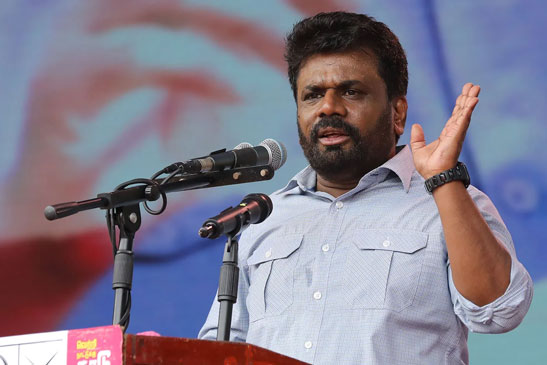
President Anura Kumara Dissanayake yesterday said a businessman, arrested with a caches of firearms, ammunition and hand grenades, had links to a politician, as authorities continued investigations into the seizure.
Addressing a public gathering in Badulla, the President said the suspect was among those being investigated in connection with operations targeting organised crime and that authorities were aware of his political connections.
He also referred to a video footage allegedly showing the suspect firing at people in the Weliweriya area, describing it as an example of the dangerous activities associated with individuals possessing illegal firearms.
The 38-year-old businessman, who is reportedly the owner of a cinema, and a relative of a politician, was arrested following a search conducted by officers of the Colombo District Crime Division at the cinema on Hanwella Road, in the Kirindiwela Police Division, on October 17.
Police said the search had been carried out based on information received by investigators.
The weapons and ammunition seized included two foreign-made pistols, a revolver, a foreign-made repeater firearm and a foreign-made 12-bore firearm.
Police also recovered hundreds of rounds of ammunition, including 398 rounds of 12-bore ammunition, 278 rounds of 9mm ammunition, 49 rounds of .32-calibre ammunition and 3,083 rounds of .22-calibre ammunition, along with two live hand grenades.
The suspect, a resident of the Millathe area, is being questioned as investigations continue.
The Police Media Division said police would seek a detention order to facilitate further questioning of the suspect and advance the investigation.
The Colombo District Crime Division is conducting further investigations into the cache of weapons and the suspect’s alleged activities and connections.

Showers or thundershowers will occur in most parts of the island after 1.00 p.m

CTU: Teacher shortage casts doubt on govt.’s education reforms

Norochcholai to remain offline for several days after blackout

President links businessman held with arms to politicians

CID probe sought into tusker’s death amid fears of elephant-killing syndicate

Bill to allow remote witness testimony in courts

‘Dates have the highest sugar content to fight Coronavirus’

Sunday Island 27 December – Headlines

#SundayIsland 17th December – Headlines

Sunday Island – 28th March

Sunday Island Headlines – 21 March

Sunday Island – 21st February – Headlines
-

 Latest News6 days ago
Nissanka’s return headlines Sri Lanka’s Test squad against Pakistan
-

 News5 days ago
Sri Lanka, India caught in US-Iran ship crisis
-
 Latest News6 days ago
Imran Khan’s PTI braces to fight federal takeover of Khyber Pakhtunkhwa
-

 Latest News5 days ago
Missiles intercepted near Riyadh after Saudi coalition hits Yemen fuel depot
-

 Latest News5 days ago
Kusal Mendis’ unbeaten 87 hands Sri Lanka consolation win
-
 News6 days ago
Mahinda and Shiranthi hospitalised
-
 News2 days ago
Asgiri Mahanayake calls for immediate release of Gnanasara Thera
-

 News6 days ago
Presidential pardons: Govt. studying Justice Thurairaja’s recommendations – Minister