
News
Sri Lanka is proof that governments use IMF bailouts to hurt political opponents


M Rodwan Abouharb, The Conversation & Bernhard Reinsberg, The Conversation
Sri Lanka received a bailout from the International Monetary Fund in March amid soaring inflation, debt and a sovereign default.In exchange for US$3 billion, the government committed to spending cuts and tax and financial sector reforms. These have prevented Sri Lankan wages from recovering after they fell by almost half in real terms during the preceding financial crisis, leading to protests in the streets of Colombo.
Sri Lankans’ experience of these measures has been far from uniform. Emerging evidence indicates that the government – led by Ranil Wickremesinghe, part of the Buddhist Sinhalese majority – has concentrated the burdens primarily on ethnic minorities, who are the poorest in Sri Lanka and typically support the opposition.
The government has sought to protect the elite, which is primarily Buddhist Sinhalese, by avoiding imposing wealth taxes and only making small increases in corporation tax. It has placed the costs of austerity on low-income people by doubling the value-added tax rate to 15%.
It has also doubled the tax that people pay on pension-fund returns. Again, this hits poor ethnic minorities hardest because they frequently earn too little to pay income tax.
Unfortunately, this experience is part of a worldwide pattern. Our new book, IMF Lending: Partisanship, Punishment and Protest, shows how governments lump the burden of adjustment on opposition supporters while shielding their own backers – in other words, using IMF programmes for political gain.
IMF programmes and past research Scholars have long noted that IMF restructuring programmes create winners and losers, but always in relation to different sectors of the economy. For example, the fact that programmes attempt to strengthen exports has been shown to favour farmers and business owners over urban middle-class state employees like civil servants.
The problem with purely comparing sectors is highlighted when you look at citizens’ experiences. One segment of the survey data we used in our research, covering nine countries in Africa, showed that three out of 10 civil servants actually thought IMF reforms made their lives better, while a similar proportion observed no difference.
Admittedly this data is from 1999-2001, since none of the more recent surveys that we used asked this question, but it raises an important point: if IMF reforms are entirely bad for the civil service, why are so many civil servants upbeat about the effects? Politics is likely to be the missing piece of the puzzle.
An extensive academic literature already shows that governments often use their discretion to play politics over development loans. For example, a recent study found that projects funded by Chinese money are more likely to be undertaken in the birth region of a political leader.
With IMF programmes, it’s commonly assumed that they narrow borrowing governments’ policy options, but that is an oversimplification. Borrowers certainly have less overall freedom over economic policy, but they maintain broad discretion in how they implement loan conditions. Our study is the first to quantify how they use this discretion and examine the consequences for protests within the countries in question.
Our study
We collected individual survey data from over 100 countries from four widely used sources: Afrobarometer, Asian Barometer, Latinobarómetro and the World Values Surveys. It covers a 40-year timespan up to the late 2010s, with periods varying from region to region.
We first examined whether opposition supporters had experiences of reforms different from government supporters. Sure enough, these were indeed more negative.
We worried this might be because these people are more critical of their governments in general. So we compared countries which had just experienced a restructuring programme with others which had not, and found that sentiment among opposition supporters was much more negative in borrower countries.
The graph (above) provides an explanation, showing that opposition supporters in countries on IMF programmes suffer relatively more deprivation than government supporters compared to countries not in programmes.
This “partisan gap” was also wider in countries who went through a more burdensome recent IMF adjustment, which points to the same conclusion.
The effect on protest
We expected that this highly unequal treatment would increase the chances of protest – especially when stoked by opposition politicians. This, too, was robustly supported across the surveys.
In Africa, people who reported being worse off due to the structural adjustment programme were more likely to protest. Opposition supporters as a whole were also more likely to protest, especially if the country had just experienced a more severe IMF programme.
Again, this data was from 1999-2001. Nonetheless, the other surveys also showed that protest was more likely among opposition supporters, especially during times of high pressure for adjustment.
What can be done
Scholars normally blame the increase in inequality caused by IMF programmes on the loan conditions, but the effects are clearly amplified by governments’ policy choices. How could this situation be improved? The IMF could require borrower countries to impose loan conditions in a non-partisan way, but would probably argue that its mandate prohibits considering domestic politics. Policing this would also be very difficult and time-consuming.
An alternative would be for the IMF to tame its demands on borrower countries. This would reduce the burdens that could be inflicted on opposition supporters. Economists might warn that this could encourage countries to be more financially irresponsible. Equally, however, it ought to make it more likely that adjustment programmes will be completed, thereby making the borrowing country more economically resilient for the future. It would also avoid any adverse reaction from the financial markets against a country breaking conditions.
Another potential avenue is to let opposition parties and civil society organisations participate in bailout negotiations. This would ensure everyone “owns” the bailout, and might even make it harder for incumbent governments to exploit policy conditions for political gain.
(M Rodwan Abouharb, Associate Professor in International Relations, UCL. Bernhard Reinsberg, Reader in Politics, University of Glasgow)









* Govt. lacks plan to meet IMF targets
By Shamindra Ferdinando
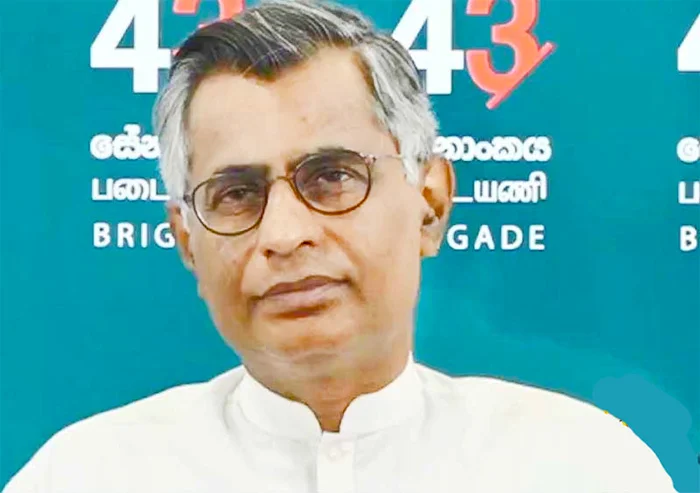
United Republican Front (URF) leader Patali Champika Ranawaka has alleged that the 22nd Amendment is aimed at enabling the National People’s Power (NPP) to perpetuate its rule without conducting elections.
The former Minister was addressing the media at the Flower Road Office of UNP leader Ranil Wickremesinghe on Tuesday (25). Alleging that the Pelawatte-based ‘red junta’ spearheaded the operation to enact the controversial 22nd Amendment, the ex-parliamentarian pointed out that neither President Anura Kumara Dissanayake nor Health and Media Minister Dr. Nalinda Jayathissa, who is also the Cabinet spokesman, never denied declarations made by various members of the NPP parliamentary group that elections wouldn’t be conducted for 10, 20 years.
The President and the Cabinet spokesman never clarified that such declarations were not the position of the government, Ranawaka said. The URF leader pointed out that some NPP/JVP members told those receiving appointments that they would also retire under the same administration.
Addressing the media after former External Affairs Minister Prof. G. L. Peiris, convenor of the Joint Opposition, said that the government recognised them as the real opposition. Referring to Dr. Jayathissa’s recent claim that they conspired at the residence of Prof. Peiris and challenged them to come on to the streets, ex-lawmaker Ranawaka thanked the Minister for the recognition at the expense of the Samagi Jana Balawegaya (SJB). The government accepted the challenge posed by them in spite of the main Opposition party, in Parliament, having 40 MPs, the URF Chief said, urging the government to reveal the identities of those who clandestinely led the ruling party.
The former MP said that the country was now aware of their conspiracies during the past six decades. Blaming the government for its inordinate delay in conducting the Provincial Council polls, and the failure to take tangible measures to do away with the executive presidency, as repeatedly promised in the run-up to the national elections in 2024, Ranawaka alleged that the government was busy conspiring to roll back the electoral map. He also alleged that President Dissanayake was leading the operation.
According to Ranawaka the government was keen to postpone elections indefinitely as its members feared to face the law under a different government.
Commenting on the economic situation, Ranawaka explained how under President Wickremesinghe tough measures were taken during the 2022 to 2024 period to stabilise the country with the backing of the International Monetary Fund (IMF). “However, the country cannot go on beyond 2027 under the current setup. In terms of the agreement with the IMF, the debt repayment was stopped. However, the country will have to start repayment in 2028,” the ex-MP said, pointing out the country’s reserves were down to USD 6.4 bn.
The ex-MP said the IMF expected Sri Lanka to maintain foreign reserves at USD 6.8 bn and to increase the reserves to USD 12 bn next year. In terms of the IMF’s recommendations, the foreign reserves have to be increased to USD 15 bn by 2028, Ranawaka said, recollecting how former President Ranil Wickremesinghe, at a recent book launch, explained the daunting challenges faced by the country on the economic front.
Ranawaka was referring to Wickremesinghe’s speech at the launch of former Minister Ranjith Siyambalapitiya’s book launch at the BMICH, where the former President warned of dire consequences if the government failed to adhere to the IMF formula.
The former Minister disputed the government’s much touted claim that corruption was dealt with. The person who caused an unprecedented gas crisis, in 2021, by promising to supply gas at a much lower price than what was paid by the then government at that time and ended up causing countrywide panic due to “accidental” blasts of domestic gas cylinders, received protection from this government.
The government conveniently refrained from initiating action against that person, Ranawaka said. Referring to the developments leading to President Gotabaya Rajapaksa’s government declaration of bankruptcy in April 2022, the ex-Minister claimed that the IMF, in a letter dated 7 March, 2022, alerted the Secretary to the President, the Finance Ministry and the Central Bank, of the impending economic collapse. The NPP government failed to take action against those responsible for creating the 2022 crisis, Ranawaka said.

Navy headquarters yesterday said it was continuing the search for Lt. Thilina Udayapriya, second-in-command of the Super Dvora Mark III Fast Attack Craft (FAC), which sank in the seas off Angulana, on 15 August, 2026. Of the 12-member crew, 11 were rescued but so far SLN efforts to locate the missing officer’s body had failed, sources said.
They said that the salvage operation of the sunken craft, taken delivery from Israel after the end of the war, is continuing amidst gruelling weather and rough sea conditions, and the sunken vessel is now off Bambalapitiya.
Sources said that the vessel collided with a sunken ship MV Thermopylae Sierra that sank in August 2012, during a monsoon storm. The ill-fated Super Dvora Mk III has gone over the ship wreck in spite of it being clearly demarcated in the nautical chart, aka hydrographic chart available to the ill-fated vessel’s crew. But authorities had failed to mark the site with a buoy to warn maritime traffic, in spite of public appeals. (SF)
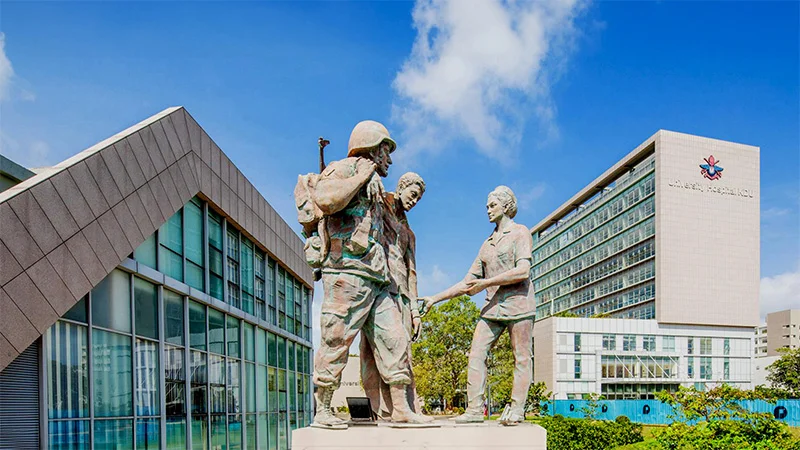
The Ministry of Defence, Ministry of Health and Mass Media, and the General Sir John Kotelawala Defence University (KDU), have signed a tripartite Memorandum of Understanding (MoU) to facilitate the expansion of free cardiothoracic surgery services by utilising the facilities of the General Sir John Kotelawala Defence University (KDU) Teaching Hospital.
The Defence Secretary Air Vice Marshal Sampath Thuyacontha (Retd), Secretary to the Ministry of Health and Mass Media Dr Anil Jasinghe, and Vice Chancellor of General Sir John Kotelawala Defence University Rear Admiral H. G. U. Dhammika Kumara, signed the agreement on behalf of their respective institutions.
The Defence MInistry said that the initiative, implemented in accordance with a Cabinet proposal submitted by the Minister of Health and Mass Media Dr Nalinda Jayatissa would reduce congestion and address the lengthy waiting list for cardiothoracic surgeries at the National Hospital of Sri Lanka (NHSL).
The Ministry stated: “Under the arrangement, specialist doctors and clinical staff of the Cardiothoracic Unit of the National Hospital will conduct free heart and thoracic surgeries and provide specialised treatment for patients at the KDU Teaching Hospital. KDU will provide the necessary infrastructure, medical facilities and specialised equipment, while the Ministry of Health and Mass Media will provide the required medicines, medical supplies and specialised medical care.”

Showers above 50 mm are likely in the Western, Sabaragamuwa and North-western provinces and in Kandy, Nuwara-Eliya, Galle and Matara districts

Patali alleges NPP conspiring to put off elections indefinitely

August 15 Super Dvora tragedy: Search continues for missing officer’s body

Tripartite MoU to expand free cardiothoracic surgeries at KDU Hospital

Jaffna to mark Int’l Day of the Disappeared

Unfolding El Niño and burning issues

‘Dates have the highest sugar content to fight Coronavirus’

Sunday Island 27 December – Headlines

#SundayIsland 17th December – Headlines

Sunday Island – 28th March

Sunday Island Headlines – 21 March

Sunday Island – 21st February – Headlines
-
 News6 days ago
Country’s first woman Surveyor General appointed
-

 Business5 days ago
SriLankan Airlines makes ShakthiSAT Mission possible for talented Sri Lankan student
-
 Features6 days ago
Medical education in Sri Lanka: Then and now
-
 Latest News6 days ago
Imran Khan moved to private hospital amid deteriorating health
-
 Latest News6 days ago
Government has declared 21, 22 and 23 August 2026 as national days of mourning
-
 Features4 days ago
My secondary schooling after Royal Primary
-

 Latest News5 days ago
Tharanga edges out Chopra in 88m javelin battle
-
 News6 days ago
22A: Opp. demands all available SC judges hear petitions