
News
Economic crisis: How trade misinvoicing contributed to Sri Lanka’s bankruptcy


Public interest group points finger at corrupt public-private partnership
By Shamindra Ferdinando
A group representing trade union and civil society collective on Tuesday (07) called for urgent action to tackle the well-organised influential public–private sector partnership engaged in ‘overinvoicing’ and ‘under invoicing, with the blessing of successive governments.
Addressing the media at the Centre for Society and Religion, Maradana, economic analyst Dhanusha Pathirana, civil society activist TharinduUduwaragedara and Attorney-at-Law Lakmali Hemachandra explained how ‘over invoicing’ and ‘under invoicing’ contributed to the economic crisis.
Pathirana asserted that a sharp reduction of capital, as a result of mispricing by importers, in respect of duty/tax free goods and taxable imports, was far more serious than the parking of funds overseas by exporters.
The group underscored the need to examine capital flows through four forms of trade mis-invoicing, namely import over-invoicing and under-invoicing and export over-invoicing and under-invoicing.
Opposition lawmakers Vasudeva Nanayakkara, Wimal Weerawansa and Gevindu Cumaratunga, in Parliament, estimated the stashed amount at over USD 35 bn. The trio has alleged that the Exchange Control Act No 12 of 2017, enacted during the Yahapalana administration allowed exporters to ‘park’ funds overseas.
Dr. Wijeyadasa Rajapakse, PC, has estimated as much as USD 53.5 bn had been ‘parked’ overseas. This claim was made during the committee stage debate on the Appropriation Bill last year.
Pathirana discussed the disclosures made by Global Financial Integrity (GFI), a Washington, DC-based think tank that examined illicit financial flows, corruption, illicit trade and money laundering, pertaining to Sri Lanka.
Commenting on statements made, both in and outside Parliament as regards parking of export proceedings, both Pathirana and Uduwaragedara emphasized that the country suffered much more losses due to capital outflows than ‘parking’ of export proceeds overseas.
They found fault with both importers and exporters, at different levels, and deceitful bureaucracy, that manipulated the entire process, for the benefit of a few, at the expense of the entire country. They stressed that such huge outflows couldn’t be caused by illegal money transferring schemes, such as ‘undial’ and ‘hawala.’
Referring to GFI findings that dealt with the 2009-2018 period, Pathirana, formerly of Asia Capital, stressed that the country lost as much as USD 40 bn due to over-invoicing and under-invoicing, in addition to parking of export proceeds, etc.
Secretary General of the Commercial and Industrial Workers Union, Arulingam Swasthika, didn’t join the discussion, as stated by the organizers.
At the onset of the briefing, Uduwaragedara pointed out that the Wickremesinghe-Rajapaksa government was on its knees before the International Monetary Fund (IMF) for USD 2.9 bn bailout package, whereas USD billions ,that could be utilized,remained overseas.
Sri Lanka has secured IMF bailout packages on 16 previous occasions.
The activist said that Justice Minister Wijeyadasa Rajapakse, PC, and Samagi Jana Balavegaya (SJB) heavyweight Patali Champika Ranawaka, in his capacity as the Chairman of the National Council sub-committee on identifying short- and medium-term programmes, related to economic stabilization, acknowledged the disclosures made by the GFI.
Cabinet spokesperson Bandula Gunawardena, too, admitted the issue at hand, though the government was yet to respond to this situation, Uduwaragedara said.
Actually, the government owed an explanation why, in spite of facing such extreme difficulties, those responsible for the revenue collection mechanisms, soft-pedal the issue.
“We are in a desperate situation. But, Parliament, responsible for public finance ,never really intervened in this matter. Parliament not only turned a blind eye to this daylight robbery but encouraged corruption at every level,” Uduwaragedara alleged.
Pathirana pointed out that even after President Gotabaya Rajapaksa’s government restricted imports, in 2021, the import bill remained high. “Our foreign reserves, amounting to USD 7.5 bn, simply evaporated as unscrupulous elements ,engaged in ‘over-invoicing,’ simply stepped up their operations,” Pathirana said.
According to him, even foreign loans, received by Sri Lanka, and foreign remittances, too, were vulnerable to these machinations. Both Pathirana and Uduwaragedara warned that unless remedial measures were taken to tackle corrupt cartels, the USD 2.9 bn received, over a period of four years, wouldn’t make a difference.
Pathirana emphasized that if the government was genuinely interested in breaking up the corrupt networks it could be done.
The public interest group urged the government to launch a comprehensive audit as part of the overall remedial measures. The Central Bank should intervene in this matter, without further delay, Pathirana said.
Uduwaragedara pointed out that those at the helm conveniently failed to act on the shocking disclosures made by Panama Papers (published beginning April, 2016) and Pandora Papers (2021). Referring to a spate of cases, involving Sri Lankans, that had been disclosed by Panama Papers and Pandora Papers, Uduwaragedara stressed that the failure on the part of the government to properly investigate, at least one case, exposed the bitter truth.
The media was told how those who had been exposed, invested in property overseas, ranging from luxury houses to art.
Stressing the urgent need and the responsibility on the part of the government to further strengthen laws to tackle these issues, Pathirana suggested that there should be a wider discussion, regarding writing off debt.
The Island
asked whether they really expected those responsible for the economic ruin here to genuinely address this issue, and anything tangible expected from those at the helm of power. Lawyer Lakmali Hemachandra said that they were still pursuing the issues and no final decision was taken on future course of action.
Pathirana said that Universities should engage in what he called an in-depth study of the growing problem. Referring to former Auditor General Gamini Wijesinghe’s declarations, pertaining to the ongoing crisis, Pathirana suggested that the government should commence an inquiry, beginning 2021.
The group said that this particular issue hadn’t received sufficient attention of the Sinhala media, both print and electronic, hence the need to make the public aware of the continuing threat. In spite of the Central Bank, in July 2006, responding to the threat posed by money laundering and terrorism financing, successive governments never really took concrete measures in that regard.
Towards the end of the discussion, the urgent need to introduce amendments to the Exchange Control Act No 12 of 2017, as part of Sri Lanka’s response to the continuing financial crisis was also taken up. Amendments were necessary to restore the authority exercised by the Central Bank in respect of regulation of foreign exchange, before the enactment of the above controversial piece of legislation by the Yahapalana government.
The group said that wider investigation was required to establish the truth, though the current crisis had been blamed on President Gotabaya Rajapaksa’s policy mismanagements, such as unprecedented tax cuts that caused the loss of revenue to the tune of Rs 600 bn.









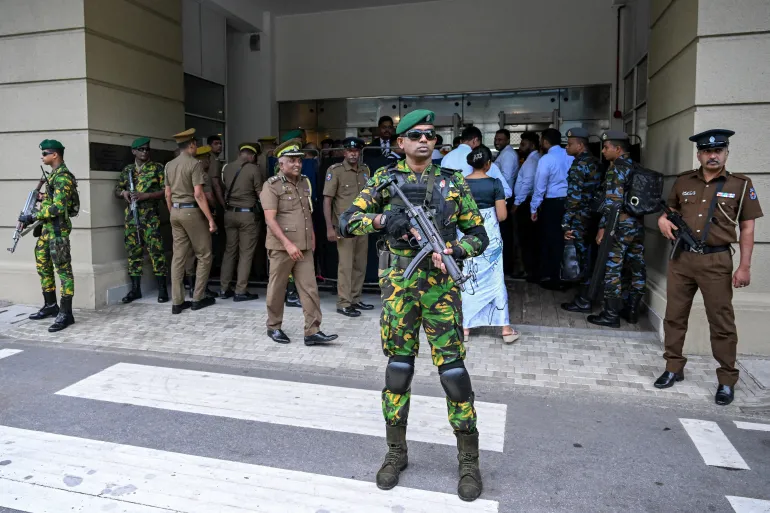
The High Court has convicted 14 of the 24 men accused of being directly involved in the 2019 Easter Sunday bombings, which killed 279 people.
The three-judge bench read out its decision on Tuesday after a five-year trial and said sentencing would take place later, the AFP news agency reported.
The charges included murder and conspiracy to commit terrorism.
Nine others were acquitted, while another defendant was found guilty of only some of the charges, the court said.
[Aljazeera]
By Shamindra Ferdinando
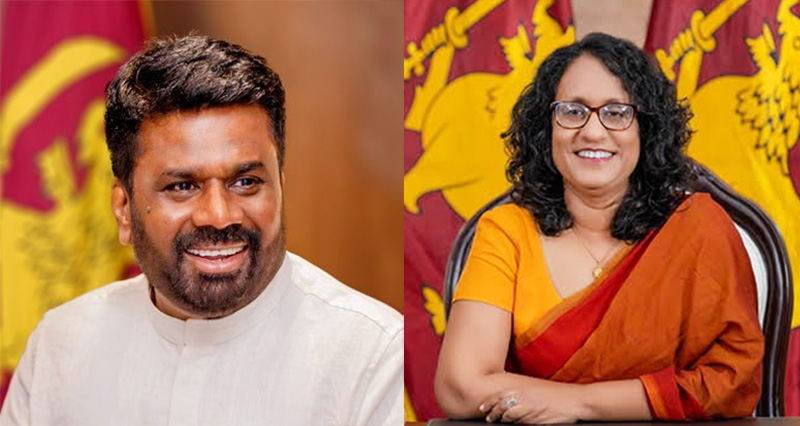
The ruling NPP yesterday (21) dismissed claims of a widening rift, within the government, over the proposed 22nd Amendment. Asked whether the NPP was concerned over a section of the Opposition alleging Prime Minister Dr. Harini Amarasuriya and two dozen MPs taking a view contrary to that of the party in this regard, authoritative party sources said some persons were propagating speculation for their own interest.
Declaring that there was absolutely no issue regarding the controversial Amendment, sources emphasised once it was tabled in Parliament, it would be passed with 2/3 majority.
Sources dismissed claims that out of its 159-member parliamentary group a section of NPPers was opposed to the government move. According to an influential Opposition activist, there are 57 JVPers and 66 NPPers in the government group and the rest contested the last parliamentary polls, having aligned with the JVP.
Ministerial sources told The Island that the government was confident of going ahead with the 22nd Amendment and Judicature (Amendment) Bills. Sources said that the NPP was not bothered about the Opposition protests in and outside Parliament.
Speaker Dr. Jagath Wickremaratne is expected to disclose the confidential ruling that he received from the Supreme Court in respect of more than 65 petitions for and against the 22nd Amendment and Judicial Amendment Bills. The enactment of the 22nd Amendment would pave the way for extending the retirement age of Supreme Court judges, from 65 to 67 years, and Court of Appeal judges, from 63 to 65 years.
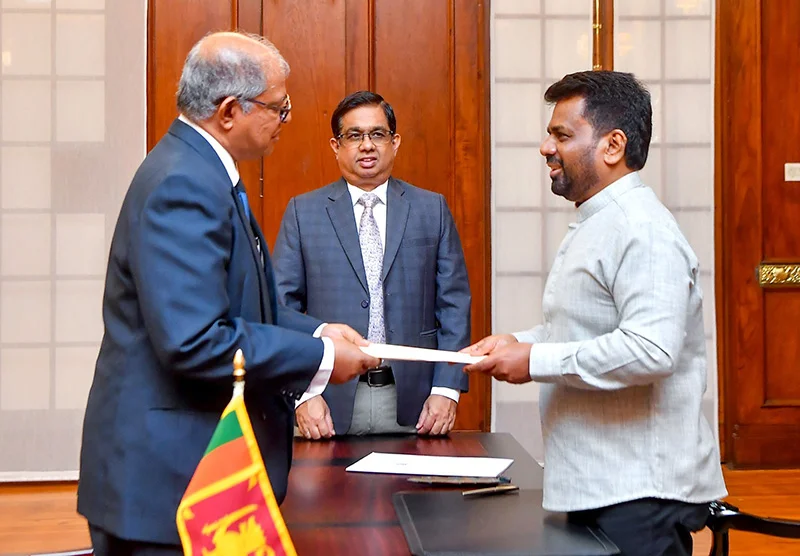
President Anura Kumara Dissanayake has appointed Court of Appeal Judge Mayadunna Sri Mevan Anthony Edirimannasuriya Corea as the Acting President of the Court of Appeal.
The appointment has been made as President’s Counsel Nalin Rohantha Abeysuriya, who currently serves as President of the Court of Appeal, will be overseas until the 24th.
Accordingly Justice Mayadunna Corea was sworn in as Acting President of the Court of Appeal before President Anura Kumara Dissanayake at the Presidential secretariat last morning (21).
Secretary to the President Dr Nandika Sanath Kumanayake was also present at the occasion.

High Court convicts 14 over deadly Easter bombings

Mandhana, Shafali and Ghosh lead dominant India to Asian Games gold

Fatima Sana and Umm-e-Hani secure bronze for Pakistan in Asian Games

India bat first in Asian games womens cricket final

Showers about 100mm will occur in the Western, Sabaragamuwa, Central and North-western provinces and in Galle and Matara Districts

Govt. confident of 2/3 majority despite NPP split speculation

‘Dates have the highest sugar content to fight Coronavirus’

Sunday Island 27 December – Headlines

#SundayIsland 17th December – Headlines

Sunday Island – 28th March

Sunday Island Headlines – 21 March

Sunday Island – 21st February – Headlines
-

 News6 days ago
US embassy won’t comment on IGP’s probe into joint drug raid
-

 News5 days ago
Bid for Basil’s extradition nears final stage: Police
-

 News4 days ago
Shanakiyan urges urgent action over reported death sentence for Lankan in Saudi Arabia
-

 Business6 days ago
All-new Bolero MaXX unveiled in Sri Lanka
-

 News3 days ago
Namal Rajapaksa Buddhist gambit fails, bail denied
-
 Opinion6 days ago
A journalist who wrote across the divide
-

 Editorial7 days ago
More fuel price shocks shrouded in secrecy
-

 Sports7 days ago
MAS Holdings, official clothing sponsor of Sri Lanka team at Aichi–Nagoya 2026 Asian Games