
Sports
Yupun’s rise calls for top grade competitions for deserving athletes

by Reemus Fernando
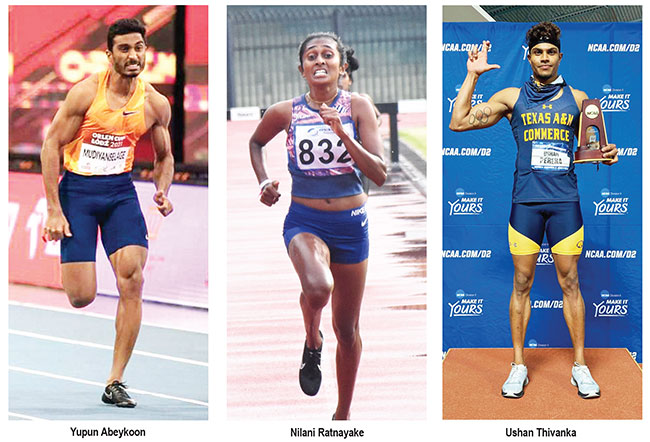
National men’s 100 metres record holder Yupun Abeykoon climbed to the 40th position in the world rankings after the World Athletics updated the event rankings last week. Despite finishing ninth at the last Diamond League final in Zurich (September 9), the Italy based sprinter has climbed five places up in the world rankings highlighting the importance of participating in top grade competitions. What has helped Abeykoon maintain a world rank above 50 in a highly competitive track and field discipline is something that country’s sports authorities should study seriously as there are at least half a dozen others who could emulate him in other disciplines in athletics if they are given similar exposure.
To begin with, the credit for Yupun’s improvement and the laudable world ranking position should be given to his team in Italy. They had prepared the ground work for him to take part in competitions in Europe. Systematic training and top-grade competitions was the key for him to improve on his world rankings. That enabled him to represent Sri Lanka at the Tokyo Olympics.
Yupun broke into the top 100 in the world only in late May. He clocked 10.15 seconds at the Centro Sportivo Fontanassa, Savona, Italy. On May 31st he was ranked 79th and by late June he was occupying a position in the top 50 (49). It took only one good performance at a top-grade competition for him to break in to the top 50. On June 10th, Yupun clocked 10.16 to be placed fourth at the Golden Gala Pietro Mennea. That feat earned him 1292 points and secured his ticket to the Olympics. By late July Yupun was ranked 54th but after the Diamond League final in Zurich where he was placed ninth Yupun moved up again.
He has overtaken Japan’s Ryota Yamagata, France’s Jimmy Vicaut, Slovakia’s Jan Volko, China’s Zhiqiang Wu and USA’s Chris Royster and Christopher Belcher to be ranked 40th in the world, a position that would auger well for him ahead of a World Championship year.
It was not only the impressive performances that have helped the 26-year-old secure a top position in world rankings but also the grade of the competitions where he executed them.
Gone are the days when you could punch your ticket to the Olympics and World Championships with sheer speed or top performances. The latest qualifying system introduced for such events require athletes to perform consistently at top grade competitions and reach top world rankings to qualify for events. The World Ranking system arguably favours the athletes competing in the European circuit and athletes taking part in competitions like the Diamond League. For an example, in the pandemic plagued season there had been 90 athletes who had produced faster times than Yupun in the world in men’s 100 metres but the latter was able secure a higher ranking by the end of the season as he had produced his most impressive performances at competitions which guarantee higher points.
By the last weekend, Japan’s Ryota Yamagata, who is one of only two Asians to have produced sub 10 seconds this season was ranked 41st, , one point behind Yupun. And two compatriots of Yamagata who are yet to clock sub 10 seconds this season have much higher world ranks of 24 (Shuhei Tada) and 36 (Yoshihide Kiryu).
Yupun’s impressive rise has given enough evidence to prove that country’s top athletes could benefit if they are exposed to top grade competitions. However, it is easier said than done. Just prior to the Olympics Sri Lanka Athletics struggled to find top competitions for country’s Olympic hopefuls. By May, the US based high jumper Ushan Thivanka was on the cusps of earning an Olympic berth with a remarkable personal best of 2.30 metres. Sri Lanka Athletics’ attempts to find him a berth in a Diamond League competition in a bid to get him qualified for Olympics found futile as the Diamond League competitions the governing body was looking for ‘were already overbooked’.
The world has seen only 25 athletes going over the bar at 2.30 metres or above this year in the men’s high jump. Thivanka is one of them. He was so good this season that he could have finished joint eighth at the Olympics with his best feat (which was in May-2.30m) had he been selected for the quadrennial event on merit of his 2.30 metres produced in May. The World Athletics qualifying system has frowned on many such athletes who could not compete at top grade competitions to improve their rankings.
It is incumbent upon World Athletics to provide equal opportunities for athletes of all regions in the world to gain top competition exposure while local authorities need to get their act together to lobby for top competitions for their athletes. The likes of Nilani Ratnayake (steeplechase), Nadeesha Ramanayake (400m), Nimali Liyanarachchi (800m) and Dilshi Kumarasinghe (800m, 400m) in the women’s category, sprinters Kalinga Kumarage and Aruna Dharshana, throwers, Sumedha Ranasinghe and Waruna Lakshan and Ushan Thivanka in the men’s category and several other athletes were craving for top competitions to improve their rankings ahead of the Olympics. They will be heading for the same predicament ahead of World Championships in 2022 if authorities fail to find answers to the problems they faced ahead of Olympics.



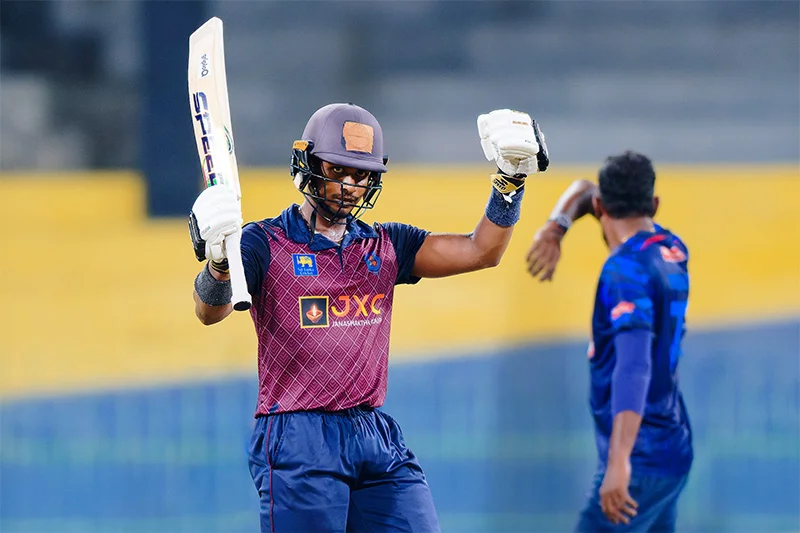
Sri Lanka will begin their three match T20I series against Pakistan in Rawalpindi on Friday with an opportunity for several youngsters to stake their claims, although the absence of Pathum Nissanka leaves a sizeable hole at the top of the order.
Nissanka, Sri Lanka’s highest-ranked batter in the ICC T20I rankings, has been one of the side’s most consistent performers in recent years and his absence deprives the tourists of a proven match-winner against a Pakistan attack that will still carry plenty of firepower despite resting several senior players.
The three T20Is will be played in Rawalpindi on October 9, 11 and 13 before attention switches to the seven match ODI tri-series involving hosts Pakistan, Sri Lanka and England.
While Sri Lanka will miss Nissanka, his absence opens the door for highly rated Sineth Jayawardene, who has been earmarked as one for the future. The former Sri Lanka Under-19 captain now has an opportunity to show that he can make the considerable jump from domestic and age group cricket to the international stage. Sineth skippered Royal College, Colombo with distinction.
There will also be considerable interest in leg-spinner Vijayakanth Viyaskanth, another player Sri Lanka have invested in with an eye on the future. With Wanindu Hasaranga out of the equation, Viyaskanth has an opportunity to make a strong case for a regular berth rather than remain on the fringes.
Sri Lanka will be encouraged by the fact that Pakistan too have opted to look beyond some of their established names for the T20I leg of the tour.
Sahibzada Farhan will captain Pakistan after leading them at the recently concluded Asian Games in Japan, taking over from Salman Ali Agha, who has been left out of the T20I squad. Salman remains part of Pakistan’s ODI plans.
Pakistan have also rested Babar Azam and Shaheen Shah Afridi for the T20Is, although both return for the ODI tri-series, where Shaheen will continue as captain.
The hosts have named uncapped all-rounders Razaullah and Mohammad Imran Randhawa in their 15-member T20I squad, while Maaz Sadaqat and Hasan Nawaz have been rewarded for impressive performances at the Asian Games.
Hasan finished the tournament as Pakistan’s leading run scorer with 123 runs, including a blistering 96 off 51 balls against India in the final, although Pakistan had to settle for silver.
Fast bowler Naseem Shah returns to Pakistan’s T20I squad having last played the format against Sri Lanka in February, while Shadab Khan, Fakhar Zaman, Saim Ayub and Abrar Ahmed provide experience.
For Sri Lanka, while Nissanka’s runs will be sorely missed his absence means someone else has the chance to put his hand up. Sri Lanka will hope one or two of their young guns grab that opportunity with both hands.
The ODI tri-series will follow the T20Is, with the first three matches being played in Rawalpindi before the tournament moves to Lahore for the remaining league games and the final.
Pakistan have retained a more experienced core for the 50-over competition, with Babar, Salman, Haris Rauf and Faheem Ashraf among those included.
Former Pakistan Under-19 captain Saad Baig has earned his maiden ODI call-up after scoring more than 1,000 runs in the 2025-26 Quaid-e-Azam Trophy, while left-arm wrist-spinner Sufiyan Moqim is another notable inclusion.
Pakistan have also strengthened their backroom staff, bringing back former Australian fast bowler Shaun Tait as bowling consultant. Tait previously served as Pakistan’s bowling coach in 2022-23 and replaces Ashley Noffke, who left after the Asian Games to take over as Netherlands head coach.
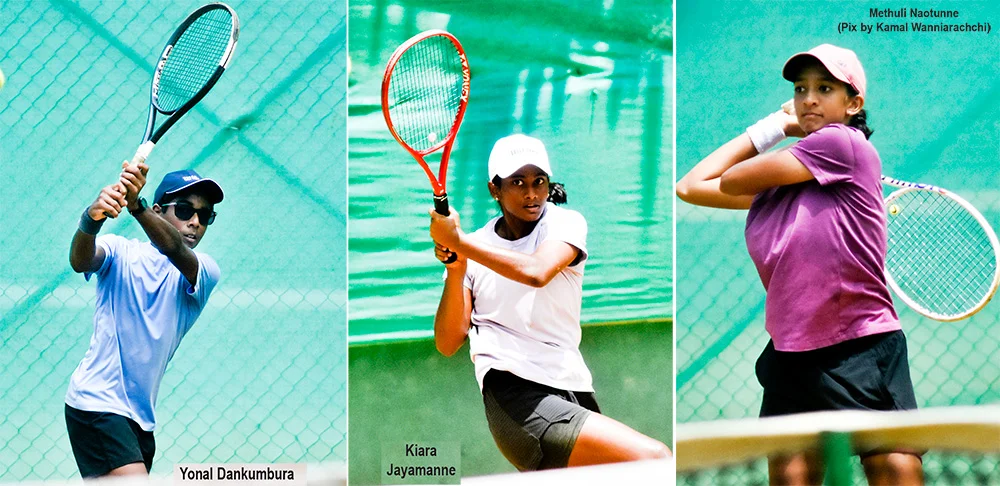
ATF Under-16 Colombo Week 1 Tennis
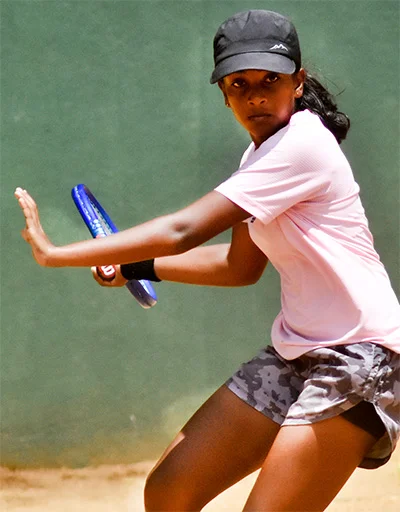
Sri Lanka’s junior players delivered a series of impressive performances on Wednesday, with the girls claiming all four semi-final places at the ATF Under-16 Colombo 2026 Week 1 tournament, held at the Sri Lanka Tennis Association courts.
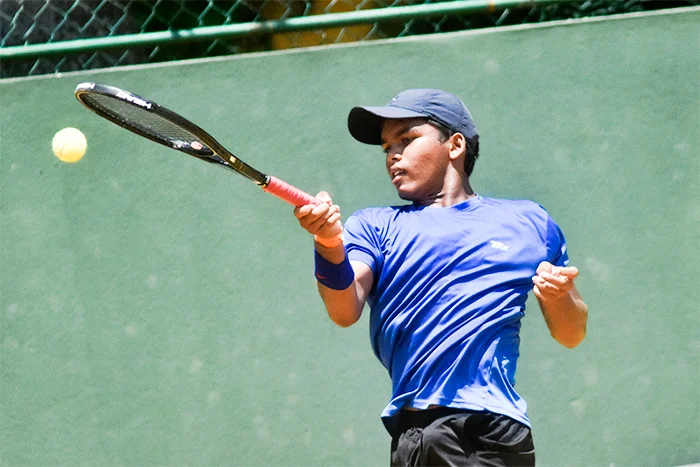
Damsath Peiris
Methuli Naotunne led the charge with a notable quarter-final win over India’s Yashmitha Santhosh, recovering from a set loss to prevail 4-6, 7-5, 6-1. Kiara Jayamanne also came from behind to beat India’s Ahnavi Shaw 5-7, 6-4, 6-2.
Risindi
Hewawasam
In an all-Sri Lankan quarter-final, Risindi Hewawasam overcame Desandi Peiris 4-6, 6-2, 6-3, while Disini Samaraweera defeated Sayli Basnayake 3-6, 6-2, 6-0.
The Sri Lankan boys also impressed. Damsath Peiris beat Buvindu Jayawardhana 8-2, 7-6, and Yonal Dankumbura battled to a 4-6, 6-3, 6-3 victory over Jayan Sebastian.
The visiting players, however, proved tough to beat. The Philippines’ Anthony Castigador defeated Sri Lanka’s Dehan Wickramasinghe 6-2, 6-4, and India’s Gurshaan Chahal fought back to overcome Udeera Gunasinghe 2-6, 7-5, 7-5.
(RF)
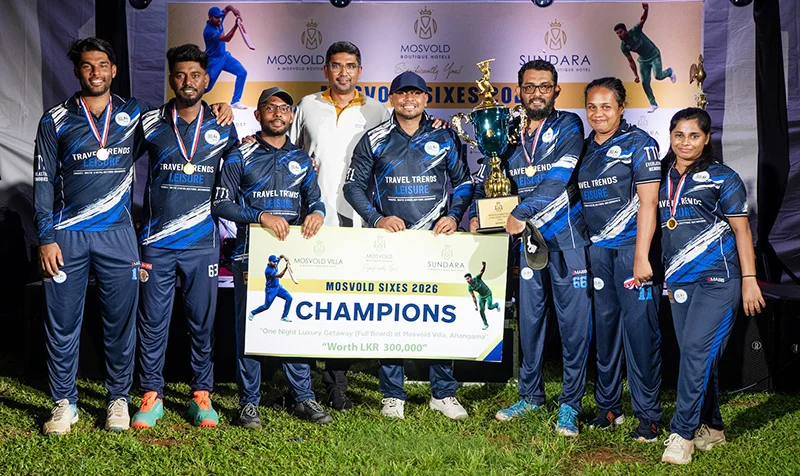
Mosvold Sixes 2026 concluded on Sunday at the Colombo Malay Cricket Club with Travel Trends Leisure crowned champions after a closely fought final against last year’s winners, Connaissance De Ceylan Sri Lanka, who finished as runners-up. Transco Travels were second runners-up.
Twenty three destination management companies took part in the six-a-side softball cricket tournament, organised by Mosvold Sri Lanka.
The Mosvold Martinus Challenge Trophy 2026 was presented to the champions by Nilanka Martinus, Co-Founder and Managing Director, Mosvold Boutique Hotels. Chief Guest Farveez Maharoof, the former Sri Lanka all-rounder, presented the runners-up award to Connaissance De Ceylan Sri Lanka.
This year’s twenty three competing DMCs were Tangerine Tours, Sri Lanka Tailormade, Olanka Travels, Antiquity Sri Lanka, Travel Trends Leisure, House of Travels & Tourism, NKAR Travels & Tours, Jetwing Travels, Walkers Tours, Connaissance De Ceylan Sri Lanka, Delux Holidays, Ceylon Roots, Spiceland Holidays, Infinity Vacations, Tropiculture, Serene Travels, Authenticities, Red Apple Travel & Holidays Lanka, DTH Travel Lanka, Hayleys Travels, We stay Ceylon, Transco Travels and Ceylon Tours.

Showers above 100 mm are likely at some places in the Western, Sabaragamuwa, Central, Uva and Southern provinces and in Anuradhapura district

PSTA worse than PTA: FSP

Shiranthi R remanded until 13 Oct.

Former NSB Chairman Kariyawasam granted bail

Katchatheevu row: India SC urges fishermen to avoid Sri Lankan waters

Remembering Juvenal, Coke, Acton and Machiavelli

‘Dates have the highest sugar content to fight Coronavirus’

Sunday Island 27 December – Headlines

#SundayIsland 17th December – Headlines

Sunday Island – 28th March

Sunday Island Headlines – 21 March

Sunday Island – 21st February – Headlines
-

 Editorial6 days ago
Colombo Port drug bust: The plot thickens
-

 Features4 days ago
The first woman in the foreign service or Ceylon Overseas Service it was then called
-

 Editorial5 days ago
Fuelling discontent and protest
-

 News3 days ago
Geneva takes up Sallay’s case and govt. ignores opportunity to answer accusations
-

 Foreign News5 days ago
Ten injured after car crashes into rugby supporters in Australia
-

 Latest News5 days ago
Tharindu Rathnayake, bowlers secure Asian Games Bronze for Sri Lanka
-

 Features3 days ago
Sri Lanka Cricket Bill: Governance reform is not yet a cricket strategy
-

 News4 days ago
Nearly 20 Iranian tankers stranded off Lanka amid US sanctions