
Editorial
Wrongs don’t cancel one another out


Saturday 10th June, 2023
Prime Minister Dinesh Gunawardena and Opposition Leader Sajith Premadasa crossed swords in Parliament, on Thursday, with the former reminding the House that the latter’s late father, President Ranasinghe Premadasa, had violated people’s democratic rights blatantly. What one gathered from the Prime Minister’s line of reasoning was that he thought the Opposition Leader, as President Premadasa’s son, had no moral right to talk about allegations of human rights violations against the present government. Sajith responded that not everything his father’s government had done was acceptable to him, and he celebrated only its good deeds.
Premadasa’s presidential legacy has been an asset as well as a liability for Sajith, paradoxical as it may sound. The overall assessment of a departed political leader’s rule is usually influenced by various factors, and public perception of it evolves with biographers, researchers and historians providing fresh insights into discussions, debates and studies on their lives and careers. It is, in fact, a process that goes on for years, if not decades. However, posthumous remembrances of political leaders in this country tend to be shaped by basically what they did during the final phases of their tenures. Hence the need for the heads of state who want the people to have a positive impression of them posthumously not to wait until it is too late to retire or demean themselves by entering/re-entering Parliament after leaving high office.
The popularity of Premadasa Snr. was very low at the time of his untimely demise in May 1993 owing to the assassination of Lalith Athulathmudali, who had broken away from the UNP together with several party stalwarts,following an abortive attempt to impeach the former, and founded the DUNF, which emerged as a formidable political force. The Premadasa government resorted to extremely oppressive measures to hold its political enemies at bay and was accused of killing tens of thousands of youth during the second JVP uprising in the late 1980s. It is the people’s dreadful memories of that phase of the Premadasa rule that PM Gunawardena craftily sought to evoke when he took on Sajith in Parliament, on Thursday, in a bid to defend the incumbent administration against the allegations of human rights violations.
PM Gunawardena specifically took up the issue of mass sackings and blatant violations of labour rights during the Jayewardene and Premadasa governments, which were antipathetic to unionised labour despite having its own trade union wing, the JSS. They turned hostile towards labour unions and did everything in their power to crush strikes. PM Gunawardena was right in pointing out the plight of the workers who took part in a general strike in July 1980; tens of thousands of them lost their jobs, and the JRJ government bragged that ‘the elephant’ had only shaken its tail; it was a dire warning that trade unions would have to face a far worse fate if they resorted to industrial action again.
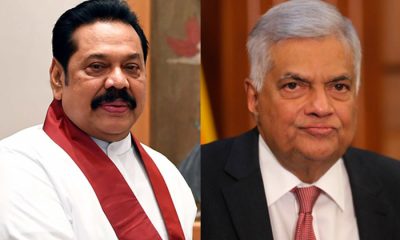
What PM Gunawardena, however, left unsaid was that his current political boss, President Ranil Wickremesinghe, was one of the diehard supporters of President Jayewardene and President Premadasa and served in their Cabinets. One may recall that when some UNP MPs led by Athulathmudali and Gamini Dissanayake, together with the Opposition, tried to impeach President Premadasa, Wickremesinghe solidly stood behind him in 1991, and remained ever faithful to him until his untimely demise about two years later despite numerous violations of human rights and attacks on democracy on his watch. Mahinda Rajapaksa was one of the key campaigners against the Premadasa government. In fact, it was his public protest campaigns that helped him rise to national prominence and work his way up to become the President. Today, Mahinda has thrown in his lot with Wickremesinghe. So has PM Gunawardena!
It may be recalled that the SLFP, which was involved in the 1980 strike, promised to look after the interests of the terminated workers, some of whom were driven to suicide. But the unfortunate strikers’ problems remained unsolved even under the SLFP-led governments of Presidents Chandrika Bandaranaike Kumaratunga and Mahinda Rajapaksa. Gunawardena was a minister in those administrations, which did not honour the SLFP’s assurance to the July strikers that justice would be served. One cannot but agree with PM Gunawardena that democracy suffered tremendously under the Ranasinghe Premadasa government, but he needs to be told that the wrongs that previous regimes committed cannot be cited in extenuation of the incumbent dispensation’s undemocratic acts, which are legion. Let that be the bottom line.








Saturday 7th February, 2026
It is popularly said in this country that when one has power one has no brains, and when one has brains, one has no power—bale thiyanakota mole ne, mole thiyanakota bale ne. However, some present-day politicians have proved that they have neither power nor brains. Painful knocks they and their parties received from a disillusioned public in the 2024 elections do not seem to have had a sobering effect on them if their misplaced priorities are any indication.
Former Minister Rohitha Abeygunawardena waxed eloquent in Parliament on Thursday, lamenting as he did the high prices of a popular brand of arrack, known as ‘gal’, so named because it was originally manufactured by a state distillery located in the Galoya valley. He fervently appealed to the government to consider slashing the ‘gal’ arrack prices ‘for the benefit of the ordinary people’ who consumed it. Deputy Minister of Economic Development Nishantha Jayaweera reportedly said the government was exploring the possibility of lowering excise duties on liquor.
MP Abeygunawardena is not alone in campaigning for making ‘gal’ arrack available at lower prices. His former ministerial colleague Chamara Sampath Dassanayake also keeps asking the government to reduce the ‘gal’ arrack prices. Their rotgut mission, as it were, may have gladdened the hearts of those who prioritise ‘warming the liver’ over everything else including the need to dull their family members’ pangs of hunger. The question is why these politicians are not equally vocal on the need to solve burning problems affecting the public, such as the escalating cost of living, and the prevalence of malnutrition and stunting among children. This country is not short of men who spend money on liquor at the expense of the nutritional needs of their family members, especially children.
It is doubtful whether the MPs calling for liquor price reductions have seen the findings of a Select Committee of Parliament which was appointed to look into child malnutrition issues in Sri Lanka. The committee report, issued last year, has said that according to the National Nutrition and Micronutrient Survey conducted in 2022, the prevalence of low birth weight in a nationally representative sample was 15.9%. The June 2023 Nutrition Month report identified an increase in underweight and stunting among infants and children up to two years of age compared to 2022, the committee report has said, noting that the most alarmingly high underweight rate of 24.6% was recorded in the Nuwara Eliya District, where one in every four children was identified as moderately or severely underweight. In June 2023, the proportion of children affected by poverty in Sri Lanka was 10%, and 1.2% of all children under the age of 5 were affected by severe acute malnutrition, the committee has said. Reports issued by non-governmental research organisations have revealed that about 43% of Sri Lankan children experience some nutritional problems, including stunting, underweight or wasting. Why don’t the members of both sides of the House address these issues which are bound to impact the entire nation adversely?
We have not heard the campaigners for cheap liquor addressing issues faced by women, who do not seek solace in alcohol despite working as hard as men and being equally fatigued and stressed. They toil in garment factories and on estates and in West Asia to keep their home economies and the national economy afloat. But the alcohol and tobacco consumption among them is negligible. Hats off to them!
Most of all, the National Authority on Tobacco and Alcohol (NATA), during a recent interaction with the Parliamentary Sectoral Oversight Committee on Health, Mass Media and Women’s Empowerment, has revealed that approximately 22,000 deaths occur annually in Sri Lanka due to tobacco and alcohol consumption, according to a report published in this newspaper on 30 Jan. 2026. The NATA has disclosed that the country suffers an economic loss of between Rs. 225 billion and Rs. 240 billion a year due to the consumption of tobacco products and alcohol. The focus of all people’s representatives must be on how to reduce liquor and tobacco consumption to save precious lives and state funds.
When will our politicians stop playing to the gallery and grow up?

Friday 6th February, 2026
Some Opposition big guns went ballistic yesterday in Parliament, lashing out at the JVP-NPP government for refusing to provide SJB MP Rohana Bandara with security in view of threats to his life. They have been urging the government to ensure the protection of MP Bandara, but in vain. It looks as if the eminences grises of the JVP remote-controlled the national legislature.
The government MPs made some facetious remarks about MP Bandara’s demand for security. Their flippancy is deplorable. Gun violence is on the rise, and hardly a day passes without a fatal shooting in this country. Underworld gangs have amply demonstrated their ability to strike anywhere at will. The police swing into action only after crimes are committed.
The police first made a proper threat assessment and concluded that MP Bandara should be provided with security. The government, which had made light of his complaint, was left with egg on its face. It disregarded the police report and sought to obfuscate the issue. While it was drawing fire in Parliament for the inordinate delay in taking action to protect MP Bandara, the police issued a counter-report, reversing their earlier threat assessment, and, lo and behold, claimed that the threats to the MP emanated from a rival in his own party. Obviously, the government pressured the police to make an about-turn and help give a political twist to the issue. The police have earned notoriety for their absurd claims, which are legion, and trotting out lame excuses in defence of their political masters.
Opposition Leader Sajith Premadasa yesterday chided the government frontbenchers for flippancy and making a false claim that MP Bandara had received threats from someone in his own party. He said a Deputy Inspector General of Police in Anuradhapura and intelligence services had initially recommended that MP Bandara be given adequate security. But the government members continued to crack themselves up. Ruling party politicians behave in this manner when power goes to their heads.
The Opposition MPs are in a dilemma where their security is concerned. When they face threats and ask for protection, the Speaker says the government goes by threat assessments done by the police in deciding whether to provide them with security. The police do as the government says, and issue reports justifying its position that there are no threats to its political rivals. Thus, the Opposition MPs have no one to turn to when their lives are in danger. The government MPs are apparently deriving some perverse pleasure from MP Bandara’s predicament.
Let the government be warned that it is making a big mistake by refusing to provide MP Bandara with security. Sri Lanka is no stranger to political assassinations. The JVP itself has gunned down hundreds of its political rivals. The UNP, the SLFP, etc., too, have a history of political violence, which claimed many lives. Those who do not learn from history are said to be doomed to repeat it. One may recall that an assassin’s bullet that pierced DUNF leader and former Minister Lalith Athulathmudali’s heart in April 1993 became the undoing of a UNP government. That repressive regime disregarded the then Opposition’s demand that the UNP dissidents be provided with security as they were facing threats to their lives from the LTTE as well as pro-UNP goons.
Most of all, a fundamental democratic and legal norm underpinning modern parliamentary systems is that all members of Parliament are equal in rights and privileges and must be treated as such. It is unbecoming of a government to dismiss threats to an Opposition MP’s life, and make flippant remarks, which reflect poorly on it.


Thursday 5th February, 2026
The argy-bargy is done, and the battle’s lost and won, one might say with apologies to the Bard. A prolonged tug of war between President Anura Kumara Dissanayake and the Constitutional Council (CC) has come to an end. The newly reconstituted CC has unanimously approved President Dissanayake’s nominee for the post of Auditor General (AG). The National Audit Office (NAO), which remained headless for months, now has a new head—Samudrika Jayaratne, who has served as Senior Deputy Auditor General. But the question is whether one can truly say, in this case, all’s well that ends well.
We do not intend to raise suspicions about the integrity of the new AG, but there are some questions that warrant answers. The critics of her appointment have levelled some allegations against her, including transactions tainted by conflict of interest and ‘unprofessional conduct’. They have also claimed that the Commission to Investigate Allegations of Bribery or Corruption has launched an investigation into allegations against her. Unsubstantiated as these allegations are, they have the potential to raise doubts in the public mind about the new AG’s integrity and that of the NAO under her. Hence the need for her to respond to them.
Thankfully, President Dissanayake’s efforts to parachute a total outsider loyal to the JVP into the post of AG came a cropper because the immediate predecessors of the three newly appointed civil society members of the CC intrepidly resisted pressure from the Executive. However, the government ought to explain why it overlooked Dharmapala Gammanpila, who served as the Acting AG. The general consensus is that he is the most eligible candidate for the post of AG. Four Mahanayake Theras wrote a joint letter to President Dissanayake, recently, urging him to appoint Gammanpila as AG. The prelates’ request resonated with those who cherish good governance, but President Dissanayake ignored it.
The JVP-led NPP’s election manifesto, A Thriving Nation: A Beautiful Life, attributes the deterioration of the public service to ‘political appointments’ and ‘state workers making political decisions’. Among the steps the NPP has promised to take to straighten up the public service are ‘merit-based appointments and promotions’. But its refusal to appoint Gammanpila as AG has raised many an eyebrow and lent credence to its critics’ claim that it is wary of having an upright official at the helm of the NAO because it does not want various fraudulent deals in the public sector on its watch exposed; some of them are the questionable release of 323 red-flagged freight containers without mandatory Customs inspections from the Colombo Port and the rice and coal scams. The only way the government can show that the merit principle it claims to uphold has not fallen by the wayside and its commitment to good governance is genuine is to give credible reasons for its decision to overlook the most eligible candidate for the post of AG.
The heads of all state institutions must be above suspicion like Caesar’s wife, so to speak, for a fish is said to rot from the head down. One may recall that the Police under Deshabandu Tennakoon, whom the SLPP-UNP government appointed IGP by unashamedly subverting the CC process amidst protests, became subservient to the then rulers. Sadly, the situation has not changed much; the long arm of the law has become a cat’s paw for the JVP-NPP government. While claiming to uphold good governance, the incumbent government has embarked on a campaign to vilify the Attorney General in a bid to pressure him to obey its dictates. Thankfully, he has proved that he is made of sterner stuff, and his staff, the Bar Association of Sri Lanka and others have circled the wagons around him.
Meanwhile, the CC’s unanimous endorsement of the appointment of the AG has diminished the Opposition’s moral right to criticise the actions of the NAO under the new head.

US wants Russia and Ukraine to end war by June, says Zelensky
Hetmyer heroics, Shepherd hat-trick headline West Indies’ opening day win over Scotland

USA bowl, India pick Siraj with Bumrah out unwell

Colorado funeral home director sentenced to 40 years for corpse abuse

Scotland opt to field against West Indies

Faheem Ashraf drags unconvincing Pakistan over the line after big scare

‘Dates have the highest sugar content to fight Coronavirus’

Sunday Island 27 December – Headlines

#SundayIsland 17th December – Headlines

Sunday Island – 28th March

Sunday Island Headlines – 21 March

Sunday Island – 21st February – Headlines
-

 Business5 days ago
SLIM-Kantar People’s Awards 2026 to recognise Sri Lanka’s most trusted brands and personalities
-
 Business7 days ago
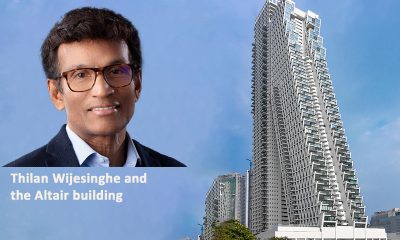
Altair issues over 100+ title deeds post ownership change
-

 Business7 days ago
Sri Lanka opens first country pavilion at London exhibition
-

 Business6 days ago
All set for Global Synergy Awards 2026 at Waters Edge
-
 Business5 days ago
API-first card issuing and processing platform for Pan Asia Bank
-
 Business7 days ago
ESOFT UNI Kandy leads the charge in promoting rugby among private universities
-

 Business16 hours ago
Zone24x7 enters 2026 with strong momentum, reinforcing its role as an enterprise AI and automation partner
-

 Editorial3 days ago
All’s not well that ends well?