
Business
Sri Lanka opens first country pavilion at London exhibition


Sri Lanka’s apparel industry marked a milestone with its first country pavilion at Source Fashion 2026. The exhibition was held from 13 to 15 January 2026 at Olympia London, one of Europe’s leading apparel sourcing events.
The pavilion was officially inaugurated on 13 January with a ribbon-cutting ceremony. High Commissioner of Sri Lanka in the UK Nimal Senadheera and UK’s Trade Envoy to Sri Lanka, Lord Hannett of Everton OBE presided over the event. Apparel and fashion industry representatives, exhibitors, invitees, and officials from the EDB Sri Lanka and the Sri Lanka High Commission in London attended the ceremony.
Sri Lanka’s participation was jointly organized by the EDB, Sri Lanka apparel industry, and the Sri Lanka High Commission in the UK. The objective was to strengthen trade ties, expand buyer networks, and position Sri Lanka as a preferred sourcing destination for the UK and European markets.
Twenty Sri Lankan apparel booths, including 12 SMEs, showcased locally manufactured apparel, textiles, handmade products, and value-added solutions for both industrial and consumer use. The pavilion highlighted manufacturers and designers offering high-quality, ethically produced collections. Sustainability, transparency, innovation, and long-term partnerships were central themes.
Exhibitors included Star Garments Group, Insomnia, J K Garments (Pvt.) Ltd, New Universe Clothing SL, Protector Clothing Manufacturers, Janasri Mills, Pridemo Apparel, Senvin Collection, True Digital Printing, Concord Manufacturing, Kobithan Garments, Hayleys Free Zone Ltd, JAS Activewear, Krisherert Holdings, Jia Moda, Randhi International, “Creative Sri Lanka” booth, and the EDB booth.
Sri Lankan apparel also featured prominently in a series of Source Fashion Catwalk Shows highlighting the country’s design and manufacturing capabilities alongside world-class international apparel showcased at the event.
Sri Lanka’s presence at the Source Fashion London-2026 was further strengthened by new trade opportunities which are available for Sri Lanka with zero import duty created under the UKs Developing Countries Trading Scheme (DCTS) mainly due to its flexible or liberalized Rules of Origin which are effective from 1 January 2026, as already announced by the UK. The announced flexibility will create greater opportunities for the competitive enhancement from Sri Lankan apparel exports into the UK market under its DCTS concessions.
Sri Lanka’s participation underscored its growing reputation as a trusted, sustainable, resilient, and innovative apparel sourcing destination. It reflected global market expectations, evolving supply chain requirements, and the Government of Sri Lanka’s vision for export and industry promotion in overseas markets. (Sri Lanka High Commission in London)

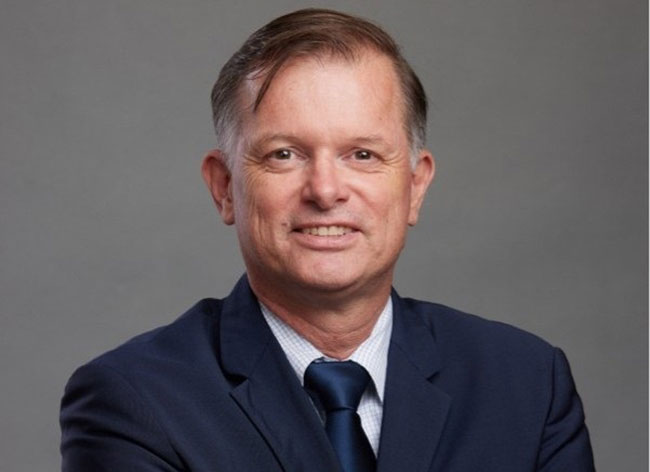
On a quiet evening at the Ambassador’s residence in Colombo, following the launch of the Tea Small Holdings Development Authority’s Regenagri Digital Resource Centre Network, His Excellency Iwan Rutjens, Acting Ambassador of the Embassy of the Kingdom of the Netherlands, in Sri Lanka , sat down for a conversation. What emerged was not the usual diplomatic repertoire of cautious optimism and scripted courtesy. Instead, the Dutch envoy offered something rarer: clear-eyed honesty about Sri Lanka’s potential, its obstacles, and the kind of partnership that truly matters – one built on trade, not charity. And he started not with ships or ports, but with a cup of tea.
The Dutch footprint in Sri Lanka’s tea industry
For centuries, the Netherlands has been intertwined with Sri Lanka’s trade history. But today, that relationship is less about colonial legacy and more about shared futures – especially in tea. “Dutch companies are standing ready to share their knowledge and expertise,” says Rutjens. “But in order to create fruitful cooperation, there needs to be easy market access, ease of doing business, and less red tape.”
He pauses, then adds with quiet emphasis: “We trust the Sri Lankan government is working hard on these issues to create a more favourable investment climate for foreign direct investment.”
The message is unmistakable. The Netherlands – one of Europe’s most open, trade-savvy economies – is not here to write cheques alone. It is here to partner. But partnership requires two willing hands. And right now, Sri Lanka’s bureaucracy remains a stubborn third party at the table.
Yet Rutjens is no pessimist. In fact, he sees something many others miss, starting with the very sector that launched the evening’s conversation.
400,000 small tea holders at the heart of the story
The occasion for this conversation was the launch of the Regenagri Digital Resource Centre Network in Kandy, supported by Solidaridad, the Netherlands Embassy, and other stakeholders. The initiative, led by the Tea Small Holdings Development Authority, represents approximately 400,000 small tea holders – many of them women, young people, and families in some of Sri Lanka’s most vulnerable areas.
“The small holders in particular are facing significant challenges,” Rutjens explains – volatile prices, limited access to finance, insufficient technology, and climate-related risks. “Compared to the larger estates, they lack the ability to innovate, invest and operate on the same competitive level. By this initiative, we can bring new technologies and reduce inequalities across the tea value chain.”
The €500,000 Dutch Good Growth Fund (DGGF) grant funded by the Netherlands Ministry of Foreign Affairs enables these 400,000 small tea holders to access data, training, and content that were out of reach before. “The impact will contribute not only to their competitiveness, but also ensures long-term agricultural stability and the well-being of the people who contribute, from cultivation to every cup of tea.”
Sustainability as Sri Lanka’s competitive edge
Rutjens is careful to frame sustainability not as a burden, but as an opportunity. Many small tea holders already use traditional methods that avoid synthetic chemicals – preserving soil, biodiversity, and long-term agricultural viability. “European consumers are becoming more aware and critical about the sustainability and production practices of their food and beverages,” he notes. “Sri Lanka’s small tea holders are well situated to benefit from this trend. Globally, already many ethical tea brands partner with small-scale farmers.”
On the question of certifications like Regenagri, he is unequivocal. “The European Union as a single market is the largest export destination for Sri Lankan goods. Access to this market is of paramount importance. With new due diligence regulations, supply chain certification is extremely important – not to be regarded as a non-tariff barrier, but as an opportunity the Sri Lankan agricultural sector is well poised to meet.”
He adds: “Sustainability is the way forward. A race to the bottom in terms of environmental standards and labour practices will not only have a negative impact on the environment and the sector as a whole, but also on the small tea holders and their livelihoods. All goes hand in hand: people, planet and profit. This is what European consumers are demanding.”
From tea plantations to global maritime trade
Yet Rutjens sees the tea sector not in isolation, but as part of a larger story. If smallholders can be integrated into sustainable, certified supply chains, then Sri Lanka can do the same on a national scale with maritime trade and logistics.
“Sri Lanka has the potential to grow further in importance in maritime trade, logistics and supply chains,” he says, leaning forward. “Domestic agricultural production – including tea – can be integrated more in these supply chains. There are strong Dutch and other European partners in maritime logistics eager to assist Sri Lanka in expanding its position as a leading global maritime trade hub.”
This is not abstract strategy. The majority of Sri Lankan exports already go to Europe. A stronger maritime logistics position means faster, cheaper, more reliable delivery of Ceylon tea to Dutch warehouses, German retailers, and French consumers. “A strong partnership between Sri Lanka and Europe,” he argues, “will benefit all parties and strengthen Sri Lanka’s strategic independence from other global players.”
Those words hang in the air. In an era of great power rivalry, a mid-sized democracy like Sri Lanka does not have to choose sides. It can build its own lane with partners like the Netherlands – starting with its small tea holders.
A partnership built on resilience, not charity
In a world where geopolitical tensions and conflicts are disrupting global energy and food security, Rutjens sees international collaboration between mid-sized democracies as more critical than ever.
“Both the Netherlands and Sri Lanka, as mid-sized democracies with open economies, are very much vulnerable to shocks in markets and supply chains,” he says. “Both our countries depend on a well-functioning international rule-based order to create resilient economies and sustainable supply chains. International cooperation such as the GSP+ trade agreement between the European Union and Sri Lanka are very important to build resilience.”
He returns to tea one last time: “What we are doing with Regenagri and the 400,000 small holders is not charity. It is an investment in a shared, sustainable future. If smallholders can compete, if they can certify their sustainability, if they can access European markets on fair terms – then Sri Lanka as a whole can do the same with its maritime destiny.”
As the evening light faded over the Ambassador’s residence, one could not escape the feeling that Rutjens had offered something more than an interview. He had offered a framework for Sri Lanka to see itself not as a struggling island, but as a strategic hub; not as a recipient of aid, but as a partner in trade. And it begins, appropriately, with the people who grow the tea in your cup.
By Sanath Nanayakkare
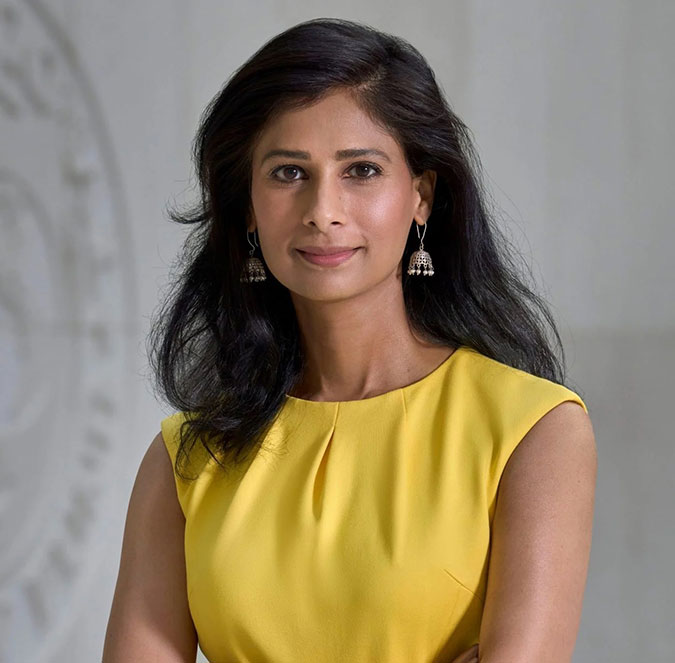
Gita Gopinath, who served as the IMF’s First Deputy Managing Director from 2022 to 2025 and is now a professor of economics at Harvard University, said something at a Bloomberg podcast interview on May 29 that every Sri Lankan policymaker and citizen should hear. She said: “I do think there has been a regime shift – a change in the underlying dynamics that kept interest rates low.”
According to her comments, for nearly two decades before the pandemic, the world enjoyed unusually cheap money. The IMF, the Asian Development Bank, and other multilateral lenders all lent at very low rates.
Now, that era is over.
The Island Financial Review asked an independent analyst what he thought about Gopinath’s comments and how they would matter to Sri Lanka right now.
The following are excerpts from his comments:
“Even though Sri Lanka cannot borrow from international capital markets because of its default, we still borrow from the IMF and ADB. Many people assume those loans are always cheap. They are cheaper than private banks and that is true. But they are no longer as cheap as they used to be.”
“The IMF’s interest rate is tied directly to global short-term rates, mainly the US dollar rate. When the US Federal Reserve raises rates, the IMF’s rate rises automatically. There is no escape. The ADB is in a similar position. It raises money by selling bonds in global markets. When those markets demand higher interest, the ADB must pay more. It then passes that cost to borrowers like Sri Lanka. So even our ‘concessional’ loans are now more expensive than they were five years ago. And because the shift is permanent – not temporary – we cannot wait for rates to fall back to the old normal. That normal is gone.”
At the interview, Gopinath gave three reasons for this shift: large government deficits in rich countries, the huge appetite for capital from the artificial intelligence boom, and a change in who buys government debt. None of those factors are going away soon. Her warning to the world was clear: adjust to higher rates, because they are here to stay.
For Sri Lanka, this means three things, the analyst said.
“First, every new IMF or ADB loan will carry a higher interest cost than the last one. Second, the 2% surcharge we currently pay to the IMF – because our borrowing exceeds 300% of our quota – becomes even more painful when the base rate is also high. Third, our path to returning to international capital markets is now steeper. If we try to go back to borrow privately, the rates waiting for us will be far higher. Probably as high as 8-10%.”
“None of this is a reason for panic. But it is a reason for realism. The cheap IMF and ADB loans of the past are gone. Gita Gopinath said so herself. The only sensible response is to borrow less, export more, and rebuild our economy so that one day we no longer depend on any lender – cheap or expensive. That day is still far away. But knowing the truth about interest rates is the first step toward reaching it.”
Notably, referring to a missing number in all the IMF news here in Sri Lanka, he said:
“There is one more thing worth noting. On May 29, Sri Lanka received a double tranche of USD 695 million from the IMF after the successful completion of the fifth and sixth reviews. Every news channel carried the story. The Central Bank issued a statement. The Finance Ministry welcomed the funds. And so did the Ceylon Chamber of Commerce. But not one official source told the Sri Lankan people a simple fact: at what interest rate did we receive this money?
“Here is the answer that nobody gave. The IMF’s current basic interest rate – called the rate of charge – is tied to the SDR interest rate, which stood at 2.729% as of mid-May 2026. On top of that, the IMF adds a fixed margin. In May 2026, the IMF Executive Board confirmed that the margin would remain at 60 basis points for the coming financial year. That brings the base rate to approximately 3.33%.
“But Sri Lanka does not pay only the base rate. Because our borrowing from the IMF exceeds 300% of our quota, we also pay a level-based surcharge of 200 basis points, or 2 percentage points. This surcharge was introduced to discourage countries from borrowing heavily from the Fund. For a country in default, however, there is little alternative.
“So the current borrowing cost can be estimated as follows: 2.73% SDR interest rate, plus 0.60% IMF margin, plus 2.00% surcharge. That comes to approximately 5.33% per annum.
“There is also a separate service charge of 0.50% levied on each disbursement. However, this is a one-time fee rather than an annual interest charge. For the latest USD 695 million tranche, that service charge would amount to roughly USD 3.5 million.
“Before the pandemic, the IMF’s basic rate of charge was often below 2%. Sri Lanka’s total borrowing from the IMF under the Extended Fund Facility now stands at approximately USD 2.4 billion. By the time we finish repaying these loans – with repayment periods of 5 to 10 years in semi-annual installments – the total interest and related charges paid will run into hundreds of millions of dollars.
“None of this is a secret. The IMF publishes its rate formulas openly. Sri Lanka’s projected payments, including principal and interest, are available on the IMF website. For May 2026 alone, Sri Lanka’s scheduled payments to the IMF totaled more than USD 47 million, comprising USD 29.7 million in principal and USD 17.3 million in interest and charges.
“But somehow, when the good news of a disbursement is announced, the interest rate is never mentioned. Perhaps that is because 5.33% does not sound as heroic as USD 695 million. Perhaps it is because nobody wants to remind a suffering public that even IMF financing carries a significant cost. Whatever the reason, the people of Sri Lanka deserve to know the full cost of the money their government is borrowing.
“Gita Gopinath warned us that the era of cheap loans is gone. The latest IMF disbursement shows exactly what that new era looks like,” he said in conclusion.
When the good news is announced, no one has the heart to mention the cost
By Sanath Nanayakkare
Business
Sri Lankan scientist-innovator Milinda Edirisinghe introduces AI-integrated gem testing system to gemological world

In a country celebrated for producing some of the world’s finest gemstones, Sri Lankan gemologist Rewatha Milinda Edirisinghe now says the future of gemstone testing must move beyond traditional observation and into the realm of scientific precision powered by artificial intelligence.
Edirisinghe, the Founder and Managing Director of Gemological Report of Ceylon (GRC), has introduced what he describes as a next-generation AI-integrated spectroscopy system designed to modernize gemstone identification and analysis for global gem laboratories.
The innovation, currently under patent application in Sri Lanka with plans for international patent registration, combines a traditional gemological spectroscope with smart-device connectivity, proprietary algorithms and an AI-driven gemstone database capable of analysing mineral compositions with unprecedented precision.
According to Edirisinghe, the invention was born out of a longstanding frustration shared by many gemologists.
“The spectroscope is one of the most powerful tools in gemology, but it is also one of the most uncomfortable instruments to use,” he said during an interview with The Island Financial Review. “Even experienced gemologists often avoid using it extensively because it strains the eyes and requires difficult interpretation of colour absorption patterns. For colour-blind users or those with eyesight limitations, it becomes even more challenging.”
A conventional spectroscope allows gemologists to study how gemstones absorb light, revealing unique spectral signatures linked to trace elements such as chromium, iron and vanadium. These spectral patterns function much like fingerprints for gemstones, helping experts identify species, treatments and origins.
Edirisinghe’s solution transforms that traditionally manual process into a digitally assisted scientific system.
Using a specially designed clip-on device attached to the spectroscope, spectral data from gemstones can now be transmitted directly to a smartphone or smart device under varying lighting conditions and viewing angles. The collected data is then processed through dedicated software and algorithms before being matched against an AI-supported gemstone database developed in collaboration with foreign partners, including specialists in Thailand.
“The spectroscopy is the fingerprint of a gemstone,” Edirisinghe explained. “What we have done is create a system that captures those fingerprints more accurately than ever before and analyses them scientifically through AI-supported comparison.”
The system, branded as the “Ray’s Spectroscopy System for Smart Devices,” named after his middle name Rewatha, is designed to identify gemstone treatments, detect enhancements and even assist in determining the geographic origin of stones.
He says the innovation marks a significant shift in how gemstone certification could evolve globally.
“In many laboratories, reports are sometimes issued mainly based on surface-level tests such as specific gravity or refractive index measurements. Those methods are important, but they are not enough for comprehensive gemstone identification in today’s complex market,” he noted.
“With this system, gemstone analysis becomes a deeper scientific exercise rather than simply issuing a certificate after limited testing.”
Edirisinghe believes the technology will also democratize access to advanced testing by offering laboratories a more affordable alternative to costly imported systems.
The GRC founder is no stranger to challenging conventions within the gem industry. Earlier this year, his laboratory gained industry attention for introducing rigorous multi-layered certification methodologies aimed at elevating Sri Lanka’s standing in international gemstone authentication markets.
Now, with his latest innovation, Edirisinghe says he hopes to position Sri Lanka not merely as a source of valuable gemstones, but also as a contributor to global gemological science.
He draws parallels between his contribution and that of the late Francis Leo Danvil Ekanayake, who discovered the rare radioactive mineral ekanite in Sri Lanka in 1953.
“After the discovery of ekanite, there have been very few scientific innovations emerging from Sri Lanka’s gemological sector,” he said. “I wanted to contribute something practical and globally relevant to the industry.”
While commercial production awaits patent approval, the system is already being used internally at GRC’s laboratory in Colombo. Meanwhile, the database continues to expand with fresh gemstone data and analytical inputs from international collaborators.
For Edirisinghe, the ambition extends beyond business success.
“If Sri Lanka is known for producing some of the world’s finest gemstones, then we must also contribute world-class scientific innovation to the industry,” he said. “That is how we truly elevate Sri Lanka’s name in global gemology.”

Showers will occur at times in the Western, Sabaragamuwa and North-western provinces and in Galle, Matara, Kandy and Nuwara-Eliya districts

Harsha flays govt. over plan to pass coal, Treasury losses to public

PM opens Vesak pandals

UNP challenges NPP move to amend Vihara – Devalagam Act

Fuel price increases: Bus and trishaw operators demand fare hike

Govt. halts e-passport project

‘Dates have the highest sugar content to fight Coronavirus’

Sunday Island 27 December – Headlines

#SundayIsland 17th December – Headlines

Sunday Island – 28th March

Sunday Island Headlines – 21 March

Sunday Island – 21st February – Headlines
-
 News2 days ago
IMF urges Lanka not to meddle with exchange rate
-

 News6 days ago
Easter Sunday carnage: Court told Maulana’s statement cannot be accepted without cross-examination
-

 News6 days ago
UK passport holder hiding here wants to have deportation order rescinded to leave without blemish
-
 Opinion6 days ago
Undermining the democratic political framework
-
 Business3 days ago
Sri Lanka’s construction industry losing ground while no one watches
-

 Features3 days ago
The Division Bell Mystery
-
 Midweek Review5 days ago
Israeli-US aggression won’t go unanswered -Iranian Ambassador
-
 News2 days ago
State of emergency extended