
News
Writing on the wall for South Asia from climate change, several studies point out

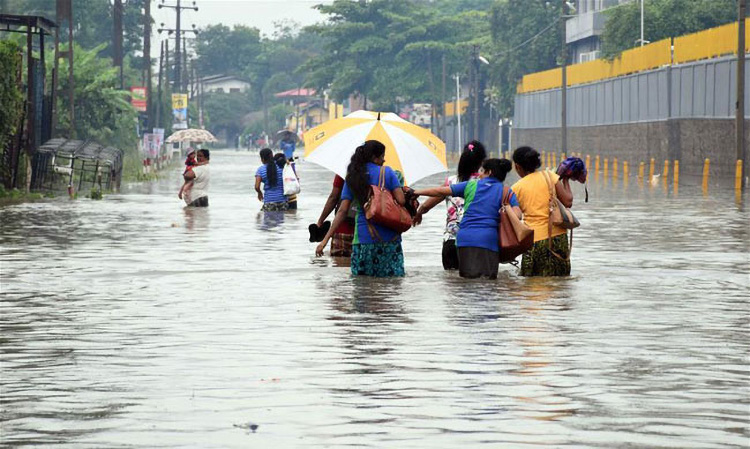
Several research studies, published by peer-reviewed journals in recent weeks, have pointed out that Climate-change-induced downpours, drought, and soaring temperatures have become increasingly common across the eight countries of South Asia, making it one of the world’s most vulnerable regions to the impacts of global warming.
A University of Leeds study published in 2021 found the ice from glaciers in the Himalayas is melting “at least 10 times higher than the average rate over past centuries”, a result of human-induced climate change, Al Jazeera said in a report.
Researchers said the Himalayas, which cover countries such as Pakistan, Nepal and India, had lost 40 percent of their ice over several hundred years.
Water scarcity and low crop yields will result in adding to the continuing hunger crisis in the region, climate experts said.
In 2021, the UN’s Food and Agriculture Organization (FOA) said some 21 percent of people in South Asia faced severe food insecurity, a two percent rise from 2020. In the same year, the region had the highest number of undernourished people in the world – 330 million – the FOA said.
For thousands of years, South Asia was seen as the world’s “granary” for agriculture – a region with weather patterns well-suited for growing crops, Pakistan-based climate scientist Fahad Saeed told Al Jazeera.
“However, with the onset of climate change, the delicate balance which was important for crops to grow, has been disturbed,” Saeed said.
Results from a study published in 2021 on wheat production up to 2050, using crop simulation models, found the most negative effects will be seen in South Asian nations with a yield decline of 16 percent.
Environmentalist Anjal Prakash said climate change will have “significant implications” for food security in South Asia.
“Rising temperatures, changing precipitation patterns, and increased frequency of extreme weather events such as droughts, floods, and storms … pose substantial challenges to agricultural systems in the region,” said Prakash, adding livestock productivity and fisheries will be adversely affected.
Prakash said climate change could also make water availability a significant issue in the region, which has one of the highest number of glaciers in the world, situated in the Himalayas.
“Melting glaciers and changes in rainfall patterns can disrupt irrigation systems, affecting crop growth and exacerbating water scarcity,” Prakash, who has previously worked with the UN’s Intergovernmental Panel on Climate Change, asserted.
In 2021, the UN’s Food and Agriculture Organization (FOA) said some 21 percent of people in South Asia faced severe food insecurity, a two percent rise from 2020. In the same year, the region had the highest number of undernourished people in the world – 330 million – the FOA said.
Fears of declines in food production, together with other climate-related calamities, such as rising sea levels, have also raised the alarm as millions in South Asia are being internally displaced.
A report published by activist group ActionAid in 2020 estimated the region could see up to 63 million people become migrants by 2050 as a result of extreme weather events.
Huq said displacement from human-induced climate change was further adding to economic migration from rural to urban areas – a continuing phenomenon worldwide – with South Asia being a major “hotspot”, with the greatest displacement taking place in low-lying coastal areas.
“Climate change … is exacerbating the ‘push factor’ – the motivation to migrate away from place of residence – for people who are living in places where they can no longer continue to have livelihoods that they used to have, whether it’s farming or fishing,” he said.





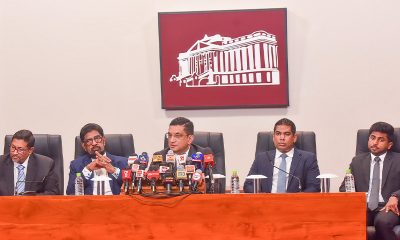




The Ministry of Finance, Planning and Economic Development has issued a circular aimed at managing state expenditure, within approved fiscal limits, ensuring the continuity of essential public services while mitigating the economic impact of the ongoing Middle East conflict.
The directive, signed by Secretary to the Ministry of Finance Dr. Harshana Suriyapperuma, was addressed to all Ministry Secretaries, Provincial Chief Secretaries, Heads of Special Expenditure Units and Commissions, Heads of Departments, District Secretaries, and Chairmen of State Corporations and Statutory Boards.
The circular outlines measures to standardise fuel allowances following limitations on fuel issuance and the declaration of Wednesday as a government holiday. Fuel entitlements for Ministers, Deputy Ministers, Members of Parliament, public officials, and other categories will now be calculated based on fuel prices as of 01 March, until further notice.
In addition, any other allowances, previously linked to fuel quantity or fluctuating fuel prices, are also to be adjusted according to the 01 March rates.
The Finance Ministry said the move is intended to maintain fiscal discipline, prevent overspending, and safeguard essential government functions during a period of economic uncertainty.Officials stressed that these measures are temporary but necessary to ensure stability in public finances while navigating challenges arising from external disruptions in energy supply.
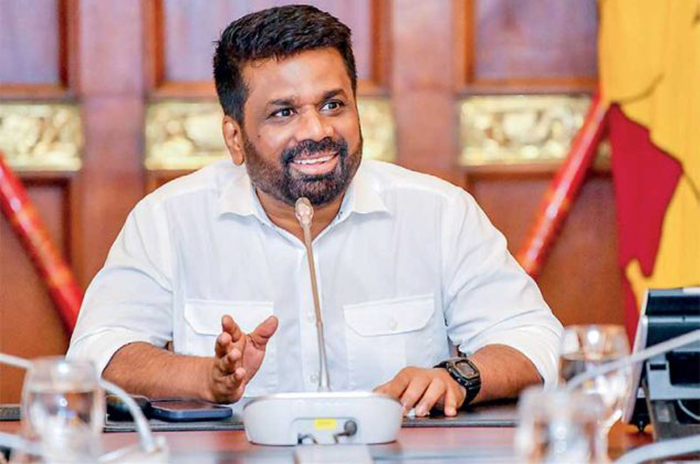
President Anura Kumara Dissanayake has issued a Gazette notification permitting the import of alternative rice varieties to address the shortage of Samba and Kiri Samba in the local market.
Cabinet Spokesman Dr Nalinda Jayatissa on Tuesday (31) said approval had been granted for each importer to bring in up to 1,040 metric tonnes of GR 11 rice, including Ponni Samba and Kiri (Paal) Ponni varieties, as a temporary measure.
According to the Gazette notification, importers are permitted to import the rice stocks between 01 April and 30 April, while clearance from Sri Lanka Customs must be obtained by 31 May.
Importers have also been exempted from obtaining import control licences for the purpose, the notification said.
The decision follows warnings from the Consumer Affairs Authority, citing updated data from the Department of Agriculture Sri Lanka, that production of Samba and Kiri Samba rice during the 2025/26 Maha season would not be sufficient to meet domestic demand.
Officials cautioned that a severe shortage of the two rice varieties could emerge by May 2026.
The Food Policy and Security Committee had also stressed the need to stabilise market prices and meet consumer demand through the import of substitute rice varieties.


A visiting delegation from the International Monetary Fund (IMF) met with President Anura Kumara Dissanayake at the Presidential Secretariat on Thursday (02) to discuss Sri Lanka’s ongoing economic reform programme and progress under the IMF-supported Extended Fund Facility.
During the discussions, attention was drawn to the current status of Sri Lanka in relation to the fifth and sixth review of the IMF programme, with the IMF delegation engaging the President on recent developments and progress achieved.
The IMF representatives commended the economic progress achieved by Sri Lanka under the present Government, particularly noting that the country has transitioned towards a more resilient economic footing through the achievement of growth targets, improved revenue management and the strengthening of foreign reserves.
Discussions also focused on how Sri Lanka could continue to advance within the IMF programme without undermining the economic stability that has been established thus far. It was further noted that the ongoing conflict situation in the Middle East poses an external challenge, the impact of which on Sri Lanka cannot be entirely avoided. However, the Government has been managing the situation prudently, taking measured decisions to address pressures on fuel prices and the energy sector, while ensuring that targeted relief is provided to vulnerable groups.
In the face of these external challenges, the IMF delegation also appreciated the Government’s programme aimed at safeguarding economic progress while effectively managing both the economy and the livelihoods of the people.
Responding to the IMF’s observations, President Dissanayake stated that Sri Lanka has met all targets set under the programme and has reached a position of relative stability. He highlighted the need to take all necessary measures to minimise the impact on the public.
The IMF delegation was led by Mission Chief Evan Papageorgiou and comprised Martha Woldemichael, Enrique Flores Curiel, Dinar Prihardini, Ursula Wiriadinata, Ozlem Aydin, Yorbol Yakhshilikov, Klakow Akepanidtaworn and Manavee Abeyawickrama.
The discussions were attended by senior Sri Lankan officials including P. Nandalal Weerasinghe, Governor of the Central Bank of Sri Lanka, S. Jegajeevan from the CBSL, Dr. Harshana Suriyapperuma – Secretary to the Treasury and Ministry of Finance, A. K. Seneviratne – Deputy Secretary to the Treasury and M. K. C. Senanayake – Director General (Fiscal Policy). Minister of Labour and Deputy Minister of Finance and Planning Anil Jayantha Fernando also participated in the meeting.
Senior officials from the Presidential Secretariat, including Duminda Hulangamuwa, Senior Economic Advisor to the President, and G. M. R. D. Aponsu, Senior Additional Secretary to the President, were also present.

Finance Ministry issues circular to control state expenditure

President issues Gazette permitting rice imports

IMF delegation meets President Dissanayake

Britain has opened a door: Sri Lanka’s SME apparel exporters need help walking through it

Brouhaha over a book

CSE & NSEIX enter strategic partnership to expand capital market access

‘Dates have the highest sugar content to fight Coronavirus’

Sunday Island 27 December – Headlines

#SundayIsland 17th December – Headlines

Sunday Island – 28th March

Sunday Island Headlines – 21 March

Sunday Island – 21st February – Headlines
-

 News4 days ago
Tariff shock from 01 April as power costs climb across the board
-
 News5 days ago
Inquiry into female employee’s complaint: Retired HC Judge’s recommendations ignored
-

 News2 days ago
2025 GCE AL: 62% qualify for Uni entrance; results of 111 suspended
-

 Features5 days ago
New arithmetic of conflict: How the drone revolution is inverting economics of war
-
 Features6 days ago
When seabed goes dark: The Persian Gulf, cable sabotage, and race for space-based monopoly
-

 Business3 days ago
Hour of reckoning comes for SL’s power sector
-

 Editorial2 days ago
Search for Easter Sunday terror mastermind
-

 Sports5 days ago
Sri Lanka’s 1996 World Cup heroes to play exhibition match in Kuala Lumpur