
Features
Urgent and critical issues related to climate change


by Dr. Ranil Senanayake
Now that we have a host of international experts, policymakers, scientists, and practitioners travelling here to address the ‘urgent and critical issues related to climate change’, it is time to repeat the Sri Lanka Position Paper to the UN Conference for Climate Change (COP21) Paris 1-10 December 2015. It made three requests, which have been ignored by the Climate Change bureaucracy for the last eight years. The international platform, being hosted in Colombo under the Presidential Secretariat, can most certainly address these issues, to act on what is already well known, to examine what the country needs in order to adapt to the oncoming changes and hopefully to pay attention to what has been stated over and over in the media for years.
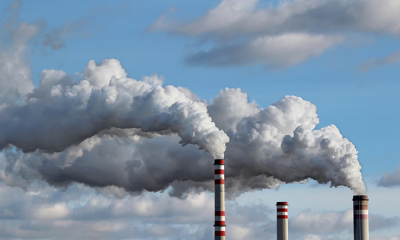
1. We are aware of the great difference in carbon dioxide that is emitted from biological sources and carbon dioxide emitted from fossil sources. One has sequestered rates measured in thousands of years while the other in millions of years. Yet the cost is still the same. We would request the IPCC to address the relative costs of each.
Carbon (C), the fourth most abundant element in the Universe, after hydrogen (H), helium (He), and oxygen (O), is the building block of life. It’s the basic element that anchors all organic substances, from fossil fuels to DNA. On Earth, carbon cycles through the land, ocean, atmosphere, and the Earth’s interior in a major biogeochemical cycle (the circulation of chemical components through the biosphere from or to the lithosphere, atmosphere, and hydrosphere). The global carbon cycle can be divided into two categories: the geological/ancient, which operates over large time scales (millions of years), and the biological/modern, which operates at shorter time scales (days to thousands of years).
The fossil Carbon cycle
The operation of life has been clearly demonstrated to change the chemistry of that atmosphere to what it is today. One of the most active agents of this change were/are the oceanic plankton, photosynthetic microscopic phytoplankton that produces prodigious quantities of oxygen and biomass over time. Oxygen is released to the atmosphere and the biomass is consumed by respiring zooplankton (microscopic marine animals) within a matter of days or weeks. Only small amounts of residual carbon from the plankton settle out to the ocean bottom at any given time, but over long periods of time this process represents a significant removal of carbon from the atmosphere. This slow removal of Carbon from the primary atmosphere into the fossil reservoir, while at the same time creating an atmospheric reservoir of oxygen, had a major effect on the maintenance of biotic homeostasis.
A similar process was repeated on the land especially at Devonian times with the huge vegetation mass that covered the earth absorbing Carbon Dioxide and then being mineralized in the lithosphere into coal, effectively removing that volume of carbon from earth’s atmosphere. The Oxygen released by these early prodigious forests contributed greatly to the chemistry of the current atmosphere.
Life on Earth learnt how to maintain gas and material flows, optimum for the evolution of biodiversity. Carbon Dioxide, although essential to the process of life, was being introduced into the atmosphere by volcanic processes at disruptive levels, throughout geologic history. But the gas has not concentrated in the atmosphere, because it was sequestered by living things and put away out of circulation from the biosphere of living carbon. This store of carbon was fossilized and has been slowly accumulating over the last few hundred million years. Through these processes, which are still active today, Carbon that enters the Lithosphere is removed completely from the biological cycle and becomes mineralized into pools with ages of 100’s of millions of years.
The modern (biotic) Carbon cycle
 The major exchange of carbon with the atmosphere results from photosynthesis and respiration. During the daytime in the growing season, leaves absorb sunlight and take up carbon dioxide from the atmosphere. In the oceans, the planktonic cycle operates similarly. Both create biomass. In parallel, plants, animals and substrate microbes consume this carbon as organic matter, transform it in the process of respiration and finally return it as carbon dioxide to the atmosphere. When conditions are too cold or too dry, photosynthesis and respiration cease along with the movement of carbon between the atmosphere and the land surface. The amounts of carbon that move from the atmosphere through photosynthesis, respiration, and back to the atmosphere are large and produce oscillations in atmospheric pressure, water vapour and carbon dioxide concentrations.
The global impact of active photosynthetic biomass can be illustrated by the volume of water released into the atmosphere as water vapour. At a water release rate of 100:1, where over 100 molecules of water are released for each molecule of carbon dioxide absorbed by the leaf (Jones 1976). The quantity of water released annually into the atmosphere by vegetation is between 5640 – 6280 billion tons.
In the course of a year, these biological fluxes of carbon cycle over 10 times the amount of carbon that is introduced to the atmosphere by fossil fuel burning. But this carbon belongs in the atmosphere. It has a very significant chemical signature in the ratio of its 13C to 12C as well as quantity of the rare unstable isotope 14C. All carbon that lacks 14C or has a lower 13C/12C ratio does not belong in the modern or biotic cycle. This fluxing movement of biotic carbon happens in cycles of a few days to thousands of years, but always maintains the same isotope ratio.
This demonstrates fossil Carbon and biotic Carbon are very different and need to be valued differentially when considering the impact on the global biosphere. While the carbon balance of the planet has been greatly modified by colonial human activity, with the massive loss of the forests of the world, creating the ‘trigger’ for global warming trends; it is the post industrial burning of fossil carbon that introduced an accelerating increment of ‘new’ carbon into the atmosphere.
These facts underscore the great danger of accepting the consumption of fossil fuels as a tool for national ‘development’. Once a nation or economy has become ‘fossil addicted’, they are willing to sacrifice their own wellbeing and the wellbeing of others to feed their addiction. This is why a clear distinction between fossil and biotic carbon and placing differential values on the two sources, can go a long way in choosing the right options for development.
2. We are aware that the optimum operating temperature of chlorophyll is at 37 deg C. In a warming world where temperatures will soar well above that, food production will be severely impacted. We would request the IPCC to address responses to this phenomenon.
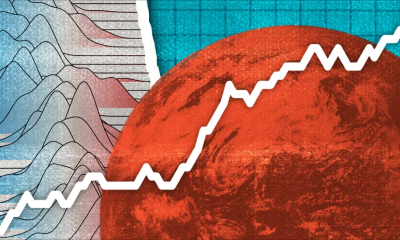
Why is a heatwave so dangerous? Apart from the heat stress in humans and animals, it could exceed the threshold for enzymatic activity in plants. All of agriculture depends on the good growth of plants, all plants rely on their chlorophyll (the green stuff of plants) to grow and produce. Chlorophyll is an enzyme that functions well up to an optimum of about 38 degrees, above which their performance falls. In heatwaves often exceeding 40 degrees plant productivity will be impacted and yields drop following the rise in temperature (fig 1). This phenomenon was seen when heatwaves in the spring began to reduce farmers’ yields.
As an adaptive response agricultural research institutions must begin coordinating a research programme to identify the genes that can confer heat tolerance crops and utilise this to reinforce the current seed production programmes.
Another response would be to implement watershed design to control ambient temperatures through transpirative cooling. It has been shown that trees placed strategically on a landscape can help to reduce the ambient temperature by 3 degrees or more. This can make the difference between crop and no crop for farming communities.
3. We are aware that the critical Ecosystem services such as production of Oxygen, sequestering of Carbon, water cycling and ambient cooling is carried out by the photosynthetic component of biomass. This is being lost at an exponential rate, due to the fact that these Ecosystem Services have not been valued, nor economically recognized. We would request the Intergovernmental Panel on Climate Change (IPCC) to examine the value of photosynthetic biomass.
Photosynthetic biomass performs the act of primary production, the initial step in the manifestation of life. Biomass so termed has the ability to increase in mass through the absorption of solar radiation while releasing oxygen and water vapor into the atmosphere, as in the leaves of plants. Respiring biomass is that component of living biomass that uses the output of primary production to make the complicated biological patterns of life; it consumes oxygen to power its functions, and does not have photosynthetic functions itself. This distinction is fundamentally important when assessing the value of the biomass that is being addressed. On land, it is the leaves of plants that have photosynthetic biomass. They drive carbon sequestration, carbohydrate production, oxygen generation and water transformation, i.e. all actions essential for the sustainability of the life support system of the planet. Yet currently, it is only the downstream product of photosynthetic biomass, usually represented by wood/timber that has been recognized as having commercial value in the carbon market for sequestering Carbon. The photosynthetic biomass for terrestrial ecosystems is largely composed of the leaves of terrestrial vegetation.
The sheer power of operation of the terrestrial photosynthetic system is seen when the volume of water released from leaves is considered, at a water release rate of 100:1, where over 100 molecules of water are released for each molecule of carbon dioxide absorbed by the leaf. The quantity of water released annually by forests and grasslands are like aerial rivers cycling about 6250 billion tons of water into the atmosphere per annum. This quantity of evaporative water not only greatly influences local cooling events, but also contributes to the distribution of heat in the atmosphere and the creation of clouds. One of the most significant consequences of evapotranspiration by terrestrial vegetation is the ʻcleaningʼ effect on groundwater. Plants can grow in polluted ground water, but the water they transpire in is clean and pure. This cleaning function is hardly recognized nor evaluated.
The recognition and evaluation of photosynthetic biomass must become a primary driver of the restoration processes discussed above. It can energize the restoration of biodiversity and the restoration of environmental services.
Another aspect of climate change is the accelerating rise in sea levels. We have to prepare for salt intrusion into coastal agricultural lands which will affect food production. Higher tides, together with the episodic intense rainfall events, will increase flooding frequencies in the lowland areas. An urgent seed breeding programme will be needed to develop salt tolerant varieties of crops. As there are countries like China and Bangladesh who already possess such varieties, we should reach out to acquire material for our farmers and our breeding programmes.
The sea level rise not puts coastal agriculture at risk but also increases the risk of lowland flooding created by sudden, stochastic high precipitation events. We should strive to develop architecture of raised construction to respond to flooding in flood prone areas.
When Bob Dylan sings, “We don’t need a weatherman to tell us which way the wind blows”, he points out the fact that responding to commonsense is better than setting up universities to research on commonsense. So, here are five commonsense actions to address the urgent and critical issues related to climate change. Good luck with the deliberations.
Climate Change : Some urgent programmes that need national attention:
1. Initiate a seed breeding programme to develop salt tolerant varieties of Rice
2. Initiate a seed breeding programme to develop heat resistant varieties of crops
3. Implement watershed design planning to control ambient temperatures through transpirative cooling
4. Develop a national programme to monitor sea level rise and salt intrusion.
5. Develop architecture of raised construction to respond to flooding.









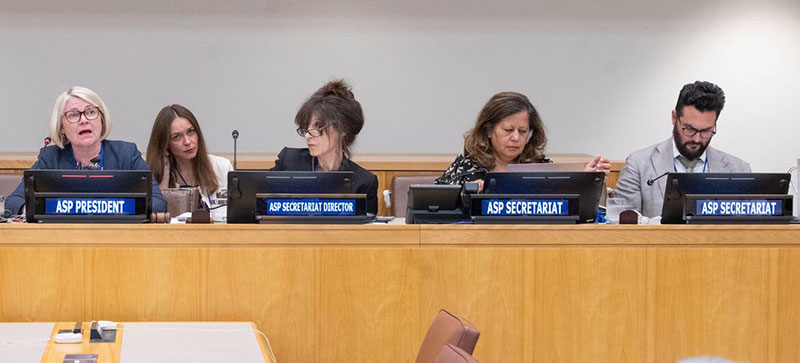
 US Secretary of State Marco Rubio’s warning to the International Criminal Court (ICC) was stark: ‘Either the ICC will end its threats, or we will end the ICC.’ It followed US central administration accusations that the court was unfairly targeting Americans on the basis of trumped-up war crimes charges.
However, a new plethora of sanctions has been clamped on the ICC by the US, which in turn has spurred accusations by sections of the world that the latter has unleashed an ‘assault’ on the international legal order.
What some of the sanctions would mean for the ICC was outlined by Rubio: ‘We will ban transactions with this rogue court, cutting off their resources and crippling their ability to operate against us.’
The ICC has shown consistency of purpose over the years. Despite some operational constraints it has indicted a large number of political strongmen from around the world, accused of war crimes and other governance excesses that come under its purview. Two such recent figures are: Russian President Vladimir Putin and Israeli Prime Minister Benjamin Netanyahu.
Rather than enjoy a mere nominal presence in the world community, the ICC has proved its effectiveness by detaining and bringing to justice scores of VIP politicians and others of their ilk who have been found guilty of human rights abuses and kindred excesses that come within the terms of reference of the ICC.
Accordingly, the international justice system would be stymied considerably as a result of the ICC being dis-empowered, particularly financially. Needless to say, potential and real perpetrators of the species of crime coming under the jurisdiction of the ICC would stand to gain most from such anarchic tendencies. That is, political repression globally would be enabled to enjoy a new lease of life.
A detailing of the types of crime coming under the purview of the ICC provides an idea of what it would cost the international community if the ICC’s operations are gravely hampered. They are mainly: genocide, war crimes, crimes against humanity and the crime of aggression.
That is, the part of the world to be worst affected would be the global South, since the latter is awash with the mentioned crimes. Needless to say, a chronically-disaffected South will sooner rather than later undermine the well being of the world dangerously. The world is already being put through these paces.
At the time of writing, ‘illegal migrants’ from the South, for example, are aggravating many a Western economy’s woes, besides creating for them acute law and order issues. The fact that these migrants’ presence goes on to become a virtual test of the migrant receiving states’ ability to forge domestic social inclusion in the face of jingoistic protests by mainly white supremacist groups is evidence of the latter. As is known, the US, to take just one example, has been up against this crisis for quite a while.
Accordingly, it will be in the best interests of the West if ‘illegal’ migrant arrivals on their shores are stemmed. If the socio-political and economic problems assailing the South are effectively managed through North-South collaborative, ‘trouble-shooting’ efforts the causes leading to ‘illegal’ migration and connected issues could be resolved at source as it were. For, it is the aggravation of the South’s material questions that lays the basis for the emergence of repressive and anti-democratic regimes in the hemisphere.
Until such time that the aforementioned issues in North-South relations are visited afresh and addressed urgently, a vibrantly functioning ICC would be needed. For, the latter would prove a deterrent to Southern political and military strongmen, highly prone to power abuse and like excesses, from coming into being in the wake of the South’s chronic material woes and the wars and conflicts that result from them.
It stands to reason then that the US would be acting in its own interests by enabling the ICC to perpetuate its mandate without hindrance. For a crop of issues that impinges negatively on internal law and order would be defused.
Meanwhile, there needs to be a meeting of minds among the rest of the West to put back in place a North-South dialogue process aimed at reducing some of the economic pressures that are weighing on the South.
Since economics usually drives politics it will be in the interests of the world community to scrutinizingly re-visit North-South issues of the past and put in place economic relief packages for Southern publics that would enable them to tide over their material hardships rather than permit the latter to aggravate into social disaffection and eventually armed militancy. It is the latter juncture that paves the way for the emergence of authoritarian rulers in the South who then go on to be a blight on their publics.
Accordingly, the Southern-based global development thinking of the past that envisaged a more equitable world economic order needs to be seen as an urgent need. That is, NAM’s international development paradigms need to be resuscitated to the extent possible.
It is unlikely that rightist governments of the West, such as the current Republican administration in the US, would find these projects feasible, but democratic states of Europe, led by perhaps the UK, are likely to think otherwise. For it would not be beneficial for the democratic world to be having on their hands repressive governments in the South who would be gravitating towards the major military and economic actors of the South, such as Iran and North Korea, who tend to be in constant power struggles with the West.
However, until such time that the mentioned, pro-people initiatives are given serious thought the ICC would need to be enabled by the international community to be in place comfortably and carry on with its mandate of bringing repressive rulers to book. Besides the ICC should pave the way for the peoples of the developing world to enjoy some substantial respite from the political repression and even terror which tend to be their lot.
Meanwhile, the wars of West Asia are relentlessly aggravating the economic hardships of people everywhere, driving the point home to enlightened sections that there is no alternative to peacemaking. A challenge is to convert the US under President Trump to this line of thinking.

 This week, I give you five simple, time-tested homemade remedies that help reduce the appearance of blemishes, control excess shine and leave your skin feeling softer and smoother.
The Honey and Lemon Brightening Dab:
For stubborn blemish marks, this is a classic. Mix one teaspoon of pure bee honey with three to four drops of fresh lemon juice. Apply gently, only on the affected spots, and leave for 10 minutes before rinsing with lukewarm water. While honey soothes and softens, lemon helps to brighten naturally. Use twice a week in the evening.
Besan and Rose Water Oil-Control Pack:
An ideal remedy to combat shine, especially on the T-zone. Take two teaspoons of besan (gram flour) and mix with sufficient rose water to form a smooth paste. Add a pinch of turmeric for its antiseptic goodness. Apply evenly, keep for 15 minutes and wash off. It absorbs excess oil without over-drying, leaving a beautiful matte finish.
Aloe Vera and Cucumber Ice Soother:
Blend fresh aloe vera gel with the juice of a grated cucumber and freeze the mixture in an ice tray. Each morning, wrap one cube in a soft muslin cloth and gently rub over a cleansed face for 30 seconds. It calms, tightens pores and imparts a baby-soft smoothness.
Oatmeal and Curd Gentle Polish:
Roughness and old blemish marks need gentle exfoliation. Combine one tablespoon of finely powdered oatmeal with one tablespoon of fresh curd (yoghurt). Massage very gently, in circular motions, for one minute, leave for five minutes and rinse. It removes dead cells and unveils softer, clearer skin.
Multani Mitti and Green Tea Magic Mask:
Brew some green tea and allow it to cool completely. Mix one and a half teaspoons of Multani Mitti (Fuller’s Earth) with the tea water to make a fine paste. Apply for 10 to 12 minutes – do not let it dry and crack completely – and wash off. It draws out impurities, fades blemishes and bestows a fresh, shine-free glow.
A Gentle Reminder:
As with any natural remedy, always do a patch test on your inner arm first. For those with oily or combination skin, avoid heavy coconut oil application and harsh scrubbing, as they tend to aggravate shine and blemishes.

 Dream of performing on a world stage? Well, here is your unique, golden opportunity!
The World Championships of Performing Arts (WCOPA) — the one and only official “Talent Olympics” — is the world’s premier global platform for aspiring singers, dancers, actors, models, instrumentalists, etc., to compete, shine and be discovered!
And, yes, this world stage is open to YOU, Sri Lankans living in Sri Lanka and overseas!
Held annually in glittering Las Vegas, WCOPA brings together over 70 countries, all competing for Gold, Silver and Bronze Medals, just like the traditional Olympics.

Lakisha Bernard: Will represent Team Sri Lanka at WCOPA 2027
Outstanding performers vie for the coveted titles of Junior and Senior Grand Champion Performer of the World, with winners and standout participants awarded over $500,000 in scholarships, cash awards and prizes to catapult their education and careers!
Sri Lanka is already making waves! At WCOPA 2026, Natharie Wickramasinghe, representing Team Sri Lanka, made the nation proud by winning a Bronze Medal in the Ethnic/Folklore Dance category!

Lakisha: Accomplished freelance Model and Fashion Design graduate
Recruitment for this prestigious competition is handled through a system of scouts and licensed National Directors — and this is where our very own Chris Rajendra, now based in Las Vegas, and National Director for Team Sri Lanka, comes into the scene.
If you are a singer, dancer, actor, model, instrumentalist — if you have talent burning inside you — contact Chris Rajendra today for registration and, who knows, you may find yourself in Las Vegas, and proudly draped in the Sri Lankan flag, at WCOPA 2027!
The contact address is: Chris Rajendra, wcopa.nationaldirector.sl@gmail.com
or chris.rajendra@gmail.com
Meanwhile, a star is born for 2027, in the form of Lakisha Bernard who is all set to represent Team Sri Lanka at WCOPA 2027.
Originally hailing from the sun-drenched coastal city of Colombo and now carving out her creative career in Canada, 22-year-old Lakisha is stepping into the international spotlight.
This accomplished freelance Model and Fashion Design graduate has officially been appointed as the Team Sri Lanka Promoter for Canada as she prepares to represent Team Sri Lanka at WCOPA in Las Vegas.
Lakisha brings a unique blend of high-fashion sensibility, captivating camera presence and expert garment design to the Team.
Having built her career, from local college shoots to high-glamour concepts, Lakisha’s inspiring journey embodies the true spirit of cultural bridge-building and creative resilience, bringing immense pride and recognition to Sri Lanka on the global stage.
WCOPA 2027 will be held at the legendary Westgate Hotel & Casino, Las Vegas, from 12th to 20th July – the very same iconic arena where the late, great Elvis Presley himself performed!
Your moment is now. Your stage is Las Vegas, so hurry and contact Chris Rajendra.

AgriConnect Sri Lanka’ to be launched on 30 October to Modernise the Agricultural Sector Through Digitalisation

57th Annual Saints’ Quadrangular Tournament on Saturday and Sunday

Showers or thundershowers will occur at most parts of the island

Prison rules to be revised over monks’ attire

AC President recuses himself from hearing prison attire case pertaining to Gnanasara Thera

Court orders steps to obtain INTERPOL Red Notice against Basil

‘Dates have the highest sugar content to fight Coronavirus’

Sunday Island 27 December – Headlines

#SundayIsland 17th December – Headlines

Sunday Island – 28th March

Sunday Island Headlines – 21 March

Sunday Island – 21st February – Headlines
-

 News7 days ago
NDB fraud Rs 60mn more than reported
-

 News7 days ago
Removing monk’s robes matter for Sangha to decide: Mahanayake Theras
-

 News5 days ago
Sri Lanka escalates anti-graft drive with Shiranthi’s jailing
-

 News6 days ago
NPP govt. reminded of its responsibilities as US warship leaves Colombo
-

 Latest News6 days ago
Farhan, Sadaqat help Pakistan ace 183 chase to go 1-0 up
-
 News7 days ago
BHC, Colombo: “LTTE remains a proscribed org. in the UK”
-

 Latest News4 days ago
Farhan and Sadaqat help Pakistan seal series in style
-

 News5 days ago
Iranian ships stranded, Lanka fears US sanctions