
Sports
Why Oman became home to Sri Lanka’s Duleep Mendis

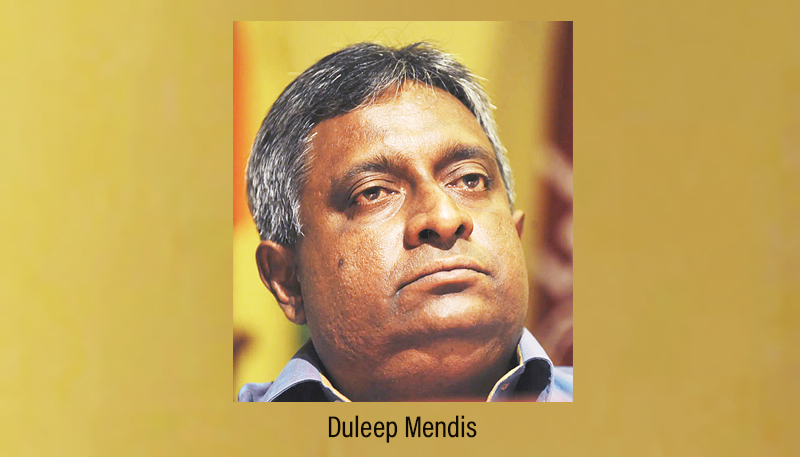
When Duleep Mendis first arrived in Muscat to help a budding nation find its footing in international cricket, he expected his stay to be brief. That was 13 years ago.
The 2026 tournament in India and Sri Lanka is Oman’s fourth T20 World Cup and Mendis has been around for the whole journey. He had not expected to stay and find a second home in a desert nation that has grown into a competitive force in Associate cricket.
“Initially I went for one or two years and ended up being there for about 14 years now,” Mendis, the Oman head coach, says while in his old stomping grounds, Colombo, where they are based for all their Group B matches.
“Pankaj Khimji, Chairman of Oman Cricket asked me how long I was going to keep shuffling up and down and whether I would like to come and settle down,” Mendis says. “By that time, I found out it was the right place. And more than anything I must say the people who were administering Oman cricket were fantastic guys.”
What Mendis found was rare in international sport. While many coaches battle board interference, he had a group of leaders who offered him a “free hand” to build.
“I liked very much working for the board because they gave me the authority. There were many proposals that we took forward. You are given a free hand and there were times that we failed, but you correct it and go forward.”
To comprehend the breadth and depth of growth in Oman cricket during Mendis’ tenure, one must first take a step back. When he started, their infrastructure was minimal. Founded in 1979 by the late Kanaksi G Khimji, Oman Cricket became an Affiliate Member of the ICC in 2000, gained T20I status in 2015, three years after Mendis joined and ODI status in 2019. Today, Muscat boasts world-class facilities that rival those in most Test nations.
The academy features a state-of-the-art indoor facility with seven pitches (fast, slow and ordinary) in a fully air-conditioned environment, while barren land has been replaced by “beautiful lush green” turf, with the government recently gifting the board three additional grounds.
While centred in Muscat, Mendis is pushing to take the game to Salalah and Sohar, to ensure cricket isn’t just a capital city sport. However, the road to the top division of international cricket has not been without complications.
The transition from “honorary” board to professional entity reached breaking point following the 2024 T20 World Cup when 11 senior players, including stars like Aqib Ilyas and Zeeshan Maqsood, clashed with the board over unpaid prize money.
The fallout was severe. The board suspended central contracts and because residency in Oman is often tied to these sporting visas, several players were forced to leave the country.
While the board eventually pledged to clear all dues by July 2025, attributing the delay to procedural hurdles, the incident highlighted friction in a rapidly evolving system.
For Mendis, who views the board members as “passionate guys who only wanted to do well,” these obstacles were part of the journey.
“I would say the hurdles were there, you had to just cross it,” Mendis says philosophically. “When the obstacles are coming, we discuss it as a panel and try to take constructive decisions. We are an Associate country, and there is a big difference from Associate to Test.”
Mendis is a realist regarding priorities in the region. He understands that in the Gulf Cooperation Council, of which Oman is a part, the focus is on white-ball cricket, which fits the working schedules of their player pool.
“The infrastructure and everything is suited for the white-ball game,” Mendis says. “Most of them are there for work, though that is slightly changing now. When the team does well, people start talking… it’s like back in ’96 when we [Sri Lanka] won the World Cup.”
As a batter who faced the world’s most fearsome bowlers in the 1970s and 80s, Mendis views the modern game with a nuanced eye. While he marvels at the athleticism, he sees a decline in the purer arts.
“Modern day cricket is completely different… it is almost like athletes playing. But I would say batting technique and standards have dropped a little.”
But despite that, he does envy the security the modern player has compared to his era. “Today you can come into cricket and say I will make it a career. That is an advantage.”
[Cricinfo]
by Madushka Balasuriya

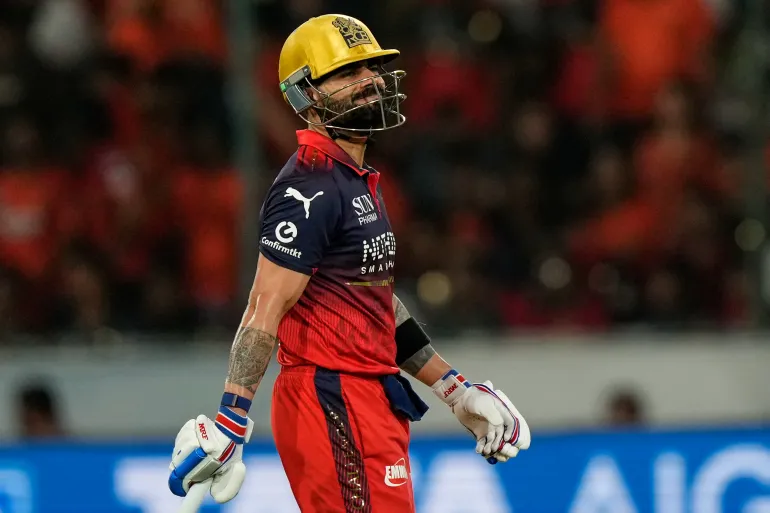
Tempers flared between Virat Kohli and Travis Head in the Indian Premier League, as the former India captain refused to shake hands with the Australian batter after Head’s Sunrisers Hyderabad handed Kohli’s Royal Challengers Bengaluru a crushing 55-run defeat.
The two exchanged heated words when Kohli opened for Bengaluru, looking to chase down a daunting target of 256. During the exchange, a visibly angry Kohli was seen gesturing towards Head to come and bowl.
Kohli also mockingly made the “impact player” substitution gesture, a reference to Head, who is primarily a batter, often being replaced by Hyderabad for a specialist bowler after the Australian finishes batting.
Head did not have much time to take Kohli up on his invite, as the Bengaluru opener fell soon after, scoring 15 off 11 balls. The Australian, however, bowled an over later in the game and dismissed Bengaluru captain Rajat Patidar.
As the teams lined up to shake hands after the match, Head held out his hand but Kohli looked straight ahead and walked past him.
Friday’s win left third-placed Hyderabad on equal points with Bengaluru, but Kohli’s side remained top of the table with a superior net run rate. Both teams have qualified for the IPL playoffs starting Wednesday.
[Aljazeera]
[Cricbuzz]
Latest News
Sunrisers Hyderabad win big but Royal Challengers Bengaaluru, Gujarat Titans seal top two spots

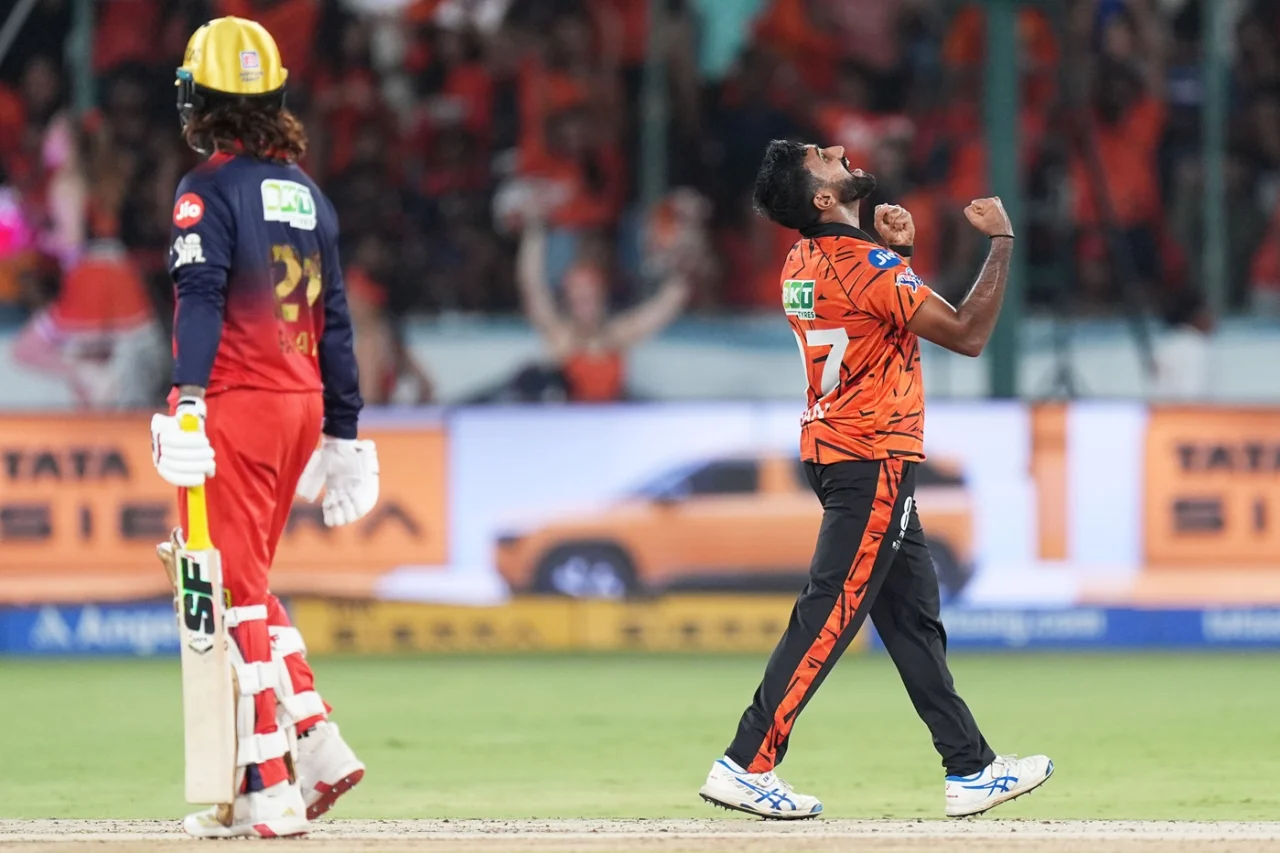
Sunrisers Hyderabad [SRH] won, and yet it didn’t feel like a win. Royal Challengers Bengaluru [RCB] lost, but it didn’t feel like that either. In a nutshell, that’s how Friday night went in Hyderabad as RCB secured a top-two finish – they finished No 1 – despite a 55-run defeat, while SRH remained third.
On the back of half-centuries from Abhishek Sharma, Heinrich Klassen and Ishan Kishan, SRH posted a monster total of 255, but had to restrict RCB to 166 or below for a chance to move into the top two. Rajat Patidar’s 56, Venkatesh Iyer’s 44 and Krunal Pandya’s unbeaten 41 ensured there were no blushes for RCB even as they finished the league stage with a defeat.
That left the top three teams all on 18 points, with Gujarat Titans sandwiched between the two teams at No. 1 and No. 3. Eventually, it came down to net run-rate to decide which team would go to Qualifier 1, and which team would play the Eliminator.
Going into the game, RCB wanted to win but also wanted to ensure they didn’t slip outside the top two should they lose. After SRH pumped 255 for 4 in 20 overs, the equation became clear – RCB had to avoid losing by 90 or more runs.
The start given by their new opener, Venkatesh, calmed the nerves. He gave Pat Cummins a four-six jab in the first over, and saved his best for the fourth over delivered by left-arm wristspinner Shivang Kumar. He punished Shivang for two sixes in one over, with a boundary sandwiched in between. Venkatesh fell for a 19-ball 44 but by then RCB had already scored 60 in 4.3 overs.
Even though Virat Kohli (15) failed to leave a mark in the game with the bat, a spunky 21 from No. 3 Devdutt Padikkal ensured RCB stayed on course for 166 even if the chase looked to get out of hand. Sakib Hussain, who delivered 1 for 31 in four overs, was a major reason why RCB could not push on.
Patidar scored his fourth half-century of the season, staying in from the sixth over to the 19th. His 39-ball 56 included crisp boundaries off Eshan Malinga, Cummins and Harshal Patel, but fell to part-timer Travis Head. Krunal stayed till the end with an unbeaten 41 in 31 balls as RCB finished on a commendable 200 for 4 by the end.
Dropped in the sixth, seventh and eighth overs, Abhishek made full use of the chances RCB’s fielders offered him. On a flat surface with no grass, he did not let purple-cap holder Bhuvneshwar Kumar settle. His early boundaries over the off-side against Bhuvneshwar’s awayswingers moved into his takedown of Suyash Sharma’s googly and Romario Shepherd’s seam-up balls.
Abhishek was finally out in the ninth over, but by then his turbo-charged innings had SRH almost touching triple-digits.
Kishan had three fifties against RCB in his last three outings, and on Friday, he made it four in a row with a 46-ball 79. While Abhishek was going, Kishan took his time to score nine off his first ten balls, but then found his groove.
His best shot of the night was probably the leg-side slog towards the bigger boundary against Krunal in the 11th over, a sign that timing and form continued to be on his side. A sixth 50-plus score for Kishan this season also made IPL 2026 his most prolific as a batter. His sweeps, cuts and pulls allowed SRH to pump 73 runs across overs 11 to 15.
Klaasen’s story was similar, starting off with only five runs in nine balls, but one that was unlocked with his takedown of Josh Hazlewood in the 13th over. One six over cow corner and two more over long-on made Hazlewood leak 27. His effortless loft of Bhuvneshwar over extra cover took him close to yet another landmark, and he brought up his sixth half-century of the season in the 16th over. He fell in the 17th over to a low-arm slinger from Krunal for 52, but not before becoming the first player to cross 600 runs while batting at No. 4 or lower in a T20 tournament.
Nitish Kumar Reddy scored a blazing unbeaten 29 in 12 balls to give SRH a late push. He hit Krunal for two sixes in his first three balls in the crease and then deposited Hazlewood for another.
The late flourish took SRH past 250 while also leaving RCB’s senior seam-bowling pair of Bhuvneshwar and Hazlewood ducking for cover. Hazlewood conceded 55 on the night while Bhuvneshwar leaked 51. They both finished the evening wicketless.
Brief scores:
Sunrisers Hyderabad 255 for 4 in 20 overs (Abhishek Sharma 56, Travis Head 26, Ishan Kishan 79, Heinrich Klaasen 51, Nitish Kumar Reddy 29*; Rasikh Salam 2-52, SuyashSharma 1-36, Krunal Pandya 1-24) beat Royal Challengers Bengaluru 200 for 4 in 20 overs (Venkatesh Iyer 44, Virat Kohli 15, Devdutt Padikkal 21, Rajat Patidar 56, Krunal Pandya 41*, Tim David 15*; Eshan Malinga 2-33, Sakib Hussain 1-31, Travis Head 1-07) by 55 runs
[Cricinfo]

Kohli refuses Head handshake after heated Hyderabad-Bengaluru clash in IPL

Ampara District special Coordination Committee meeting chaired by the President

Landslide Early Warnings issued to the districts of Colombo, Gampaha, Kalutara, Kegalle, Nuwara Eliya and Ratnapura

Most people seeking green cards must now apply from outside US

Tulsi Gabbard to resign as US director of national intelligence

SpaceX launches massive Starship V3 rocket on test flight

‘Dates have the highest sugar content to fight Coronavirus’

Sunday Island 27 December – Headlines

#SundayIsland 17th December – Headlines

Sunday Island – 28th March

Sunday Island Headlines – 21 March

Sunday Island – 21st February – Headlines
-

 Features7 days ago
Sri Lankan Airlines Airbus Scandal and the Death of Kapila Chandrasena and my Brother Rajeewa
-

 News7 days ago
Kapila Chandrasena case: GN phone records under court scrutiny
-
 Features4 days ago
Octopus, Leech, and Snake: How Sri Lanka’s banks feast while the nation starves
-

 News7 days ago
Rupee slide rekindles 2022 crisis fears as inflation risks mount
-

 Business7 days ago
Expansion of PayPal services in Sri Lanka officially announced
-
 News3 days ago
Steps underway to safeguard Sri Lanka’s maritime heritage
-

 News7 days ago
Court orders further arrests in alleged USD 42 Mn NDB fraud case
-

 Opinion3 days ago
Murder of Ehelepola family, Bogambara Wewa and Sightings of Wangediya