
Business
Expansion of PayPal services in Sri Lanka officially announced

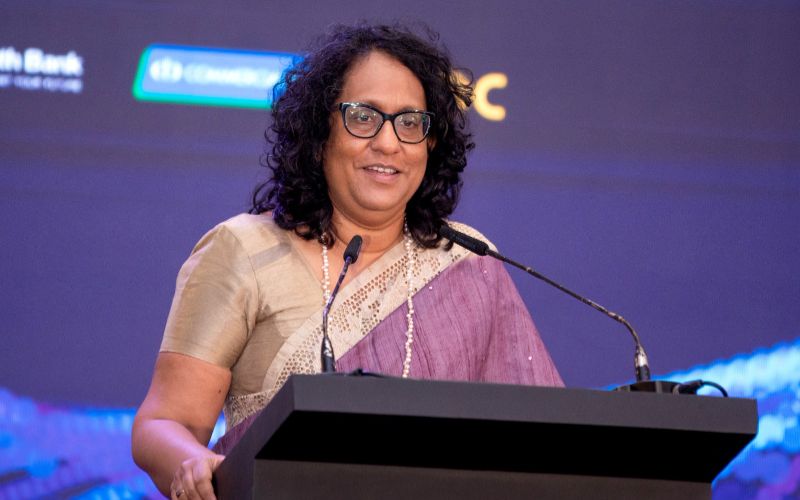
Marking a significant milestone in the digital economy, the official announcement on the expansion of PayPal services in Sri Lanka was made on Saturday (16) morning at the Galle Face Hotel under the patronage of Prime Minister Dr Harini Amarasuriya.
The Prime Minister, welcomed the initiative by Sri Lankan banks to collaborate with PayPal. PayPal services will soon be made available in Sri Lanka through initial banking partners Bank of Ceylon, Commercial Bank of Ceylon and Sampath Bank PLC, with additional banks expected to join in the coming months.
The announcement marks a significant step in ongoing efforts to strengthen secure and trusted cross-border payment access for Sri Lankan consumers, freelancers, entrepreneurs, start-ups and businesses.
Sri Lanka’s digital economy agenda is focused on enabling inclusive growth, supporting digital entrepreneurship and strengthening the country’s connectivity with international markets. The expansion of cross-border payment services is expected to play an important role in advancing this vision by enabling Sri Lankan small businesses, start-ups and enterprises to participate more actively in global commerce.
Sri Lanka’s micro, small and medium-sized enterprises are estimated to contribute approximately 52% of the country’s GDP, underscoring the importance of improving global market access for the sector. Freelancers, entrepreneurs, small businesses, start-ups and digital service providers are expected to benefit from improved payment interoperability and more secure and trusted methods of transacting with customers worldwide.
Addressing the event, the Prime Minister said;
“This is indeed a moment of celebration, and I think one that is testament to the fact that Sri Lanka’s role in the digital economy is finally being recognised, and that we are able to position ourselves both regionally and globally. As many of you know, we have ambitious targets for our digital economy, and this is expected to become one of our primary areas of growth and job creation.
We also have many talented freelancers in this sector, and establishing a system of transparent and secure financial services is absolutely important to our growth strategies and to establishing ourselves in this space. The SME sector, online services, e-commerce and the digital economy are all closely linked, and I believe this is a rapidly expanding sector where we can expect some of the most exciting growth opportunities in the months and years ahead.
I think it is extremely important that online services and payments come under a more secure, legitimate and accountable system. We have seen increasing concerns globally about scams, insecure systems and dubious transactions, so establishing a globally accepted and integrated platform that ensures accountability and security is essential as we move forward.
While we are looking to the digital economy, the SME sector and e-commerce as major areas of growth, we cannot forget that our economic growth plan is organised around two fundamental principles: equity, ensuring that no one is left behind, and transparency and accountability.
As we think about expanding the SME sector, supporting freelancers, growing e-commerce and strengthening our digital economy, we must also ensure that the longstanding issues our country has faced, social inequity, economic inequity and widening disparities in growth, are addressed. Our growth must be inclusive, equitable and socially responsible.
I am hopeful that our younger generation, which is enthusiastically participating in this transformation, will take the lead in ensuring that Sri Lanka’s future growth reflects those values.
I hope this collaboration and initiative will bring the benefits we are all hopeful for, and that it will ensure our country remains on the path not only to recovery and resilience, but also to positioning itself regionally and globally as a trustworthy nation, one that is capable of doing much more than merely following others, and one that is positioned as it truly deserves to be.”
Eranga Weeraratne, Deputy Minister of Digital Economy;
“For decades, Sri Lanka failed to introduce a trustworthy, simple and efficient payment solution, despite having talented people, globally competitive products and ambitious plans for the future.
We had entrepreneurs, freelancers and exporters delivering services to the world, but we did not have the proper platforms to support them or to help them receive payments efficiently. With the hard work of the President’s Secretariat, the Ministry of Digital Economy, the Ministry of Finance and all stakeholders, we have now been able to unlock this much-needed digital payment platform for Sri Lankans.
This platform is not only making it easier for Sri Lankans to receive payments from overseas, but also making it easier for clients around the world to do business with Sri Lanka.
For many years, the lack of trusted and efficient payment systems pushed people towards informal and grey-market solutions, meaning a significant amount of money never entered Sri Lanka’s formal financial system. According to current assessments, Sri Lanka’s digital exports amount to around US$1.5 billion, but there is also a large shadow industry because people have struggled to receive payments through formal channels.
This Government is committed to removing those barriers and making it easier to do business in the right way. We are also working on introducing regulatory frameworks for digital currencies and virtual assets as part of our broader digital transformation agenda.
We want to encourage more young entrepreneurs, freelancers and SMEs to participate in exports and the digital economy. Recently, we also introduced digital nomad visas as part of this strategy.
This is how we plan to build a US$15 billion digital economy by 2030 and increase the digital economy’s contribution to 20% of GDP. With the guidance of His Excellency the President, the Ministry of Digital Economy is spearheading this transformation together with all partner ministries and stakeholders.”
Secretary to the President Dr Nandika Sanath Kumanayake stated:
“Expanding the digital economy is a key priority of the new Government, and we believe that the initiative launched today will provide significant support towards achieving that goal.
Discussions on introducing a payment facilitation platform of this nature to Sri Lanka have been taking place over the past 10 to 12 years, during which several obstacles emerged. However, the President’s Office took the lead and held direct discussions with representatives of PayPal in India. As a result of those efforts, we have now been able to introduce this PayPal facility to Sri Lanka.
Special appreciation should also be extended to Dr Muditha Senarath Yapa of our Innovation Commercialization Unit. With the support of the Central Bank and all stakeholders in the financial sector, we were able to successfully bring this initiative to fruition.
This facility will be particularly beneficial to micro, small and medium-scale entrepreneurs, as well as those engaged in the technology sector. PayPal is also a timely requirement for expanding the country’s economy, and it is a matter of satisfaction that this need has now been fulfilled.
I invite young entrepreneurs to make use of this opportunity to further develop and expand their businesses.”
Dr. Nandalal Weerasinghe, Governor of the Central Bank of Sri Lanka;
“I remember first discussing PayPal with its CEO many years ago at the FinTech Festival in Singapore. At that time, Sri Lanka was not seen as a viable business opportunity, but today I am pleased that PayPal has recognised the country’s potential.
This is an important step in Sri Lanka’s digitalisation journey and a win-win situation for businesses, SMEs and the banking sector. In today’s world, businesses and professionals are no longer limited by geographical boundaries, but one of the biggest challenges faced by freelancers, entrepreneurs and exporters in Sri Lanka has been the difficulty in receiving international payments efficiently.
Enabling inward payments through globally recognised platforms such as PayPal is therefore a timely and significant step for the country. It will provide SMEs, freelancers and online service providers with a faster, safer and more convenient way to receive foreign income directly into their local bank accounts through formal channels.
This initiative will also strengthen Sri Lanka’s participation in global markets, particularly in export-oriented and knowledge-based sectors such as software development, digital marketing, e-commerce and other digital services industries.
Importantly, it will encourage foreign exchange inflows through regulated financial systems, improve transparency and strengthen confidence in the financial sector. This development goes beyond introducing a new payment method — it supports Sri Lanka’s broader vision of strengthening the digital economy, encouraging fintech innovation and enabling Sri Lankan businesses and professionals to participate more actively in the global marketplace.
We hope this initiative will encourage more young entrepreneurs, freelancers and SMEs to expand into exports and digital services, while contributing to Sri Lanka’s long-term economic growth.”
Mr. Nath Parameshwaran, Director, Corporate Affairs, India and South Asia at PayPal;
“It is a privilege to be here today for this important milestone for both Sri Lanka and PayPal. Today’s announcement reflects the strong collaboration between the Government, regulators, financial institutions and industry partners.
We are deeply grateful to the Honourable Prime Minister, the President’s Office, the President’s Secretariat, the Central Bank, the Ministry of Digital Economy and the Ministry of Finance for their leadership, guidance and support in making this initiative possible.
The Digital Economy Vision 2030 is an ambitious and forward-looking agenda that recognises the potential of technology and digital connectivity to drive inclusive economic growth.
What particularly stands out is the focus on ensuring that the benefits of digital transformation reach small businesses, freelancers, professionals and entrepreneurs across the country.
Small businesses and the freelance ecosystem form the backbone of Sri Lanka’s economy, and we are encouraged by the Government’s commitment to creating a more connected and inclusive digital economy.
This has been a genuine partnership among all stakeholders, involving significant commitment over the past several months. From PayPal’s perspective, we look forward to continuing this collaboration and playing a responsible role in Sri Lanka’s growth story.”
Nadia Syed, Senior Vice President, International Cross Border Trade and General Manager, APAC, PayPal;
“It is a privilege to be part of this important initiative, and we are grateful to the Prime Minister for bringing together public and private sector partners around a shared vision for a more connected digital economy in Sri Lanka.
At PayPal, our purpose has always been to empower small businesses, freelancers, entrepreneurs and consumers to gain access to the global economy. With 439 million active accounts across more than 200 markets, we are committed to helping make commerce simpler, more secure and more accessible.
Sri Lanka has a vibrant and outward-looking community of freelancers, entrepreneurs, exporters and startups already serving customers around the world. Their ambition is global, and the opportunities ahead are significant.
For many of them, the ability to receive international payments easily through trusted local banks is an important enabler of growth. It can help freelancers work with clients in new markets and help entrepreneurs turn global demand into sustainable growth for Sri Lankan goods and services.
Together with Bank of Ceylon, Commercial Bank and Sampath Bank, and with the support of the Honourable Prime Minister, we are taking an important step towards creating more accessible cross-border payment experiences for PayPal users and businesses in Sri Lanka.
This is not simply about payments. It is about access, choice and opportunity. It is about supporting Sri Lanka’s freelancers, entrepreneurs and small businesses at a pivotal time as digital commerce and cross-border services become increasingly important drivers of growth.
We look forward to continuing this momentum together with our banking partners to support Sri Lanka’s wider digital economy goals.”
General Manager and Acting Chief Executive Officer of the Bank of Ceylon, Y. A. Jayatilaka;
“We provide digital services to more than 16 million customers across Sri Lanka. In particular, we recently launched a new service called ‘Smart Freelancer’ for the younger generation engaged in providing freelance services to overseas markets through online platforms.
We also introduced a separate loan scheme called ‘E-Creator’ for them at very low interest rates. In addition, we launched the ‘Smart Remit App’ for those sending foreign remittances to Sri Lanka from abroad.
We believe that PayPal will help fill the long-standing gap in having a reliable payment platform alongside these services. Around 150,000 freelance service providers in Sri Lanka are customers of the Bank of Ceylon. There has been a strong need for a platform such as PayPal to enable them to receive salaries and other foreign remittances from overseas more efficiently and securely.
As the Bank of Ceylon, we are grateful for the efforts taken by the Central Bank and the Government of Sri Lanka to make this possible.”
Managing Director and Chief Executive Officer of Commercial Bank of Ceylon, Sanath Manatunge;
“The introduction of the PayPal withdrawal facility marks an important milestone in Sri Lanka’s digitalisation journey. PayPal is not merely a payment platform; it is a significant opportunity for the country’s business community, digital freelancers engaged in international transactions, and the wider digital economy to connect more easily with global markets.
Digital freelancers are already making a highly positive contribution to Sri Lanka’s economy. Across the world, employment opportunities are rapidly expanding in areas such as information technology, remote services, creativity and digital skills.
For a long time, the lack of a formal and convenient mechanism to receive foreign payments was a major obstacle for these professionals. The introduction of PayPal helps address this challenge.
This initiative will strengthen foreign exchange inflows into the country and ensure that the contribution made by Sri Lanka’s freelance professionals to the economy receives the recognition and value it deserves.”
Managing Director of Sampath Bank, Sanjaya Pradeep Gunawardena;
“We see this occasion as the successful outcome of a relationship built through years of effort. The introduction of PayPal is not merely the launch of another payment facility or technological solution, but an important step forward in connecting Sri Lanka more closely with the global digital economy and opening up new opportunities for the country’s people and business community.
Today, the world is changing rapidly. Digital payments, fintech innovation and cross-border financial connectivity have become key drivers of the global economy. They are no longer simply support services, but major factors that determine economic growth, exports, entrepreneurship, employment opportunities and a country’s competitiveness.
We have already seen that Sri Lanka possesses the talent, capability and creativity needed to succeed in the digital economy. Freelancers, technology entrepreneurs, creators and exporters in Sri Lanka are already engaging with global markets. What they require is a financial system that is accessible, reliable and efficient in connecting them with international markets.
When Sampath Bank began this journey with PayPal, our vision was to strengthen Sri Lanka’s connection with the global digital economy. We are extremely pleased to see that journey evolve into an initiative of national importance.”
Minister of Industry and Entrepreneurship Development Sunil Handunnetti, Minister of Labour and Deputy Minister of Finance and Planning Dr Anil Jayantha Fernando, Deputy Minister of Industry and Entrepreneurship Development Chathuranga Abeysinghe, Senior Presidential Adviser on Science and Technology Prof. Gomika Udugamasooriya, Presidential Adviser on the Digital Economy Dr Hans Wijayasuriya, and Director General of the National Initiative for Research and Development Commercialization (NIRDC), Ministry Secretaries, heads of financial institutions, government officials, industrialists, entrepreneurs and banking sector representatives were also present on the occasion.
[PMD]


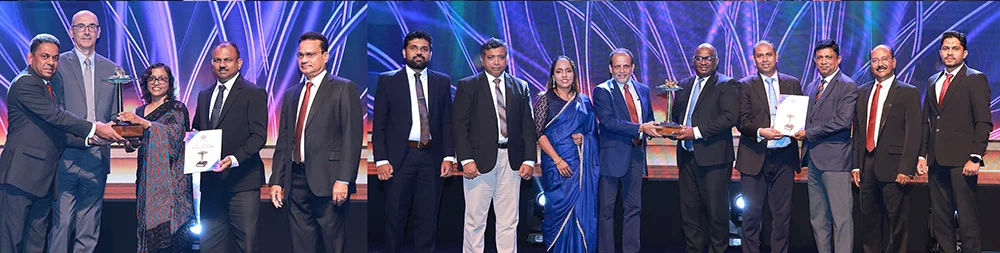
Corporate accolades underscore the alignment between its operational excellence and national development
In an era where national competitiveness is intrinsically tied to digital connectivity, strengthening the country’s digital backbone has become an urgent priority. Within this context, the evolving role of Sri Lanka’s leading telecommunications provider, SLT-MOBITEL, offers valuable insight into how technological infrastructure can underpin broader economic resilience.
Telecommunications and digital networks are foundational to economic transformation. By expanding high-speed broadband access, upgrading enterprise cloud capabilities, and bridging the urban-rural connectivity divide, SLT-MOBITEL helps reduce business transaction costs, streamline supply chains, and enable micro, small, and medium enterprises to reach global markets.
Recent corporate accolades further underscore this alignment between operational excellence and national development. SLT-MOBITEL’s triple triumph at the National Business Excellence Awards 2026 – winning in the Infrastructure and Utilities sector, Performance Management, and ICT Services categories – highlights its growing impact. Notably, the recognition of eChannelling’s contributions to digital healthcare reflects a broader strategic pivot toward integrated technology solutions.
“Institutional efficiency of this nature is critical for attracting foreign direct investment, as global partners increasingly assess a country’s digital maturity and systemic stability before committing capital,” noted industry observers.
Moreover, the company’s transition from a conventional telecom utility to a comprehensive digital solutions provider aligns seamlessly with Sri Lanka’s national digitalisation agenda. As the country pursues public sector modernisation, enhanced e-governance, and a competitive knowledge economy, the private sector must step up to deliver secure, scalable, and future-ready networks. Investments in data centres, cybersecurity frameworks, and advanced ICT infrastructure act as strategic buffers, ensuring that Sri Lanka’s economic apparatus remains agile and resilient amid future global uncertainties.
However, industry experts caution that while these achievements are commendable, SLT-MOBITEL still has a considerable distance to cover in fully enabling a truly digital economy.
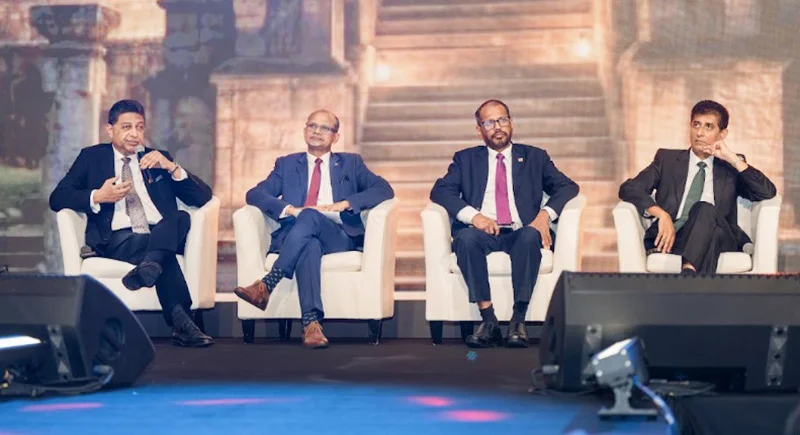
Port City Colombo (PCC) took a prominent role as Platinum Sponsor at the second edition of Sri Lanka Beyond Your Dreams, a high-level diplomatic and investment engagement hosted by the Consulate General of Sri Lanka in Dubai and the Northern Emirates. The event, held on 2nd September 2026 at the Hilton Dubai Al Habtoor City, brought together over 400 senior UAE-based business leaders, investors, diplomats, and institutional stakeholders, alongside Sri Lanka’s most senior government representatives.
The gathering was graced by Dr. Thani bin Ahmed Al Zeyoudi, UAE Minister of Foreign Trade, as Guest of Honour, and Vijitha Herath, Sri Lanka’s Minister of Foreign Affairs, Foreign Employment and Tourism. A high-level Sri Lankan delegation – including the Secretary to the Prime Minister, the Chairman of the Board of Investment, the Chairman of the Export Development Board, and the Director General of Commerce – underscored the government’s strong commitment to deepening economic diplomacy with the UAE.
In his keynote address, Minister Herath reaffirmed the centuries-old ties between Sri Lanka and the Arab region, emphasising the UAE’s vital role as a key economic partner. He stressed the urgency of finalising a Comprehensive Economic Partnership Agreement (CEPA) with the UAE, which would establish a robust framework to elevate trade, investment, and bilateral cooperation. Declaring Sri Lanka “open and ready for business,” he positioned Port City Colombo as the physical embodiment of this economic mission – a modern Special Economic Zone (SEZ) with a dedicated legal framework and competitive incentives, offering UAE investors a natural gateway to South Asia while maintaining strong Gulf connectivity.
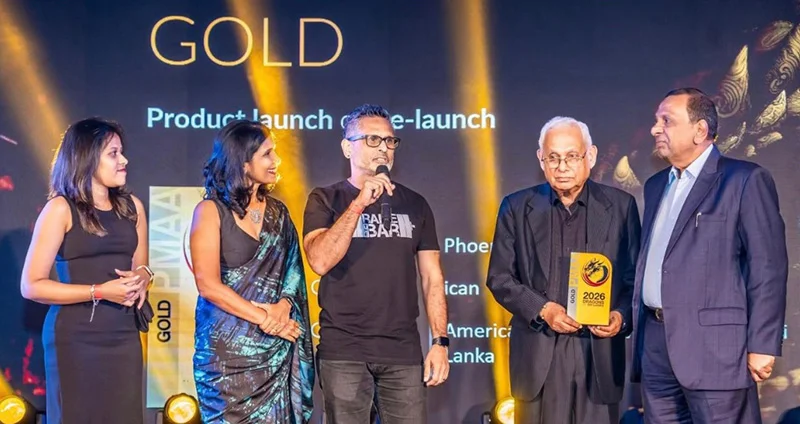
American Premium Water has secured four wins at Dragons of Sri Lanka Awards 2026, including three Gold Dragons and one Black Dragon, marking a significant milestone for the brand following its relaunch last year.
Part of the prestigious Dragons of Asia awards, Dragons of Sri Lanka brings the program’s regional platform to the local market, celebrating creative and effective marketing communications, with entries evaluated on strategic thinking, creativity, execution and impact. Established in 2000, Dragons of Asia is one of Asia’s premier results-driven marketing awards programs.
For American Premium Water, the achievements are particularly significant given that the company’s debut at the Dragons awards has resulted in four Dragons across four categories. In the distinction of Gold Dragons, American Premium Water was recognized across three categories including Product Launch or Re Launch, Cause, Environment or Sustainability and Creative Excellence while the Black Dragon was awarded in recognition of Small Budget.
Competing alongside leading brands and agencies in Sri Lanka, American Premium Water’s four wins demonstrate the strength and effectiveness of its recent work. Winning three Gold Dragons across three distinct categories highlights the breadth of the brand’s achievements, while the Black Dragon for Small Budget further emphasizes its ability to create meaningful impact through focused and efficient investment.

Pakistan seek revenge, Sri Lanka eye another Asia Cup final

Trump says every adult American will get $5,000 if Republicans win midterms

Protesters mistake Pakistan’s U-19 team for asylum seekers in Portsmouth

Steps are being taken to provide accommodation facilities for 16,000 university students – Prime Minister

Showers will occur in the Western and Sabaragamuwa provinces and in Kandy, Nuwara-Eliya, Galle and Matara districts.


‘Dates have the highest sugar content to fight Coronavirus’

Sunday Island 27 December – Headlines

#SundayIsland 17th December – Headlines

Sunday Island – 28th March

Sunday Island Headlines – 21 March

Sunday Island – 21st February – Headlines
-

 News6 days ago
Namal remanded until Sept. 18 over Airbus deal investigation
-

 Latest News5 days ago
Tharanga creates history with Diamond League crown in Brussels
-

 News5 days ago
Dispute which triggered listed company director being detained at BIA resolved
-

 Features4 days ago
After the parade: What a traffic OIC’s walk-out tells us
-
 Opinion7 days ago
In Memory of Dr Upatissa Pethiyagoda
-

 Editorial6 days ago
Power vs Equality
-
Editorial4 days ago
Arrests as theatre
-

 Latest News6 days ago
SLPP MP Namal Rajapaksa arrested by CIABOC