
Business
Where were the women?

It’s been 70 years since the Bandung Conference brought leaders of Asian and African countries together in a collective effort to forefront anti-colonial and anti-imperial struggles. Twenty-nine Asian and African countries attended and the 1955 conference symbolised a ‘new spirit of solidarity of the Third World’ . The conference underscored two principles of Third World politics – decolonisation and development – and led to the establishment of the Non-Aligned Movement (NAM) and an alternative conversation on how the world should be ordered including a proposal for a New International Economic Order (NIEO).
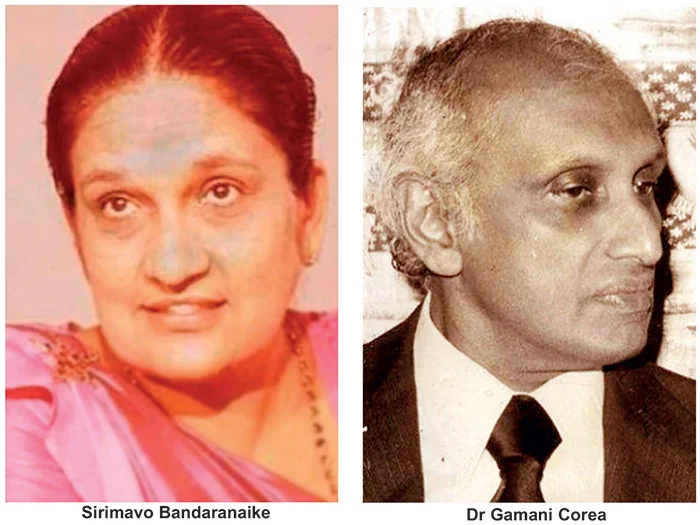
It was a time when Sri Lanka punched significantly above her weight – Mrs Sirimavo Bandaranaike was an acknowledged leader of NAM, Dr Gamani Corea pushed for more favourable trade terms for the global south from his position as the Secretary of UNCTAD, and Ambassador Shirley Amerasinghe pushed against international competition to acquire the resources of the sea bed and was a key player in the International Law of the Sea conferences. It was a time when the themes of the Bandung conference, economic cooperation, respect for fundamental human rights and the principles of the UN Charter, promotion of world peace and recognition of the equality of all races and the equality of all nations large and small, framed the discussions between nations.
Today we live in a world that is experiencing economic, ecological and geo-political crises, and where the above themes of Bandung have been sidelined if not completely obliterated. Many global south countries are deeply entrenched in debt, world peace is wilfully ignored, and genocidal actions and structural violence proliferate from Burma to Palestine. It is also a world in which limiting global warming to 1.5° Celsius is no longer possible and the consequences of climate change presents an existential crisis. It is a time where the revival of the “Bandung spirit” should provide a resonance that can inspire and inform the foreign policies and international relations of small states like Sri Lanka.
A two-day conference in Colombo, organised by IDEAS in collaboration with the BCIS and Yukthi on the 2nd and 3rd of June 2025 at the BCIS in Colombo, will bring together thinkers from Latin America, Africa and Asia to share what the Bandung spirit can portend for the world going forward. BCIS and partners will also organise a series of events leading up to the conference, and following it, to keep the spirit of Bandung at the forefront of our thinking.
In this article I ask the question famously raised by Cynthia Enloe in her writings on international relations –where were the women? It seems like there were NO female delegates at the conference . And even though the 10 points of the Bandung Declaration reiterated the principles of the UN Charter and set a standard for international relations’ and that championed coexistence instead of co-destruction, it did not explicitly refer to women’s rights. Neither this lack of representation nor the omission of women’s rights from the agenda or outcome of the conference meant that women were missing from anti-colonial and anti-imperial struggles that underscored the Bandung spirit – far from it.
In the first half of the 20th century, starting before Bandung, different constellations of national and international women’s organisations planned and implemented three conferences that foreshadowed the rise of women’s international solidarity in Asia and Africa and could have, as some commentators have argued, informed the emerging pan-Asian and Afro-Asian movement for anti-imperialist regional cooperation symbolized by Bandung.
In 1949 the Conference of the Women of Asia was held in Beijing, China, hosted by the Women’s International Democratic Federation (WIDF) together with the All-China Women’s Democratic Federation and Mahila Atma Rakshi Samiti (MARS) or Women’s Self-Defense Committee from West Bengal, India; in 1958 the Asian-African Conference of Women was held in Colombo, Ceylon (Sri Lanka), under the aegis of five national women’s organizations from Indonesia, India, Pakistan, Burma, and Sri Lanka; and in 1961 Afro-Asian Women’s Conference was held in Cairo, Egypt, organized by the Afro-Asian Peoples’ Solidarity Organization (AAPSO) with strong support from the Non-Aligned Movement, including Gamel Abdel Nasser’s government in Egypt.
Not only did the 1949 conference precede Bandung but it took place well before the now familiar United Nations World Conferences on Women, the first of which was held in Mexico City in 1975 ushering in the UN Decade for Women. The early 20th century gatherings of women from Africa and Asia were the outcome of what was a long-standing critique by women from the colonised countries of Western feminism and the development of solidarity along common issues faced by women in the global south
There were several strands to the agenda and demands of global south women at this point in history. A social reform agenda demanded better access for women to education, health care, and social welfare and sought to “modernise” cultural and religious practices. In some ways this agenda mirrored the agitation by nationalist reformers in societies that were demanding decolonisation who saw education and freedom for women, and monogamy, as markers of modernity and development, They strived to create the “enlightened” woman, a partner for the “bourgeois man”, who negated everything that was considered ‘backward’ in the traditions of the colonised societies. The concept of the “new woman” became eagerly adopted, albeit with regional variations, from Egypt to Japan, China to Korea While the ‘new woman’ image at one level reflected characteristics of the emancipated women of Europe and the USA, and the demand for education allowed women from the bourgeois classes to come out of their homes and into various professions and social work, there was also an underlying conservative emphasis on traditional ideals of the woman as wife and mother, reinforcing women’s role as care givers despite the quest for legal equality.
A second strand of feminist agitation In the early 20th century comprised a nationalist and state agenda that sought equal rights for women in independent nations and women’s full participation in public life. As women became more educated their demands also stretched to obtaining voting rights. This agitation was fuelled as the growing feminist literature of the women’s movement (books, journals and magazines) began catering to the educated and literate ‘new’ woman and reported the efforts for women’s emancipation in different parts of the world. So women in Asia and Africa were able to access information about suffragist and feminist struggles in Europe and by the early decades of the 20th century women in China, India, Japan and Sri Lanka were agitating for women’s suffrage in their countries, organising demonstrations and storming the legislature when voting rights were not granted.
What has received the least attention however in the historic accounts has been that strand of feminist organising that sought to restructure the economy as well as social relations and cultural and political practices to enfranchise all women. These feminist movements tended to push their change agenda beyond the nationalist struggles even after formal independence was granted. They recognised that economic pressures from imperial powers and the national propertied classes and business lobbies weakened the political will of governments to institute reforms. Colonial forms of ownership of the means of production continued under the new decolonised systems. They mobilised peasant women and landless migrants in urban areas with the aim of building a movement led by rural, peasant, working class and middle class women. Their activism was based on anti-imperialism, mass-based organising, a membership dominated by rural women and anti-capitalism. It was this strand of feminist analysis and thinking that dominated the first of the international conferences that was held in Beijing in 1949. Some commentators have argued that this ideological stance of the first pan-Asian women’s conference informed the emerging pan-Asian and Afro-Asian movement for anti-imperialist regional cooperation symbolized by Bandung.
(Ms Priyanthi Fernando is the Executive Director of the Bandaranaike Centre for International Studies. The views expressed in this article are her own.)
(To be continued)
by Priyanthi Fernando


18 March 2026; Colombo – SriLankan Airlines wishes to alert customers to social media scams circulating on Facebook, WhatsApp and other platforms, often sent from both known and unknown contacts, featuring fake offers that misuse the SriLankan Airlines name, logo and brand.
SriLankan Airlines will never request payments, OTPs, credit card details, bank information or any other financial details via social media channels.
Customers are advised to always verify that any promotional offer is linked to the airline’s official website, www.srilankan.com, or shared through the verified social media accounts of SriLankan Airlines, as scammers often use fake links with unusual characters or spellings, or impersonate the airline through fake social media accounts.
Business
JSL & Fentons Joint Venture to Construct Double Circuit Transmission Line from Mannar Grid Substation to Mullikulam Collection Grid Substation

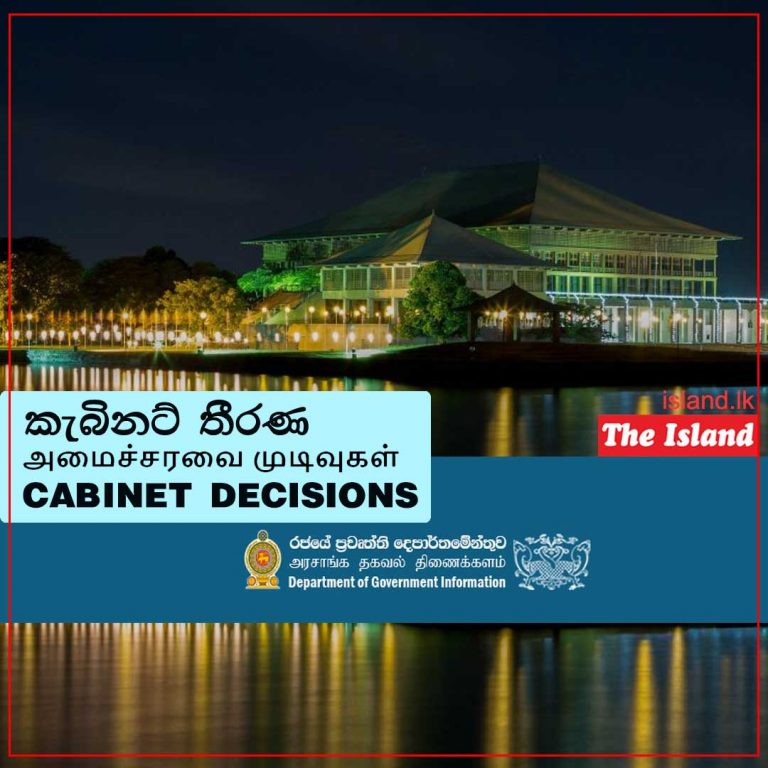
Approval has been granted at the Cabinet meeting held on 03-02-2025 to implement the formal procurement procedure to select a contractor for the construction of a 28 km long double circuit transmission line with the capacity of 220 kW, from Mannar Grid Substation to Mullikulam Collection Grid Substation under the Lot B of the Mullikulam Wind Power Transmission Project.
Bids have been invited following the International Competitive Procurement Procedure and five (5) bids have been received.
Accordingly, based on the recommendations submitted by the High-Level Standing Procurement Committee after evaluating the aforementioned bids, the Cabinet of Ministers has approved the resolution furnished by the Minister of Power and Energy to award the contract to the JSL & Fentons Joint Venture – Intend (Jyoti Structure Limited, India and Hayleys Fentons
Limited, Sri Lanka), substantially responsive minimum bidder, for an equal amount of Sri Lankan Rs. 2,269.18 million (without VAT).

Economic pressure likely to push already-strained businesses into a liquidity crunch
By Sanath Nanayakkare
Sri Lanka is slowing to a midweek halt as a deepening fuel shortage has compelled the government to suspend most public sector operations every Wednesday, while courts have been advised to take a lenient view of attendance requirements amid transportation difficulties caused by fuel rationing.
The directive, issued by the Commissioner General of Essential Services, suspends most state functions one day a week until further notice in an attempt to conserve scarce fuel reserves. Authorities have also urged the private sector to adopt a similar arrangement.
Officials say the measure is aimed at reducing commuter traffic into major cities, particularly Colombo, where thousands of public servants travel daily from suburban areas.
Explaining the decision to select Wednesday, officials said declaring Friday a holiday could have effectively denied the public access to government services for three consecutive days when combined with the weekend.
However, the development underscores the fragility of Sri Lanka’s economic recovery as households continue to grapple with rising prices of essential goods.
The impact is already visible on the streets. Long queues have formed outside fuel stations while public buses have been seen overcrowded, with passengers clinging to footboards. Many commuters were also seen attempting to secure rides through the ride-hailing platforms Uber and PickMe, where drivers were demanding higher fares as demand surged.
Recognising these difficulties, the Judicial Service Commission (JSC) has issued a circular instructing judges to take transportation constraints caused by fuel rationing into consideration when making legal determinations.
Judges have been advised to consider the possibility that lawyers, litigants, witnesses and even suspects may be unable to attend court due to limited fuel availability.
While court proceedings are expected to continue, judicial officers have been asked to assess such situations on a case-by-case basis.
The JSC has also directed courts to make greater use of virtual platforms whenever possible. This is expected to apply particularly to proceedings such as extending remand orders, thereby avoiding the need to transport prisoners physically to court.
Authorities believe that conducting such hearings online could significantly reduce fuel consumption associated with prison transport. The temporary measures will remain in effect until further notice.
Meanwhile, officials say special fuel allocations may be considered for critical sectors including tourism, the Colombo Port, agriculture, health services, the plantation industry and public transportation in order to sustain essential services and economic activity.
However, the broader economic outlook remains uncertain. Business leaders warn that companies already burdened with higher taxes, rising operational costs and thin margins could face severe liquidity pressures if global oil prices remain elevated.
Industry observers say some firms may be compelled to seek loan moratoria if the disruption linked to the conflict involving Iran continues for another month.
Public concern has also been heightened by recent comments from Iranian officials indicating that Tehran has not sought a ceasefire in the ongoing conflict.
For President Anura Kumara Dissanayake, the unfolding fuel shortage is emerging as one of the most serious challenges facing his administration. Although the government has been holding internal consultations, critics say an all-party conference has yet to be convened to formulate a unified national response to the crisis.
Within business circles and sections of the public, questions are increasingly being raised about whether the government possesses the institutional capacity and experience required to manage a prolonged energy shock.

SriLankan Airlines Alerts Customers to Social Media Scams

Four dead 32 injured in head on collision at Weerawila

JMSDF ship OONAMI concludes goodwill visit

Cabinet nod to amend Central Cultural Fund Act No. 57 of 1980
’National Namal Uyana’ declared as a National Heritage
Establishment of Supervisory Committees for restoring economic activities.

‘Dates have the highest sugar content to fight Coronavirus’

Sunday Island 27 December – Headlines

#SundayIsland 17th December – Headlines

Sunday Island – 28th March

Sunday Island Headlines – 21 March

Sunday Island – 21st February – Headlines
-

 News7 days ago
Historic address by BASL President at the Supreme Court of India
-

 Sports7 days ago
The 147th Royal–Thomian and 175 Years of the School by the Sea
-

 Business3 days ago
Browns EV launches fast-charging BAW E7 Pro at Rs. 5.8 million
-

 Life style4 days ago
From culture to empowerment: Indonesia’s vision for Sri Lanka
-

 News7 days ago
Power sector reforms jolted by 40% pay hike demand
-

 Latest News4 days ago
QR code system will be implemented for fuel with effect from 06.00 a.m. today (15th)
-
 Opinion6 days ago
M. D. Banda: Memories of Appachchi – II
-

 News2 days ago
Australian HC debunks misleading travel risk claims for Sri Lanka