
Business
Where were the women?

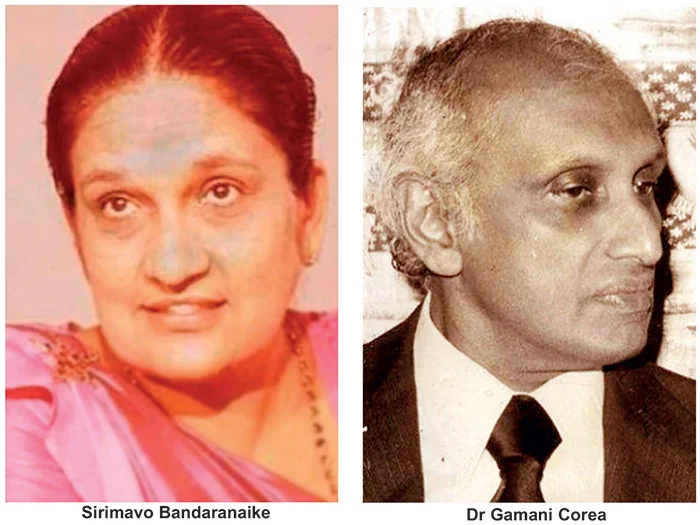
It’s been 70 years since the Bandung Conference brought leaders of Asian and African countries together in a collective effort to forefront anti-colonial and anti-imperial struggles. Twenty-nine Asian and African countries attended and the 1955 conference symbolised a ‘new spirit of solidarity of the Third World’ . The conference underscored two principles of Third World politics – decolonisation and development – and led to the establishment of the Non-Aligned Movement (NAM) and an alternative conversation on how the world should be ordered including a proposal for a New International Economic Order (NIEO).
It was a time when Sri Lanka punched significantly above her weight – Mrs Sirimavo Bandaranaike was an acknowledged leader of NAM, Dr Gamani Corea pushed for more favourable trade terms for the global south from his position as the Secretary of UNCTAD, and Ambassador Shirley Amerasinghe pushed against international competition to acquire the resources of the sea bed and was a key player in the International Law of the Sea conferences. It was a time when the themes of the Bandung conference, economic cooperation, respect for fundamental human rights and the principles of the UN Charter, promotion of world peace and recognition of the equality of all races and the equality of all nations large and small, framed the discussions between nations.
Today we live in a world that is experiencing economic, ecological and geo-political crises, and where the above themes of Bandung have been sidelined if not completely obliterated. Many global south countries are deeply entrenched in debt, world peace is wilfully ignored, and genocidal actions and structural violence proliferate from Burma to Palestine. It is also a world in which limiting global warming to 1.5° Celsius is no longer possible and the consequences of climate change presents an existential crisis. It is a time where the revival of the “Bandung spirit” should provide a resonance that can inspire and inform the foreign policies and international relations of small states like Sri Lanka.
A two-day conference in Colombo, organised by IDEAS in collaboration with the BCIS and Yukthi on the 2nd and 3rd of June 2025 at the BCIS in Colombo, will bring together thinkers from Latin America, Africa and Asia to share what the Bandung spirit can portend for the world going forward. BCIS and partners will also organise a series of events leading up to the conference, and following it, to keep the spirit of Bandung at the forefront of our thinking.
In this article I ask the question famously raised by Cynthia Enloe in her writings on international relations –where were the women? It seems like there were NO female delegates at the conference . And even though the 10 points of the Bandung Declaration reiterated the principles of the UN Charter and set a standard for international relations’ and that championed coexistence instead of co-destruction, it did not explicitly refer to women’s rights. Neither this lack of representation nor the omission of women’s rights from the agenda or outcome of the conference meant that women were missing from anti-colonial and anti-imperial struggles that underscored the Bandung spirit – far from it.
In the first half of the 20th century, starting before Bandung, different constellations of national and international women’s organisations planned and implemented three conferences that foreshadowed the rise of women’s international solidarity in Asia and Africa and could have, as some commentators have argued, informed the emerging pan-Asian and Afro-Asian movement for anti-imperialist regional cooperation symbolized by Bandung.
In 1949 the Conference of the Women of Asia was held in Beijing, China, hosted by the Women’s International Democratic Federation (WIDF) together with the All-China Women’s Democratic Federation and Mahila Atma Rakshi Samiti (MARS) or Women’s Self-Defense Committee from West Bengal, India; in 1958 the Asian-African Conference of Women was held in Colombo, Ceylon (Sri Lanka), under the aegis of five national women’s organizations from Indonesia, India, Pakistan, Burma, and Sri Lanka; and in 1961 Afro-Asian Women’s Conference was held in Cairo, Egypt, organized by the Afro-Asian Peoples’ Solidarity Organization (AAPSO) with strong support from the Non-Aligned Movement, including Gamel Abdel Nasser’s government in Egypt.
Not only did the 1949 conference precede Bandung but it took place well before the now familiar United Nations World Conferences on Women, the first of which was held in Mexico City in 1975 ushering in the UN Decade for Women. The early 20th century gatherings of women from Africa and Asia were the outcome of what was a long-standing critique by women from the colonised countries of Western feminism and the development of solidarity along common issues faced by women in the global south
There were several strands to the agenda and demands of global south women at this point in history. A social reform agenda demanded better access for women to education, health care, and social welfare and sought to “modernise” cultural and religious practices. In some ways this agenda mirrored the agitation by nationalist reformers in societies that were demanding decolonisation who saw education and freedom for women, and monogamy, as markers of modernity and development, They strived to create the “enlightened” woman, a partner for the “bourgeois man”, who negated everything that was considered ‘backward’ in the traditions of the colonised societies. The concept of the “new woman” became eagerly adopted, albeit with regional variations, from Egypt to Japan, China to Korea While the ‘new woman’ image at one level reflected characteristics of the emancipated women of Europe and the USA, and the demand for education allowed women from the bourgeois classes to come out of their homes and into various professions and social work, there was also an underlying conservative emphasis on traditional ideals of the woman as wife and mother, reinforcing women’s role as care givers despite the quest for legal equality.
A second strand of feminist agitation In the early 20th century comprised a nationalist and state agenda that sought equal rights for women in independent nations and women’s full participation in public life. As women became more educated their demands also stretched to obtaining voting rights. This agitation was fuelled as the growing feminist literature of the women’s movement (books, journals and magazines) began catering to the educated and literate ‘new’ woman and reported the efforts for women’s emancipation in different parts of the world. So women in Asia and Africa were able to access information about suffragist and feminist struggles in Europe and by the early decades of the 20th century women in China, India, Japan and Sri Lanka were agitating for women’s suffrage in their countries, organising demonstrations and storming the legislature when voting rights were not granted.
What has received the least attention however in the historic accounts has been that strand of feminist organising that sought to restructure the economy as well as social relations and cultural and political practices to enfranchise all women. These feminist movements tended to push their change agenda beyond the nationalist struggles even after formal independence was granted. They recognised that economic pressures from imperial powers and the national propertied classes and business lobbies weakened the political will of governments to institute reforms. Colonial forms of ownership of the means of production continued under the new decolonised systems. They mobilised peasant women and landless migrants in urban areas with the aim of building a movement led by rural, peasant, working class and middle class women. Their activism was based on anti-imperialism, mass-based organising, a membership dominated by rural women and anti-capitalism. It was this strand of feminist analysis and thinking that dominated the first of the international conferences that was held in Beijing in 1949. Some commentators have argued that this ideological stance of the first pan-Asian women’s conference informed the emerging pan-Asian and Afro-Asian movement for anti-imperialist regional cooperation symbolized by Bandung.
(Ms Priyanthi Fernando is the Executive Director of the Bandaranaike Centre for International Studies. The views expressed in this article are her own.)
(To be continued)
by Priyanthi Fernando

Business
Pelwatte Dairy commissions Sri Lanka’s largest dairy effluent treatment plant to advance ESG leadership and global market readiness
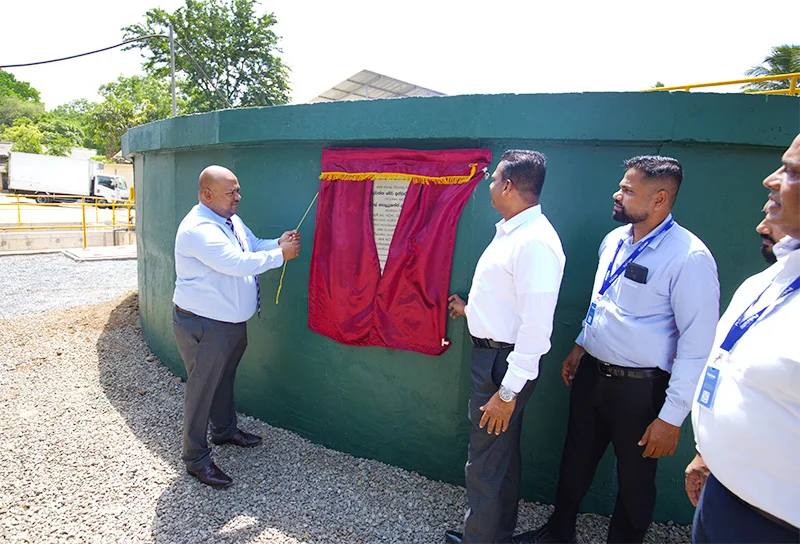
Pelwatte Dairy Industries Limited has successfully commissioned its state-of-the-art Effluent Treatment Plant (ETP) at its Buttala manufacturing facility, marking a significant milestone in the company’s journey toward environmental stewardship, ESG compliance, and responsible dairy processing.
This facility is the largest Effluent Treatment Plant within a dairy processing operation in Sri Lanka, underscoring Pelwatte Dairy’s commitment to aligning its operations with global environmental standards and strengthening its position in international markets.
Strategic Commitment to ESG and Responsible Growth
This investment reflects a deliberate and forward-looking strategy by the Board of Directors to embed Environmental, Social, and Governance (ESG) principles into core operations. As Pelwatte Dairy continues to scale its processing capacity and expand its export footprint, environmental compliance has become a central pillar of sustainable growth.
The ETP has been designed to meet the increasingly stringent environmental expectations of Western, European, and Far Eastern markets, where compliance with wastewater discharge standards, environmental reporting, and sustainability practices are essential for market access.
Future-Proofed Design for Scalable Growth
The facility has a base treatment capacity of 250 m³ per day, with the engineered capability to handle peak volumes of up to 325 m³, representing approximately 30% additional capacity to accommodate future growth in processing volumes. [ETP Opening | Word]
This future-ready design ensures that Pelwatte Dairy can maintain consistent environmental performance even under high production scenarios, reinforcing the company’s commitment to long-term compliance, operational resilience, and responsible expansion.
Advanced Technology Supporting Global Compliance
The ETP integrates advanced treatment technologies, including:
Integrated Dissolved Air Flotation (IDAF)
Anaerobic and Enhanced Sequential Batch Reactor (AnSBR/eSBR) systems
Dedicated CIP wastewater management
Real-time automated process monitoring
Screw press sludge dewatering
These systems ensure high treatment efficiency and compliance with critical environmental parameters such as Biological Oxygen Demand (BOD), Chemical Oxygen Demand (COD), and nutrient discharge limits.
The plant is fully aligned with Sri Lanka’s stringent Central Environmental Authority (CEA) discharge standards and supports adherence to ISO 14001 Environmental Management System (EMS) practices, reinforcing Pelwatte Dairy’s structured approach to environmental management and continuous improvement.
Regulatory Engagement and Endorsement
The inauguration ceremony was attended by distinguished representatives from the Board of Investment (BOI) Environmental Division and Central Environmental Authority (CEA) provincial and district offices, reflecting strong regulatory engagement and endorsement of the environmental standards achieved through this investment.
Their presence underscores Pelwatte Dairy’s proactive approach in working closely with regulatory authorities to ensure compliance with national environmental frameworks while aligning with global best practices.
Enhancing Global Credibility of Sri Lankan Dairy
With this development, Pelwatte Dairy strengthens its position as a responsible and globally competitive dairy processor, capable of meeting the environmental expectations of leading international buyers and regulatory bodies.
This initiative not only enhances the company’s ESG profile but also contributes to elevating the sustainability standards of Sri Lanka’s dairy industry.
Acknowledgements
Pelwatte Dairy extends its sincere appreciation to its project team, operational staff, consultants, regulatory authorities, and partners for their contributions. Special recognition is extended to Industrial Solutions Lanka (Pvt) Limited for their engineering expertise and successful project delivery.
Business
Port City Colombo Forum in Dubai positions Sri Lanka as South Asia’s gateway for UAE business expansion
Exclusive invitation-only engagement at the Ritz-Carlton DIFC brought together approximately 200 senior UAE business and diplomatic leaders to explore Sri Lanka’s role as a platform for regional growth
The Embassy of Sri Lanka in the United Arab Emirates and the Consulate General of Sri Lanka in Dubai and the Northern Emirates, in collaboration with Colombo Port City Economic Commission and CHEC Port City Colombo Pvt. Ltd., hosted Globalisation and the Sri Lankan Opportunity – From Recovery to Relevance: Sri Lanka’s Moment in the Evolving Global and Regional Economy, an invitation-only diplomatic and investment engagement at The Ritz-Carlton, Dubai International Financial Centre.
The forum brought together approximately 200 senior leaders from across UAE corporates and business chambers alongside Sri Lanka’s most senior diplomatic and investment representatives – among them senior executives from Sobha Realty, Binghatti, Oracle, Emirates Airlines, First Abu Dhabi Bank, JLL, Cushman & Wakefield, CBRE, IFS, Danube and Samana Developers – reflecting the depth of interest from the UAE’s leading industries in Sri Lanka’s evolving economic proposition.
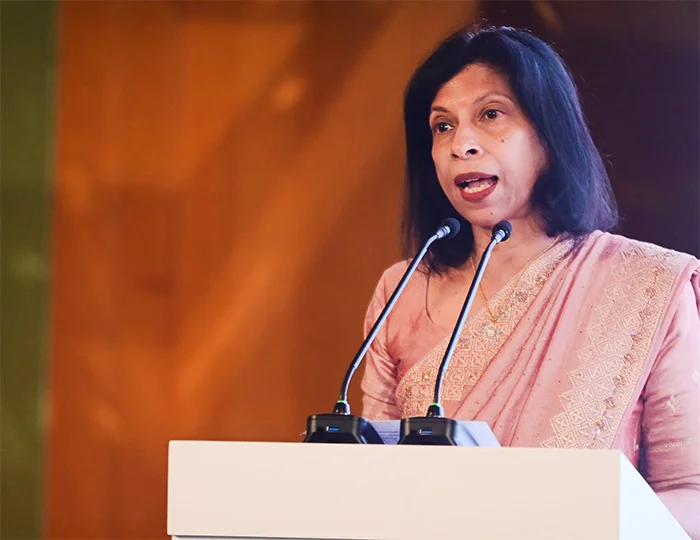
Opening the forum, Prof. Arusha Cooray, Ambassador of Sri Lanka to the United Arab Emirates, set the tone for a morning of substantive dialogue, speaking to the depth and durability of the UAE–Sri Lanka partnership, one built on decades of trade, people, and shared economic ambition, and affirming Sri Lanka’s commitment to taking that relationship into a new chapter defined by what Sri Lanka can offer UAE businesses seeking to grow their presence across South Asia.
The keynote address was delivered by Ghanim Al Falasi, CEO of Falak Tayyeb Platinum and Senior Vice President/Director General’s Office for of Dubai Silicon Oasis (DSO), who drew on over a decade of senior leadership experience in the UAE’s innovation and technology ecosystem to frame the question of what South Asia’s emerging platforms offer to forward-looking UAE businesses. He noted that while Dubai provides global access to capital and logistics, Colombo offers strategic access to South Asia, and that together the two cities can function as complementary platforms serving different but mutually reinforcing roles in the regional economy.

The Ceylon Chamber of Commerce will convene its 187th Annual General Meeting on Thursday, 25th June 2026, at 5.30 PM at The Forum, Cinnamon Life.
This year’s gathering welcomes His Excellency Andrew Patrick, High Commissioner of the United Kingdom to Sri Lanka, as Chief Guest, who will deliver the keynote address. His presence reflects the close and longstanding ties between Sri Lanka and the United Kingdom, and is especially fitting at a juncture when strengthening trade ties, investor confidence, and sustained economic reform remain front of mind for the nation’s business community.
Chairperson of the Ceylon Chamber, Krishan Balendra, will also address the audience, reflecting on a year of progress and setting out the priorities ahead. His remarks will provide an overview of the Ceylon Chamber’s continued push to sharpen private sector competitiveness, drive evidence-based policy advocacy, and anchor long-term economic stability.
Following the formal proceedings, members and guests are invited to a networking reception.
Ceylon Chamber members wishing to attend may register by contacting Alikie at alikie@chamber.lk / 9411 558 8805.

Showers will occur in the Western, Sabaragamuwa and North-western provinces and in Galle, Matara, Kandy and Nuwara-Eliya districts

Military held land: Govt. trying to maintain balance between security and civilian needs

Yoshitha granted bail, travel ban imposed

EV Adoption critical for renewable energy growth and economic stability, says Minister Karunathilaka

Speaker endorses Rescue, Rehabilitation and Insolvency (Corporate and Personal) Bill

Haiti deployment under UN command: India clears obstacle faced by SLA

‘Dates have the highest sugar content to fight Coronavirus’

Sunday Island 27 December – Headlines

#SundayIsland 17th December – Headlines

Sunday Island – 28th March

Sunday Island Headlines – 21 March

Sunday Island – 21st February – Headlines
-
 News6 days ago
CIABOC summons Yoshitha over his participation in British Navy training programme
-

 News3 days ago
Release of 2025 O/L results likely to be delayed
-

 Sports3 days ago
Tharanga set for high-profile javelin clash in Ostrava
-

 News6 days ago
Justice Minister responds to social media claims he represented Easter Sunday ringleader
-

 Features4 days ago
Politics of protected species
-

 News3 days ago
Theft of USD 2.5 mn from Treasury: CoPF accused of complicity in NPP cover-up
-

 News5 days ago
Commonwealth lawyers urge Lanka to uphold rule of law
-

 News2 days ago
Beijing Capital Airlines to resume flights to Colombo signalling boost to tourism