
Business
WCIC canvasses the importance of safe workplaces for women free from GBVH, and the importance of ILO Convention C190

Women face Gender Based Violence and Harassment at Corporates and in Entrepreneurial businesses.
Women’s Chamber of Industry and Commerce (WCIC) has been actively working to create workplace environments that are free from Gender-Based Violence and Harassment (GBVH), enabling women to thrive and contribute meaningfully. Over the past few years, in collaboration with the Centre for International Private Enterprise (CIPE), WCIC undertook extensive research to understand the realities faced by professional women and women entrepreneurs in Sri Lanka.
“Working on the latest project of CIPE – the WCIC will strive to move forward meaningful action to make some head way” Stated the Project Chair Tusitha Kumarakulasingam on behalf of the WCIC
The research revealed that awareness of GBVH and experiences of harassment in the workplace are widespread. While GBVH has appeared on the agendas of many organizations, the study found that no formal, conclusive actions have been implemented to address the issue effectively.
Based on the survey findings, WCIC sought to create a forward-looking pathway toward a better tomorrow, guided by the objective:
“Break the Bias for a Better Tomorrow: Promote and Invest in a Decent Workplace for Women – Ratify ILO Convention 190.”
Gender-based violence and harassment in the workplace affect both men and women; however, women experience it disproportionately. Until now, there has been limited documentation or evidence to understand the scale and magnitude of the issue. Many women are also unaware of what constitutes GBVH. Through this survey—conducted for WCIC by Kantar Sri Lanka—the Women’s Chamber of Industry and Commerce aimed to bridge this knowledge gap and educate working women about GBVH, while empowering them with information on the steps they can take if they face such incidents.
The survey outcomes revealed several critical gaps and challenges faced by working women in Sri Lanka in relation to gender-based violence and harassment (GBVH). Overall awareness of harassment remains limited, with many women not fully understanding that such behavior constitutes an offence or being aware of the full range of actions that amount to harassment. Awareness was highest in relation to bullying, followed by discrimination and sexual or physical harassment. Women reported experiencing GBVH across all categories, with bullying emerging as the most prevalent, while women entrepreneurs reported higher levels of sexual and physical harassment compared to professional women. Although some respondents were aware that complaints could be lodged through human resources mechanisms, there was little confidence that these would be addressed fairly. A significant majority lacked awareness of existing laws, legal processes, or support organizations, and among those who experienced GBVH, 80% took no action. Fear of negative career repercussions, victim-blaming, and not being believed were key reasons for remaining silent. While a few organizations had policies and procedures in place, in most cases these were not implemented in a fair or effective manner.
The “cost of GBVH” in Sri Lanka refers to the broad social and economic impact of gender-based violence and harassment, rather than a specific monetary value. Research shows that GBVH places a significant burden on individuals, businesses, and the national economy through both direct and indirect costs.
Key insights include:
Gender-based violence and harassment (GBVH) carries significant economic and social costs at the workplace, national, and global levels. A 2022 International Finance Corporation (IFC) study covering nine companies in Sri Lanka estimated that workplace violence and harassment resulted in the loss of approximately six working days per employee per year, translating into a total cost of at least USD 1.7 million for those organizations. In parallel, institutions such as the Family Planning Association of Sri Lanka (FPA Sri Lanka), together with the World Bank, are assessing the costs of delivering GBV response services through healthcare facilities, including Mithuru Piyasa centres. Beyond these direct costs, GBVH undermines productivity through absenteeism and presenteeism, increases staff turnover, and generates additional healthcare and legal expenses, alongside substantial intangible costs such as pain, trauma, and loss of dignity. At a broader level, the United Nations estimated in 2016 that violence against women accounts for approximately 2% of global GDP—around USD 1.5 trillion—highlighting the magnitude of its national and global economic impact.
(Source: IFC and FPA Sri Lanka)
The Way Forward
To address these issues in a systematic and sustainable manner, ILO Convention 190 (C190) is widely recognized as a critical pathway forward. While many organizations, including WCIC, have actively advocated for the ratification of the Convention, meaningful progress has yet to be achieved. As ratification requires government facilitation, the commitment and conviction of relevant authorities are essential for advancing this agenda and ensuring decent, safe, and inclusive workplaces for women.
For more details on the WCIC visit: https://www.wcicsl.lk
The Women’s Chamber of Industry and Commerce, Sri Lanka (WCIC) was inaugurated in 1985 by a group of entrepreneurs with a visionary mindset. Each of them were already successful in their own business ventures, together with a few professionals they created an organization which has today, reached high standards. They envisaged that the organisation could be a pivotal force in leveraging women entrepreneurs into the mainstream of business activity in the country, encouraging greater economic contribution to the country from women. We work on the principles of Engage, Empower, Enrich
The organization is steered with a clear vision, sharp mission, and a strategic plan which delivers on the identified expectations.


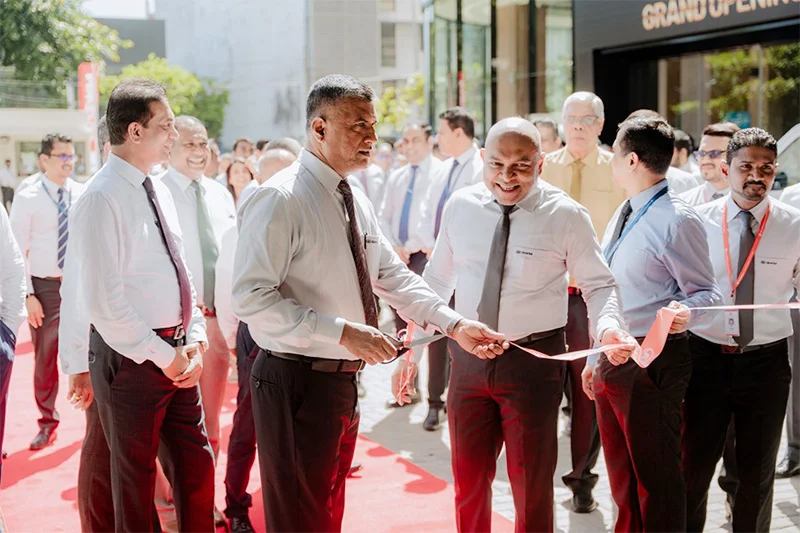
David Pieris Automobiles (Private) Limited (DPA), the four-wheeler sales arm of the David Pieris Group, announced the opening of its state-of-the-art GWM Flagship Experience Centre at 250, Access Tower 03, Union Place, Colombo 02, marking a significant milestone in the evolution of Sri Lanka’s automotive retail landscape.
The newly opened flagship facility is designed to deliver a truly world-class automotive experience, showcasing the latest innovations and technologies from GWM, one of the world’s leading automobile manufacturers. As the first and only vehicle experience centre of its kind in Sri Lanka, it offers customers an immersive journey that goes beyond the traditional showroom concept. Visitors can explore GWM’s premium range of SUVs and electric vehicles, including the HAVAL H6 HEV, HAVAL H6 PHEV, HAVAL H6 GT PHEV, TANK 300 HEV and TANK 500 HEV, while enjoying dedicated vehicle demonstration zones, test-drive opportunities, and a host of innovative customer engagement experiences designed to redefine the vehicle purchasing journey. GWM’s product portfolio in Sri Lanka will be further expanded in the coming months with the introduction of several new models, including a range of fully electric vehicles.
With a legacy spanning over four decades, the David Pieris Group has earned a reputation as one of Sri Lanka’s most trusted automotive organisations, particularly for its comprehensive after-sales support and customer service excellence. Strengthening its commitment to GWM customers, DPA has already established a dedicated, state-of-the-art GWM service centre at No. 75, Hyde Park Corner, Colombo 02, supported by an expanding network of authorised service dealers across the island to ensure convenient and reliable customer care.
Commenting on the opening, Mahesh Gunathilake, Director, David Pieris Automobiles, stated: “The opening of the GWM Flagship Experience Centre represents a significant milestone in our journey with the GWM brand in Sri Lanka. This is the country’s first dedicated state-of-the-art experience centre for GWM vehicles, offering customers the opportunity to experience world-class automotive technology, premium comfort and advanced safety features. GWM has successfully redefined modern mobility by delivering high-end luxury and innovation at an affordable price point, and we are proud to bring this exceptional experience to Sri Lankan motorists.”
The opening of the flagship facility further reinforces David Pieris Automobiles’ commitment to expanding GWM’s presence in Sri Lanka while providing customers with an unmatched ownership experience backed by the Group’s renowned sales and after-sales expertise.(DPA)
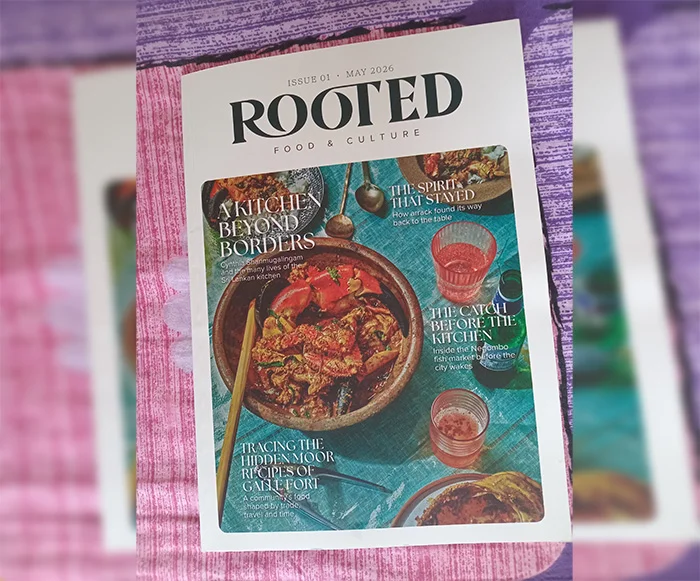
Issue no.1 of a ground-breaking journal on Sri Lankan food and culture has just been launched and it’s such an engaging ‘read’ that it just cannot be put down by the reader until s/he reaches the last word in the publication. Titled ‘ROOTED’ it is a publication of Rooted Publications Pvt. Ltd. Colombo (www.rootedsrilanka.com).
This is no run-of-the-mill journal on local ‘culinary delights’. It is a profoundly empathetic, sensitive exploration of the uniqueness of Sri Lankan food and the cultures of the country. In other words, it’s a close, appreciative examination of what makes the native food of Sri Lanka and its cultures special and hard to replicate and replace.
Writers of the arrestingly illustrated articles in ‘ROOTED’ have apparently spared no pains to travel the length and breadth of Sri Lanka to unravel, with mesmeric pleasure, the food and drink offers at the heart of Sri Lankan cuisine. The food connoisseur has all his curiosities satisfied in the journal and cannot prevent his taste buds from being stimulated on reading the contents of the journal.
Regardless of geographical or physical location what Sri Lanka has to offer its own people or the visitor to the country by way of particularly indigenous dishes and meal spreads are made to come alive in these pages. The connoisseurs and food experts are taken on an entrancing journey into homes transformed into family restaurants, aromatic eateries and bustling market places with sizzling catch along the sea coast of the island to its interior in this appetizing survey of Sri Lankan food.
What is distinct in terms of food and drink to the different ethnicities and cultures of the land are rendered in larger-than-life eye-catching portrayals via the pen and the lens. Consequently the journal not only celebrates food but also its distinctive cultural roots and identities. That is, people are serenaded alongside food.
In the process, the ‘ambul thials’, the ‘ala thel and brinjal badums’, the ‘thilapia curries’, the multifarious, ‘mouth-burning sambols’ and heady ‘Arrack shots’ experimentally mixed, to name just a few such offers of food and drink with a uniquely Sri Lankan stamp on them, are made to come alive in ‘ROOTED’.
The magazine has been put together by an editorial team headed by editors Chadini Fernando, Vidya Balachander and they need to be commended on a job well done.
By Lynn Ockersz
In Sri Lanka, selling something has always carried an unspoken risk for women. Share your number with a stranger. Arrange a meeting. Handle cash. Hope for the best.
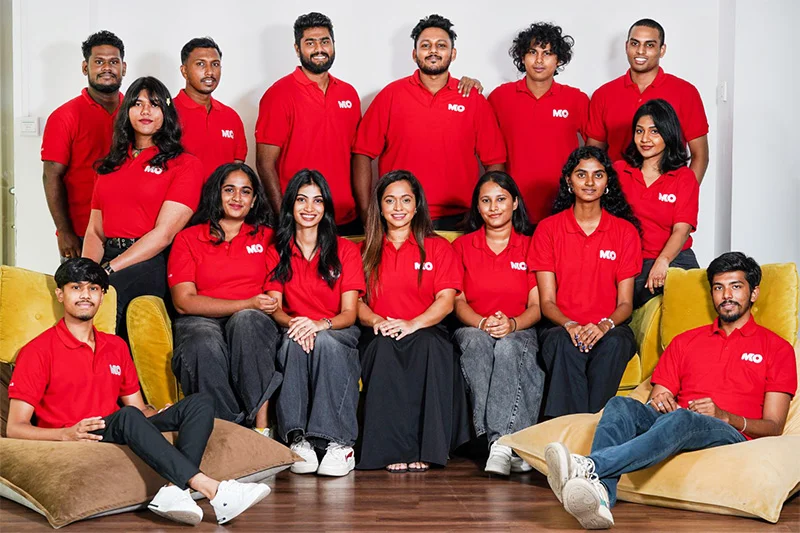
MO Marketplace, live since June 2024, has removed every one of those friction points. Buyers and sellers on the platform never need to exchange personal contact details. Payments are held in escrow until delivery is confirmed. Pickup and drop-off is managed entirely by MO. Two people can complete a transaction from start to finish without ever speaking directly to each other.
For women running home-based businesses or women simply have too many clothes and things, that architecture is not a convenience. It is a fundamental shift in what is possible.
The evidence is in the listings. Clothing, fashion, and home goods dominate the platform, categories overwhelmingly driven by female sellers and buyers. From home-based clothing traders to small lifestyle businesses operating out of living rooms across Colombo, women are using MO to participate in commerce on their own terms, without compromising safety or privacy.
The platform has recorded 45,000 downloads and 14,000 registered users in 18 months, with peak monthly active users of 15,000. Commissions are capped at a flat 10%, significantly below the 15% to 30% charged by dominant platforms, making it accessible for small and micro sellers.
Coming mid-2026, AI tools will automatically generate listing descriptions and enhance product images, removing two of the most common barriers to getting started as a seller. Video selling is also on its way.
Sri Lanka has no shortage of entrepreneurial women. Until now it lacked a platform designed around how they actually need to trade.

Showers or thundershowers will occur at times in the Western, Sabaragamuwa and North-western provinces and in Galle, Matara, Kandy and Nuwara-Eliya districts.

Sallay refuses to end hunger strike unless probe is taken out of CID led by Shani

Lanka joins US-led Indo-Pacific Ports Forum

Vehicle imports remain steady despite surcharge – Customs

EU supports launch of Sri Lanka’s Revised National Green Reporting System Guidelines in partnership with UNIDO

Former Intelligence Colonel files petition to prevent his arrest in connection with 2019 Easter attacks

‘Dates have the highest sugar content to fight Coronavirus’

Sunday Island 27 December – Headlines

#SundayIsland 17th December – Headlines

Sunday Island – 28th March

Sunday Island Headlines – 21 March

Sunday Island – 21st February – Headlines
-
 Latest News5 days ago
Kusal Mendis, Pathum Nissanka, bowlers put Sri Lanka 1-0 up
-
 News5 days ago
New US tariffs proposed on 60 countries, including Sri Lanka
-

 Features4 days ago
Power crept into the Sangha and is now tearing it apart
-

 Features4 days ago
Kondachchi wind farm and battery storage project to boost energy security, says Power Ministry Secretary
-

 Features4 days ago
Saudi Arabia sets new benchmark in Hajj management as 1.7 million pilgrims complete sacred journey
-

 News3 days ago
Asst. Manager, security officer arrested over Rs 30 mn snatch at Horana PB branch
-

 News2 days ago
Women’s T20 World Cup 2026 warm-up: Chamari Athapaththu’s 94 helps Sri Lanka beat Pakistan
-

 Editorial1 day ago
Probe Sallay’s complaint