
Latest News
UN climate talks fail to secure new fossil fuel promises

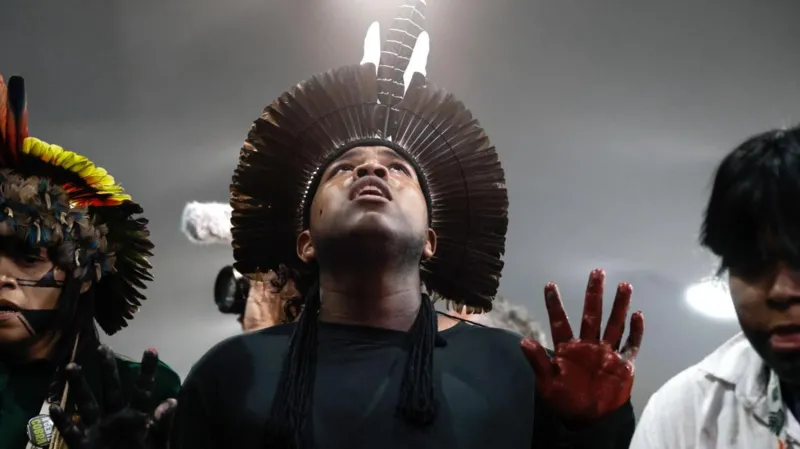
Following bitter rows, the UN climate summit COP30 in Belém, Brazil has ended with a deal that contains no direct reference to the fossil fuels that are heating up the planet.
It is a frustrating end for more than 80 countries including the UK and EU that wanted the meeting to commit the world to stop using using oil, coal and gas at a faster pace.
But oil-producing nations held the line that they should be allowed to use their fossil fuel resources to grow their economies.
The meeting takes place as the UN says it fears global efforts to limit global temperature rise to 1.5C above pre-industrial levels have failed.
A representative for Colombia furiously criticised the COP presidency for not allowing countries to object to the deal in the final meeting on Saturday, known as a plenary.
“Colombia believes that we have sufficient scientific evidence saying that more than 75% of the global greenhouse gas emissions come from fossil fuels,” Daniela Durán González, Colombian Climate Delegate, told BBC News.
“So we do believe it’s time that the Convention on Climate Change starts talking about that reality,” she added.
The final deal, called the Mutirão, calls on countries to “voluntarily” accelerate their action to reduce their use of fossil fuels.
For the first time, the US did not send a delegation after President Donald Trump said the country will leave the landmark Paris treaty that committed countries to act on climate change in 2015. He has branded climate change “a con”.
Veteran negotiator and former Germany climate envoy Jennifer Morgan told the BBC that the US absence was a “hole” in the negotiations. Often the US has supported blocs like the EU and UK.
“In a 12-hour negotiation overnight, when you have oil-producing countries pushing back hard, to not have someone counteracting on that, it certainly was hard,” she said
But for many countries, the fact that the talks did not collapse or roll back on past climate agreements is a relief.
Antigua and Barbuda Climate Ambassador Ruleta Thomas commented: “We are happy that there is a process that continues to function […] where every country can be heard.”
In the final meeting, a representative for Saudi Arabia said: “Each state must be allowed to build its own path, based on its respective circumstances and economies.”
Like many other leading oil-producing nations, the country has argued it should be allowed to exploit its fossil fuel reserves as others have done in the past.
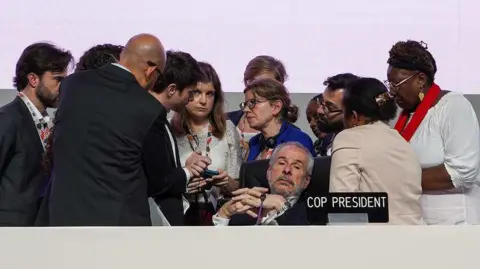
The two weeks of talks were at times chaotic. Toilets ran out of water, torrential thunderstorms flooded the venue, and delegates struggled to cope in hot, humid rooms.
The COP’s around 50,000 registered delegates were evacuated twice. A group of about 150 protestors broke into the venue, breaching security lines, and carrying placards reading “our forests are not for sale”.
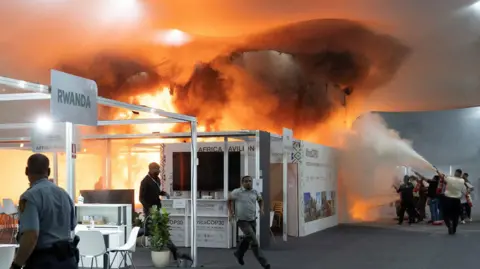
On Thursday a large fire broke-out scorching a hole into the roof and forcing participants to rush outside.
Brazilian President Luiz Inácio Lula da Silva chose the city of Belém to put the world’s attention on the Amazon rainforest and to bring a rush of finance to the city.
Despite its desire for a more ambitious fossil fuel agreement, Brazil was criticised for its own plans to drill for oil at the mouth of the Amazon.
Its offshore oil and gas production is on course to increase until the early 2030s, according to analysis shared with the BBC by campaign group Global Witness.

Countries at the talks have competing interests, depending on their national circumstances and how exposed they are to the effects of climate change. Some countries were happy about the outcomes.
India praised the deal, calling it “meaningful”. A group representing the interests of 39 small island and low-lying coastal states on Saturday called it “imperfect” but still a step towards “progress”.
Poorer nations have come away with a promise for more climate finance to help them adapt to the impacts of climate change.
“It has moved the needle. There is a clearer recognition that those with historic responsibility [countries that emitted more planet-warming gases in the past] have specific duties on climate finance,” said Sierra Leone Minister of The Environment and Climate Change Jiwoh Abdulai.
But it’s a sour end for more than 80 countries, who negotiated through the night to keep stronger fossil fuel language in the deal.
UK Secretary of State for Energy and Climate Change Ed Miliband insisted the meeting is a “step forward”.
“I would have preferred a more ambitious agreement,” he said.
“We’re not going to hide the fact that we would have preferred to have more, to have more ambition on everything,” EU climate commissioner Wopke Hoekstra told journalists.
With lush trees, bird cries and intense humidity, it was hard to escape the Amazonian backdrop of the talks.
Brazil launched the talks with a new fund called Tropical Forests Forever Facility that would pay countries to protect tropical forests. By the end of the meeting, it raised at least $6.5bn from governments, although the UK has not yet contributed.
Over 90 countries supported a call for a global deforestation action plan, or “roadmap”.
[BBC]

Latest News
Heat Index likely to increase up to ‘Caution level’ at some places in the Western, Sabaragamuwa, Southern, North-western, Northern and North- central provinces and in Monaragala district
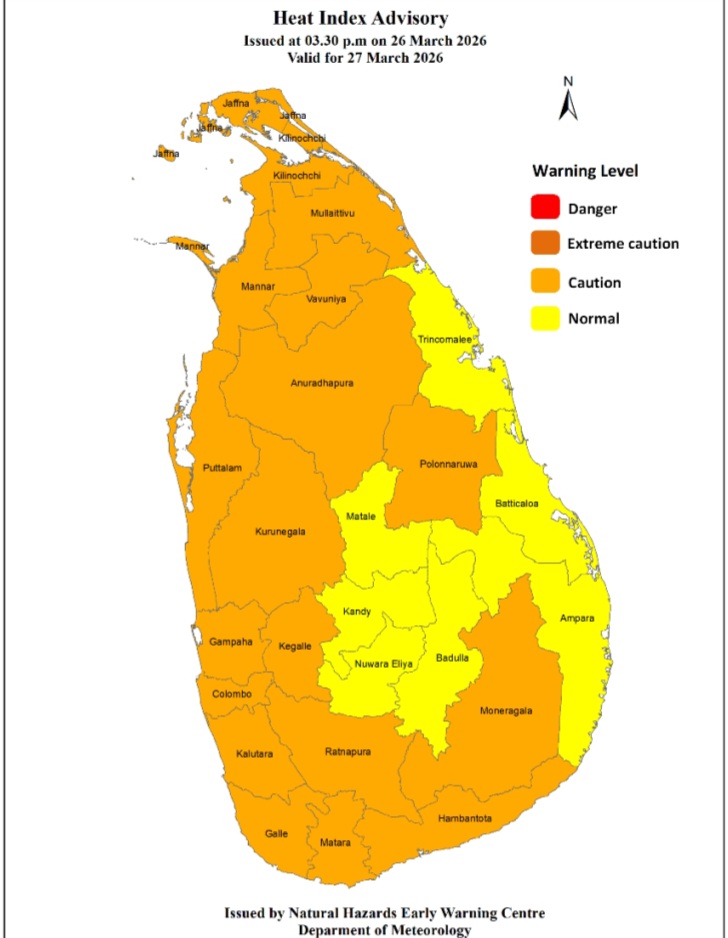
Warm Weather Advisory
Issued by the Natural Hazards Early Warning Centre of the Department of Meteorology
Issued at 3.30 p.m. on 26 March 2026, valid for 27 March 2026.
Thw Heat index, the temperature felt on human body is likely to increase up to ‘Caution level’ at some places in the Western, Sabaragamuwa, Southern, North-western, Northern and North-
central provinces and in Monaragala district.
The Heat Index Forecast is calculated by using relative humidity and maximum temperature and this is the condition that is felt on your body. This is not the forecast of maximum
temperature. It is generated by the Department of Meteorology for the next day period and prepared by using global numerical weather prediction model data.

Effect of the heat index on human body is mentioned in the above table and it is prepared on the advice of the Ministry of Health and Indigenous Medical Services.
ACTION REQUIRED
Job sites: Stay hydrated and takes breaks in the shade as often as possible.
Indoors: Check up on the elderly and the sick.
Vehicles: Never leave children unattended.
Outdoors: Limit strenuous outdoor activities, find shade and stay hydrated.
Dress: Wear lightweight and white or light-colored clothing.
Note:
In addition, please refer to advisories issued by the Disaster Preparedness & Response Division, Ministry of Health in this regard as well. For further clarifications please contact 011-7446491
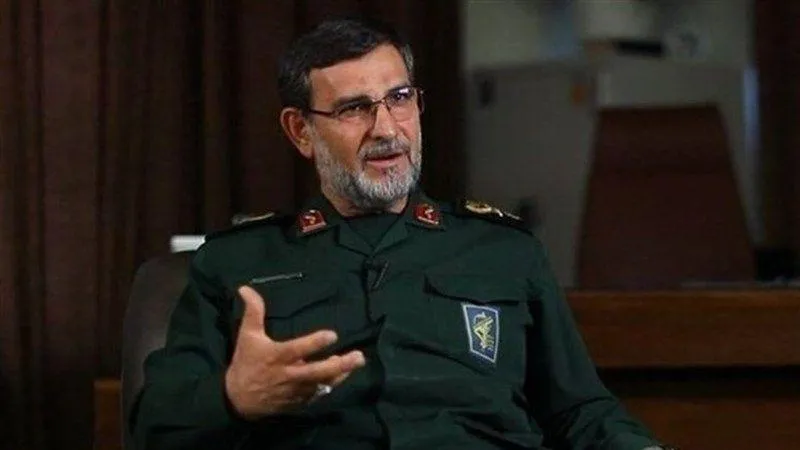
Israel says it has killed the Iranian navy chief overseeing what is a near-total blockade of the Strait of Hormuz.
Alireza Tangsiri, head of the Islamic Revolutionary Guards Corps (IRGC) navy, was “directly responsible for the terrorist act of bombing and blocking the Strait of Hormuz”, and has been “blown up”, according to Israel’s defence minister Israel Katz.
He added that a number of other “senior Navy command officials” have also been killed. Iran has not yet commented.
Since the start of the war on 28 February, Israel has assassinated several top Iranian officials, including Supreme Leader Ayatollah Ali Khamenei and security chief Ali Larijani.
Effectively blockading the Strait of Hormuz – the thin waterway between Iran, the United Arab Emirates (UAE) and Oman, through which around 20% of the world’s oil and liquefied natural gas normally passes – has been a key pillar of Iran’s strategy in the war.
Oil prices have consequently shot up, placing a direct price of the war on consumers in not only the US and Israel but across the world.
In recent weeks, an X account attributed to Tangsiri and cited by Iranian media has posted frequently about the Hormuz blockade, writing that “no vessel associated with the aggressors against Iran has the right to pass through”.
Tangsiri was appointed as the commander of the Navy in 2018, having previously served as deputy commander since 2010. In 2019, he was sanctioned by the US Treasury along with other IRGC commanders after Iran shot down a US surveillance drone near the strait.
Israeli Prime Minister Benjamin Netanyahu described Tangsiri as an individual with “a great deal of blood on his hands” and said his assassination was “yet another example of the co-operation between us and our friend, the United States, toward the common goal of achieving the objectives of the war”.
US Central Command said in a statement Tangsiri’s death “makes the region safer” and that the IRGC’s navy “is on an irreversible decline”. It also called on serving members of the IRGC to abandon their posts and return home “to avoid further risk of unnecessary injury or death”.
Israel’s military said in a statement posted on X that the head of the IRGC Navy’s intelligence directorate, Behnam Rezaei, was also “eliminated”.
(BBC)
Latest News
A strong Technical and Vocational Education and Training (TVET) system equips individuals with practical, relevant, and future-oriented skills helping to innovate responsibly towards a greener and sustainable future – PM
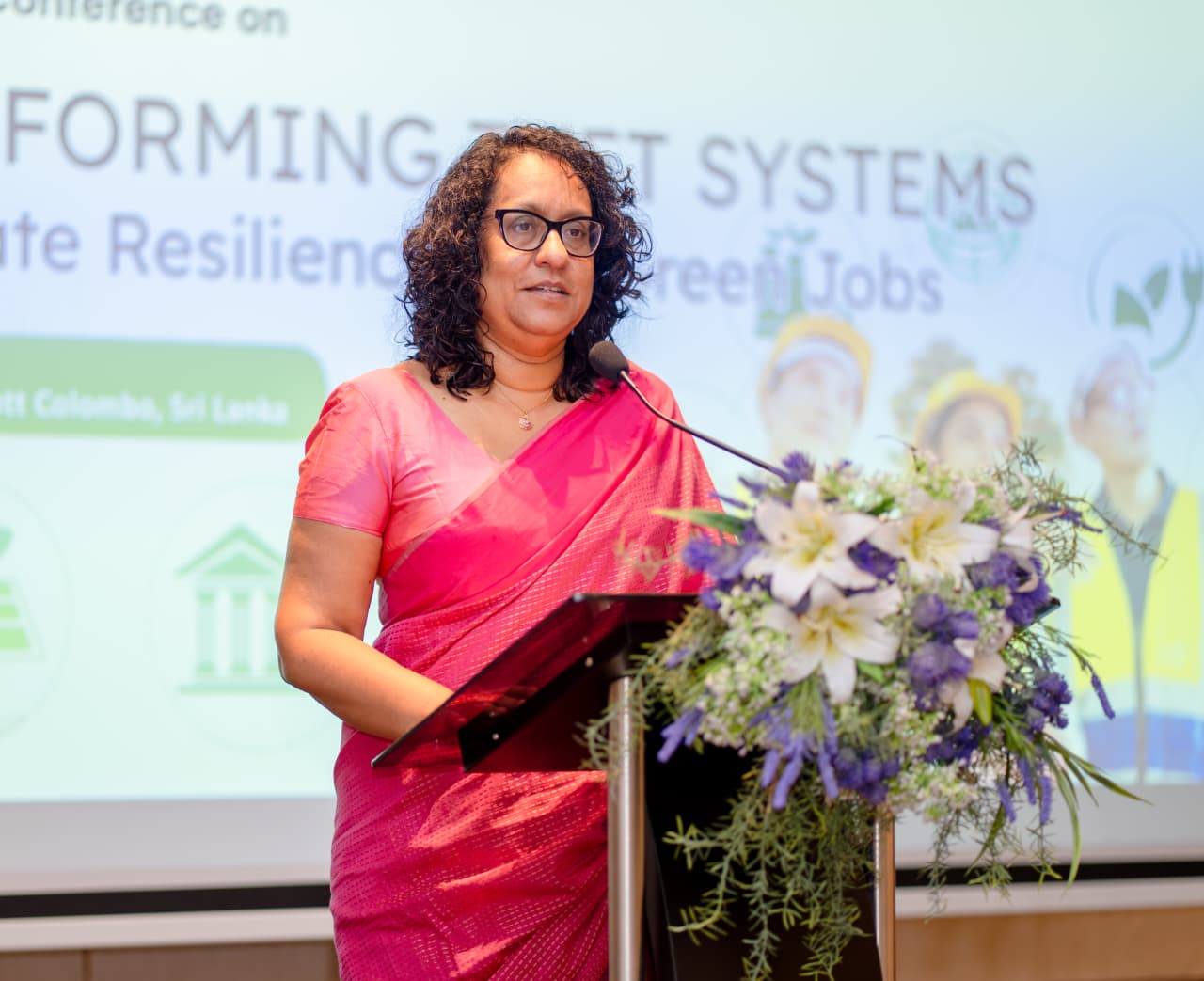
The Prime Minister, Minister of Education, Higher Education and Vocational Education Dr. Harini Amarasuriya participated as the Chief Guest in the international conference on ’Transforming TVET Systems for climate resilience and green jobs’ organized by Colombo Plan Staff College, Philippines together with the Ministry of Education, Higher Education and Vocational Education Sri Lanka on 24 th of March at Courtyard by Marriott Colombo, Sri Lanka.
The Conference serves as the flagship event of the five-day Regional Programme on “Transforming TVET for a Digital, Green, and Inclusive Economy” (23-27 March 2026), which continues throughout the week, bringing together representatives from CPSC member countries including Bhutan, Fiji, Malaysia, Maldives, Myanmar, Nepal, Philippines, Thailand, Pakistan, and Sri Lanka, fostering high-level dialogue and knowledge sharing on climate-resilient and green skills development.
The Conference features technical and plenary sessions on climate-responsive TVET systems, green skills development, national policy frameworks, and emerging technologies shaping industry transformation.
Addressing at the event, the Prime Minister emphasized the role of Technical and Vocational Education and Training (TVET) that equips individuals with practical, relevant, and future-oriented skills in addressing climate change and shaping a sustainable future.
The Prime Minister reaffirmed that this transformation remains a national priority for Sri Lanka. She stressed that education must go beyond knowledge dissemination to empower individuals with opportunities, dignity, and the capacity to contribute meaningfully to society.
She further emphasized the need to integrate environmental sustainability into education and training systems by embedding green skills in curricula, investing in modern training facilities, promoting innovation, and fostering collaboration between training institutions and emerging green industries.
Highlighting the importance of ensuring equity the Prime Minister further stated, that opportunities arising from the green transition must be accessible to all, including youth, young women, people with special needs, and marginalized communities.
Reaffirming Sri Lanka’s commitment to working closely with regional and international partnerships, the Prime Minister emphasized the importance of transforming them to actual benefits and partnerships.
The occasion was attended by the Secretary to the Ministry of Education, Higher Education and Vocational Education Nalaka Kaluwewa, Additional Secretary (Vocational Training) Ms. Samanthi Senanayake Director General Colombo Plan Staff College Prof. Dr. Suresh K. Dhameja , TVET administrators, institutional leaders, policymakers, instructors, industry representatives, and international delegates from across the region and seniors officials and officials from Ministries.
(Prime Minister’s Media division)

Heat Index likely to increase up to ‘Caution level’ at some places in the Western, Sabaragamuwa, Southern, North-western, Northern and North- central provinces and in Monaragala district

Israel says it has killed Iran’s navy chief overseeing Strait of Hormuz blockade

A strong Technical and Vocational Education and Training (TVET) system equips individuals with practical, relevant, and future-oriented skills helping to innovate responsibly towards a greener and sustainable future – PM

PM reviews progress of the committee appointed for the establishment of a National Nursing University

UN votes to recognise enslavement of Africans as ‘gravest crime against humanity’

Meta and YouTube found liable in landmark social media addiction trial

‘Dates have the highest sugar content to fight Coronavirus’

Sunday Island 27 December – Headlines

#SundayIsland 17th December – Headlines

Sunday Island – 28th March

Sunday Island Headlines – 21 March

Sunday Island – 21st February – Headlines
-

 News2 days ago
Senior citizens above 70 years to receive March allowances on Thursday (26)
-

 Features4 days ago
Trincomalee oil tank farm: An engineering marvel
-
 News7 days ago
CIABOC tells court Kapila gave Rs 60 mn to MR and Rs. 20 mn to Priyankara
-

 Features7 days ago
Science and diplomacy in a changing world
-

 Features4 days ago
The scientist who was finally heard
-

 Business23 hours ago
Dialog Unveils Dialog Play Mini with Netflix and Apple TV
-
 News2 days ago
Japanese boost to Sri J’pura Hospital, an outright gift from Tokyo during JRJ rule
-

 News2 days ago
CEB Engineers warn public to be prepared for power cuts after New Year