
Latest News
Meta and YouTube found liable in landmark social media addiction trial

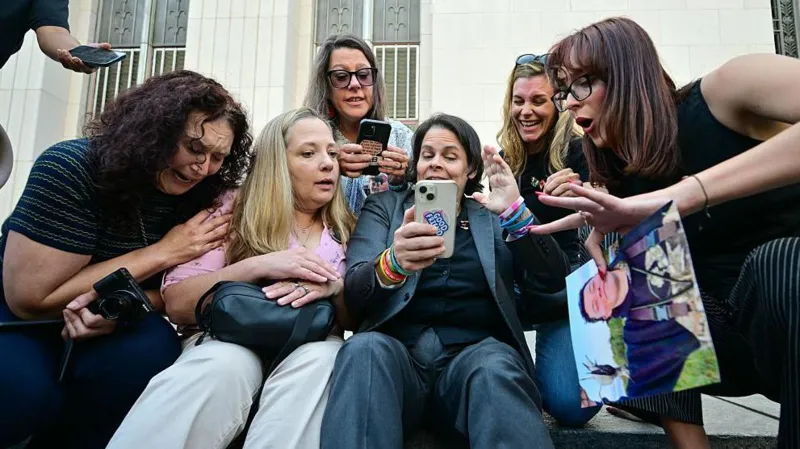
A Los Angeles jury has handed down an unprecedented win for a young woman who sued Meta and YouTube over her childhood addiction to social media.
Jurors found that Meta, which owns Instagram, Facebook and WhatsApp, and Google, owner of YouTube, intentionally built addictive social media platforms that harmed the 20-year old’s mental health.
The woman, known as Kaley, was awarded $6m (£4.5m) in damages, a result likely to have implications for hundreds of similar cases now winding their way through US courts.
Meta and Google said separately that they disagreed with the verdict and would both appeal. Meta said: “Teen mental health is profoundly complex and cannot be linked to a single app.
“We will continue to defend ourselves vigorously as every case is different, and we remain confident in our record of protecting teens online.”
A spokesperson for Google said: “This case misunderstands YouTube, which is a responsibly built streaming platform, not a social media site.”
Jurors found that Kaley should receive $3m in compensatory damages and an additional $3m punitive damages, because they determined Meta and Google “acted with malice, oppression, or fraud” in the way the companies operated their platforms.
Meta will be expected to shoulder 70% of Kaley’s damages award, with Google the remaining 30%.
Parents of other children, who are not part of Kaley’s lawsuit but claim they also were harmed by social media, were outside the courthouse on Wednesday, as they had been many days throughout the five-week trial.
When the verdict came through, parents like Amy Neville were seen celebrating, and hugging other parents and supporters who had been waiting for a decision.
The LA verdict came a day after a jury in New Mexico found Meta liable for the way in which its platforms endangered children and exposed them to sexually explicit material and contact with sexual predators.
Mike Proulx, a research director for Forrester, said the back-to-back verdicts underline a “breaking point” between social media companies and the public.
In recent months, countries such as Australia have imposed restrictions for children to stop or limit their use of social media. The UK is currently running a pilot program to see how a ban of social media for people aged under 16 may work.
“Negative sentiment toward social media has been building for years, and now it’s finally boiled over,” Proulx said.
During his appearance before the jury in February, Mark Zuckerberg, Meta’s chairman and chief executive, relied on his company’s longstanding policy of not allowing users under the age of 13 on any of its platforms.
When presented with internal research and documents showing that Meta knew young children were, in fact, using its platforms, Zuckerberg said he “always wished” for faster progress to identify users under 13. He insisted the company had reached the “right place over time”.
While Google, as the owner of video-sharing site YouTube, was also a defendant in the case, most of the trial proceedings focused on Instagram and Meta.
Snap and TikTok were also initially defendants, but both companies reached undisclosed settlements with Kaley prior to trial.
As for Kaley’s lawyers, they argued that Meta and YouTube had built “addiction machines” and failed in their responsibility to prevent children from accessing their platforms.
Kaley said she started using Instagram aged nine and YouTube aged six, and encountered no attempts to block her because of her age.
“I stopped engaging with family because I was spending all my time on social media,” Kaley said during her testimony.
Kaley said she was 10-years-old when she started having feelings of anxiety and depression, disorders for which she would be diagnosed years later by a therapist.
She also started to obsess about her physical appearance and began using Instagram filters that would change the way she looked – making her nose smaller and her eyes bigger – almost as soon as she started using the platform as a child.
Kaley has since been diagnosed with body dysmorphia, a condition which causes people to worry excessively about their physical appearance and prevents them from seeing themselves as others do.
Her lawyers argued that features of Instagram, like infinite scroll, were designed to be addictive.
Meta’s growth goals were aimed at getting young people to use its platforms, Kaley’s lawyers said.
Using testimony from experts and former Meta executives, they argued the company wanted young users because they were more likely to stick with its platforms for longer stretches of time.
When lawyers for Kaley told Adam Mosseri, the head of Instagram, that her longest single day of use of the platform stretched to 16 hours, he denied that it was evidence of an addiction.
Instead, he called a teenager spending most hours of the day on Instagram “problematic”.
Lawyers for Kaley said Wednesday that the jury’s verdict “sends an unmistakable message that no company is above accountability when it comes to our children.”
Another case against Meta and other social media platforms over their alleged harms to children is poised to begin in June in California federal court.
[BBC]

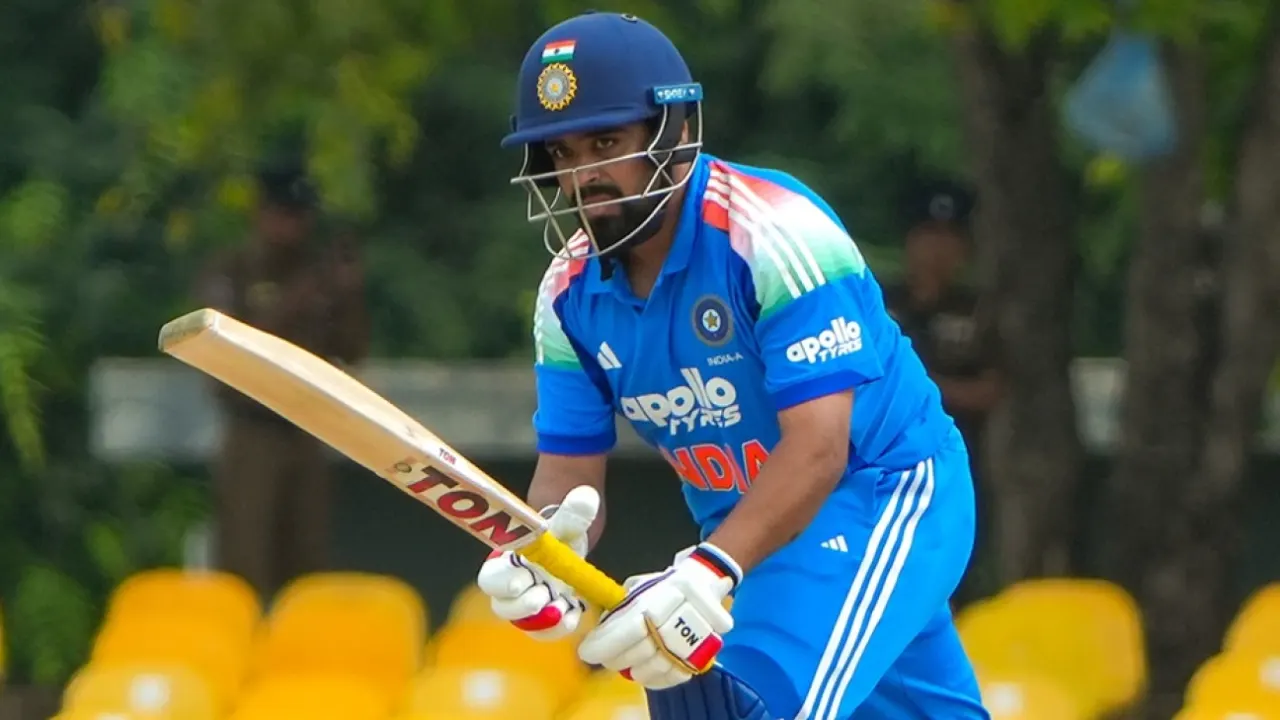
After a close-fought win against Sri Lanka A, India A continued their tri-series campaign with a defeat to Afghanistan A in a rain hit match in Dambulla. Prabhsimran Singh, Rutraj Gaikwad and Captain Tilak Varma all hit half-centuries to take India A to a big total, but Afghanistan A’s batters did enough to help them edge the game on DLS. Here are the key talking points from the game.
After showing glimpses of his talent in the tri-series opener against Sri Lanka A, Vaibhav Sooryavanshi put on a more impactful display against Afghanistan A. He lay down the marker early, cutting the first two balls he faced through cover point for fours.
He predominantly targeted the off side, driving or slashing anything offering width, finding the cover and point boundaries with ease, helping India A reach 50 in 4.5 overs.
He didn’t hit a six, but hit nine fours before a nick to the keeper off Abdollah Ahmadzai sent him back for 44 off 22 balls.
At the other end, Prabhsimran also started well, even if he wasn’t quite as explosive as his 15-year-old opening partner. He drove fuller balls through the covers and when the bowlers pulled their lengths back, he was happy to walk down the track and put away some punchy square drives.
He brought up a 39-ball half-century in the 14th over, driving left-arm wristspinner Zahir Khan straight of mid-off to get to the milestone. He finished that over with a deft touch to beat short third.
Prabhsimran picked up three more boundaries through and over the mid-off region across the next two overs, taking India A to 140 for 2 at the first drinks break, and also bringing up a half-century stand with Gaikwad off just 38 balls.
His first 12 boundaries all came through the off side, before he drove two Zahir full-tosses past mid-on to take India A to 150 in the 18th over. He eventually got out on 84 while trying to paddle-scoop Afghanistan A captain Imran Mir, and only managed a feather touch to the keeper.
Gaikwad, fresh off a century against Sri Lanka A, started off from where he left off, meeting his first ball with a glorious back-foot cover drive. That was his only boundary during his partnership with Prabhsimran, and he was happy to go at around a run a ball while Prabhsimran did the heavy lifting.
Once Prabhsimran fell, Gaikwad was joined by Tilak, and the two kept the scoreboard ticking mainly through singles and doubles, in the effort to ensure India A had the platform for a big finish. They shared a 78-run stand, during which Gaikwad brought up his half-century.
Gaikwad eventually got out trying to up the tempo, lobbing a top-edged slog off medium-pacer Farmanullah to midwicket.
Tilak also brought up a second consecutive half-century, before Suryansh Shedge and Anukul Roy applied the finish to take India A to 349 for 9 in their allotted 49 overs.
After a short delay during the first innings, more rain followed during the innings break, delaying the restart. Afghanistan A began their chase needing 294 from 38 overs. With the light likely to start fading, and with floodlights not in action, the match was most probably going to be decided by DLS.
Afghanistan A openers Hassan Eisakhil and Imran started off quickly, with Eisakhil the initial aggressor. India A’s new-ball bowlers Anshul Kamboj and Arshad Khan failed to threaten, until Arshad drew a top edge from Eisakhil with a bouncer in the eighth over, and later in the same over had the Afghanistan opener pulling another short ball to deep square leg.
Among the spinners, Roy looked the most dangerous, trapping Khalid Taniwal lbw with an arm ball, but Vipraj Nigam and Ayush Badoni were mostly ineffectual.
This allowed Imran and Bahir Shah to keep the scoring rate ahead of the DLS par score without losing wickets. Imran made 75 not out off 70 deliveries while Shah was on 51 off 52 after Eisakhil’s 29-ball 34.
Rain and bad light eventually stopped play at 5.28pm, with Afghanistan A four runs ahead on DLS.
SCORES:
Afghanistan A 177 for 2 in 25.5 overs (Imran 75*, Bahir Shah 51*; Anbukul Roy 1-24) beat India A 349 for 9 in 49 overs (Prabhsimran Singh 84, Vaibhav Sooriyavanshi 44, Rutraj Gaikwad 66, Tilak Varma 66, Suryansh Shedge 40; Abdollah Ahmadzai 5-68, Farmanullah 3-85)by 4 runs (DLS method)
[Cricinfo]
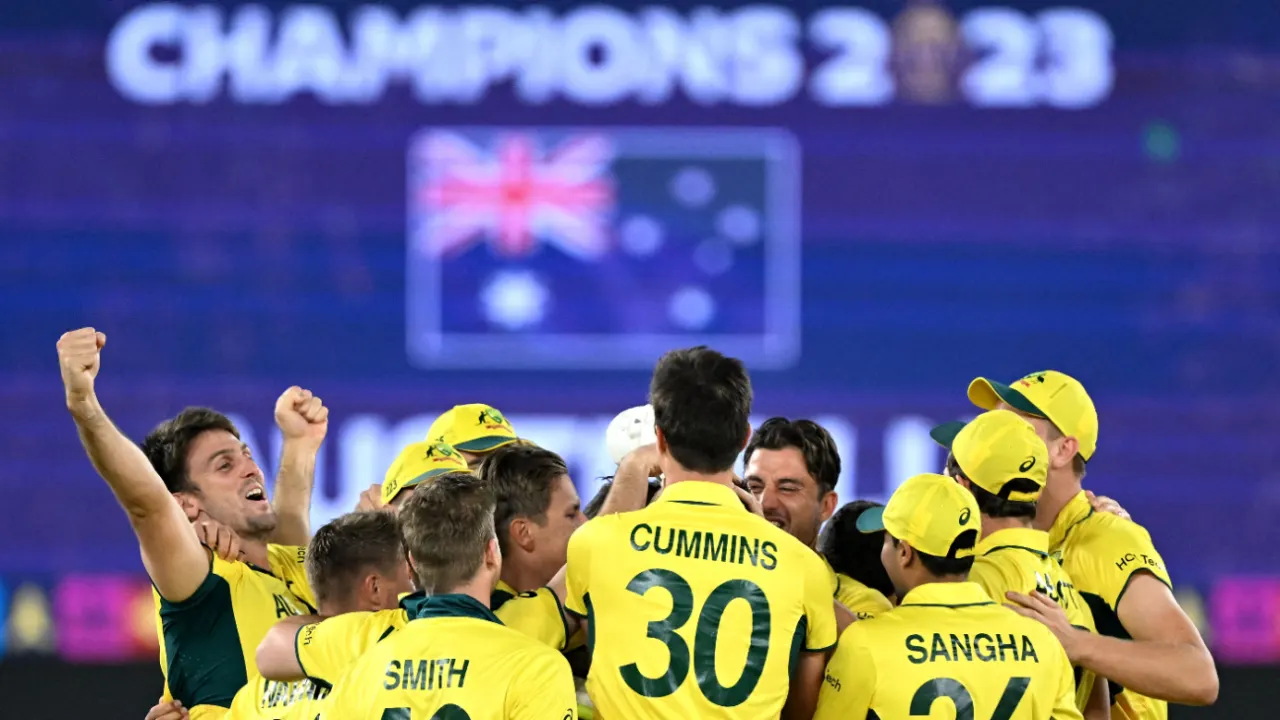
The 2027 men’s ODI World Cup, which will be played in South Africa, Zimbabwe and Namibia, has been provisionally inked into the calendar to run from October 4 to November 21 that year. ESPNcricinfo has learned the dates were agreed upon at the ICC board meeting in Ahmedabad in May with the finer details set to be confirmed at the ICC’s AGM in Edinburgh in July.
It is understood that South Africa’s eight venues will likely host the bulk of the matches – at least 41 of the 54 games – with Zimbabwe due to stage between eight and 10 games, and Namibia, three. Zimbabwe will also have three venues instead of the original two, with Victoria Falls joining Harare Sports Club and Queens in Bulawayo. The Fale Mosi-oa-Tunya International Cricket Stadium will be completed later this year and is set to host domestic cricket before an official inauguration next May. South Africa were initially in talks to travel to Zimbabwe this August to open the stadium as an international venue, but that has been pushed back.
The 2027 ODI World Cup will be the first in Africa since the 2003 tournament, though South Africa has since hosted the 2007 T20 World Cup, the 2009 Champions Trophy and the 2023 Women’s T20 World Cup. Zimbabwe and Namibia recently co-hosted the Under-19 men’s World Cup. It will return to a 14-team tournament after being played between 10 teams in the previous two editions. The teams will be divided into two groups of seven, before the top three from each group advance to the Super Six stage. As Full Members, South Africa and Zimbabwe automatically qualify but Namibia are part of the qualification process.
That World Cup will also be the first ICC event of the 2027-2031 Future Tours Programme (FTP), which governs bilateral international engagements between sides and which is set to be finalised at ICC meetings in Hong Kong later this year. It is understood that some initial discussions have taken place but the major sticking point around the crafting of the FTP is the structure of the World Test Championship and its possible expansion.
The ICC is set to take a final decision on whether to include all 12 Full Members (currently Zimbabwe, Ireland and Afghanistan are not part of the WTC) and if one-off Tests can be played as part of the WTC schedule. ESPNcricinfo understands a decision could be taken at the AGM in July, after which the full FTP will be fleshed out.
[Cricinfo]
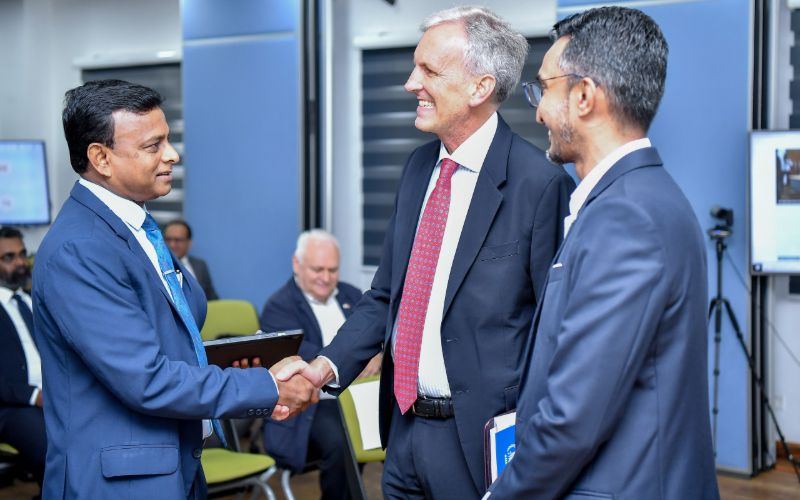
The conclusion of the Humanitarian Priorities Plan (HPP) implemented by the United Nations for those affected by Cyclone Ditwah was marked at a ceremony held in Colombo this morning (11), under the patronage of Commissioner General of Essential Services and Chief of Staff to the President, Prabath Chandrakeerthi, and United Nations Resident Coordinator in Sri Lanka, Marc-André Franche.
Speaking at the event, UN Resident Coordinator Marc-André Franche noted that the humanitarian relief programme launched for those affected by Cyclone Ditwah had been successfully implemented owing to the strong political leadership and the swift response demonstrated in managing the disaster situation.
Commissioner General of Essential Services and Chief of Staff to the President Prabath Chandrakeerthi emphasized that Sri Lanka had demonstrated how strong national leadership and effective partnerships could ensure the delivery of relief to affected communities in a fair and efficient manner during times of crisis. He further stated that the timely and accurate data and assessments provided by the United Nations had played a crucial role in facilitating rapid relief efforts. He also noted that the Government is continuing its efforts to strengthen multi-hazard early warning systems to enhance resilience against future natural disasters of a similar nature and to further expand institutional coordination at national, provincial and local levels.
Expressing appreciation and gratitude for the generous and prompt assistance extended by various countries and partners, the Commissioner General also commended the contribution of all state institutions that helped ensure the uninterrupted provision of essential services and facilitated the swift delivery of relief assistance.
Under the United Nations’ Humanitarian Priorities Plan for Cyclone Ditwah, a fundraising initiative was launched to mobilise US$35.4 million for those affected by the disaster. Of this amount, 75 per cent has already been disbursed as assistance to affected communities across the country. Through the programme, each affected family received an allowance of Rs. 27,000 through Divisional Secretariats, while a range of additional relief measures, including the construction of temporary housing, were also implemented.
The Humanitarian Priorities Plan covered 25 districts and delivered assistance through nine key sectors. Official reports indicate that 87 per cent of the targeted population of more than 650,000 people, equivalent to approximately 575,000 individuals, directly benefited from the programme. This achievement clearly reflects the confidence and support extended by foreign governments and organisations towards the Cyclone Ditwah response programme being implemented by the present Government.
Among those who attended the event were Additional Secretary (Disaster Management) to the Ministry of Defence K. G. Dharmatilake, ambassadors and high commissioners from several countries, representatives of the United Nations Development Programme (UNDP), representatives of the World Health Organization (WHO), representatives of international humanitarian organisations, and a number of local and international dignitaries.
(PMD)

Prabhsimran, Gaikwad, Tilak score fifties in DLS loss to Afghanistan A

India-born Nikhil Chaudhary called into Australia T20I squad

Men’s ODI World Cup 2027 set to run from October 4 to November 21

UN Humanitarian Priorities Plan (HPP) for Cyclone Ditwah successfully concluded

President chairs discussion on potential El Niño impacts and institutional preparedness

New Sasakawa Memorial Sri Lanka–Japan Cultural Centre reflects enduring friendship between Sri Lanka and Japan – PM

‘Dates have the highest sugar content to fight Coronavirus’

Sunday Island 27 December – Headlines

#SundayIsland 17th December – Headlines

Sunday Island – 28th March

Sunday Island Headlines – 21 March

Sunday Island – 21st February – Headlines
-

 Features7 days ago
Power crept into the Sangha and is now tearing it apart
-

 Features7 days ago
Kondachchi wind farm and battery storage project to boost energy security, says Power Ministry Secretary
-
 News4 days ago
Women’s T20 World Cup 2026 warm-up: Chamari Athapaththu’s 94 helps Sri Lanka beat Pakistan
-

 Features7 days ago
Saudi Arabia sets new benchmark in Hajj management as 1.7 million pilgrims complete sacred journey
-

 News6 days ago
Asst. Manager, security officer arrested over Rs 30 mn snatch at Horana PB branch
-

 Editorial4 days ago
Probe Sallay’s complaint
-
 News5 days ago
Lankan-Canadian inducted to Toronto Sports Hall of Fame
-
 News2 days ago
Local firms move millions of dollars overseas for phantom imports: Govt.