
Latest News
UN climate talks fail to secure new fossil fuel promises

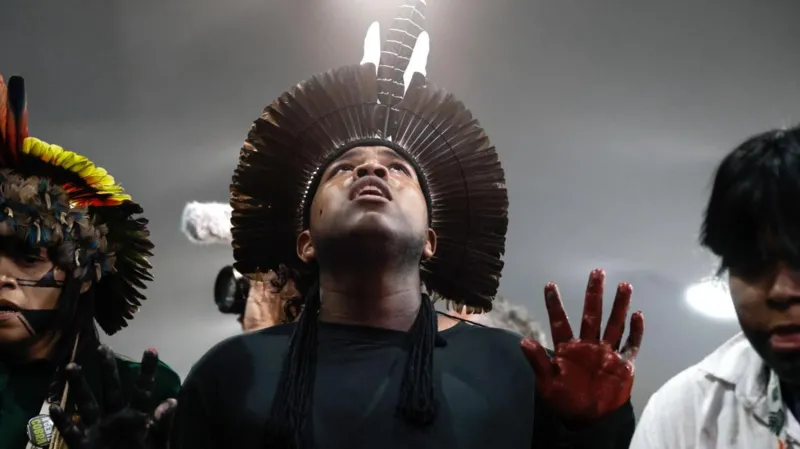
Following bitter rows, the UN climate summit COP30 in Belém, Brazil has ended with a deal that contains no direct reference to the fossil fuels that are heating up the planet.
It is a frustrating end for more than 80 countries including the UK and EU that wanted the meeting to commit the world to stop using using oil, coal and gas at a faster pace.
But oil-producing nations held the line that they should be allowed to use their fossil fuel resources to grow their economies.
The meeting takes place as the UN says it fears global efforts to limit global temperature rise to 1.5C above pre-industrial levels have failed.
A representative for Colombia furiously criticised the COP presidency for not allowing countries to object to the deal in the final meeting on Saturday, known as a plenary.
“Colombia believes that we have sufficient scientific evidence saying that more than 75% of the global greenhouse gas emissions come from fossil fuels,” Daniela Durán González, Colombian Climate Delegate, told BBC News.
“So we do believe it’s time that the Convention on Climate Change starts talking about that reality,” she added.
The final deal, called the Mutirão, calls on countries to “voluntarily” accelerate their action to reduce their use of fossil fuels.
For the first time, the US did not send a delegation after President Donald Trump said the country will leave the landmark Paris treaty that committed countries to act on climate change in 2015. He has branded climate change “a con”.
Veteran negotiator and former Germany climate envoy Jennifer Morgan told the BBC that the US absence was a “hole” in the negotiations. Often the US has supported blocs like the EU and UK.
“In a 12-hour negotiation overnight, when you have oil-producing countries pushing back hard, to not have someone counteracting on that, it certainly was hard,” she said
But for many countries, the fact that the talks did not collapse or roll back on past climate agreements is a relief.
Antigua and Barbuda Climate Ambassador Ruleta Thomas commented: “We are happy that there is a process that continues to function […] where every country can be heard.”
In the final meeting, a representative for Saudi Arabia said: “Each state must be allowed to build its own path, based on its respective circumstances and economies.”
Like many other leading oil-producing nations, the country has argued it should be allowed to exploit its fossil fuel reserves as others have done in the past.
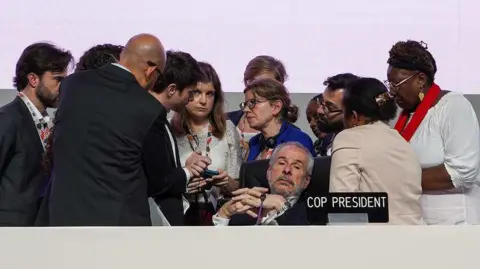
The two weeks of talks were at times chaotic. Toilets ran out of water, torrential thunderstorms flooded the venue, and delegates struggled to cope in hot, humid rooms.
The COP’s around 50,000 registered delegates were evacuated twice. A group of about 150 protestors broke into the venue, breaching security lines, and carrying placards reading “our forests are not for sale”.
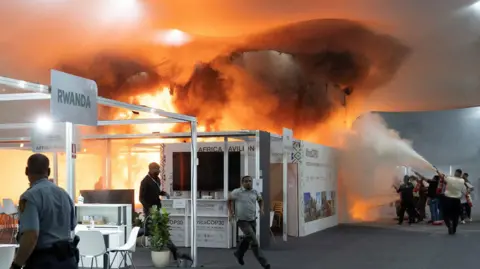
On Thursday a large fire broke-out scorching a hole into the roof and forcing participants to rush outside.
Brazilian President Luiz Inácio Lula da Silva chose the city of Belém to put the world’s attention on the Amazon rainforest and to bring a rush of finance to the city.
Despite its desire for a more ambitious fossil fuel agreement, Brazil was criticised for its own plans to drill for oil at the mouth of the Amazon.
Its offshore oil and gas production is on course to increase until the early 2030s, according to analysis shared with the BBC by campaign group Global Witness.
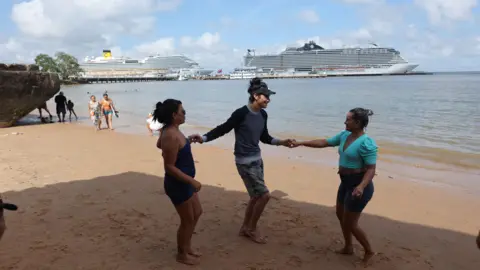
Countries at the talks have competing interests, depending on their national circumstances and how exposed they are to the effects of climate change. Some countries were happy about the outcomes.
India praised the deal, calling it “meaningful”. A group representing the interests of 39 small island and low-lying coastal states on Saturday called it “imperfect” but still a step towards “progress”.
Poorer nations have come away with a promise for more climate finance to help them adapt to the impacts of climate change.
“It has moved the needle. There is a clearer recognition that those with historic responsibility [countries that emitted more planet-warming gases in the past] have specific duties on climate finance,” said Sierra Leone Minister of The Environment and Climate Change Jiwoh Abdulai.
But it’s a sour end for more than 80 countries, who negotiated through the night to keep stronger fossil fuel language in the deal.
UK Secretary of State for Energy and Climate Change Ed Miliband insisted the meeting is a “step forward”.
“I would have preferred a more ambitious agreement,” he said.
“We’re not going to hide the fact that we would have preferred to have more, to have more ambition on everything,” EU climate commissioner Wopke Hoekstra told journalists.
With lush trees, bird cries and intense humidity, it was hard to escape the Amazonian backdrop of the talks.
Brazil launched the talks with a new fund called Tropical Forests Forever Facility that would pay countries to protect tropical forests. By the end of the meeting, it raised at least $6.5bn from governments, although the UK has not yet contributed.
Over 90 countries supported a call for a global deforestation action plan, or “roadmap”.
[BBC]

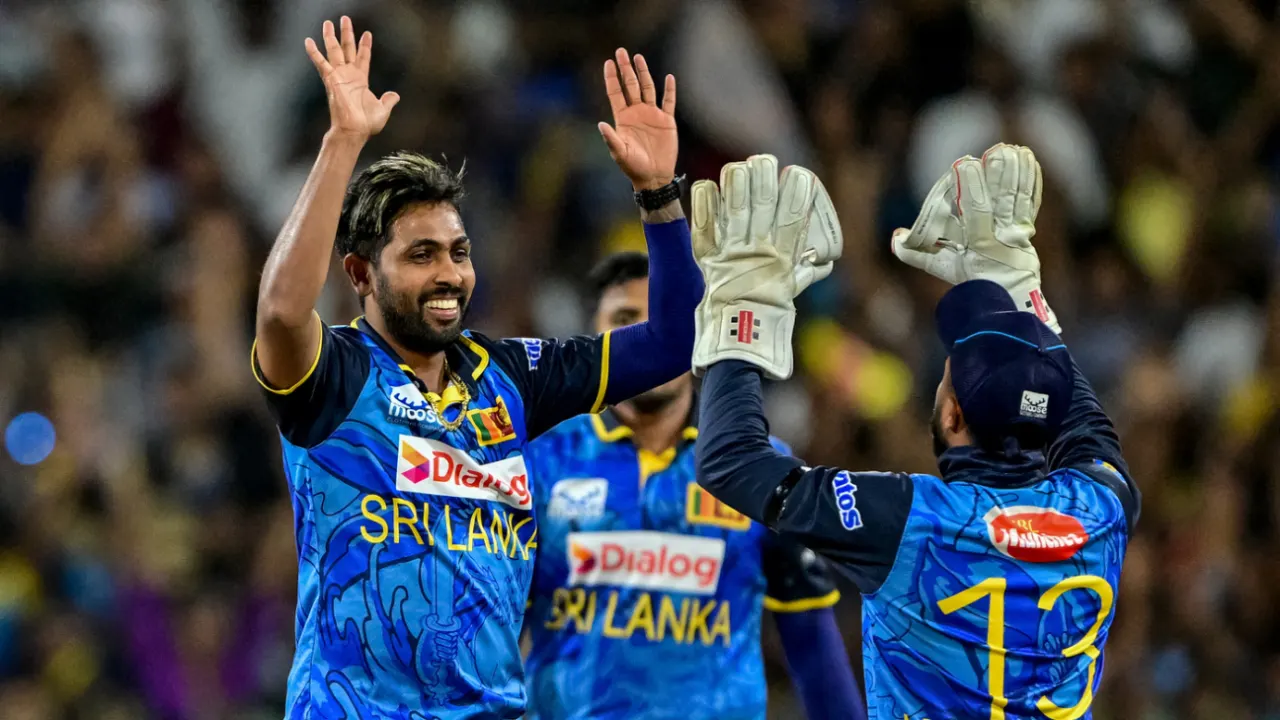
Medium pacer Nuwan Thushara is among 46 men’s cricketers awarded national contracts by Sri Lanka Cricket (SLC), after he withdrew the legal case he had filed against the board in April.
Thushara’s inclusion indicates a re-setting of his relationship with the board. The bowler had objected to SLC making a fitness test a requirement for the board granting him a No-Objection Certificate to play franchise cricket overseas. But since the board members whom he had been at a loggerheads with were ousted en-masse by the Sri Lankan government, Thushara decided to withdraw his case.
He had then written to the new administrators at SLC, announcing his eligibility for national selection, which the new Transformation Committee has since accepted.
Also in the contracts list are Jaffna legspinner Vijayakanth Viyaskanth, ambidextrous spinner Tharindu Rathnayake, batters Kamil Mishara and Lasith Croosepulle,and allrounders Isitha Wijesundera, Wanuja Sahan and Dilum Sudeera, who have all been included for the first time. Batter Bhanuka Rajapaksa was not awarded a contract, though he had played domestic cricket in Sri Lanka earlier this year.
There are otherwise no major surprises in what is a substantial roll of cricketers. The list features players such as Dinesh Chandimal and Kasun Rajitha, who primarily play Tests, as well as limited-overs specialists like Binura Fernando.
The SLC release said the players had been graded into six different categories, but did not divulge which players were in which category. The period of the contract runs from April 1, 2026 to March 31, 2027.
Men’s national contracted players
Kusal Mendis, Dhananjaya de Silva, Dinesh Chandimal, Wanindu Hasaranga, Pathum Nissanka, Charith Asalanka, Kamindu Mendis, Dushmantha Chameera, Asitha Fernando, Dasun Shanaka, Maheesh Theekshana, Janith Liyanage, Dunith Wellalage, Niroshan Dickwella, Jeffrey Vandersay, Prabath Jayasuriya, Vishwa Fernando, Matheesha Pathirana, Dilshan Madushanka, Pavan Rathnayake, Eshan Malinga, Milan Rathnayake, Lahiru Kumara, Kasun Rajitha, Avishka Fernando, Sadeera Samarawickrama, Ramesh Mendis, Kamil Mishara, Binura Fernando, Nuwan Thushara, Sonal Dinusha, Sahan Arachchige, Pramod Madushan, Lasith Croospulle, Lahiru Udara, Nuwanidu Fernando, Vijayakanth Viyaskanth, Isitha Wijesundara, Nishan Madushka, Akila Dananjaya, Chamika Karunaratne, Pasindu Sooriyabandara, Mohammed Shiraz, Wanuja Sahan, Dilum Sudeera, Tharindu Rathnayake
[Cricinfo]
No Sri Lanka Cricket (SLC) representative was invited to the ICC’s quarterly meeting in Ahmedabad over the weekend, but the fact that the ICC board has not slapped sanctions on SLC’s new Transformation Committee is being quietly celebrated by the new board in Sri Lanka, a board member said.
The Transformation Committee was appointed by the nation’s government in May, replacing the elected set of SLC office-bearers. The ICC had taken a dim view of government interference in SLC in 2023, as well as in 2015, imposing sanctions on each of those occasions.
But athough the ICC had sent deputy chair Imran Khwaja on what was effectively a fact-finding trip to Colombo in May, no sanctions attributed to government interference have followed, even after the latest ICC meeting.
“So far what we feel is that no news is good news,” said a Transformation Committee member. In late 2023, the ICC had suspended SLC from its board due to government interference. On that occasion, the country’s sports minister was accused of overreach.
The latest, sweeping administrative changes in Sri Lanka, which includes the ousting of the elected board and the installation of a committee tasked ostensibly with transforming Sri Lankan cricket, have so far only drawn ICC scrutiny rather than tangible consequences. The ICC statement said only this: “In Sri Lanka, ICC Deputy Chair Imran Khwaja and Devajit Saikia (BCCI) have visited and met with relevant stakeholders to assess ongoing developments.”
The Transformation Committee headed by Eran Wickramaratne has repeatedly expressed that its goal remains to rewrite an outdated SLC constitution, in order to better align the organisation with the requirements of Sri Lanka’s public.
“Even in the debates in parliament, which were not driven by party loyalties, it has been acknowledged that there has to be a change at Sri Lanka Cricket,” said Wickramaratne, chair of the new Transformation Committee and a former politician. “The job we have is to change the SLC constitution. The stakeholders in that change are the Sri Lankan people. The people can give their ideas. Other stakeholders can also express their ideas. We thought our first role is to listen to those ideas.”
SLC hopes Transformation Committee members will be invited to future ICC meetings.
ESPNcricinfo has reached out to the ICC for comment on SLC participation in meetings, but the ICC is yet to respond.
[Cricinfo]

Sachin Tendulkar may not be a fan of them, but impact subs are making their way into the Lanka Premier League, as is a stipulation that an Under-23 player (one born on or after July 1, 2003) has to be a part of each side’s playing XI at all times – even after the use of an impact sub. These were two key elements playing on the minds of the five franchises as the LPL draft 2026 took place on Monday in Colombo.
Both these changes ensured that squad composition – right from the four pre-signings to the 16-18 players drafted on the night – had to be fairly well thought out, with teams needing to decide which roles to entrust to a largely unproven talent while simultaneously balancing their squads for maximum impact. Complicating matters further was the relative dearth in the Under-23 category, with many of Sri Lanka’s Under-19 talents due to play India in July and thus unavailable for the tournament.
It was also revealed that Pathum Nissanka and Matheesha Pathirana are both nursing injuries, despite the former being named in the touring party for the West Indies. It is understood that his workload is being managed, with the player expected to undergo surgery in order to be fit for India’s tour of Sri Lanka later this year.
In terms of the teams, four of the five sides revealed new owners and coaching staff, with fresh team names to go with them. Only the Dambulla Sixers remained unchanged – though they had gone through a tumultuous period in 2024, with two changes in ownership prior to the start of the season. Jaffna are now the SC Jaffna Kings, Galle are the Galle Gallants, Kandy the Kandy Royals and Colombo the Colombo Kaps.
The draft itself concluded in a little under four hours, with each team tasked with drafting squads of at least 18 players, with the option of two additional signings at the end. In total there were 14 mandatory rounds of drafting, with two optional rounds for the teams that decided to participate.
Players were split into three categories – Platinum (US$ 50,000), Gold ($30,000), Classic ($20,000) – with each having a separate category for local and foreign players. There were also categories for Associate ($15,000) and Emerging Under-23 ($10,000) players.
Vijay Shankar the recently retired Indian national, IPL breakout star Eshan Malinga, fiery Pakistan opener Sahibzada Farhan, and the experienced pair of Angelo Mathews and Dinesh Chandimal were some of the notable pre-signings, while Avishka Fernando and Charith Asalanka were both first-round picks despite neither able to find a place in the Sri Lankan T20 squad. Rahmanullah Gurbaz and Mohammed Nawaz headlined the overseas picks.
The final squads are as follows:
SC Jaffna Kings: Taskin Ahmed, Dunith Wellalage, Shakib Al Hasan, Bhanuka Rajapaksa, Avishka Fernando, David Wiese, Dilshan Madushanka, Kamil Mishara, Traveen Mathews, Ibrahim Zadran, Mohommed Shiraz, Chamindu Wickramasinghe, Nuwanidu Fernando, Sandeep Lamichhane, Lizaad Williams, Dipendra Airee, Kugathas Mathulan, Praveen Manisha, Nishan Madushka
Colombo Kaps: Ben McDermott, Kamindu Mendis, Jimmy Neesham, Kusal Mendis, Binura Fernando, Mujeeb Ur Rahman, Sadeera Samarawickrama, Milan Ratnayake, Janith Liyanage, Shahnawaz Dahani, Jeffrey Vandersay, Thanuka Dabare, Movin Subasingha, Mohammed Haris, Hasan Mahmud, Kushal Bhurtel, Malsha Tharupathi, Sharujan Shanmuganathan, Wanuja Sahan, Anthony Pragasam
Kandy Royals: Vijay Shankar, Angelo Mathews, Moeen Ali, Wanindu Hasaranga, Nuwan Thushara, Rahmanullah Gurbaz, Kusal Perera, Asitha Fernando, Garuka Sanketh, Daniel Sams, Vishen Halambage, Muditha Lakshan, Lahiru Udara, Dale Phillips, Zahir Khan, Brandon McMullen, Sahan Mihira, Pawan Sandesh, Dushan Hemantha, Isitha Wijesundera
Galle Gallants: Litton Das, Eshan Malinga, Rassie Van Der Dussen, Dasun Shanaka, Charith Asalanka, Mohammad Nawaz, Pramod Madushan, Lasith Croospulle, Vijayakanth Viyaskanth, Akif Javed, Sahan Arachchige, Chamika Karunaratne, Tharindu Rathnayake, Sam Harper, Mehidy Hasan Miraz, Haider Ali, Dinura Kalupahana, Uri Koththigoda, Kasun Rajitha, Sachindu Colombage
Dambulla Sixers: Reeza Hendricks, Dinesh Chandimal, Sahibzada Farhan, Dushmantha Chameera, Maheesh Theekshana, Fazalhaq Farooqi, Niroshan Dickwella, Pavan Rathnayake, Akila Dananjaya, Mohammed Wasim, Dhananjaya Lakshan, Ramesh Mendis, Sachitha Jayatilake, Gulbadin Naib, Dian Forrester, Shadley Schalkwyk, Vishva Kumara, Gayana Weerasinghe
Pre-signings:
SC Jaffna Kings – Taskin Ahmed, Dunith Wellalage, Shakib Al Hasan, Bhanuka Rajapaksa
Galle Gallants – Litton Das, Eshan Malinga, Rassie Van Der Dussen, Dasun Shanaka
Kandy Royals – Vijay Shankar, Angelo Mathews, Moeen Ali, Wanindu Hasaranga
Colombo Kaps – Ben McDermott, Kamindu Mendis, Jimmy Neesham, Kusal Mendis
Dambulla Sixers – Reeza Hendricks, Dinesh Chandimal, Sahibzada Farhan, Dushmantha Chameera
[Cricinfo]

Nuwan Thushara among 46 men’s cricketers to be awarded SLC contracts

Pakistan naval trio arrives at Colombo Port

Sri Lanka Cricket relieved at ICC’s mild response to Transformation Committee

ICC approves red-to-pink ball change to reduce bad-light impact in Test cricket

LPL introduces impact subs for 2026 season

Protesters call on Kenyan government to halt femicide crisis

‘Dates have the highest sugar content to fight Coronavirus’

Sunday Island 27 December – Headlines

#SundayIsland 17th December – Headlines

Sunday Island – 28th March

Sunday Island Headlines – 21 March

Sunday Island – 21st February – Headlines
-
 News4 days ago
IMF urges Lanka not to meddle with exchange rate
-
 Business5 days ago
Sri Lanka’s construction industry losing ground while no one watches
-
 News4 days ago
State of emergency extended
-
 Midweek Review7 days ago
Israeli-US aggression won’t go unanswered -Iranian Ambassador
-

 Features5 days ago
The Division Bell Mystery
-
 Business2 days ago
IMF’s unstated rate:Sri Lanka’s $695m loan costs about 5.33% per annum
-
 News2 days ago
UNP challenges NPP move to amend Vihara – Devalagam Act
-
 News6 days ago
RTI query of Ditwah funds: Presidential Secretariat mum on key questions