
News
UK rejects Lanka’s request for handing over of Gash dispatches to Geneva


… blames Defence Advisor for not verifying info, contradicts its own position
By Shamindra Ferdinando
The UK has rejected Sri Lanka’s request for the disclosure of wartime dispatches from its High Commission in Colombo.
Authoritative sources told The Island that the request was made during the 46th session of the Geneva-based United Nations Human Rights Council (UNHRC).
The month long Geneva sessions ended on March 23, with the 47-member council adopting a fresh accountability resolution with 22 countries voting for, 11 against and 14 abstaining.
Sources said the UNHRC member and the leader of Sri Lanka Core Group the UK informed the government of its decision soon after the conclusion of the sessions. The request has been made in the second week of March. “We strongly believe those dispatches from the then British Defence Advisor Lt. Col. Anthony Gash can facilitate Geneva investigations. However, the British, despite repeatedly assuring us of longstanding friendship denied information in their possession,” a government source familiar with accountability matters, said.
After Gash’s departure, the UK discontinued having a resident Defence Advisor in Colombo. Instead, New Delhi-based Defence Advisor looked after matters pertaining to Sri Lanka for nearly a decade. However, in January 2019, the UK re-appointed Colonel David Ashman as their resident Defence Advisor in Colombo.
Sri Lanka requested the UK to handover Gash dispatches to the UNHRC in the wake of the proposal to set up a special unit to ‘collect, consolidate, analyze and preserve information and evidence’ in respect of Sri Lanka. The unit is also meant for the development of required strategies to deal with the country in case of gross violations of human rights or serious violations of international humanitarian law.
Sources pointed out that despite Lord Naseby’s disclosure of a section of the Gash reports in Oct 2017, Sri Lanka refrained from requesting examination of the dispatches till March 2021.
Responding to Sri Lanka’s request for the full disclosure of dispatches, the UK much to the surprise of the government played down the importance of Gash reports that dealt with the situation on the Vanni front between January1-May 18, 2009. The UK faulted Gash for not obtaining independent confirmation of reports he had sent to the Foreign and Commonwealth Office (FCO). Sources said that the contrary to the position taken by the FCO when Lord Naseby moved the UK information Commission to get hold of dispatches in 2015, the government asserted that such a disclosure would impede their relations with Sri Lanka. However, when Sri Lanka made the request, the UK asserted that Gash reports couldn’t be taken seriously as he merely reported irregular information obtained from various parties at different times, sources said.
The US has dismissed Gash reports on the basis they hadn’t been based on properly examined evidence and information.
Gash countered the primary UN allegation (Panel of Experts’ report issued in March that the Sri Lankan military massacred 40,000 civilians. Gash estimated the number of deaths at 7,000 to 8,000. His assessment largely tallied with confidential UN survey (Aug 2008-May 13, 2009) that placed the number of dead at 7,721.
The UK has told Sri Lanka that it would abide by UN reports, including POE report and the 2015 OHCHR Investigation on Sri Lanka (OISL) which faulted Sri Lankan military of causing deaths of tens of thousands by carrying widespread large-scale attacks.
The UK has reminded Sri Lanka of OISL blaming the country for gross violations of international human rights law, serious violations of international law, and international crimes were committed by the government and the LTTE.
Sources said that the UK had taken contradictory positions as regards Gash dispatches at the hearings at the UK Information Commission and when Sri Lanka requested for the full disclosure of relevant dispatches. Sources said that if the UK wasn’t pursuing an agenda inimical to Sri Lanka, dispatches from Colombo would have been released. The UK owed an explanation whether those dispatches weren’t made available to POE and OISL also on the grounds they weren’t credible.
The Island sought former Constitutional Council member and attorney-at-law Javid Yusuf’s opinion on the Geneva move to set up a new inquiry at a cost of USD 2.8 mn to gather accountability info, evidence pertaining to Sri Lanka. On behalf of GoSL, Prof. GLP (at a recent media briefing) asked whether the UK would hand over what he called suppressed Gash dispatches to the new inquiry. GoSL stand for examination of all available evidence received SJB backing (Dr Harsha de Silva). My query: Do you think UK should submit all available evidence in its possession to Geneva inquiry?
Yusuf said: “It goes without saying that if justice is to be done all available evidence must be placed before the inquiring authority so that all the available evidence is evaluated and a fair and just determination is made.
The unit that is being set up by the Office of the High Commissioner for Human Rights seems to be more in the nature of collecting evidence for future use and therefore whatever evidence is available with the UK should most certainly be submitted to the new unit.
“However from the perspective of Sri Lanka’s National Interest it is best that since there are continuous allegations being made in relation to the conduct of the end of the conflict, an independent and credible inquiry acceptable to all stakeholders be initiated by the Sri Lankan state and concluded. Only then will there be closure in respect of the matter. This will be fair by those who have been victims as well those against whom allegations have been made. Unless satisfactory closure is achieved the victims will feel that justice has been denied to them and the members of the armed forces will have the allegations hanging over them like a sword of Damocles.”


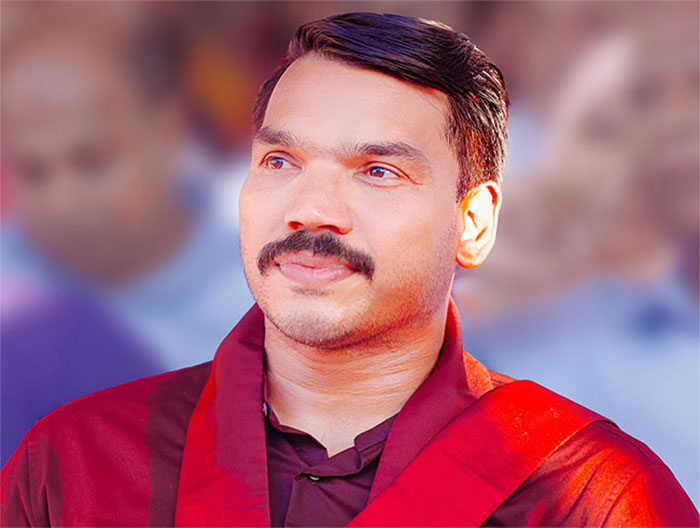
MONETABRIEF – Namal Rajapaksa, son of Sri Lanka’s former leader Mahinda Rajapaksa, was denied bail by the Colombo chief magistrate despite pleading that he needed to attend important Buddhist rituals and travel to India.
The 40-year-old opposition MP’s lawyer, Shavindra Fernando, told the court that Namal had been invited to take part in a pinnacle-capping ceremony at the Pothgul Vihara temple on September 26.
“If my client fails to attend this event, it should be regarded as a disrespect shown to the chief incumbent of the temple,” Fernando said.
He added that Namal had also received an invitation to visit India from 27 September to 1 October and therefore sought bail.
However, he was remanded until September 29 in connection with allegations that he received kickbacks of $800,000 from the $2.3 billion Airbus aircraft purchase deal his father – Mahinda Rajapaksa – approved as president in 2013.
Deputy Solicitor General Janaka Bandara invoked the Buddha’s teachings in response to Namal’s lawyer, Fernando, saying that a judicial matter was far more important than attending a religious ceremony.
“According to what is being said here, the accused himself should have considered this while conducting dealings with Nimal Perera,” Bandara said, referring to the businessman who allegedly routed the bribe money to Namal.
Bandara quoted at length from a recent Supreme Court decision that expanded on the Buddha’s teachings, noting that when a ruler is righteous, the people follow; but when the ruler is dishonest, the citizenry follows that example too.
The 40-year-old MP was arrested on 4 September under the new anti-graft legislation parliament adopted unanimously in 2023.
Namal is primarily accused of accepting $800,000 out of a 1.4 euro million bribe that the then SriLankan Airlines chief executive, Kapila Chandrasena, is alleged to have received from Airbus after finalising a $2.3 billion purchase of aircraft in 2013.
Magistrate Asanga S. Bodaragama told the previous court hearing that he did not have the power to grant Namal bail because the Director-General of the Commission to Investigate Allegations of Bribery or Corruption (CIABOC) had issued a certificate under section 149 of the Act.
The provision stipulates that a magistrate may not grant bail when the CIABOC DG presents a certificate confirming that an offence under the Act has been committed.
The magistrate noted that he could grant bail only in “exceptional circumstances”, but there was no acceptable argument from the defence for him to do so.
A Buddhist temple festival and an invitation from India could not be considered good enough reasons to grant bail.
The businessman who acted as a conduit for the bribe – Nimal Perera – had turned state witness, providing details of how the money was given to Namal through two bank transfers in 2014 and 2015, the court was told.
Under the provisions of the August 2023 Act, Namal Rajapaksa could be held in custody until the conclusion of the trial, even though the magistrate remanded him until September 18, the maximum he could be incarcerated at a time.
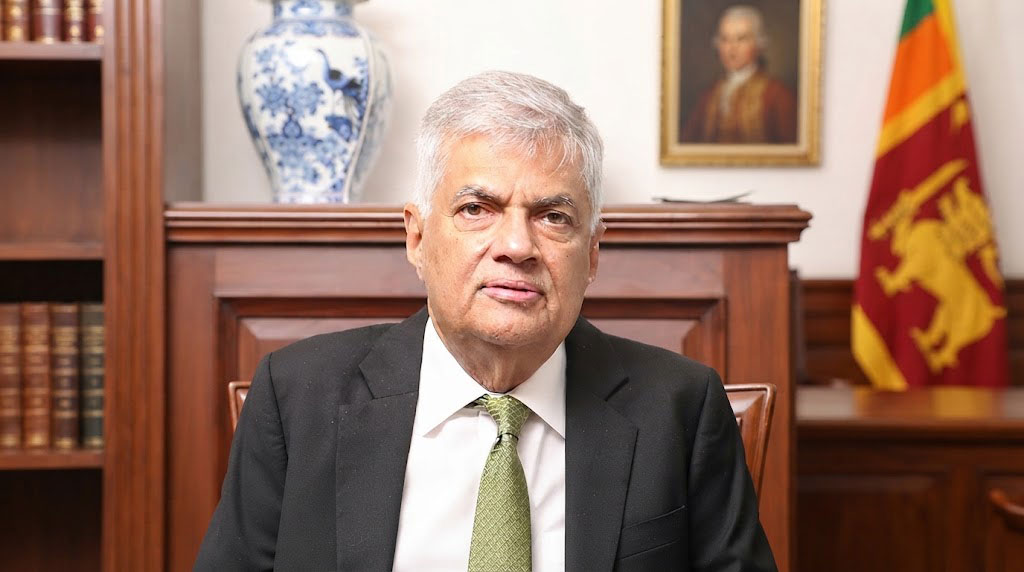
Former President and UNP Leader Ranil Wickremesinghe said Sri Lanka’s first Executive President, J. R. Jayewardene, launched a 17-year revolution that transformed the country’s economy, strengthened democracy and improved living standards.
Addressing a scholarly discussion organised by the D. S. Senanayake Political Chair at the National Library on Thursday to mark Jayewardene’s 120th birth anniversary, Wickremesinghe recalled how his predecessor’s policies expanded education, decentralised property ownership and improved access to housing and electricity.
He said school enrolment increased from 2.5 million to 4.1 million during Jayewardene’s tenure, while household electricity coverage rose from 10 per cent to 95 per cent.
Housing conditions also improved, with the proportion of homes with permanent roofs and cement walls increasing from 40 per cent to 80 per cent, Wickremesinghe said.
“Isn’t this a revolution?” he asked, stressing that the reforms had improved the quality of life of ordinary people.
Wickremesinghe also highlighted Jayewardene’s constitutional reforms, particularly Article 3 of the 1978 Constitution, which vested sovereignty, including fundamental rights and the franchise, in the people.
He said the Constitution provided for the direct election of the Executive President by the people and guaranteed judicial protection of fundamental rights through Article 126.
Paying tribute to former leaders Ranasinghe Premadasa, Gamini Dissanayake and Lalith Athulathmudali, Wickremesinghe said their contributions to housing, the Mahaweli Development Programme and the Mahapola scholarship scheme formed part of the broader transformation initiated under Jayewardene.
He said activities to mark the UNP’s 80th anniversary were now under way and invited SJB members to join in continuing Jayewardene’s legacy.
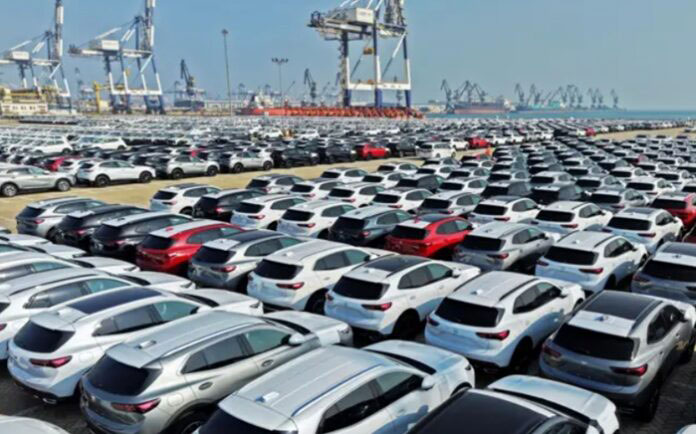
Vehicle prices in the local market have declined considerably, with prices of some small vehicles falling by at least Rs. 1 million, Vehicle Importers Association of Lanka (VIAL) Chairman Indika Sampath Merenchige said.
Speaking to the media, Merenchige said the current market situation provided an opportunity for those planning to purchase vehicles to reserve them, as prices could decline further.
He said many traders were currently selling vehicles at a loss, while the downward trend in prices was expected to continue depending on market conditions.
“People who are planning to buy vehicles should consider reserving them at this stage,” he said.
However, Merenchige said vehicle prices could increase once the market stabilised.
He said prices of several popular models, including the Toyota Yaris, Toyota Raize, Honda Vezel, Suzuki Wagon R, Daihatsu Mira and Suzuki vans, had fallen by between Rs. 400,000 and Rs. 1 million.
Rejecting recent claims by the Ceylon Motor Traders’ Association (CMTA), Merenchige said any alleged loss of Government revenue was attributable to the importation of brand-new vehicles.
The CMTA had claimed that the Government could lose between Rs. 100 billion and Rs. 120 billion in revenue in 2026 due to a tax loophole allegedly being exploited by used-vehicle importers. It had also claimed that the Government had lost around Rs. 40 billion in 2025 and a further Rs. 54 billion between January and July this year.
Merenchige explained the impact of brand-new vehicle imports on Government revenue, referring to provisions contained in a 2016 Gazette notification. He urged the authorities not to be misled by what he described as inaccurate claims.
He said the shortage of vehicles caused by the five-year restriction on vehicle imports had now largely been addressed, although more vehicles were still needed to meet the remaining market demand.
However, he claimed that vehicle imports had subsequently exceeded actual market requirements, contributing to the decline in prices.
Merenchige also attributed part of the recent price reduction to the surcharge imposed by the Government, saying it had contributed to the downward movement in vehicle prices.

Showers expected in the Western, Uva, Sabaragamuwa and North-western provinces and in Galle, Matara, Kandy and Nuwara-Eliya Districts.

Namal Rajapaksa Buddhist gambit fails, bail denied

JR’s 17-year revolution transformed Lanka, says Ranil

Vehicle prices drop by up to Rs. 1 mn, says importers’ body

‘Dead’ man returns home nearly two months after his burial

When disaster strikes, dignity cannot wait

‘Dates have the highest sugar content to fight Coronavirus’

Sunday Island 27 December – Headlines

#SundayIsland 17th December – Headlines

Sunday Island – 28th March

Sunday Island Headlines – 21 March

Sunday Island – 21st February – Headlines
-

 Opinion6 days ago
From Galkissa (Mount Lavinia) to Tambuttegama
-

 News3 days ago
US embassy won’t comment on IGP’s probe into joint drug raid
-

 Features6 days ago
Sri Lanka’s university crisis: Brain drain and union action demand urgent reform
-
 Features5 days ago
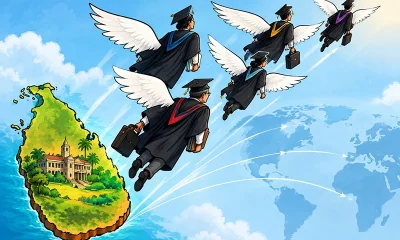
The emptying university: why are academics leaving?
-

 Business3 days ago
All-new Bolero MaXX unveiled in Sri Lanka
-

 Opinion6 days ago
Ashraff: From the SLMC towards the National Unity Alliance
-

 Editorial6 days ago
Muscle flexing, astroturfing and dog-and-pony shows
-

 News2 days ago
Bid for Basil’s extradition nears final stage: Police