
News
UK considers imposing sanctions on Gen. Silva, others over ‘war crimes’

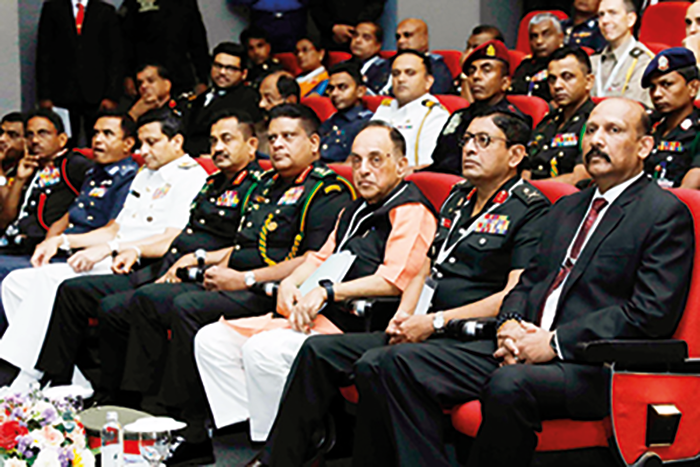
Gammanpila urges govt. to place all ‘evidence’ before Geneva
By Shamindra Ferdinando
The House of Commons has been told that the UK government is exploring the possibility of imposing sanctions on Sri Lanka’s Chief of Defence Staff (CDS) General Shavendra Silva and other members of the military.The UK has reiterated its readiness to use what Foreign and Commonwealth Development Office (FCDO) Minister Jesse Norman called, diplomatic tools including sanctions amidst the ongoing 51 sessions of the Geneva-based United Nations Human Rights Council (UNHRC).
The sessions, which commenced on Sept. 12, will conclude on Oct. 08.The former Financial Secretary to the Treasury has said that the government kept the situation, in Sri Lanka, under close review, including in relation to human rights and accountability. “Within this, the government keeps under active consideration how to use the diplomatic tools we have, including sanctions,” Minister Norman has said.
Lawmaker Norman received the appointment as FCDO Minister, on Sept 07, 2022,following the appointment of Elizabeth Truss as the Prime Minister, on the previous day. At the time Truss received the premiership, she served as the FCDO Minister.
Conservative Party Minister Norman has said so in response to a query raised by Beth Winter representing the Labour Party (Cynon Valley). The lawmaker has asked the FCDO Minister of the recent assessment made of the potential merits of imposing sanctions on (a) the Sri Lankan Chief of Defence Staff, Shavendra Silva, and (b) other members of the Sri Lankan military.
The question has been actually directed at Truss, at the time she served as the FCDO Minister, though the government responded to the query, following her appointed as the Prime Minister.
Minister Norman has said that their Global Human Rights Sanctions regime is a powerful mechanism in the hands of the UK Government meant to hold accountable those who had been involved in serious human rights violations or abuses. The Minister said that their strategy was intended to send a clear signal of the values the UK held.
The Minister said: “The UK Government continues to consider designations globally, guided by evidence and the objectives of the human rights sanctions regime; but it is not appropriate to speculate on potential future designations, in order to avoid reducing their impact.”
British political parties have stepped up attacks on the war-winning Sri Lankan military, especially General Silva in the wake of the US issuing a travel ban, in Feb 2020, on the wartime General Officer Commanding (GoC) of the celebrated Task Force I/58 Division. The US travel ban also covered General Silva’s immediate family.
The Sri Lanka Core Group, led by the UK, recently handed over a new resolution to the UNHRC seeking further action against those whom the group considered human rights violators. The 47-member council, divided into five zones, is expected to vote for the resolution, next week.
Former Minister and leader of Pivithuru Hela Urumaya (PHU) Udaya Gammanpila told The Island that the government should at least now place all available information, pertaining to the conflict, before the Geneva council. Acknowledging that successive governments, including those he served as a Minister, neglected the accountability issues, and thereby allowed interested parties to humiliate the war-winning military, lawmaker Gammanpila said that the move against the CDS was an affront to the country.
The Attorney-at-Law said that the FCDO’s position should be challenged on the basis of wartime dispatches it received from the UK High Commission in Colombo (January –May 2009). Thanks to untiring efforts made by Lord Naseby, the world knew the BHC, Colombo, reported to FCDO that 40,000 Tamil civilians didn’t die as alleged by interested parties, lawmaker Gammanpila said.
The ex-Minister urged the government to review the overall picture and take tangible measures to have politically motivated efforts countered. Sri Lanka brought the war to a successful conclusion in May 2009. PHU leader Gammanpila asserted that perhaps Sri Lanka’s defence in Geneva should be based on wartime US Defence Advisor Lt. Col. Lawrence Smith’s declaration in Colombo, late May 2011, two years after the end of the war, that there was no basis for war crimes allegations against the Sri Lankan military.



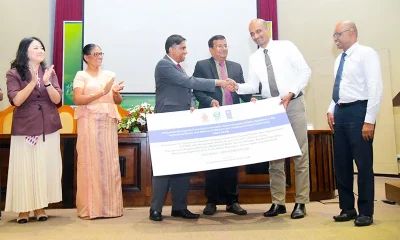

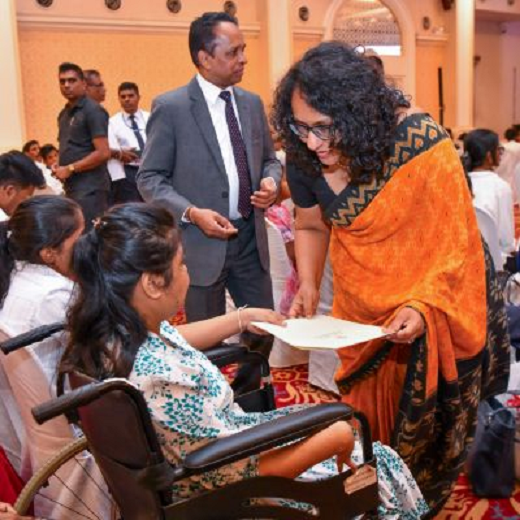
The inaugural ceremony of the ‘Sarasavi Diriya Abhiman’, a special scholarship programme implemented by the President’s Fund for students with disabilities studying at Sri Lanka’s state universities who have not allowed physical limitations to stand in the way of their educational aspirations, was held under the patronage of Prime Minister Dr Harini Amarasuriya at Temple Trees on Saturday (11) morning .
Under this programme, all students with disabilities currently studying at state universities in Sri Lanka are recognised, with the President’s Fund providing each student with a one-off scholarship grant of Rs. 100,000.
At the inaugural ‘Sarasavi Diriya Abhiman’ ceremony, 236 university students with disabilities were recognised, while the total number of students eligible for the programme is close to 400. Taking into consideration the difficulties faced by students in travelling to Colombo, a programme for the Northern, North Central and Eastern Provinces is also scheduled to be held in August.
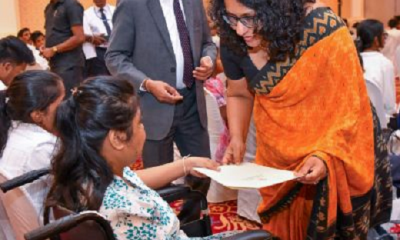
A notable feature of today’s scholarship presentation was that the scholarships were presented by approaching the beneficiary students at their respective seats.
The ‘Sarasavi Diriya Abhiman’ programme, implemented by the President’s Fund, provides national recognition for the dedication, abilities and educational achievements of students with disabilities. It is a significant social empowerment initiative that reaffirms the Government’s position that no physical limitation should stand in the way of educational aspirations.
Addressing the gathering, Prime Minister Dr Harini Amarasuriya stated that the current Government is formulating state policies based on the principle that persons with disabilities must enjoy the same rights as everyone else in society.
Prime Minister further addressing the gathering, said:
“Today is a very special day in the history of our country and, in particular, in the history of the President’s Fund. Another significant step taken during the past one and a half years is being implemented today. It must be said that today marks another successful step in our efforts to create a people-oriented President’s Fund.
Gaining a university education in our country is not easy. It is not an opportunity available to everyone. Although hundreds of thousands of students pass the GCE Advanced Level Examination, only a relatively small number gain admission to universities. Those present here today are a group of extremely courageous and determined citizens pursuing a university education. You have overcome numerous challenges and continue to face those challenges every day to reach this point. I am pleased that we have the opportunity to recognise you. You are truly an example to society and to the entire country. We respect your courage.
Persons with disabilities are part of society. Our Government is formulating policies based on the principle that persons with disabilities are entitled to the same rights enjoyed by everyone else in society. We must take a broad and inclusive approach and send a clear message that these diversities are recognised within our education system. We must build confidence within society that people can learn, progress and reach the highest levels despite these differences.
Students with disabilities were admitted to the university system only after a long struggle. Today, students have been guaranteed the right to study any subject of their choice. It is the responsibility of all of us to create the necessary environment for students exercising that right to pursue their education without barriers.
Every university should have a special unit dedicated to students with disabilities. The Task Force on the Digitalisation of Education should study this matter. A pilot project has already been launched in this regard. We have a responsibility to create universities capable of embracing all forms of diversity. This is a responsibility that cannot be abandoned.
We cannot build a developed society while leaving behind a section of society. Under the first phase of this programme, 236 students with special needs studying at the majority of universities across the island are being recognised today. On behalf of the Government, I commend this valuable initiative undertaken by the President’s Fund, which has allocated Rs. 23.6 million for your benefit. I also wish to pay tribute to your parents. They have fought a tremendous battle on your behalf. We know that you have worked tirelessly, day and night, to secure the future of your children.
As a Government, we will make every possible effort to create opportunities for you to use the higher education you receive to contribute to the sustainable development of the country and to provide the necessary career guidance to achieve this. You are not a burden on the country.
You are a valuable human resource to the nation. You are an integral part of this society. I wish for all your dreams to come true”.
Speaker of the Parliament of Sri Lanka Dr Jagath Wickramaratne said:
“The President’s Fund will mark its 50th anniversary in 2028. A programme of this nature for students with disabilities pursuing higher education is being implemented by the President’s Fund just two years before it completes half a century. When discussions were held on providing this assistance to you, everyone was genuinely pleased.
One of the main sources of revenue for the President’s Fund is a portion of the income generated through the sale of lottery tickets by the Development Lotteries Board. Therefore, all the people of this country contribute towards the funds being provided to you. After 48 years, the President’s Fund has truly become a fund belonging to the people.
Instead of centralising all the activities of the President’s Fund, the current Government has taken steps to decentralise its operations. It is remarkable to witness the level of efficiency with which the President’s Fund operates today. The President’s Fund has now been taken directly to the people.
At present, the President’s Fund is providing assistance to patients, students and identified families with various needs. In 2025 alone, Rs. 4.46 billion was allocated for education. A fresh transformation and change is taking place in the education sector.
While ensuring that social and educational benefits are provided equally to everyone, you will not be left behind for any reason. Today, the President’s Fund has become a fund close to the hearts of the people. The President’s Fund is truly the people’s fund.
Do not harbour the doubts that existed in the past. It must be said that today, the President’s Fund has been transformed into a fund dedicated to the welfare of the people and to building their future”.
Minister of Rural Development, Social Security and Community Empowerment Dr Upali Pannilage said:
“As a Government, we highly appreciate the step taken by the President’s Fund on behalf of persons with disabilities. Despite our efforts concerning persons with disabilities in our country, changing societal attitudes is a long-term process. We are continuously working towards achieving this change. In particular, as a Government, we are committed to ensuring that persons with disabilities are accorded the dignified place they deserve in society.
Our sole objective is to ensure that you are able to lead a dignified life in society. In line with international conventions, we are preparing legislation to safeguard the rights of persons with disabilities and are ready to have it enacted within a very short period.
For the thousands of persons with hearing impairments, a separate Bill on sign language has been drafted. The drafting process has now been completed, and steps are being taken to enact it into law. We are working to grant legal recognition to sign language, alongside Sinhala, Tamil and English in our country”.
Member of Parliament Sugath Wasantha de Silva said:
“Today is a special day. A person with a disability is compelled to wage a major struggle on two fronts. On the one hand, they must contend with their own disability, while on the other, they must struggle against the social, economic, political and physical factors that create disabling barriers.
Engaging in this struggle is difficult and challenging. To overcome these challenges, one must possess unwavering courage and determination. You are a group that possesses such courage.
The recognition presented by the President’s Fund is not being given because of their disabilities. It is because they have inspired society as a whole by demonstrating that it is possible to overcome life’s challenges. These undergraduates have demonstrated the power of inspiration and determination. This is a social investment. What the President’s Fund has done today is an investment in the light provided by these beacons of hope.
The President’s Fund has been rapidly democratised and brought closer to the people. It has developed the capacity to address different sections and diverse groups within society. That is why it has reached out to persons with disabilities who inspire the nation.
Every rupee in this Fund represents the hard work of the people as a whole. The benefits you receive from the President’s Fund should inspire you to become even more determined”.
Secretary to the President Dr Nandika Sanath Kumanayake said:
When we took over the President’s Fund, we could not be satisfied with the manner in which it was being administered. Only a very small group of people benefited from it, and there was no transparency. We wanted to administer the President’s Fund transparently. As an initial step, measures were taken to digitalise the President’s Fund.
Through this initiative, the services of the President’s Fund were expanded islandwide. Its services have now reached the villages. There is no longer a need to travel all the way to Colombo. We have created a system that enables you to access the services you require conveniently through Divisional Secretariats. As a result, the provision of benefits increased by 59% in 2025 compared with 2024.
The President’s Fund has now undergone a transformation. It provides medical assistance and allowances to low-income families, among other forms of support. Today, the President’s Fund also provides more scholarships to students pursuing their education.
The President’s Fund makes a significant contribution towards the provision of Mahapola scholarships. Going beyond this, we have launched a number of programmes. We awarded Rs. 100,000 each to the ten students who achieved the highest results in each subject stream at the GCE Advanced Level Examination. Assistance is also provided to children from families engaged in selling lottery tickets, whose contribution to the President’s Fund is significant.
We are providing assistance in many different ways. In parallel with these initiatives, the programme being implemented today provides Rs. 100,000 through the President’s Fund to university students with disabilities as an incentive to support their educational pursuits”.
Minister of Rural Development, Social Security and Community Empowerment Dr Upali Pannilage; Member of Parliament Sugath Wasantha de Silva; Secretary to the Prime Minister Pradeep Saputhanthri; Chief of Presidential Staff Prabath Chandrakeerthi; Secretary to the President’s Fund and Senior Additional Secretary to the President Roshan Gamage; members of the Board of Governors of the President’s Fund Sarath Chandrasiri Mayadunne and Professor J. R. P. Jayakody; Secretary to the Ministry of Education, Higher Education and Vocational Education Nalaka Kaluwewa; Chairman of the University Grants Commission Senior Professor Kapila Seneviratne; Vice-Chancellors of universities; members of the National Council for Persons with Disabilities; members of the Policy Committee on the Community of Persons with Disabilities; government officials and parents, among others, attended the event.
[PMD]

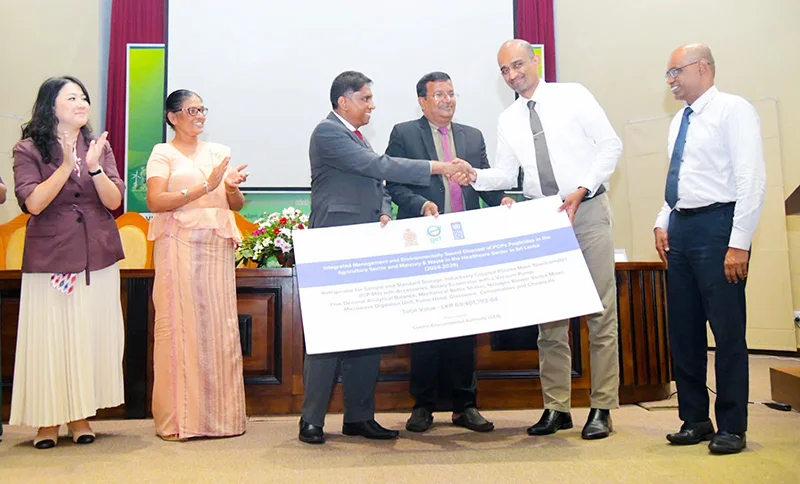
Sri Lanka yesterday took a major step towards strengthening its environmental protection and public health systems with the launch of a USD 38 million Global Environment Facility (GEF)-United Nations Development Programme (UNDP)-supported initiative aimed at improving the management of hazardous chemicals, mercury and medical waste.
The Ministry of Environment formally handed over state-of-the-art analytical laboratory equipment to key institutions to enhance the country’s capacity to monitor hazardous chemicals and persistent organic pollutants (POPs), while accelerating compliance with international environmental obligations.
The programme, titled “Integrated Management and Environmentally Sound Disposal of POPs Pesticides in the Agricultural Sector and Mercury and Waste in the Healthcare Sector in Sri Lanka,” is financed through a USD 5.04 million grant from the Global Environment Facility, together with USD 33.16 million in co-financing, bringing the total investment to more than USD 38 million.
The five-year initiative (2024-2029) is being implemented by the Ministry of Environment under the National Implementation Modality (NIM), with technical assistance from the United Nations Development Programme (UNDP).
The official ceremony was held at the Ministry of Environment under the patronage of Deputy Environment Minister Anton Jayakody.
Officials said the project addresses two of Sri Lanka’s most pressing environmental challenges: strengthening national capacity to monitor hazardous agricultural chemicals and reducing mercury pollution from the healthcare sector.
A key component of the programme is the gradual phase-out of mercury-containing medical devices in line with Sri Lanka’s commitments under the Minamata Convention on Mercury.
The project also seeks to minimise unintentionally produced persistent organic pollutants (U-POPs), which are generated through the improper incineration of medical waste, by introducing safer and environmentally sound waste management technologies.
Environmental experts noted that strengthening laboratory capacity would significantly improve the country’s ability to detect hazardous chemical residues, enforce environmental regulations and respond more effectively to pollution incidents affecting ecosystems and public health.
The event also saw the signing of Memorandums of Understanding (MoUs) with beneficiary institutions receiving the advanced laboratory equipment.
Highlighting the importance of ensuring the long-term usability of the sophisticated instruments, Professor Parakrama Karunaratne, of the Engineering Design Centre at the University of Peradeniya, delivered a presentation on a specially developed Technical and Financial Sustainability Mechanism designed to guarantee the maintenance, operation and sustainability of the equipment well beyond the project’s lifespan.
Senior officials said the mechanism would help prevent costly scientific equipment from becoming underutilised because of inadequate maintenance or funding constraints.
Among those attending the ceremony were UNDP Sri Lanka Officer-in-Charge Marina Ten, Environment Ministry Secretary K.R. Uduwawala, Central Environmental Authority Director General Kapila Rajapaksa and senior officials from the Ministry of Environment and partner institutions.
The initiative is expected to strengthen Sri Lanka’s chemical management framework, improve environmental governance and enhance the country’s capacity to meet international obligations relating to hazardous chemicals and waste, while contributing to the protection of ecosystems and public health.
By Ifham Nizam
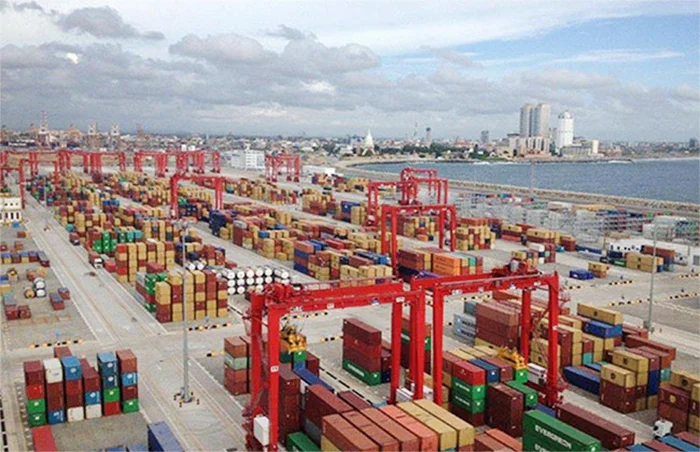
The government has banned the import of goods produced wholly or partly through forced labour, under new regulations issued by President Anura Kumara Dissanayake in his capacity as Minister of Finance, Planning and Economic Development.
The regulations, which came into effect on July 10, prohibit the import of any goods that have been wholly or partially mined, manufactured or produced using forced labour.
They also require importers to furnish the Director General of Customs with documentation certifying that imported goods were not produced through forced labour.
The regulations provide that the Minister will periodically identify the goods or countries to which the prohibition applies, taking into account decisions of the International Labour Organization (ILO).
The move follows a proposal by U.S. President Donald Trump to impose additional import tariffs on goods from 60 countries, including Sri Lanka, over what Washington described as inadequate measures to prevent the import of products made with forced labour.
Under the proposal, Sri Lankan exports would be subject to an additional 12.5 per cent tariff. The United States said the measure was prompted by Sri Lanka’s failure to prohibit the import of goods produced with forced labour or to effectively enforce such restrictions.
The new regulations are intended to address that concern by prohibiting the import of goods linked to forced labour.

A few showers may occur in the Western, Sabaragamuwa and North-western provinces and in Kandy, Nuwara-Eliya, Galle and Matara districts

‘Sarasavi Diriya Abhiman’ programme launched under PM’s patronage

England to make late call on Declan Rice for World Cup semi-final

GEF-UNDP backs USD 38 mn drive to curb mercury, hazardous waste

Govt. bans import of goods made with forced labour

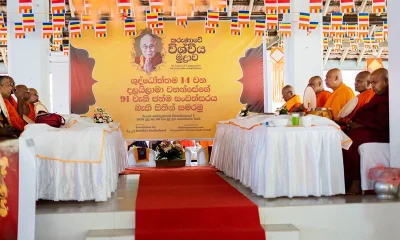
Dalai Lama’s 91st Birthday celebrated here

‘Dates have the highest sugar content to fight Coronavirus’

Sunday Island 27 December – Headlines

#SundayIsland 17th December – Headlines

Sunday Island – 28th March

Sunday Island Headlines – 21 March

Sunday Island – 21st February – Headlines
-
 News4 days ago
Herath warns prospective migrant workers not to get fleeced by racketeers
-

 Midweek Review6 days ago
Unexpected focus on ‘pieces of tin’ worn by military men
-
 Features2 days ago
Prison riots and politics: NPP’s biggest challenge and Sri Lanka’s biggest opportunity
-

 Editorial3 days ago
What’s the world coming to?
-
 Foreign News4 days ago
Tensions erupt in Indian state after 11-year-old raped and murdered
-
 Features4 days ago
Devanesan Annan – in Memoriam
-
 News5 days ago
Negombo Prison riot: Ensuring protection of prisoners fundamental responsibility of the state – UN
-

 Editorial6 days ago
Prison riots and political battles