
News
TNA, GTF seek TN and Indian backing to achieve political goals

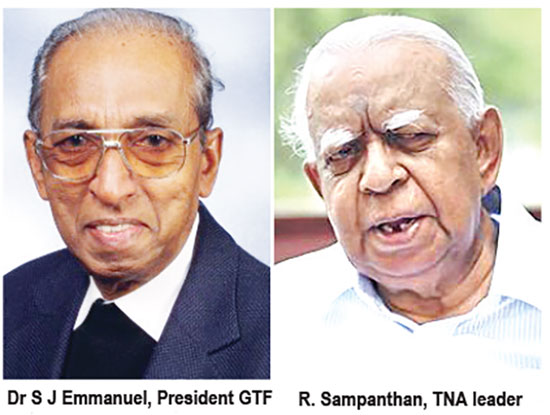
The TNA and the GTF, in a joint statement issued in Colombo and London over the weekend, declared that they looked forward to directly engaging the Tamil Nadu government and further strengthening the engagement with the government of India in line with overall efforts to settle the Tamil national question in Sri Lanka.
Tamil people in Sri Lanka aspire to a degree of self-rule in the areas of their historic habitation (the North-East) and believe this empowerment is fundamental for their equal citizenship in Sri Lanka and to protect their unique identity in the island – a position that always resonated with Tamil Nadu and Indian thinking and policy positions, they said.
The following is the text of the statement: “It has not even been a year since M. K. Stalin became the Chief Minister of Tamil Nadu, yet the mark that the Dravida Munnetra Kazhagam (DMK) leader has made in his State and among Tamils worldwide is unmistakable.
Whether it was ably handling the second wave of the pandemic, or the progressive social justice agenda that includes economically uplifting the underprivileged while removing caste and gender barriers in many aspects of lives, or the bold vision of making Tamil Nadu ‘a one-trillion economy’ by 2030 – Chief Minister Stalin has become the envy of many leaders across India.
With the theme of ‘let Tamil bind us together’, Chief Minister Stalin has taken many meaningful steps towards promoting the commonalities and cohesiveness of the global Tamil community, arguably more so than any other Tamil leader in recent history. Appointing a dedicated Minister, viz., K.S. Masthan, whose portfolio includes Welfare and Rehabilitation of Non-Resident Tamils; declaring January 12 as the World Tamil Diaspora Day with Chief Minister Stalin inaugurating the event; taking steps to institute Tamil studies in international universities, including through donations towards the establishment of Tamil Chairs at Harvard University and the University of Toronto – are just a few examples.
The TNA and the GTF hold Chief Minister Stalin in high esteem for his inspiring leadership of the global Tamil community.
From the perspective of Tamils from Sri Lanka, including those living in Sri Lanka and in the Diaspora – the approach adopted by the present Tamil Nadu government is commendable. They are grateful for the invitations extended to the Member of Parliament from the TNA, M. A. Sumanthiran, and the President of the Canadian Tamil Congress (CTC), Sivan Ilangko for the inaugural World Tamil Diaspora Day event last month. The participation and felicitation by the Tamil Nadu Minister Hon. K. S. Masthan at the annual Thai Pongal Celebrations conducted by the CTC on January 29, 2022 is equally pleasing.
Chief Minister Stalin’s announcement last August regarding Ilankai Thamizhar refugee camps, stating the following was a welcome gesture of notable significance. “They are not orphans; we are there for them and hereafter they will be called Ilankai Thamil rehabilitation camps” This announcement was backed up with a generous allotment of Rs. 317 crores for their welfare schemes, with a promise to improve their living standards further. We also note with gratitude Chief Minister M.K. Stalin’s strong public statements, in his capacity as Opposition leader, exerting pressure on India to support the UNHRC resolution on Sri Lanka during the March 2021 session.
Chief Minister Stalin’s supportive approach towards the Tamil struggle in Sri Lanka is consistent with the long tradition of Dravidian political leaders of Tamil Nadu, particularly his illustrious father, late Hon. Kalaignar M. Karunanidhi. Tamil people in Sri Lanka and their political leaders looked upon the leaders of Tamil Nadu for guidance, support and inspiration. Their support – directly, as well as through the Government of India – has always been a great source of comfort for the Tamil people living in Sri Lanka.
We remember with gratitude, the leadership shown by the late Hon. M. Karunanidhi – the initiatives to protect lives, property, and political rights of the Tamil people following the 1983 anti-Tamil riots; the late Chief Minister using his influence to prod different Indian Prime Ministers to find a political solution to address the Tamils’ quest for equality, justice, peace, dignity, and devolution of power; and DMK MPs’ consistently voicing for the Ilankai Thamizhar in the Lok Sabha over decades. We are also conscious that the DMK support for the Tamil cause continued despite many challenges it faced in the Indian Union, including the dismissal of the DMK government in 1991 relating to the Tamil peoples’ problems in Sri Lanka.
We are acutely conscious of the difficulties and degrading treatments encountered by the leaders of the mainstream Dravidian Movements in Tamil Nadu, many of such regrettable actions originating from unrealistic and hardline positions adopted by some from both sides of the Palk Strait. However, the overwhelming majority of the Tamils of Sri Lankan origin have always been appreciative and grateful for the support provided by the leaders of Tamil Nadu, and also recognise their limitations in shaping every event of the past. Such understanding is growing in strength and will help solidify the bonds and mutual respect enjoyed by the people and the leaders of both communities.
Tamils in Sri Lanka are, once again, at a critical point. Twelve years after the end of the war, their economic prospects are dismal. The progress on war-related accountability is marginal at best. Tamils face many existential challenges – to protect their land and to preserve their identity in the Northern and Eastern Provinces against rampant militarisation and state sponsored initiatives aimed at altering regional demography. It is feared a new constitution under preparation could further weaken the status of the Tamil people, especially by abolishing or weakening the Provincial Councils – the only constitutional power devolution arrangement the Tamil people achieved with direct Indian involvement.
It is in such a dire situation that we are looking for guidance and support from India and Tamil Nadu.
India has significant leverage over Sri Lanka and has repeatedly called upon Sri Lanka to address the legitimate aspirations of the Tamil people for equality, justice, peace, dignity, and meaningful political devolution. India has emphasised on many occasions, including during the March 2021 UNHRC sessions, about its two-pillar policy of supporting Sri Lanka’s unity and territorial integrity, and its commitment to Tamils’ aspirations, and that these were not mutually exclusive choices.
Tamil Nadu has always been critical in setting Indian policies towards Sri Lanka, and it is in this context that a path setting and pragmatic approach adopted by Chief Minister Stalin will give us enormous comfort. A continued focus on this issue at this critical time is crucial for the long-term peace and prosperity of the Tamil people in Sri Lanka. It is also intrinsically linked with the interests of Tamils on both sides of the Palk Strait, and the greater India.



Former first lady Shiranthi Rajapaksa, wife of former President Mahinda Rajapaksa was produced before the Hulftsdorp court, after being arrested by officers of the Commission to Investigate Allegations of Bribery or Corruption (CIABOC) and produce
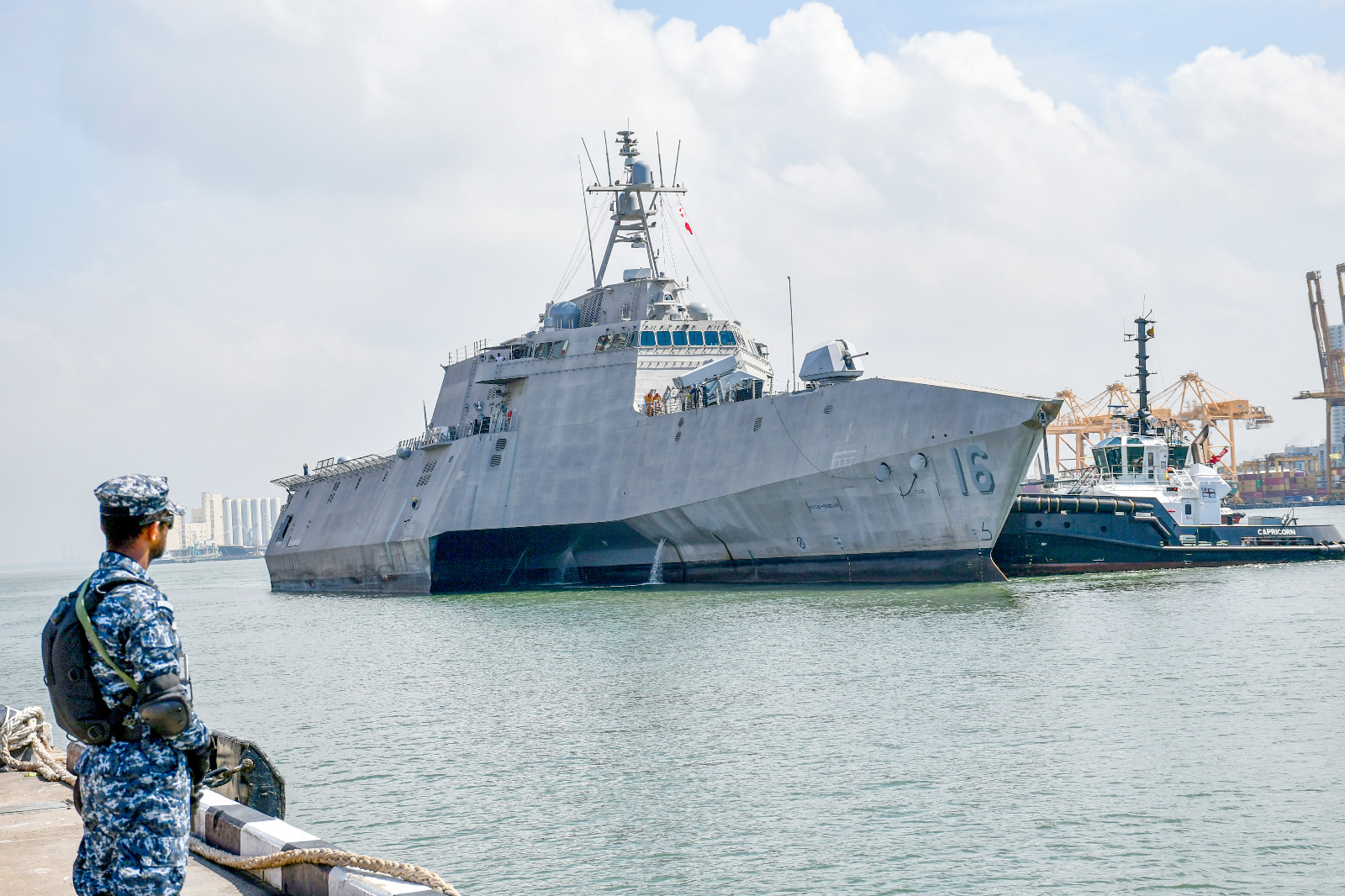
The U.S. Navy ship USS Tulsa (LCS 16) arrived at the Port of Colombo this morning, 7 October 2026 for replenishment purposes.
The visiting ship was welcomed by the Sri Lanka Navy in accordance with naval traditions.
The 127.7-metre-long platform is a Littoral Combat Ship commanded by Commander BM Wanier. Commissioned on 16 February 2019, USS Tulsa has since been in service with the US Navy.
The ship previously made a port call in Sri Lanka on 27 August 2025.
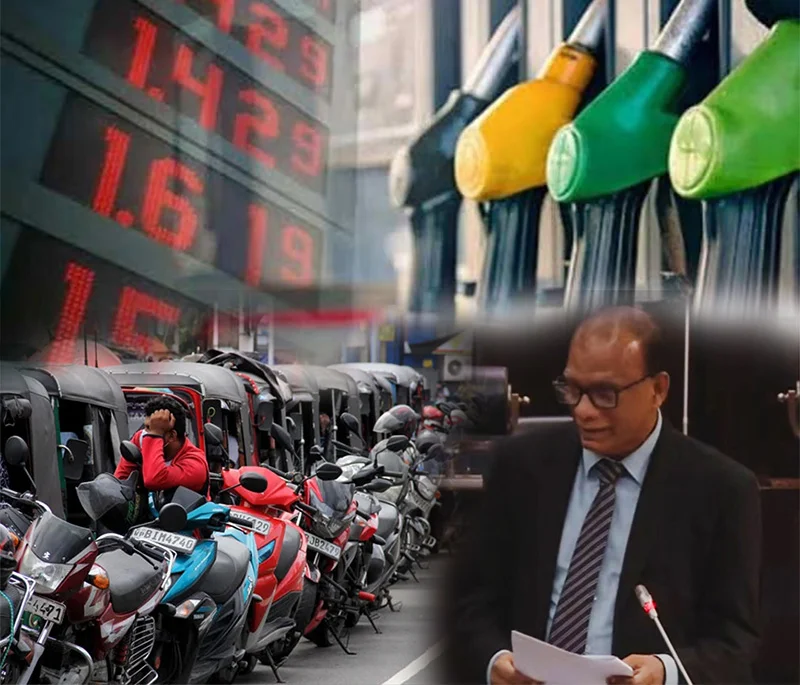
Govt. tells fuel distributors to maintain stocks to ensure uninterrupted supplies
by Saman Indrajith and Norman Palihawadane
The government had instructed private fuel distributors to maintain minimum stocks and ensure uninterrupted supplies to the market, Energy Minister Anura Karunathilaka told Parliament yesterday (06).
Karunathilaka said the Ministry of Energy Secretary had notified the relevant companies of the requirement, following a reduction in supplies by some private distributors, amid higher international fuel prices.
The Minister said private companies had informed the government that they were facing losses because international prices had risen while fuel was being sold, locally, at prevailing prices. As a result, some companies had reduced the volumes released to the market.
The reduced supplies had increased the burden on the Ceylon Petroleum Corporation (CPC), whose share of the diesel market had risen from about 54% to 82%, the Minister said.
“The CPC currently holds an 82% share of the market,” he said, adding that it had increased its supplies, compared with February, to compensate for the reduction by private distributors.
Karunathilaka said the government could not, under the existing agreements with private companies, specify the quantities they should supply to individual filling stations. However, it could require them to maintain minimum stocks in the country.
The Minister said the Energy Ministry had already instructed companies that had failed to maintain the required stocks to take steps to prevent supply disruptions.
The Minister attributed the queues reported at some filling stations to reduced supplies from private distributors, as well as normal variations in fuel distribution. He also said demand for CPC fuel had increased because private companies generally did not provide fuel to dealers on credit, while the CPC offered a three-day credit facility.
“We expect that, as the Ceylon Petroleum Corporation takes on this additional burden, the problem will ease to some extent by Wednesday or Thursday,” Karunathilaka said.
He said instructions had also been issued to increase supplies to CPC filling stations. A special discussion on the issue is scheduled for today (07), with officials of the Energy Ministry and CPC expected to participate,
along with President Anura Kumara Dissanayake.
Meanwhile, Petroleum Dealers’ Association officials have called for an early solution to the supply issue. Association Chairman D.V. Shantha Silva said queues had been reported at many filling stations, mainly those operated by private distributors.
He said the situation was not due to an overall shortage of fuel, but was linked to reduced orders by Lanka IOC, Sinopec and R.M. Parks amid concerns over losses incurred on fuel sales.
The Ceylon Petroleum Private Tanker Owners Association has urged motorists to refrain from panic buying, saying there was no nationwide disruption to fuel supplies.
The government earlier increased fuel prices and introduced a per-litre diesel subsidy following concerns raised by distributors over rising international prices.

Former first lady Shiranthi Rajapaksa arrested by CIABOC

U.S. Navy ship USS Tulsa arrives in Colombo for replenishment visit

Smriti Mandhana appointed India captain across formats

Ronaldo apologizes for Portugal walkout; says Jesus broke promise

Showers in the Western, Sabaragamuwa, Central, Uva, North-western and Southern provinces and in Anuradhapura and Mannar districts

Fuel crunch looms

‘Dates have the highest sugar content to fight Coronavirus’

Sunday Island 27 December – Headlines

#SundayIsland 17th December – Headlines

Sunday Island – 28th March

Sunday Island Headlines – 21 March

Sunday Island – 21st February – Headlines
-

 News7 days ago
US-assisted ‘Ice’ detection: NPC to examine IGP’s move to transfer drug-busting team
-

 Editorial6 days ago
Colombo Port drug bust: The plot thickens
-

 Editorial7 days ago
Drug busting, transfers and trust deficit
-

 Features4 days ago
The first woman in the foreign service or Ceylon Overseas Service it was then called
-
 News7 days ago
Sri Lankan facing death penalty in Saudi Arabia: Mano G appeals to Crown Prince
-

 Editorial5 days ago
Fuelling discontent and protest
-

 News3 days ago
Geneva takes up Sallay’s case and govt. ignores opportunity to answer accusations
-

 Latest News4 days ago
Tharindu Rathnayake, bowlers secure Asian Games Bronze for Sri Lanka