
Features
The Snake Charmer and the Princess

By Jayantha Perera
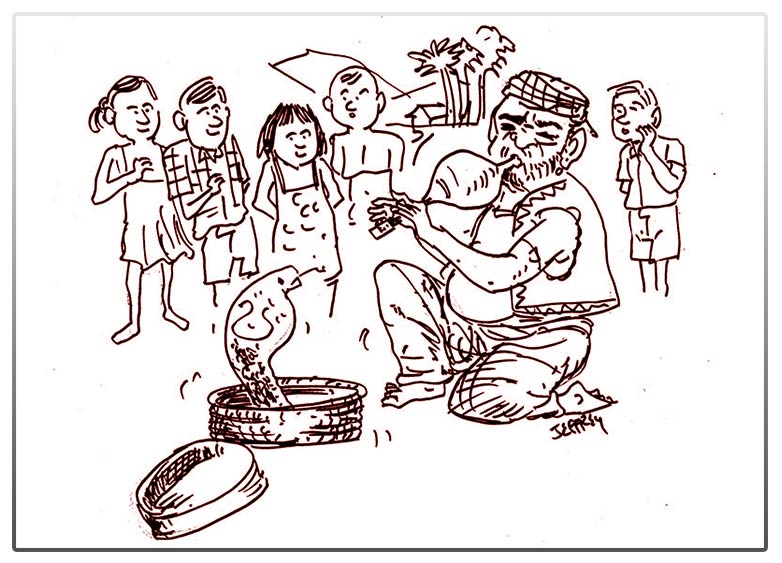
The tall snake charmer with a thick moustache stared into my eyes and smiled. His eyes were large. His rugged, good looks were accentuated by long, black, curly hair that reached his shoulder. He had a flute-like instrument, which indicated he was a rodi (untouchable) snake charmer. He asked my permission to sit on the ground next to me. He smiled again and told me he was waiting for the children to come out of school to watch snake dances. I told him I was waiting for my friends to return. I was uneasy to see his two baskets in a dirty cloth rucksack.
The sun was intense, and the parched bed of the village reservoir behind the school looked like an over-baked cake with a broken, burnt crust. The clay at the bottom of the tank was exposed to the direct sun, and several people were cutting clay cubes to make bricks. Galgamuwa, where we were, had not received rain for several months.
Galgamuwa is a village on the Colombo-Jaffna railway line. About 50 years ago, the Galgamuwa railway station also functioned as a pola (village fair) for fresh vegetables. Farmers brought vegetables in small trays to sell to railway passengers. A vegetable tray contained eggplant, beans, bitter gourd, green chillies, and limes. The buyer emptied the tray and returned it with money to the seller, who was waiting on the platform.
I heard the school bell and saw children running out of classrooms onto the gravel road in front of the school. Some bought food from vendors, and about 20 boys gathered around us to see a snake dance. The snake charmer told them that he would charge five cents from each child. He boasted that he had a king cobra.
The snake charmer was not in a hurry. He tested his flute while searching for something in his rucksack. He showed me a piece of wood that looked like a chalk stick. He thanked deities for allowing him to show his cobras to innocent children. He removed the lid of one basket. The cobra in it was a long one with beautiful skin. The snake charmer played his flute at full throttle, and the cobra slowly started to unwind and move towards the wooden piece the charmer held in his hand.
One child shouted, “Look, look, the hood with a Sinhala ‘pa’ letter.” The cobra hissed angrily at its master when he withdrew the stick. After five minutes, the cobra returned to its basket. The children lost interest in the cobra and ran to school to play. Some of them did not pay for the show.
As the snake charmer lingered, a sense of unease settled over me. He carefully checked the two snake baskets, kept them on my left, and sat on my right. I kept one eye on the two baskets to check what the cobras in the baskets were doing. The snake charmer understood my fear and reassured me that the cobras were harmless and honourable, and some gods use them as their vehicle.
He told me that killing a cobra was equivalent to killing one’s father! His words, rather than comforting me, only added to my unease. I remembered my late father killing a cobra many years before and how some neighbours blamed him for killing it. When my father died soon after the killing of the cobra, a neighbour said my father paid the penalty for killing the reptile.
My Catholic upbringing taught me that a snake symbolised evil, as in the story of Adam and Eve. A snake had deceived and led them to eat a forbidden apple. As a result, they lost the chance to live in paradise on Earth. At the college chapel, there was a life-size statue of Mother Mary with her right foot on the head of a giant snake. According to my catechism teacher, God had told the snake that a woman would crush its head for the unforgivable crime he had committed in Eden by deceiving Adam and Eve.
I felt nervous to be in the company of two cobras and a snake charmer. I was more scared of the snake charmer than of the two cobras. I thought he would use a powerful mantra (charm) to harm or entice me to accompany him to his hulawali (a community of rodi people).
After a long silence, the snake charmer talked to me. He was hungry and begged for some food from me. I had half a packet of ginger biscuits and a bottle of water in my bag. I took three biscuits and gave him the remaining few, which he devoured with gratitude. He did not ask for water. He got up and went to the school water tap, leaving his flute and two snake baskets in my custody. When I saw a slight movement in one basket, I shouted for him to return.
When he returned, he was a happy man. He said that he could read my face and predict my future. He said I had two main aims – to study and protect my reputation. Then he explained how enemies planned to harm me. He also talked about my marriage and children. He became thoughtful and said that I might not stay in my first marriage and I might have a second marriage. I would have three children, and they would do well and remain loyal to me.
He predicted that I would leave my motherland soon, never to return. Then he boasted that if I were interested in any woman, he could help me with a powerful mantra to entice her. He winked at me and waited for me to respond. I did not respond. His predictions, though intriguing, only added to the mystery surrounding him. He told me the girls of his community were the prettiest because they were direct descendants of a Sinhala Princess called Ratnawalli – the daughter of King Prakramabahu. The King had expelled her from the court because she supplied human flesh, claiming it was venison. The snake charmer complained that the punishment was too harsh.
I asked him about his hulawali, family, and children. His hulawali would stay six months in Galgamuwa. They would move to another area before the rains started. He was married with two children. The children were teenagers, and he had taught them how to read palms and faces and predict the future. They never attended school. The marital age in his community was 12 years for a girl and 14 years for a boy. They followed matrilineal descent, and children were generally attached to their mothers.
The snake charmer checked the two baskets again and found the cobras happy and resting. He said, “Although people consider us untouchables and untrustworthy, we are connected with royalty.” He inquired whether I had any more food in my rucksack. When I said I hadn’t, he walked to the water tap and drank from it. He settled on the ground before me and told me a story about his ancestors.
His great-grandfather was known for his mastery of mantras. He was a simple, intelligent man and was next in line to become the community chief. One day, he was begging in a Kandyan aristocratic neighbourhood when he saw a young, pretty woman watching him from her balcony. He knew she was a member of one of the leading aristocratic families. He smiled, but she snapped at him and ran in.
The young man was sad, and for several days, he roamed in the vicinity of the girl’s mansion, trying to get a glimpse of her. He got angry with her when house servants told him not to stroll near the mansion. He prayed to his ancestors and vowed to bring the girl as his wife. He felt no purpose in living in this world without her by his side as his companion.
About a month later, he walked past the mansion and saw her again on the balcony. She, too, saw him and ran back to the house, screaming that a devil was trying to harm her. The house servants chased him away. He felt terrible and decided to camp in front of her home until her parents gave her to him.
The belief in the area was if a rodi man or a woman died in the vicinity of a high-caste neighbourhood, seven houses in the vicinity would become rodias. The girl’s parents and relatives offered the young man money, but he insisted that he would die in front of the house unless they handed her over to him. In the end, the parents gave their daughter to him. Then, to save face, they spread the rumour that she ran away with a stranger.
The story of the snake charmer’s great-grandfather triggered memories of a book I had read years ago as an undergraduate. The book was Amawathura, written by Gurulu Gomi in the 12th century. One chapter was on Dittamangalika (Pleasant Woman). I told the snake charmer the story.
Dittamangalika was from a wealthy family and was pretty, educated, and of high birth. Many young men wanted her hand in marriage, but she refused all of them. She found defects in their feet, hands, or faces. Once, she was going to the royal pond to bathe and heard a bell. She opened the curtains of her palanquin and saw a chandala (untouchable) young man on the road.
She shouted, “Oh, my eyes are now polluted. Bring water to wash my polluted eyes. Oh, I mentioned his caste name, and now my tongue is polluted. Is it my fate to see such an impure creature today? I do not want to go to the pond any more; take me home immediately to wash my eyes and mouth.” Her servants were angry with the young man because they lost an excellent opportunity to enjoy good food at the royal pond at her expense. They assaulted the young man and left him for dead.
Mathanga, the young man, thought thus: I suffered profusely in the hands of those hooligans because of that young woman. If I were a man, I would take her as my wife. He staggered to the front yard of the girl’s mansion and shouted, “If I get Dittamangalika as my wife, I will get up and go with her. If not, I will die here.”
The neighbours got alarmed and told her father, “Unless you hand over the girl to the Chandala boy, we will take her to him. If the fellow dies here, seven houses to the left and seven to the right will become untouchables.” Her parents reluctantly handed over the girl to Mathanga. He told her, “Your people have beaten me up. I am fragile, and my whole body is aching. Please carry me on your shoulder to our hut”. She carried him and walked to his small hut in the periphery of the town while onlookers jeered.
The snake charmer was delighted to hear the story. He said, “Look, as far back as a thousand years ago, we had contacts with royalty and the aristocracy. Now you know that we, too, are of royal descent.” He said, “In my community, a good storyteller could easily become its leader and win the most beautiful woman.” He requested that I visit his hulawali and repeat the story to his relatives and friends.
My colleagues arrived at the scene and were unhappy to see me conversing with a rodi snake charmer. One asked me, “How long have you been talking to this man?” I told him, “About three hours.” He said I should go through a purification process to remove any mantra the man had placed on me. Before lunch, he cut several lemons, rubbed them on my body, and told me to bathe at the well.
I could not sleep that night because I dreamt of cobras and a man in a white sarong who was trying to chase them away from me. Early the following day, the colleague who had shared the room with me told me that I had shouted several times in the night, saying naya, naya (cobra, cobra). My colleagues took me to a Buddhist temple at Galgamuwa to cleanse me of pollution and charm.
Before I explained what had happened, my friends rushed to relate the story to the chief monk. One said that the snake charmer tried to charm me using his black magic skills. He explained the circumstances – I was sitting on a large boulder, the cobras on my left, and the snake charmer on my right. He thought that arrangement showed that the snake charmer wanted to keep me where I was so that he could silently recite a mantra and charm me to take me to his community.
My friend asked the priest to redeem me from the black magic entrapment. The priest thought for a minute and started chanting pirith. At the end of the chanting, he tied a white string around my wrist and blessed me. He told me that no evil spirit or person would harm me any more. The priest did not forget to advise me that I should avoid snake charmers and beggars with many tricks to harm others.


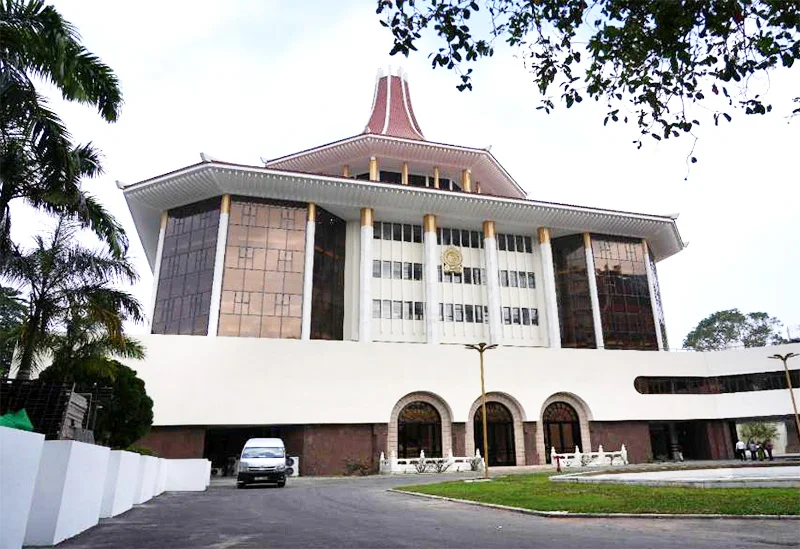
The government, it would seem, plans to amend Article 107(5) of the Constitution to extend the age of retirement of judges of the Supreme Court from 65 to 67 years, and judges of the Court of Appeal from 63 to 65 years.
I. A Flawed Policy Rationale
An attempt is made to justify this measure by resorting to a simple argument: life expectancy has greatly increased as a result of improved medical facilities, with consequent extension of the productive segment of life; and the community will therefore benefit from the accumulated knowledge and experience of judges who still have much to offer, as they approach the age of retirement currently stipulated.
This contention is spurious and entirely unsustainable.
II. Prospective and Retroactive Reform
The age of retirement of judges is, of course, not an immutable norm. There is lively discussion the world over regarding the age to be fixed by law as the point of compulsory retirement.
Significant variation in approach is seen in different jurisdictions. In the United States, judges of the Supreme Court are appointed for life, and the age at which they relinquish office is a matter of personal decision. When a mandatory threshold is laid down, it may vary from 65 and 70 to 75. An inflexible determination is contrary to practice, and is not consistent with sound policy.
This, however, is not the issue. It is a red herring across the trail, intended to distract attention from the central issue. What is important is that the age of retirement, at whatever level it is decided upon, should be determined prior to appointment of the judge, so that when he embarks upon his judicial duties, he knows the span of his judicial career. Its duration should not be changed while he is in office. The constitutional instrument or other definitive text should stipulate, in advance, the point at which the appointment ceases, and the enacted principle should apply across the board to all judges, with no discrimination from case to case.
The effects of departure from this principle are gravely prejudicial to the prestige and stature of the Judiciary. This is well illustrated by the sequence of events in our own country.
During the first half of this year, 2026, three judges of the Supreme Court retired. If the proposed extension of tenure had been effected at the beginning of the year, these judges would have been entitled to its benefit, and would have continued in office for an additional two years.
The precise moment at which the change is brought into operation is the decisive factor in deciding who, among the judges of the court in question, will be beneficiaries of the innovation, and who would be left outside its scope.
The decision as to timing is entirely in the hands of the Executive, with the support of a majority of the Legislature at its disposal. The seriously disquieting result is that the government of the day, by having recourse to ad hoc amendment of the Constitution for this purpose, becomes fully empowered to decide which judges will be recipients of its largesse, and which will not.
This amounts to picking and choosing among the judges of the court, the overriding consideration being the goodwill and discrimination of the government in power.
Whatever the actual intention may be, this inevitably gives rise in the public mind to a doubt whether the decision by the Executive is predicated on acknowledgment of past empathy, or an incentive to future understanding. The arising of this doubt is, by itself, fatal to public perceptions of the objectivity and impartiality of the Judiciary.
The answer lies in prospective, rather than retroactive, prescription of the age of retirement. Nothing is cast in stone, and changing social circumstances certainly call for accommodation in the substance of the law. But the principle to be insisted on is that the changes contemplated should apply to judges to be appointed after the amendment is made, and should not be available as a lever for use to confer on some sitting judges advantages which are tactically withheld from others.
III. Classification and Discrimination
By their very nature, arguments which appeal to longevity, productivity, and waste of talent in human resources, apply universally across the public service. Any limitation to one section, arbitrarily chosen, erodes the very foundation of the suggested rationale.
University professors and other academics in our tertiary education system retire compulsorily at 65 years. The age of retirement of medical consultants is currently fixed, in our country, at 63. Heads of Department throughout our public service relinquish their functions at 60.
In each of these categories, the accumulated experience is considerable. Is it only judges who remain capable of adding value to the public wellbeing at 65? On what rational ground is similar reasoning withheld from other categories of specialised personnel, such as cancer, kidney, and heart specialists, whose contribution in their respective spheres is noteworthy, and should continue to be available to the public?
The Minister of Justice, on the floor of Parliament, tried to justify the government plan by pointing out that judges in developed countries serve beyond the age of 65. He cited as examples several jurisdictions, including the United Kingdom, Germany and Brazil.
What he did not mention is that judges in all these countries are not treated as an isolated exception. On the contrary, the enhanced age of retirement finds its place in an overall culture which lengthens the working lives of all public service personnel in keeping with transformed social conditions and expectations.
The attempt to distinguish judicial officers from all other public officers is capricious, invidious and insincere, and, altogether, lacks the ring of conviction.
IV. Mandate and Legitimacy
An interesting feature of the government plan is the identification of this particular issue as being worthy of high priority and immediate legislative action. No one, to our knowledge, has agitated for urgent legislative intervention in this area, nor has it received even passing mention in the manifesto of the National People’s Power. By contrast, when it went before the people, almost two years ago, it committed itself to decisive action in other fields, including, in particular, the abolition of the Executive Presidency.
Current political experience in the country highlights the importance of many other constitutional issues, in particular, anomalies besetting the electoral system. This has been repeatedly invoked as a reason for delaying the conduct of Provincial Council elections.
There are other issues which call for very early responses in light of current developments — such as the recent ruling by the Vavuniya High Court suspending operation of the Gazette issued by the Governor of the Northern Province, removing from office the Mayor of the Vavuniya Municipal Council. This situation vividly exposes the ambiguities in the constitutional provisions governing the competence of a Governor to exercise the powers of a Provincial Council which is defunct in the absence of elections.
It seems strange, to say the least, that all these crucial issues are going by default, while the obsessive focus of the government is on a matter which is peripheral and divisive. Furthermore, this issue is sought to be taken up on a stand-alone basis, rather than as an integral aspect of a comprehensive constitutional reform initiative.
V. Impact on the Subordinate Judiciary
The question arises in stark form regarding the impact of the proposed change on the ranks of High Court and District Court judges, as well as Magistrates. These are public officers who have devoted their entire working lives to the administration of justice in our country. Given their dedication and commitment, upward mobility in their chosen profession is no less than their due. And yet, their legitimate expectation of promotion to higher levels of the Judiciary is stultified by the unexpected extension of the tenure of judges of superior courts. This will unavoidably result in demotivating these judges, with consequent loss of enthusiasm.
The government, in pursuing its current initiative, has repeatedly stressed the need to retain the services of judicial officers of high calibre. This requires, at the very minimum, the provision of a conducive working environment in which conscientious application is recognised and rewarded. This can hardly be done by depriving judges of access to proper avenues of promotion on which they had relied with every justification.
The problem is certainly not solved by offering to extend the tenure of all judges (not only judges of the Supreme Court and the Court of Appeal) by two years. If implemented, the effect of this is that serving judges of subordinate courts will stagnate in the positions they hold at present, since natural rotation and promotion is interfered with, by the higher judiciary retaining their positions beyond the time span contemplated prior to the proposed innovation.
VI. Equal Protection of the Law
If the government proceeds with its plan to carve out one section of the public service, which is organically an integrated whole, and to confer on it substantial advantages which are deliberately withheld from other strata, the resulting problem has more than a moral or ethical dimension: it produces justiciable legal consequences. This arises from the operation of Article 12(1) of the Constitution, which provides that “all persons are equal before the law and are entitled to the equal protection of the law”.
Trade unions and professional bodies representing services prejudicially affected will thus acquire the right to approach the courts with grievances of constitutionally impermissible discrimination. The glaring anomaly then arises that it is none other than the Supreme Court, in the exercise of its jurisdiction in terms of Chapter XVI of the Constitution, that would have the non-delegable duty to adjudicate upon the matter.
This is a flagrant violation of the essential elements of natural justice, in so far as the direct and exclusive beneficiaries of the impugned measure function as judges in their own cause — a situation which would scarcely invite public confidence in the institution.
VII. Absence of Consultation
A measure so far-reaching in its impact must necessarily be preceded by extensive public consultation. This is amply borne out by international practice. In the United Kingdom, for instance, when extension of judicial tenure was considered in earnest for more than a whole year in 2021, the government proposal was opened up for public debate, eliciting no fewer than 1,200 responses expressing a wide range of points of view.
The striking contrast in our own country is that the proposed amendment is being hatched in secrecy, unbeknown even to members of the government, let alone the community at large. When the Bar Association communicated with the Minister of Justice, the non-committal and evasive reply was that the matter had not been discussed at Cabinet. A furtive and clandestine approach, indicative of singular lack of confidence, is hardly the right approach to constitutional reform in so critical an area.
VIII. Conclusion
The government’s planned proposal is one of the most dangerous constitutional adventures proposed to be embarked upon in recent times. If the amendment is carried into effect, it will spell the doom of democratic institutions, as well as individual and group rights, as we know and cherish them. Most calamitous of all, it will shake the foundations of public confidence in the integrity and objectivity of the Judiciary. What is quite remarkable is that the government initiative is not a response to overtures by the legal community, civil society, or informed and interested groups. It is a self-serving, partisan political initiative by the government in power.
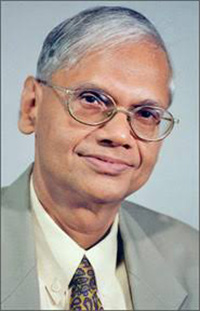 By Professor G. L. Peiris
D. Phil. (Oxford), Ph. D. (Sri Lanka);
Former Minister of Justice, Constitutional Affairs and National Integration;Quondam Visiting Fellow of the Universities of Oxford, Cambridge and London;Former Vice-Chancellor and Emeritus Professor of Law of the University of Colombo.
It is always a joy to arrive in Sri Lanka and I thank President Rajeev Amarasuriya for his kind invitation. There is something in the air of this beautiful island that drains the stress of big city living. I feel lighter and happier whenever I arrive, and last night was no different.
I thank you for the kind words of introduction.
In November 2018, I found myself in the book-lined study of the Indian jurist and friend of Sri Lanka, the redoubtable Fali S. Nariman.
Why was I there? A group of Sri Lankan lawyers working under the banner ‘Lawyers for Democracy’ and led by Upul Jayasuriya, PC had reached out to me to help secure an opinion from Mr. Nariman.
President, Maithripala Sirisena had dismissed Prime Minister Ranil Wickremesinghe. The President proceeded to dissolve Parliament and call for elections. The question was: were these actions constitutional?
Nariman opined that the Presidential proclamation dissolving Parliament was ultra vires the 1978 Sri Lankan Constitution. Reading several provisions of the Constitution harmoniously, Nariman concluded that the proviso under Article 70(1) must be read as a fetter on the power of the President to dissolve Parliament until 4 ½ years after the first meeting / sitting of Parliament. Of course, as you know, the fetter would not apply where Parliament itself had requested early dissolution by a resolution passed by not less than 2/3rds of the whole number of members voting in favour of the resolution.
I open with this episode because, here and now, we are again in the midst of a constitutional moment. Yet again, there is a legitimate concern of lawyers and the informed citizenry in Sri Lanka, on whether the Constitution and constitutionalism are being bypassed. It is again time for the legal community in the Asia Pacific and our neighbourhood to step forward and share suggestions based on our own lived experiences and learnings.
Twenty-four years after the Indian Constitution was born in 1950, the leading Indian jurist, Nani Palkhivala, published a slim volume titled “Our Constitution Defaced and Defiled“. The book drew on the 6th John F. Kennedy Memorial Lecture delivered by the author in what was then Bombay. As the title of the book suggests, there is an undercurrent of lament that runs just below the surface of Palkhivala’s lucid prose.
Why the tinge of sadness?
Published in 1974 (four years before your Constitution), Indians had worked their Constitution for 24 years. In less than a quarter century, the Indian Constitution had been amended 25 times. Palkhivala felt that successive amendments had diluted many of the high values, central to the original compact between the citizens of free India and the State they formed. He was particularly distressed at the erosion of property rights and efforts by the State to constrict and confine the role of our Constitutional courts.
Nani Palkhivala is justifiably referred to as the man who saved the Indian Constitution.
Many of you know about Stephen Pleasonton, the US State Department clerk, who in August 1814 hurriedly stuffed the original Declaration of Independence and the US Constitution in coarse linen bags and carried them away from Washington DC hours before British Troops burned the city.
Palkhivala’s role, did not involve linen bags and the timely escape from gutted government buildings. Nevertheless, it was no less heroic.
In a case titled Keshavanand Bharati that spanned several weeks of hearing, Palkhivala persuaded the Indian Supreme Court to adopt the theory of basic structure. This singular contribution to global jurisprudence by the Indian Supreme Court ensures that core traits of the Constitution cannot be abrogated even through constitutional amendments.
While the basic structure doctrine sits well in jurisdictions that allow judicial review of statutes, it has a resonance in other systems as well. The doctrine fosters respect for core constitutional values and a culture of constitutionalism.
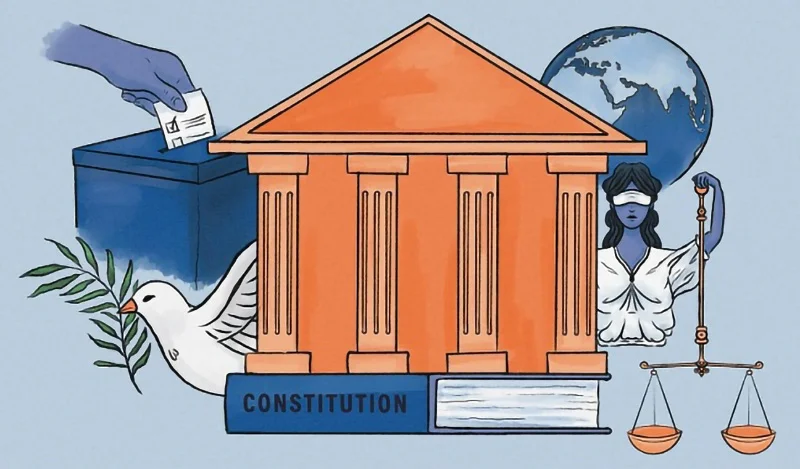
The pre-eminent value of constitutionalism is the people’s faith and belief in the supremacy of the Constitution. This is the cardinal value. As we work towards deepening democracy, we have to abide by basic tenets, continuously, without which we will miss our freedoms and the protected spaces that enable us to flourish as open societies.
Historically, the 1978 Sri Lankan Constitution as amended by the 19th Constitutional amendment in 2015 had Article 33(1)(a). This article as it then stood imposed a duty on the President to ensure that the Constitution ‘is respected and upheld by all organs of Government’. These were important words because they unequivocally required the highest constitutional functionary to promote constitutionalism.
In refashioning Article 33(1)(a), the 20th Constitutional Amendment appears to have dropped these weighty words. Indeed, for an overseas observer relying on an assortment of websites to access the definitive constitutional provisions as on date, I noticed a game of constitutional ping-pong, with provisions dropped and restored.
Since the text of the Constitution is extremely important, the fundamental duties, specifically Article 28(a) requires for every person of Sri Lanka to uphold and defend constitution and the law. The choice of words, ‘every person in Sri Lanka’ was interesting for its contrast to a corresponding Article 51A of the Indian Constitution. The Indian Constitution imposes the duty on ‘every citizen’ to ‘respect the Constitution’.
As a visitor to Sri Lanka and a citizen of India, I am currently under a moral and civic obligation to defend two constitutions, a responsibility I happily assume. I do so since constitutionalism is our best bet to navigate the turbulence of a complex world and transit to a fulfilling future.
Constitutionalism has both positive and negative attributes. It has a close cousin in constitutional morality. Indeed, both these expressions are elastic, and at their core are but pathways to securing dignity for individuals and betterment for the community in a just and fair manner.
The political scientist and constitutional commentator Pratap Bhanu Mehta identifies a cluster of characteristics linked to constitutionalism and constitutional morality. He writes:
“I [have] suggested that constitutional morality refers, instead, to the formal virtues of a constitutional sensibility: (1) Self-restraint, (2) respect for plurality, (3) deference to processes, (4) scepticism towards authoritative claims of popular sovereignty, and (5) a commitment to an open culture of criticism that lies at the heart of constitutionalism.”
Dr. B.R. Ambedkar who chaired the drafting committee of the Indian Constitution and was its principal architect, referred to the historian George Grote (pronounced Groht) when addressing the Constituent Assembly. Grote who had studied Athenian democracy emphasised ‘the diffusion of Constitutional morality’ not merely amongst the majority but throughout the whole community. This was an indispensable condition of government at once free and peaceable.
The Indian Supreme Court speaking through Chief Justice Deepak Misra in the celebrated Navtej Singh Johar case (which decriminalised same sex relationships) has an eloquent perspective on constitutionalism.
If I may be permitted a lengthy quote.
“122. The principle of transformative constitutionalism also places upon the judicial arm of the State a duty to ensure and uphold the supremacy of the Constitution, while at the same time ensuring that a sense of transformation is ushered constantly and endlessly in the society by interpreting and enforcing the Constitution as well as other provisions of law in consonance with the avowed object. The idea is to steer the country and its institutions in a democratic egalitarian direction where there is increased protection of fundamental rights and other freedoms. However, it is only when we adhere to constitutionalism as the supreme creed and faith and develop a constitutional culture to protect the fundamental rights of an individual that we can preserve and strengthen the values of our compassionate Constitution.
128. It is the concept of constitutional morality which strives and urges the organs of the State to maintain such a heterogeneous fibre in the society, not just in the limited sense, but also in multifarious ways. It is the responsibility of all the three organs of the State to curb any propensity or proclivity of popular sentiment or majoritarianism. Any attempt to push and shove a homogeneous, uniform, consistent and a standardised philosophy throughout the society would violate the principle of constitutional morality. Devotion and fidelity to constitutional morality must not be equated with the popular sentiment prevalent at a particular point of time.”
The Nobel Laureate Amartya Sen in his study The Idea of Justice (2009) explains what Constitutionalism is not. As many of you might know, Matsya in Sanskrit is a fish and Nyaya is justice. Sen writes:
“Early Indian legal theorists talked disparagingly of what they called Matsyanyaya, ‘justice in the world of fish’, where a big fish can freely devour a small fish. We are warned that avoiding Matsyanyaya must be an essential part of justice, and it is crucial to make sure that the ‘justice of fish’ is not allowed to invade the world of human beings.” – (page 44, The Idea of Justice)
This brings me to the role of Bar Associations. They have a vital societal obligation in educating the community and advancing constitutionalism.
In South Korea, a constitutional crisis erupted in December 2024 when President Yoon Suk Yeol declared martial law and attempted to dissolve the National Assembly, a move that struck at the heart of the country’s democratic framework. In the face of this extraordinary challenge, the Korean Bar Association (KBA) acted swiftly and unequivocally, issuing a public statement condemning the President’s actions as both unconstitutional and a grave assault on the rule of law. The declaration of martial law triggered a massive wave of civil protest. International organisations such as LAWASIA also joined in expressing deep concern, underscoring the broader regional and international consensus on the need to uphold constitutional processes and protect human rights. Facing immense domestic and international pressure, President Yoon rescinded the order within hours. Ultimately, South Korea’s Constitutional Court confirmed the dismissal of President Yoon Suk Yeol, upholding his impeachment and marking a decisive affirmation of constitutional supremacy over authoritarian overreach.
President Yoon Suk Yeol is currently serving a 7-year prison sentence, which was upheld by the Supreme Court of South Korea a few days ago.
Allow me a word of praise for the Bar Association of Sri Lanka. The leadership demonstrated by President Rajeev Amarasuriya builds on the work of so many distinguished past presidents including my dear friend Upul Jayasuriya. BASL has risen above politics, to project a stand founded on principles and values. My great regard for President Amarasuriya has soared as he navigates through the constitutional equivalent of the Straits of Hormuz.
The position taken by BASL as recorded in its communication of 25th May 2026 to His Excellency, President Anura Kumara Dissanayake is unexceptionable. Marshalling facts regarding the increase in the cadre of judges in the Court of Appeal and that of the Supreme Court, BASL noted that there was no workload justification for extending the retirement age of the sitting judges of these courts.
Constitutions are not to be amended merely because the government of the day commands the requisite numbers. The perception that the real reason for extending the retirement age is distant from working norms and efficiency, is apt to erode public trust and confidence.
Public trust is earned and built over decades through the work of individual judges and the collective output of the judiciary. An independent Bar that maintains an open channel of communication with the public is a vital safeguard against assaults on an independent judiciary. An independent Bar has a keen sense of potential dangers that loom. The Sri Lankan public deserves outstanding judges known for their independence and impartiality. Today, BASL is justifiably concerned about tinkering with the retirement age, absent any immediate justification.
I join my distinguished international colleagues, Mr. Steven Thiru, President of the Commonwealth Lawyers’ Association and Mr. T L Yap, President of LAWASIA in both commending the Bar Association of Sri Lanka for its courageous and principled stand and call on the authorities to pay heed to the BASL.
In the Indian experience, invoking the basic structure doctrine, the Supreme Court has consistently struck down amendments to the Constitution that impacted the independence of the judiciary. In the absence of constitutionally mandated judicial review, Sri Lankan society is best served by an open and transparent consultative process before any ad hoc piecemeal amendments are pushed through.
Recall the title of Nani Palkhivala’s book I mentioned: “Our Constitution Defaced and Defiled“. Surely, the people of Sri Lanka deserve better than a piecemeal and ad hoc amendment that defiles the constitutional scheme and possibly impairs the independence of the judiciary.
President Amarasuriya correctly mentioned that the Bar Association of Sri Lanka is guided by principle and conscience, not the political winds of the day. May I suggest a third factor which I will call the “Smell Test”. The Bar Association, comprising so many experienced and venerable practitioners has a keen and well-developed instinct refined over decades. When something “smells wrong” as it does at this constitutional moment, citizens have a reliable guide in BASL. The Bar Association knows something is amiss – something that compromises the independence of the judiciary and the rule of law. The move to amend the Constitution by extending the retirement age of superior court judges fails the Smell Test.
With the help of the Bar Association of Sri Lanka and with the help of its independent judiciary, a culture of constitutionalism is taking hold. Its roots are sinking deep.
The poet, Yasmine Gooneratne has a memorable set of lines:
There was a country where fine poems lay
close to the surface.
Under every hedge
each passing shower would bare a glittering edge.

I am confident that here in Sri Lanka every passing shower of constitutional challenge will reveal the glittering edge of constitutional values and fidelity to the rule of law. (Concluded)
Address to the Bar Association of Sri Lanka on 11 July 2026
by SHYAM DIVAN
Senior Advocate, Supreme Court of India
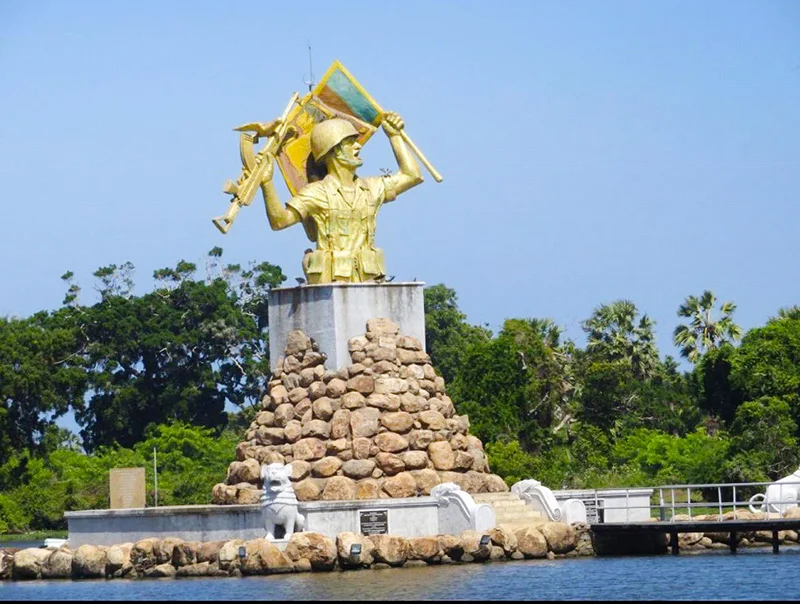
Two recent articles by my good friend and senior journalist M.R. Narayan Swamy, in the Jaffna Monitor, cut through layers of rhetoric that have clouded Sri Lanka’s post-war discourse for 17 years. One dissects the political theatre of Tamil nationalist leaders seeking endorsements from Indian chief ministers for federalism. The other exposes the poignant reality of thousands of former LTTE cadres living in poverty, scarred by war and largely abandoned by the diaspora that once fuelled their struggle. As a law enforcement officer and intelligence professional who operated at the heart of counter-terrorism efforts during the decisive phase against the LTTE, these reports resonate with hard-won lessons from the battlefield and its aftermath.
They compel us, as Sri Lankans, to confront uncomfortable truths: the self-interest that masquerades as solidarity, the myths that sustain division, and the urgent need to move beyond symbols and slogans that breed hate. It is time to remove monuments of motivation that create anger and radicalism. Let them serve as lessons of political manipulation and past mistakes. The moment has come to put a full stop to such manipulation and commit unequivocally to One Sri Lanka, a united, inclusive nation focused on shared prosperity, security, and harmony.
The futility of external federalism appeals
The contradictions in recent political overtures are glaring. Chief ministers in India’s quasi-federal system routinely battle the centre for greater autonomy. Expecting them to champion expansive federalism for Sri Lanka is not only illogical but performative. The LTTE itself rejected federal solutions in favour of separatism. Reviving these demands now primarily serves to placate diaspora constituencies and maintain political relevance rather than address the real needs of people in the North and East, fisheries livelihoods, infrastructure, education, and jobs.
This theatre distracts from practical steps. The 13th Amendment offers a framework for meaningful devolution. Strengthening its implementation through transparent governance and regular elections would advance genuine power-sharing far more effectively than symbolic appeals that risk reopening old wounds. As Sri Lankans, we must reject external scripts that keep us locked in ethnic contestation and instead prioritise internal consensus-building for national development.
The betrayal of those who fought
Even more sobering is the plight of former LTTE fighters. Around 12,000 cadres surrendered, or were captured, in 2009. Many were conscripted young, indoctrinated, or caught in circumstances beyond their control. Today, large numbers eke out marginal existences as labourers or small traders, burdened by physical injuries, psychological trauma, and unemployment. Some rely on modest government assistance, the state they once fought.
The diaspora that provided critical funding, propaganda, and international cover during the war largely withdrew support once the fighting ended. Ex-combatants have voiced this betrayal directly: resources flowed while the war continued; they dried up when defeat came. International organisations, including the World Food Programme, supplied logistical support during the conflict but withdrew aid from rehabilitation centres in late 2009 amid pressure that framed facilities as “prisons.” The government then stepped in. Such actions reveal agendas often more concerned with sustaining narratives than ending suffering or building peace.
Southern political leadership bears its share of responsibility too. Successive governments, focused on immediate security and reconstruction priorities, did not always sustain consistent, long-term reintegration programmes. This collective neglect,of both northern fighters and affected communities, has left scars that undermine national cohesion. We must acknowledge these failures honestly as Sri Lankans seeking unity.
Dismantling the genocide myth through post-war actions
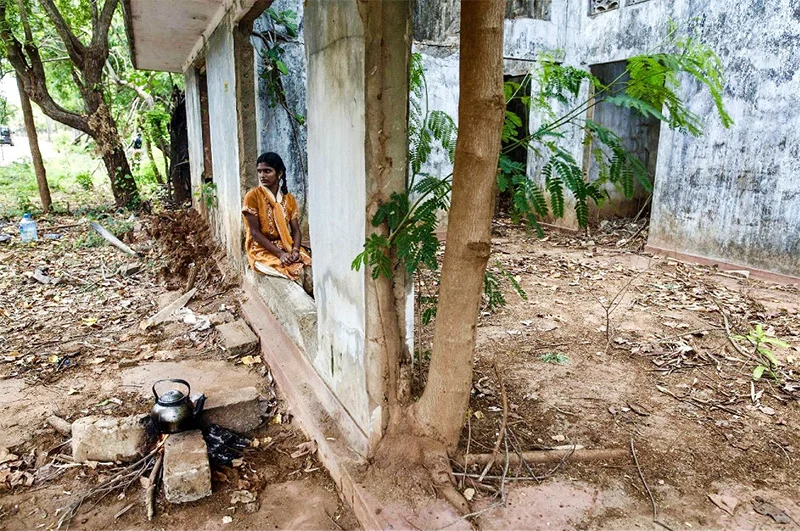
Lingering post-war challenges in Sri Lanka’s Northern Province highlight the human cost that demands practical, unifying action rather than division.
Claims of genocide and assertions of over 40,000 Tamil civilian deaths caused solely by Sri Lankan forces in the final stages lack conclusive, independently verified evidence when viewed against operational realities. The endgame involved intense fighting in civilian-dense areas where the LTTE used human shields, prevented escapes, and eliminated dissenters. Precise casualty attribution in such fog-of-war conditions remains contested, with many figures amplified by interested parties.
What stands as irrefutable counter-evidence is the treatment of the defeated. Over 12,000 former combatants underwent rehabilitation, vocational training, medical care, and release into society. This is not the conduct of a genocidal state. A regime intent on destroying an ethnic group does not invest resources in deradicalising and reintegrating thousands of its adversaries. The “genocide” narrative has become a self-perpetuating myth that serves political ends while ignoring the LTTE’s own extensive record of atrocities: suicide bombings, child soldiers, assassinations across communities, and forced recruitment.
As intelligence professionals who tracked these networks, we saw the human cost on all sides, Sinhalese, Tamil, Muslim civilians, and security personnel. Perpetuating one-sided accusations hinders the empathy required for true reconciliation.
Reintegration gaps and the injustice of selective accountability
While initial rehabilitation efforts demonstrated humanity under trying conditions, the absence of a consistent, productive long-term mechanism remains a critical shortfall. Many ex-fighters and their families continue to struggle economically. Addressing this through targeted, apolitical programmes, skills development, micro-enterprise support, and community integration, is not optional; it is essential for lasting stability.
Compounding domestic shortcomings is the international dimension. UN processes and reports, often drawing heavily from unverified or partisan sources, have led to visa refusals and restrictions on Sri Lankan officers who served lawfully to protect the nation’s sovereignty and citizens of all communities. Many have become victims of politicised circumstances, denied fair process while the LTTE’s leadership and enablers faced far less scrutiny. This selective justice creates fresh grievances rather than resolving old ones. Genuine accountability must be balanced, evidence-based, and applied equally if it is to foster trust.
Asymmetric warfare and the primacy of local strategy
Having directed counter-terrorism intelligence during the height of the conflict, I can affirm that asymmetric wars defy external templates. Victory in 2009 resulted from deep local knowledge, human intelligence networks, cultural understanding, financial disruption, and unified national will. Outsiders, regardless of intent, often lack this granularity and can inadvertently prolong division through imported solutions or sustained propaganda.
The diaspora and international voices fixated on war-crimes rhetoric should pivot. Cease slogans that radicalise; instead, channel efforts into apolitical support for ex-combatants’ futures and Northern development. This would honour the selfless (if misguided) sacrifices of ground-level fighters far better than continued political theatre.
Removing monuments of hate and embracing One Sri Lanka
A mature nation learns from its past without being imprisoned by it. Monuments and symbols that glorify one narrative in ways that provoke anger, resentment, or radicalism among any community must be reviewed and, where necessary, removed or recontextualised. Victory monuments that celebrate triumph over fellow citizens, however necessary the military outcome was to preserve sovereignty, can become focal points for manipulation and renewed division.
Treat these as stark lessons in political mistakes, both the LTTE’s violent separatism and any excesses or oversights in state responses. Replace divisive symbols with unifying memorials that honour all victims of the conflict: civilians and combatants from every ethnicity, the security forces who restored peace, and the shared suffering that must now bind us. This is not erasure of history but its wise stewardship.
As Sri Lankans, we must put a decisive full stop to political manipulation, whether from diaspora lobbies, ethnic entrepreneurs, or opportunistic external actors. The path forward is One Sri Lanka: a unitary yet inclusive nation where security is paired with justice, development reaches every province, and interfaith and inter-community harmony (as advanced through institutions like the Wakfs Board) becomes the bedrock. My own post-retirement work in community governance and the recent launch of Security Beyond Enforcement underscore this conviction, true national security flows from trust, economic dignity, and shared identity, not enforced division.
The golden statues and triumphal arches of the past served their purpose in rallying a nation against existential terror. Today, they risk becoming relics that fuel the very radicalism we defeated. Let us replace them with forward-looking investments in people, rehabilitation completed, infrastructure built, opportunities created.
Seventeen years on, Sri Lanka stands at a crossroads. We defeated terrorism through resolve and local strategy. We will secure enduring peace only by rejecting the politics of grievance and embracing the imperative of unity. The abandoned fighters, the war-weary communities, and the next generation deserve nothing less. Let this be the generation that chooses One Sri Lanka, undivided, forward-looking, and at peace with itself.
Towards One Sri Lanka – Healing Scars, Not Renewing Wounds
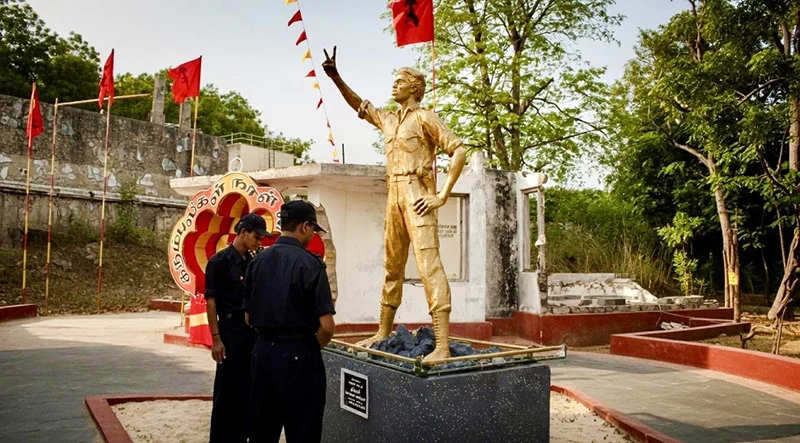
Statues and monuments glorifying LTTE cadres, such as this depiction of a fighter, risk perpetuating anger and division when they celebrate a violent past instead of a shared future.
In the long run, 17 years after the conclusion of Sri Lanka’s three-decade civil, political, and economic conflict, each passing year sees the bitter and ugly history of violence being solemnly commemorated by both sides through annual events in a tit-for-tat cycle. Monuments born of scars, intended perhaps as memorials, assume outsized significance during these occasions. Too often, they function not as beacons of development or shared sacrifice, but as monuments of division and destruction.
In this way, old scars are reopened into fresh wounds, dormant pains are reawakened, and cycles of anger and hatred persist. As Sri Lankans who have lived through the cost of division, we must recognise that such rituals, while rooted in genuine grief, risk perpetuating the very grievances that once tore our nation apart.
The time is ripe, indeed, overdue, for a genuine, transparent, and inclusive national process of reckoning and reconciliation. We must create an environment of trust and confidence that prioritises healing over commemoration of conflict, development over division, and unity over grievance. Let us transform these monuments of the past into symbols of a shared future: remove or recontextualise those that fuel radicalism, honour all victims without exception, and channel our collective energy into building One Sri Lanka, a peaceful, prosperous, and united nation where every citizen, regardless of ethnicity or past allegiance, can thrive in dignity and security.
This is not forgetting history; it is maturing as a nation. The abandoned fighters, war-weary communities, and future generations deserve no less. The choice is ours: perpetuate division or embrace One Sri Lanka, peaceful, prosperous, and united.
This column builds on the truths highlighted by Narayan Swamy while advancing a clear, unifying Sri Lankan vision. Monuments of division must give way to shared nation-building. The time for rhetoric is over; the work of genuine reconciliation and development begins now.
Writer – Mahil Dole, SSP (Retired), is the former Head of the Counter-Terrorism Division of the State Intelligence Service of Sri Lanka, and has served as Head of the Sri Lankan Delegation at three BIMSTEC Security Conferences. With over 40 years of experience in policing and intelligence, he writes on regional security, interfaith relations, and geopolitical strategy.
By Mahil Dole
Senior Superintendent of Police (Retd.)
Former Deputy Director in Charge, Counter-Terrorism Desk, State Intelligence Service (2005–2009)

Qatar’s Father Emir Sheikh Hamad bin Khalifa Al Thani laid to rest in Doha

Brendon McCullum removed from post as England Men’s Test coach

Yastika century, seamers put India on the brink of historic win at Lord’s

Showers will occur in the Sabaragamuwa, Western and North-western provinces and in Kandy, Nuwara-Eliya, Galle and Matara districts.

JSA opposes move to extend retirement ages of superior court judges

Next two weeks critical as dengue risk soars

‘Dates have the highest sugar content to fight Coronavirus’

Sunday Island 27 December – Headlines

#SundayIsland 17th December – Headlines

Sunday Island – 28th March

Sunday Island Headlines – 21 March

Sunday Island – 21st February – Headlines
-
 News3 days ago
Herath warns prospective migrant workers not to get fleeced by racketeers
-

 Midweek Review5 days ago
Unexpected focus on ‘pieces of tin’ worn by military men
-
 Features1 day ago
Prison riots and politics: NPP’s biggest challenge and Sri Lanka’s biggest opportunity
-

 Latest News6 days ago
Nyamhuri and Ngarava stun Bangladesh by defending 141
-

 Editorial2 days ago
What’s the world coming to?
-

 News4 days ago
Negombo Prison riot: Ensuring protection of prisoners fundamental responsibility of the state – UN
-
 Features3 days ago
Devanesan Annan – in Memoriam
-
 Foreign News3 days ago
Tensions erupt in Indian state after 11-year-old raped and murdered