
Business
TAMAP drives Stakeholder Forum for Good Agriculture Practice


The inaugural meeting of the GAP Stakeholder Forum was held with the support of the Technical Assistance to the Modernisation of Agriculture Programme (TAMAP) at the Department of Agriculture in Peradeniya on 17 November 2021. Prof. Udith K Jayasinghe, Secretary Ministry of Agriculture, graced the occasion as the Chief Guest.
The Good Agricultural Practices (GAP) programme, introduced by the Department of Agriculture in 2016, was a promising step taken to minimise adverse impacts of agriculture on the ecosystem and human health while meeting steadily rising demand for food. Although the programme had an encouraging start, the overall conversion of farmers to implementing GAP remained low. Over the past six years, 1500 farmers registered as GAP producers out of the 1.8 million farmers in Sri Lanka. To align with the current policy of the Sri Lankan Government to improve ecological friendliness of farming, it is important to transform all production units towards GAP farms.
Studies showed that to achieve this goal, the GAP implementation strategies needed to be updated and infused into the mainstream agriculture, facilitating a quick transformation of the current approach towards a macro-level system. Therefore, the requirement for a rapid strategizing of such an approach followed by periodic review of GAP performance arose. This initiated the need for a stakeholder forum.
The key purpose of the forum is to provide a common platform for key stakeholders to meet in formulating a strategy to mainstream SL GAP, propose a way forward for implementation such recommendations, and to regularly review program performance and adopt remedial action to achieve GAP objectives.
Prof. Udith K Jayasinghe, Secretary Ministry of Agriculture who chaired the Forum in his opening statement commented, “GAP programme has emerged a solution to challenges faced by Sri Lankan agriculture today to improve safety of users and ensuring good environmental performance. Reinforced by facilitating legislation and approved national standards, GAP programme provides a strong foundation towards addressing above concerns.”.
Over forty participants were present at the forum, representing the various stakeholder groups comprising producers, distributers, SL GAP team, academics, and market players. Ms D. S. Ratnasinghe, Addl. Director (Agribusiness) and Dr W. M. W. Weerakoon, National Coordinator outlined the status of the GAP programme and the challenges faced.
The deliberations during the forum were broken down into five main areas: Technical, financial, institutional, and social problems faced by GAP stakeholders on maintaining production, supply, product quality, and consumer trust. Gaps in technology transfer and adoption, marketing and quality control measures and means for increased rate of adoption and GAP farm certification; Gaps in current GAP process and procedures, user friendliness and applicability; Future technological needs towards increasing production, productivity, product quality and ecosystem sustainability; and Policy needs for increased adoption of GAP to mainstream GAP into national agriculture agenda.
Prof. G. Pushpakumara, Faculty of Agriculture, University of Peradeniya and Ms Jayantha Ilankoon, ADG (Dev) moderated the forum through group activity, outcome presentations and strategic discussions on the way forward.
Concluding the forum, Dr Nihal Atapattu, stated, “TAMAP, along with the European Union that provided the funding support is very pleased to have assisted to launch several interventions that would promote recognition of GAP as a premier means of strengthening Sri Lankan agriculture in sustainably meet requirements of the domestic and export markets. TAMAP expects that the Stakeholder Forum launched today will be a milestone event in advancing GAP to achieve its potential in Sri Lanka”.


HNB PLC, the leading private bank in Sri Lanka, has partnered with IDEAL Motors (Pvt) Limited to provide customers with attractive leasing solutions for brand-new vehicles & generators .
The partnership introduces a range of benefits designed to support individuals, entrepreneurs, and businesses seeking reliable vehicle and power solutions. Through this collaboration, customers can access structured lease facilities, special interest rates, free life insurance coverage, and attractive discounts through HNB General Insurance.
Commenting on the partnership, HNB, Senior Vice President/ Head of Retail Banking, Kanchana Karunagama, said, “At HNB, we believe that the right financial support can help people and businesses move forward with greater confidence. This partnership with IDEAL Motors shows our commitment to creating meaningful solutions that make vehicle and power investments more accessible, while helping our customers achieve their personal and business aspirations. By combining HNB’s financial expertise with IDEAL Motors’ industry capabilities, we are creating opportunities that support the ambitions of Sri Lankans and contribute towards a stronger, more connected economy.”
Customers purchasing vehicles through IDEAL Motors will also benefit from exclusive offers including free registration, and discounts on Bolero Maxx Pik-Up, Alfa Plus Load Carrier, Mahindra Pik-Up Single Cab, Mahindra Pik Up Double Cab, XUV 3XO vehicles, creating greater value throughout their ownership journey.
IDEAL Motors (Pvt) Limited, Director Legal and Corporate Affairs, Nimesha Welgama, said, “Our collaboration with HNB represents a shared commitment to supporting Sri Lankans in achieving greater financial independence through accessible ownership solutions. By combining IDEAL Motors’ mobility and power solutions with HNB’s financial expertise, we aim to empower individuals and businesses with opportunities that contribute to economic progress and community development. This partnership highlights our vision of creating lasting value by enabling customers to confidently invest in their future.”
With IDEAL Motors recognised for its diverse portfolio of automotive and power solutions, and HNB’s extensive expertise in financial services, the partnership aims to provide a seamless experience from selection to ownership, supported by flexible financing options and customer focused solutions.
The partnership further strengthens HNB’s commitment to supporting economic progress by providing financial solutions that enable customers to invest in personal mobility, commercial growth, and business continuity. Through collaborations with leading industry partners, HNB continues to expand opportunities for Sri Lankans while delivering a banking experience built around accessibility, trust, and value.
Business
Sri Lanka Insurance Corporation General and the Ministry of Education committed to protect Sri Lanka’s schoolchildren

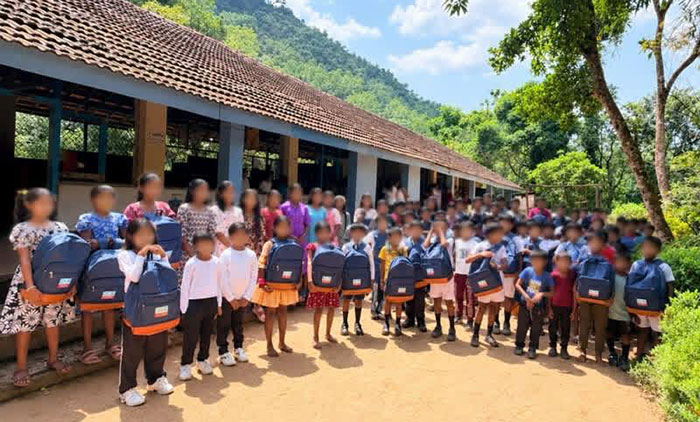
Sri Lanka Insurance Corporation General Ltd (SLICGL) and the Ministry of Education, Higher Education and Vocational Education share a commitment to protect Sri Lanka’s children throughout their school education. The pledge is delivered through the Suraksha Student Insurance Scheme, which protects over 4 million school children.
The Government of Sri Lanka, through the Ministry of Education, Higher Education and Vocational Education, provides the Suraksha Student Insurance Scheme free of charge to schoolchildren throughout the country. SLICGL is proud to partner with the Ministry in delivering this national initiative, which helps safeguard students against the financial impact of unforeseen circumstances.
Eligible students include those aged 5-21 years in Grades 1-13 from government schools, government-approved private schools, and Pirivena education, as well as students aged 4-21 years in assisted special schools.
The scheme provides hospitalisation, outpatient and critical illness cover, as well as personal accident cover for permanent and temporary disability, together with a life insurance benefit for children from low-income families on the death of a parent. Cover applies to incidents within and outside school premises.
For a child, an illness or accident can be far more than a temporary setback. It can place added pressure on a family and, in some circumstances, disrupt schooling. Suraksha acts as a safety net, giving children and their families greater peace of mind and helping them stay in school despite life’s uncertainties. The scheme is easily accessible through SLICGL’s islandwide network of 200 branches and customer service centres.
Children’s Day is a celebration of hope, the hope for every child to have the opportunity to learn, grow and build a better future. Celebrating children also means protection, not for a single day but for every day they spend in the classroom.
Commemorating Children’s Day, SLICGL extended support towards the educational needs of children at an underprivileged school. The project highlighted the company’s belief in protecting the future not only by being supportive when the unexpected happens, but also in helping create an environment in which children can learn, grow and fulfil their potential.
As Sri Lanka’s National Insurer, SLICGL’s role goes further than protecting people against risk. It is also about contributing to a stronger, safer and more resilient country as children’s education, wellbeing and aspirations contribute directly to help build the journey ahead.
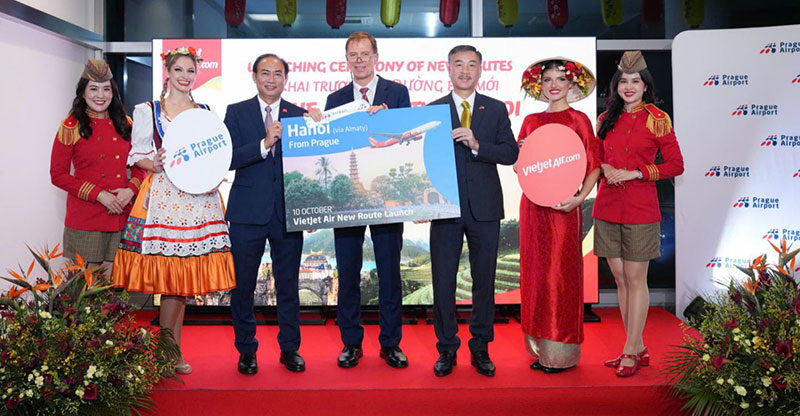
Vietjet, which already flies between Colombo and Ho Chi Minh City, has officially launched new services connecting Hanoi with Almaty, Kazakhstan, and Prague, Czech Republic, as well as Almaty with Prague, expanding its intercontinental network and marking its entry into the European Union. The new air links offer more affordable travel options while fostering greater tourism, trade and cultural exchange between Asia and Europe.
For Sri Lanka, the new routes widen the network that Vietjet is building out of Colombo. The airline has operated non-stop flights between Colombo and Ho Chi Minh City since August 2026, three times a week on Tuesdays, Thursdays and Saturdays, while its new Ho Chi Minh City to Maldives service via Colombo is scheduled to begin on 5 December 2026. With Hanoi now linked to Central Asia and Europe, Sri Lankan travellers have a growing choice of destinations reachable through Vietjet’s extensive network.
The inauguration ceremonies took place at Almaty International Airport and Václav Havel Airport Prague on 10 October, amid a warm welcome from local leaders, residents and visitors. The inaugural flights were greeted with traditional water cannon salutes and performances showcasing local cultural heritage, marking the beginning of new journeys connecting the three regions and welcoming international travellers to Vietnam. Passengers on the inaugural flights also received commemorative gifts from Vietjet and the airports, adding a special touch to their journeys.

Prison rules to be revised over monks’ attire

AC President recuses himself from hearing prison attire case pertaining to Gnanasara Thera

Court orders steps to obtain INTERPOL Red Notice against Basil

CID informs Fort Magistrate’s Court investigation into money laundering case against Namal completed

No force used to make Gnanasara Thera wear prison garb – Prisons

Saudi SC sets aside death sentence imposed on Lankan

‘Dates have the highest sugar content to fight Coronavirus’

Sunday Island 27 December – Headlines

#SundayIsland 17th December – Headlines

Sunday Island – 28th March

Sunday Island Headlines – 21 March

Sunday Island – 21st February – Headlines
-

 News6 days ago
NDB fraud Rs 60mn more than reported
-

 News6 days ago
Removing monk’s robes matter for Sangha to decide: Mahanayake Theras
-

 News4 days ago
Sri Lanka escalates anti-graft drive with Shiranthi’s jailing
-
 News5 days ago
NPP govt. reminded of its responsibilities as US warship leaves Colombo
-

 Latest News5 days ago
Farhan, Sadaqat help Pakistan ace 183 chase to go 1-0 up
-
 News6 days ago
BHC, Colombo: “LTTE remains a proscribed org. in the UK”
-

 News4 days ago
Iranian ships stranded, Lanka fears US sanctions
-

 Latest News3 days ago
Farhan and Sadaqat help Pakistan seal series in style