
Business
Swift moves can propel Sri Lanka Tourism to new heights: Indian investor

-
Indian outbound travellers are still unaware that Sri Lanka has fixed its shortage issues
-
Hosting a big international event would boost confidence in potential travellers
-
Right promotion is to start flights to new Indian destinations
By Sanath Nanayakkare
If Sri Lanka Tourism is to grow at a fast pace, the country should capture a significant share of the growing outbound travellers from India, and with the right moves made swiftly, it won’t be a herculean task for Sri Lanka, says an investor cum global investment manager from India who runs a leading hotel property in Sri Lanka.
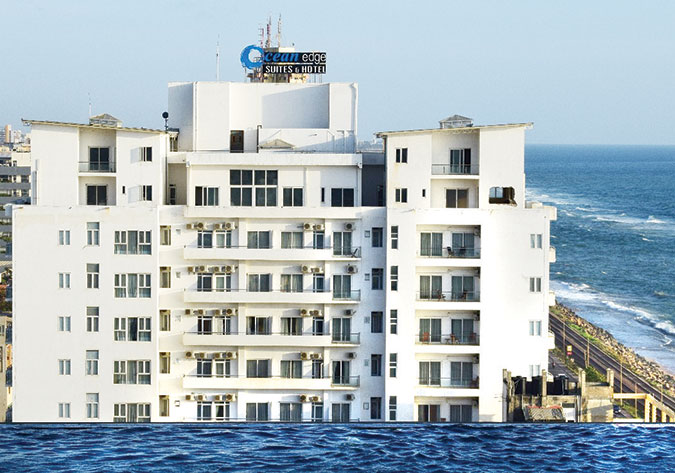
Indian investor, Priyank Gupta who is the Chairman of Ocean Edge Suites and Hotel on the Marine Drive in Kollupitiya says that given the close proximity to India, a boom in Sri Lanka tourism and leisure industry is Sri Lanka’s for the asking.
“But things that need to be done need to be done within the fastest possible time,” he says.
Further speaking he says:
“India is the most populous country in the world with the fastest growing economy. The Indian outbound travel market is among the fastest growing markets globally, therefore, Sri Lanka needs look no further than India for the exponential growth of its tourism sector to account for a greater share of Sri Lanka’s GDP.”
“However, I think Sri Lanka must relay the correct message and dispel the doubts in the minds of Indian outbound travellers about the current ground situation in Sri Lanka. Most Indians still think that Sri Lanka still suffers from food shortage, fuel shortage, electricity shortage etc. That perception doesn’t put them at ease about visiting Sri Lanka. But the reality is different. You have everything here that a foreign traveller wants. The general public may have their struggles but guests have everything they expect from a good holiday destination. That’s what they care about. Unfortunately, that message is not out there yet. So what Sri Lanka Tourism needs is not only promotions but sending the core message that the country’s tourism sector has fully recovered and there are no shortages whatsoever.”
“Indian tourism is booming. The load factor of our domestic flights is more than 90 per cent. The great shift in Indian domestic tourism is evident from the hotel room rates. A room sold in some of the places in India for US$ 30 a few years ago now costs up to US$ 300 dollars. So, with the right marketing strategy, Sri Lanka can take a significant share of that business because the two countries are tantalizingly close. The farthest place in India from Sri Lanka is New Delhi and Delhi is just 3 hours away. You see, Vietnam which was not on India’s tourism map, started direct flights to lesser known cities in India like Ahmedabad and strategically penetrated into that market when Sri Lanka hadn’t been active in the tourism landscape in the past few years.”
“Nevertheless, it’s a very positive thing that Sri Lanka has designated acceptance of Indian Rupee (INR) in Sri Lanka. I am confident that the acceptance of INR in Sri Lanka will have a major advantage for tourism because the fact that Indian tourists can pay in their own currency will make Sri Lanka a preferable destination for Indian tourists.”
“A withholding tax will come into effect from July 1, 2023 in India on all foreign exchange purchases. So our understanding is that if you go to another country where you buy foreign exchange, there will be a withholding tax of 20 per cent. In this context, it will be preferable for Indian travellers to visit countries where INR is accepted. Sri Lanka has opened the path of accepting the INR. If that is properly executed, Sri Lanka will be the most preferable destination in the world for Indian travellers.”
“With the adoption of INR transactions and relaying the correct message to India as I said, Sri Lanka will have a tourism explosion, so to speak. But If INR execution takes two years, by that time India would roll it back or India would figure out another way and Sri Lanka would miss the bus.”
“Visa fee is not a concern among tourists anymore. But connectivity is. So the right promotion is to start flights to new Indian destinations. That will bring you tourists. Let me say this too. There is no better place than Sri Lanka for Indian tourists to spend a quick weekend getaway. I have organized many tours for travellers from Delhi who hopped over to Colombo at short notice. They would inform me at 1pm on Friday and take a flight to Colombo at 5pm and get here at 8pm. I would have everything ready for them by the time they arrive. They would enjoy the best of serene Sri Lankan hospitality over the weekend and would be back in Delhi on Monday. Indians who have very busy lives find this experience amazing.”
Gupta says that Sri Lanka should demonstrate to India as well as the rest of the world that it has a stable ground situation to host big international events.
“In 2010, Sri Lanka hosted International Indian Film Academy (IIFA) awards in Colombo. The ceremony was televised in India and internationally and it conveyed a positive image about Sri Lanka. But when Sri Lanka withdrew from hosting Asia Cup 2022 amid political turmoil, it sent a reverse message and the country’s image suffered. In my view, if Sri Lanka can host a multi-nation cricket tournament involving India and Sri Lanka with other countries like England, Australia, South Africa etc. that would send a very positive message to India. Because that would drive home the point there’s nothing to worry about visiting Sri Lanka. On the contrary, they would see Sri Lanka has returned to complete normalcy and is visitor-friendly. So the right kind of help you should seek from India is to put together a big event like that rather than anything else,” he says.
The Island Financial Review
learned from the Ocean Edge Hotel’s staff that the hotel not only remained resilient through the Covid 19 pandemic and the unprecedented domestic economic crisis without using retrenchment as a cost reduction measure; but also gave its employees a sufficient pay rise to balance out prolonged inflationary pressure in the country.











Sri Lanka is one of the world’s richest biodiversity hotspots, with nature deeply intertwined with community life. Reflecting this connection, across the island, small-scale conservation efforts have always thrived in pockets. For MAS Holdings, the urgency of the environmental crisis made it clear that scattered initiatives were not enough- it was time to bring them together into an impactful, long-term approach. Employees have also welcomed the chance to be part of projects that protect nature, finding meaning in contributing to something that benefits both their communities and the environment.
Recognising this, apparel-tech conglomerate MAS Holdings has made biodiversity restoration central to its sustainability roadmap, the MAS Plan for Change 2030. Building on its commitments for 2025, the company has pledged to reforest and restore biodiversity across an area 100 times larger than its global operational footprint.
For an organization that spans 15 countries- across North America, Europe, Asia and Africa, this amounts to more than 31,700 acres of land. According to Nemanthie Kooragamage, Director – Group Sustainable Business at MAS Holdings, achieving reforestation on such an ambitious scale demands bold and innovative approaches.
“Well-planned restoration can do far more than replace lost trees,” she explains. “It can reconnect fragmented landscapes, stabilise soils, improve freshwater quality, rebuild coastal and mangrove nurseries, and create wildlife corridors- benefits that safeguard nature and the long-term resilience of apparel supply chains and communities.”
Building a Scalable Goal
The roots of MAS’ biodiversity goal trace back to 2017, when it pledged to restore 250 acres of land, equivalent to its operational footprint at the time. By the end of the initiative, the company had doubled its target and restored 500 acres of land.
Even then, MAS recognised that planting trees alone was not enough. As it pursued this goal, it became clear that landscapes face different pressures, from invasive species to degraded soils, and therefore require tailored interventions. And so, MAS developed its six-model framework for restoration: Conservation, Reforestation, Invasive Removal, Afforestation, Analog Forests, and Forest Gardens.
This framework later underpinned the biodiversity target set under Plan for Change 2025, which scaled up the 2017 pledge to restore 100 times MAS’ operational footprint at the time, a total of 25,000 acres.
Applying the Six-Model Approach
Over the last five years, the six-model framework has been put into practice, with projects demonstrating how different contexts required different interventions.
Conservation was at the heart of the Panama In-Situ Turtle Conservation Project, launched in partnership with two corporates and the Wildlife and Ocean Resources Conservation Society. Protecting a three to ten-kilometre stretch of coastline, the project has safeguarded 272 nests and released over 17,000 hatchlings since October 2023, directly supporting the survival of endangered sea turtle species.
Reforestation included the restoration of 10 acres of mangroves in Trincomalee, where MAS achieved an 81% sapling survival rate. Meanwhile, the Ittapana Mangrove Forest Reforestation Project, undertaken with the University of Sri Jayawardenepura and local communities, planted 500 saplings with a 94% survival rate. Beyond ecological restoration, it enhanced local fisheries, improved water quality, and engaged students and residents, ensuring long-term community impact.
To restore large, inaccessible degraded terrains, MAS partnered with the Sri Lanka Air Force to disperse seed bombs. This aerial reforestation method restored 275 acres and achieved a 45% survival rate, demonstrating an efficient solution for landscapes that could not be rehabilitated through conventional means.
Invasive Alien Species (IAS) removal was another critical strand, with programmes carried out in national parks in partnership with the Department of Wildlife Conservation. At Horton Plains, MAS removed Ulex europaeus from 82% of the affected areas and restored 244 acres of sensitive ecosystem. At Udawalawe and Lunugamwehera, the manual removal of Lantana camara supported the regeneration of grasslands vital for elephants, leopards, and sloth bears.
“We tested different approaches in Sri Lanka, from coastal conservation to seed bombing and invasive species removal, and they proved effective in their own contexts. With the scale of our biodiversity goals and our global operational footprint, the next step was to take these learnings beyond Sri Lanka and apply them internationally,” said Uvini Athukorala, Manager – Environmental Sustainability.
Expanding Globally
As part of its Plan for Change 2025 biodiversity conservation efforts, MAS extended projects beyond Sri Lanka to countries where it also has manufacturing operations. This ensured that the company’s restoration work addressed the landscapes and communities directly connected to its business footprint.
In Central Java, Indonesia, the Blora Ngawi Biodiversity Restoration Project has restored over 12,601 acres since 2023. The initiative planted more than half a million trees and established a multi-stakeholder forest management model that combines forest protection, land rehabilitation, and habitat enrichment.
In Kenya, MAS launched its largest conservation project to date, protecting 8,275 acres within the Nairobi National Park, in partnership with The Wildlife Foundation. The project secured wildlife corridors critical for elephants, lions, and cheetahs, reduced human-wildlife conflict, and created conservation-linked livelihoods for more than 600 people, with women and youth playing a central role.
These global projects demonstrated that the lessons learned in Sri Lanka, experimenting with diverse approaches and working hand in hand with local partners, could be successfully scaled in other contexts, while directly benefiting the communities where MAS operates.
Lessons for the Future
As the Plan for Change 2025 concludes, MAS has restored 25,058 acres toward its biodiversity conservation goal. The experience highlights two key lessons. First, that restoration must be context-specific. From mangrove reforestation in Trincomalee to invasive species removal in Horton Plains, or aerial reforestation of degraded terrain, each ecosystem required a different model to deliver meaningful results. Second, that collaboration is essential. Partnerships with government agencies, non-profits, universities, and local communities in Sri Lanka, Indonesia, and Kenya ensured both technical expertise and local ownership, making projects sustainable beyond their initial interventions.
Business
People’s Bank’s Commitment to Rebuilding the MSME Sector through Government-Backed Financing

How is People’s Bank ready to support the rebuilding of the MSME sector in Sri Lanka, not only in the post-crisis context but in general?
Micro, Small and Medium Enterprises (MSMEs) are the backbone of the Sri Lankan economy, playing a vital role in employment generation, regional development, and income distribution. At People’s Bank, supporting MSMEs is a long-term strategic priority aligned with our mandate as the country’s premier state-owned commercial bank.
Our approach extends beyond post-crisis recovery to support the full MSME life cycle, from start-ups and micro entrepreneurs to growing and established businesses, through tailored financing, advisory support, and sector-specific solutions. With our island-wide branch network and strong understanding of local economies, People’s Bank is well positioned to serve entrepreneurs across urban, rural, and underserved communities.
What government-funded facilities are currently available through People’s Bank?
People’s Bank actively participates in several government-funded and concessionary loan schemes, offering lower interest rates compared to market rates, medium to long-term tenures, loan amounts based on project viability and eligibility criteria defined by sector, purpose, and enterprise size.

Table 1
Government funded loan products are made available at People’s Bank branches for the sectors in line with government policy directives in MSME sector, as shown in the Table 1.
Can you briefly summarize the MSME loan products offered by People’s Bank?
People’s Bank offers a wide range of bank-funded MSME loan products, including working capital loans to support day-to-day business operations, term loans for machinery, equipment, expansion, and modernization, trade finance facilities including import, export, and local trade support, overdrafts and revolving credit to manage cash flow fluctuations and sector-specific loans tailored for agriculture, manufacturing, tourism, construction, logistics, and services.
Loan amounts, interest rates, and tenures vary depending on the business profile, purpose of the loan, and credit evaluation, with repayment periods extending up to several years for long-term investments whereas the MSME definition introduced by Ministry of Industries for categorization of concerned businesses.
People’s Bank offers a range of bank-funded loan schemes in MSME sector as follows and the interest rates are varies from 7.0% p.a to 12.0% p.a.
The Small and Medium Enterprises Development (SMED) Scheme
The Business Power Loan Scheme
The Solar Power Generation Loan Scheme
The Green Power Loan
The People’s SPARK Loan Scheme
The NCGIL Loan Scheme
People’s Power Loan Scheme
Vanitha Saviya Loan Scheme
Aswenna Loan Scheme
Pledge Loan Scheme (Bank-Funded Variant)
How should customers approach People’s Bank to access these facilities?
Customers are encouraged to visit their nearest People’s Bank branch, which serves as the primary access point for MSME financing. Branch Managers and Credit Officers will assess customer needs, recommend suitable bank-funded or government-funded facilities, and provide guidance on eligibility and documentation, ensuring personalized support throughout the process.
This branch-based approach ensures transparency, sound advisory support, and efficient decision-making. People’s Bank remains committed to empowering Sri Lanka’s MSME sector as a long-term national responsibility, delivering inclusive and sustainable financial solutions through both its own resources and government-backed initiatives.
(This article is based on an interview with People’s Bank Deputy General Manager (SME, Development & Micro Finance), Wickrama Narayana)

In response to the humanitarian needs arising from Cyclone Ditwah, Shangri-La Group has extended financial assistance to support national relief efforts through the Sri Lanka Red Cross Society, under the leadership of Secretary General Dr. Mahesh Gunasekara.
The contribution will be directed towards critical, life-sustaining interventions in some of the most affected communities across the country. According to the Sri Lanka Red Cross, medical services in 25 major hospitals have been severely disrupted by the cyclone. Part of the assistance will therefore support the deployment of mobile medical camps, ensuring timely and accessible healthcare for vulnerable populations.
Recognising the urgent need for safe drinking water in flood-affected areas, the initiative will also focus on restoring natural water sources, including wells and springs, helping communities regain access to clean and reliable water. In addition, a portion of the funds will be allocated to psychosocial support programmes for children residing in temporary camps, offering care, comfort, and emotional reassurance during a deeply unsettling time.
“At Shangri-La, our commitment goes beyond the walls of our hotels. In moments like these, it is about standing alongside communities with empathy, responsibility and care. We hope this support brings not only practical relief, but also comfort and reassurance to families – especially children – who are navigating an incredibly difficult time,” said Shangri-La Sri Lanka Director of Human Resources, Madusha Pihilladeniya. “Our hearts are with every community affected, and we remain united in the belief that compassion, when shared, can help restore hope.”
This initiative reflects Shangri-La’s ethos of Heartfelt Hospitality – a philosophy rooted in empathy, responsibility, and solidarity. It stands as a quiet yet powerful reminder that, beyond hospitality, Shangri-La remains committed to standing with communities when care is needed most and hopes this brings comfort, together with practical assistance to communities affected during this challenging time.

Bride and groom killed by gas explosion day after Pakistan wedding

Shanaka, Mendis star in 12-over run-fest to square series for Sri Lanka

One person dead and 300 buildings destroyed in Australia bushfires

Iran warns it will retaliate if US attacks as protesters defy crackdown

GENERAL WEATHER FORECAST FOR NEXT 36 HOURS

National Communication Programme for Child Health Promotion (SBCC) has been launched. – PM

‘Dates have the highest sugar content to fight Coronavirus’

Sunday Island 27 December – Headlines

#SundayIsland 17th December – Headlines

Sunday Island – 28th March

Sunday Island Headlines – 21 March

Sunday Island – 21st February – Headlines
-

 News22 hours ago
Sajith: Ashoka Chakra replaces Dharmachakra in Buddhism textbook
-

 News6 days ago
Interception of SL fishing craft by Seychelles: Trawler owners demand international investigation
-

 Features23 hours ago
The Paradox of Trump Power: Contested Authoritarian at Home, Uncontested Bully Abroad
-

 Business23 hours ago
Dialog and UnionPay International Join Forces to Elevate Sri Lanka’s Digital Payment Landscape
-
 News6 days ago
Broad support emerges for Faiszer’s sweeping proposals on long- delayed divorce and personal law reforms
-

 Features23 hours ago
Subject:Whatever happened to (my) three million dollars?
-

 News23 hours ago
65 withdrawn cases re-filed by Govt, PM tells Parliament
-

 Opinion3 days ago
The minstrel monk and Rafiki, the old mandrill in The Lion King – II