
Sports
Sri Lanka tourism takes center stage in new T20 Jersey

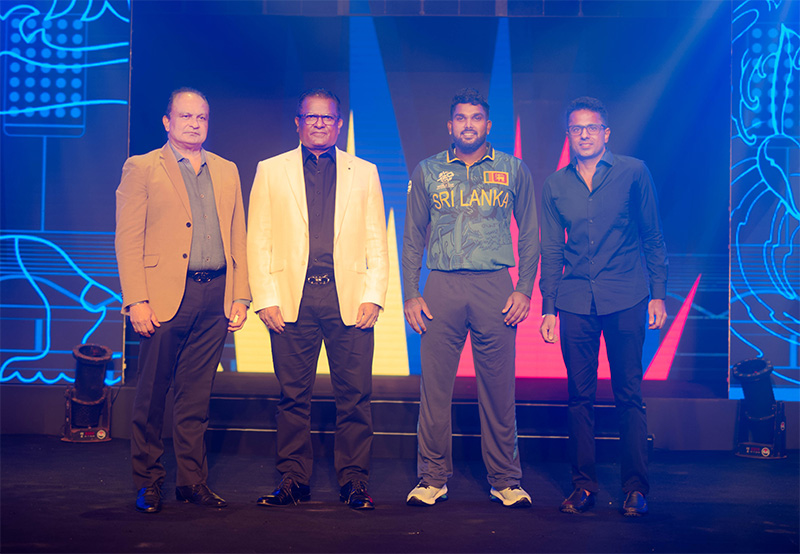
In the bustling heart of Ja-Ela, Moose Clothing Company stands tall as a beacon of creativity, technical expertise, and workmanship. Established in 2018 with a vision to redefine Sri Lanka’s fashion landscape whilst bridging the gap between affordability and accessibility to good quality fashion, Moose Clothing Company has now embarked on a journey that transcends mere apparel. This journey interweaves resilience, heritage, and hope into the fabric of the new jersey design that Moose was commissioned to create for Sri Lanka’s national cricket team, for their upcoming T20 World Cup tournament set to take place in the USA and the Caribbean.
Last year (2023), Moose Clothing Company signed a four-year agreement with Sri Lanka Cricket (SLC) and secured the position to be their official clothing partner. As they sat down to deliberate the project’s intricacies, from material selection to conceptualization, one mutual agreement emerged – a shared emphasis on bringing in the element of tourism in Sri Lanka and on to the design concept of the jersey. This wasn’t just about designing a jersey; it was about crafting a narrative that would beckon the world to explore the wonders of Sri Lanka.
“As these tournaments always became a spectacle in stadiums across mostly Asian nations, the T20 World Cup this time round feels even more unique and special as this would be the first time a T20 World Cup tournament is taking place in the USA,” Kithmini de Silva, Head of Marketing of Moose Clothing Company, remarked. “This also means bringing more tourism exposure to a country like Sri Lanka amongst potential travelers from the America and possibly people from other parts of the world, especially the Caribbean islands who are also co-hosting the tournament. So, in a way, this opportunity can be seen as a win-win situation – the main goal of using this concept as a way to not only help boost tourism and place Sri Lanka on a higher pedestal as an ideal tourist destination but also take the Moose Clothing Company brand to a global market”, she further added.
As a result, with the Moose Clothing Company having been entrusted with the honor of representing Sri Lanka on an international stage, the T20 World Cup tournament is bound for American shores. It was an opportunity not just to put across their designs but to amplify Sri Lanka’s voice in the global arena. With eyes set on the USA, Moose Clothing Company sees more than exposure; they see a gateway to the international market, a chance to introduce the world to the essence of Sri Lanka.
“How we could move ahead and represent the Sri Lankan brand on US soil was the focal point for us. At the same time, we also wanted to take Moose Clothing Company Brand and enter the international market through this initiative. As it is evident that the Sri Lanka national team’s players were also the rightful ambassadors who would be representing our country wherever they go, this jersey was, in a way, a vibrant canvas for us, giving us the platform to showcase the tourism potential of Sri Lanka, bit of the culture and tradition.”, Nishantha Perera, Head of Product Development and Design of Moose Clothing Company, stated.
Eventually, the jersey design was settled after some 40 designs were rolled in following hours of brainstorming and deliberation. Sri Lanka, often hailed as a tourist’s paradise, offers a kaleidoscope of experiences – from thrilling safaris in its wildlife reserves to serene encounters with our gentle giants in Habarana, home to the world’s largest Asian elephant gathering. These elements, each a chapter in Sri Lanka’s story, found their way into the design narrative of the jersey.
The blue hues of the southern coast the emblematic passant royal lion, and the vibrant hues of yellow and blue synonymous with Sri Lanka – all woven together in a canvas of cultural richness and natural beauty.
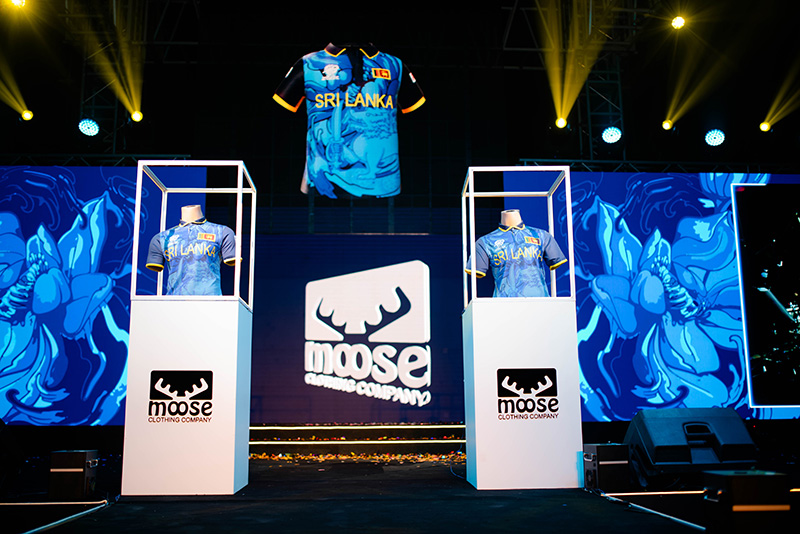
The new kit Sri Lanka will be wearing during the T-20 World Cup.
The blue water lily, Sri Lanka’s national flower, symbolizes hope amidst adversity, while the passant royal lion, a symbol etched on the flag and now the new jersey, isn’t just decoration. It symbolizes the roar of Sri Lanka Cricket identity, perfectly captured by Moose Clothing Company under the watchful eye of the Sri Lanka Cricket.
But the design goes deeper, drawing inspiration from Sri Lanka’s iconic landmarks. The muted emblem echoes the graceful arches of the Nine-Arch Bridge – the train ride in the highlands with the Kandy to Ella train is named one of the most beautiful train rides in the world and the majestic presence of the Asian elephant gathering – Habarana – is renowned for hosting one of the largest gatherings of Asian elephants in the world and has been named as ‘one of Asia’s great wildlife spectacles’ by Lonely Planet, 2012.
Each element tells a story, reflecting what they have to offer to the world as a beautiful island nation and the nation’s ability to overcome obstacles and emerge stronger. As the national cricket team wears this unique jersey, they don’t just represent a team; they embody the hopes and dreams of a nation.
Behind the scenes, Moose Clothing Company’s design team embarked on a journey of their own. They delved deep and drew inspiration from these elements. But it wasn’t just about aesthetics; it was also about craftsmanship. In Sri Lanka’s apparel industry, technology intertwines seamlessly with tradition, creating a wave of expertise unrivalled elsewhere.
Moose Clothing Company’s dedication to quality and innovation shines through in every garment, a testament to their commitment to excellence.
The new jersey integrates state-of-the-art technology, featuring innovative fabric engineering for optimal moisture management. This ensures effective sweat regulation and enhanced comfort, even during the most intense matches. Furthermore, Moose Clothing Company conducted in-depth research on the weather conditions of upcoming tournament host countries. This meticulous approach guarantees the jerseys are crafted from the ideal materials to perfectly suit the players’ environment, offering them the ultimate edge on the field.
This thorough attention to detail ensures that the material selection and engineering are tailored to meet the specific climate demands of the tournament venues. By anticipating factors such as humidity levels and temperature fluctuations, Moose Clothing Company worked to optimize the jersey’s performance in varying weather conditions. This comprehensive approach underscores Moose Clothing Company’s commitment to delivering apparel that not only enhances athletic performance but also prioritizes the comfort and well-being of the players, regardless of the environment they compete in. The incorporation of special mesh fabric allows for increased breathability, optimizing airflow and ventilation to keep the team members cool and refreshed even in the heat of competition. This strategic design ensures that heat can escape efficiently, preventing overheating and discomfort. By leveraging such technology in textile engineering, Moose Clothing Company has crafted a cricket jersey that not only looks sleek and stylish but also delivers unparalleled performance and comfort on the field.
Speaking about the milestones and future, CEO of Moose Clothing Company, Hasib Omar said, “We’re thrilled to unveil the new Sri Lanka cricket jersey for T20 World Cup 2024. This launch isn’t just about creating a stylish and functional garment for the team, it’s about a strategic partnership that celebrates Sri Lankan pride on the global stage. We believe this jersey will not only inspire the players on the field but also ignite a passion for Sri Lanka’s tourism treasures among fans around the world.”
Looking ahead, Hasib shared the company’s ambitious vision of becoming an international brand. He further added, “Moose Clothing Company isn’t stopping at Sri Lanka’s shores. This partnership with Sri Lanka Cricket marks a significant step towards our long-term vision of becoming a global fashion leader. By combining our unwavering commitment to quality and innovation with the international exposure of cricket, we’re showcasing our capabilities to the world. This jersey launch is not just about supporting our national team, it’s about igniting a passion for Sri Lankan fashion on a global scale.”
With every match, Moose Clothing Company believes that the Sri Lankan team will not only play for victory but also carry the aspirations of a nation, inspiring pride and unity among its citizens. As the T20 World Cup draws near, the stage is set for Sri Lanka to shine once again, propelled by the enduring spirit encapsulated in every stitch of the new jersey.
Apart from this instigation that every cricket enthusiast out there can look forward to, Moose Clothing is also on the pathway to diversifying their portfolio and enhancing their footprint in the apparel sector in Sri Lanka through their brand and trendy designs that will keep on growing.













Football’s Asian Cup, hosted by Saudi Arabia, could be moved back a year to 2028 following a series of attacks on the country by Yemen’s Houthis.
The continental tournament will be rescheduled “if we need to” but the organisers are in “no hurry” to make a decision, Asian Football Confederation President Sheikh Salman bin Ebrahim Al Khalifa said on Thursday.
The 2027 Asian Cup is supposed to kick off on January 7 in the Saudi cities of Jeddah, Riyadh and al-Khobar.
The kingdom has in recent days come under sustained attack in a dramatic escalation from the Houthis.
“We can wait until the end of November,” Al Khalifa told reporters in Zurich on Wednesday about a decision on the fate of the Asian Cup.
“Things can change very quickly for better or worse in the region, and it is a question of seeing what happens,” he added.
“If we need to make a decision then we will, but we could move back a year to 2028 if we need to.
“But at the moment we are monitoring the situation and everything is on schedule.”
Cristiano Ronaldo’s Al-Nassr saw their Asian Champions League match delayed by an hour on Monday after Saudi Arabia’s Civil Defence said it had intercepted a missile fired towards Riyadh.
Three matches in Saudi domestic football, including one involving Al-Nassr, were postponed this week.
(Aljazeera)


All Island Schools Games Athletics Championships
by Reemus Fernando
The Under 18 boys’ shot put meet record will be under severe threat today, when the most talked-about thrower of the last All Island Schools Games Athletics Championships takes to the field on the opening day at Diyagama.
Mayon Rajasinghe, now competing for his third school in four years, has shown steady progress this season and appears to be peaking at the right time to attempt another record-breaking performance on the junior circuit.
Having recently set a new meet record of 17.31m at the Western Province Schools Games, Mayon will now try to surpass the All Island Schools Games Under 18 record of 17.15m.
The first two age-category records in the Games’ shot put event already bear his name. He set the current Under 14 record of 15.13m while representing Prince of Wales College, Moratuwa. Last year, while attending St. Joseph’s College, Darley Road, he shattered the Under 16 meet record with a throw of 18.57m using the 4kg shot. It is the furthest any Sri Lankan has thrown in the Under 16 category at any meet, from the Junior National Championships to the Sir John Tarbat Senior Championships to the Schools Games.
Yet the outstanding performance did not receive the recognition it deserved. His father, who also trains him, was adamant that the then 16-year-old deserved the meet’s Best Athlete title. The organisers disagreed, citing the differing weights of implements across age categories as their reason for setting the performance aside. No clear criteria had been announced before the meet, which made such disappointment all but inevitable. Senior Rajasinghe’s outburst after the presentation ceremony, and the social media backlash that followed, have had an effect: the Ministry of Education has now published criteria for selecting the meet’s best athlete. However, it remains doubtful whether the criteria in the competition manual can offer athletes in different age categories and disciplines an equal opportunity to have their performances assessed fairly.
This year Mayon represents Holy Cross College, Kalutara. He has picked up where he left off last year, breaking record after record, and is poised to make an impact once again.
The championship begins with a card of eight finals. Around 5,000 athletes in the Under 14, 16, 18 and 20 age categories, representing all nine provinces, will take part in the five-day event after qualifying through house, divisional, zonal and provincial competitions.

The much-anticipated 57th Annual Saints’ Quadrangular Tournament which brings together four of Sri Lanka’s leading Catholic schools, St. Anthony’s College, Kandy, St. Benedict’s College, Colombo 13, St.Joseph’s College, Colombo 10, and St. Peter’s College, Colombo 04, for a weekend of spirited competition, camaraderie and nostalgia is scheduled to take place this weekend (weather permitting).
This year’s tournament is being hosted by the St. Peter’s College Old Boys’ Union (SPCOBU) during its Centenary year, marking 100 years since the Union was founded in 1927. The Centenary celebrates a century of service to the College and the Peterite community, under the theme “Honouring the Past, Strengthening the Present, Inspiring the Peterite of Tomorrow.”
The origins of the ‘Saints Quadrangular Tournament’ trace back to 1963, during the Diamond Jubilee celebrations of St. Benedict’s College. An open invitation was extended to schools across the country for a cricket tournament, and coincidentally, only the above three premier Catholic institutions joined
What began as a two-day cricket encounter has evolved into a multi-sport carnival that continues to embody the true spirit of sportsmanship and fraternity.
In 2002, the organizers introduced a 25-over Cricket Tournament for players aged 40 and above, allowing past cricketers to once again represent their beloved alma mater. Two years later, in 2004, Basketball was added to the lineup, enriching the event further given the strong basketball heritage of the four schools.
Continuing its evolution, 7-a-side Rugby was introduced in 2014, transforming the Saints’ Quadrangular into a vibrant sports carnival that now features three major sports across four tournaments namely Cricket, over 40 Cricket, Basketball, and Rugby.

Asian Cup in Saudi Arabia could be postponed by a year amid Houthi attacks

Houthi missile attack on Yemeni presidential palace kills five, minister says

Physical development must be matched by the enrichment of people’s inner lives through aesthetics and culture – PM

Review of the operations of the 1818 Hotline introduced to report drug-related information

Showers in the Western, Southern, Central, Sabaragamuwa, North-Western and Northern provinces and in the Anuradhapura District

SJB: Govt. trying to reappoint Jayakody, who resigned from Cabinet amidst coal scam

‘Dates have the highest sugar content to fight Coronavirus’

Sunday Island 27 December – Headlines

#SundayIsland 17th December – Headlines

Sunday Island – 28th March

Sunday Island Headlines – 21 March

Sunday Island – 21st February – Headlines
-

 News6 days ago
Sri Lanka escalates anti-graft drive with Shiranthi’s jailing
-

 News7 days ago
NPP govt. reminded of its responsibilities as US warship leaves Colombo
-

 Latest News7 days ago
Farhan, Sadaqat help Pakistan ace 183 chase to go 1-0 up
-

 Latest News5 days ago
Farhan and Sadaqat help Pakistan seal series in style
-

 News6 days ago
Iranian ships stranded, Lanka fears US sanctions
-

 Latest News3 days ago
Nissanka’s return headlines Sri Lanka’s Test squad against Pakistan
-

 News7 days ago
Interdicted top House official Kularatne receives special recognition in Mexican Parliament
-

 Features5 days ago
Intake 16: 45 years of duty and honour