
News
Sri Lanka’s book publishing industry faces crisis as 18% VAT sparks job losses and closures

By Rathindra Kuruwita
Thousands of jobs in Sri Lanka’s book publishing industry will be lost due to the imposition of VAT (18%) on books publishers claim.They claim that about 30 percent of bookshops have been closed due to the economic crisis.
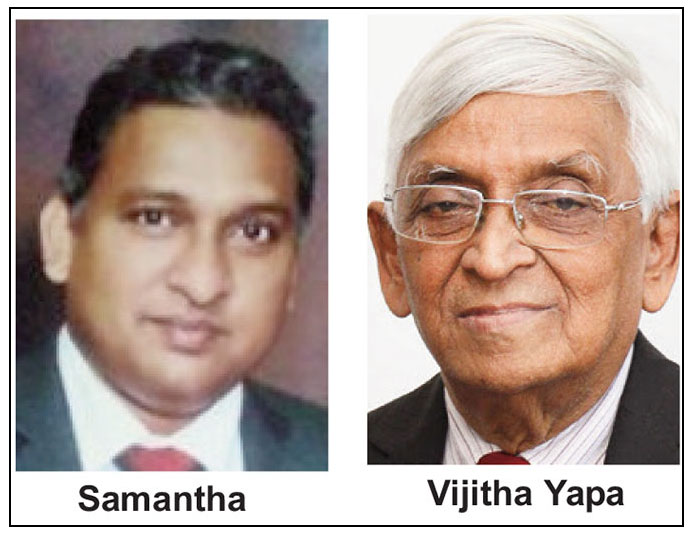
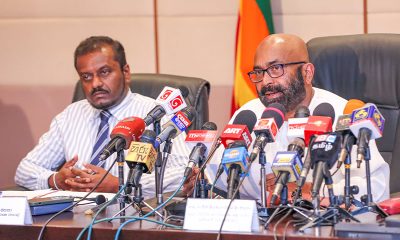
There had been no taxes on books before 01 January 2024, Sri Lanka Book Pub lish ers Asso ciation (SLBPA), President Samantha Indeewara, said.The book publishing industry was in crisis even before the imposition of VAT, he added.
“The prices of all raw materials have increased. For example, the price of paper has risen by 300 percent in the past few years.”
“Books and stationery prices will increase by more than 20 percent. The income of parents has not risen. What will they do? Children’s education will suffer.”
Indeewara said Sri Lanka imported at least 90 percent of the inputs needed to produce a book. All of them were subjected to VAT and other import duties.”However, the final product was not subjected to VAT earlier.”
Indeewara said book sales had dropped in the 1990s, with the spread of electronic media. Book publishers started the Colombo International Book Fair to reverse the trend.
“But in recent years, book sales have dropped again because of the economic crisis.
SLBPA former President Vijitha Yapa said that when Ranil Wickremesinghe was Prime Minister in 2002, he proposed a tax on books. However, the government had withdrawn the proposals due to protests from the book publishers.
“In 2016, Wickremesinghe again attempted to impose a tax on books. When Wickremesinghe came to the Colombo International Book Fair that year, as the Chief Guest, we again urged him not to impose a tax. The proposal to impose taxes on books was again withdrawn,” he said.
Yapa mentioned that in September 2023, they had heard the government was planning to impose VAT on books. The book industry representatives met the President and inquired about the possible tax.
“The President said nothing was set in stone and that we would have an opportunity to discuss the matter. He told us that the IMF wanted him to impose a tax on books.”
Despite the assurances, the book industry didn’t get an opportunity to discuss the impending taxes with the government, he said. The industry representatives wrote to the President, and his chief of staff, Sagala Ratnayake, said he would inform the President.
“Later, we were asked to talk to the IMF. Then we wrote to the IMF. It has been two months; there has not been a reply from the IMF.”
Yapa said that from what he knows, no other South Asian nation has imposed VAT on books.
“Some publishers only print about 500 copies of a book,” he added. “Earlier, we used to print thousands of copies. Prices of books are now high because we print less. There are no economies of scale. Printing books is so expensive here that people actually print books abroad and bring them here. It’s cheaper for them to pay import taxes than to print in Sri Lanka. Thousands of jobs will be lost.”
Yapa went on to say that 30 percent of bookshops have closed down already, and more shops will go out of business soon.
“We don’t know how much the government is trying to make by taxing us. We don’t know, and they won’t tell us.”
President of the Ceylon Booksellers Importers And Exporters Association, Dinushi Abeywickrama, said the text books they import for students sitting for foreign exams have tripled in price.
“Families with a few kids are seriously affected by this. Parents can’t buy. Earlier, parents used to come and buy the entire set of text books for their kids. Now they buy these books on a staggered basis. Most parents try to see if they can get the text book photocopied,” she said.
The government is violating the Agreement on the Importation of Educational, Scientific and Cultural Materials (also known as the Florence Agreement), she said.
Abeywickrama added this is a 1950 UNESCO treaty whereby states agree to not impose customs duties on certain educational, scientific, and cultural materials that are imported.
“We are a party to that agreement,” she said, adding that the President is a well-read person and that he has used the knowledge he has gained from reading to make a name for himself in the world.
“I, therefore, urge him not to deprive other people from learning and improving themselves by reading books,” she said.











In terms of the provisions of the Establishments Code on payment of festival advance to government officers, there’s a possibility of obtaining rupees 10,000/- as an advance for celebrating festivals of Theipongal, Ramazan, Sinhala and Hindu New Year, Wesak, Deepavali, and Christmas as well as for pilgrimages (Sri Paada pilgrimage and Hajj pilgrimage).
Provisions have been given to recover the said advance in 08 installments or if required earlier without interest. It has been proposed by the Budget 2026 to increase the said festival advance up to rupees 15,000/-.
Accordingly, the Cabinet of Ministers granted approval to the proposal submitted by the Minister of Public Administration, Provincial Councils and Local governments to revise the relevant provisions so that the festival advance can be increased up to rupees 15,000/- .
As per the approval given by the cabinet meeting held on 02-06-2025, action is being taken at present to offer the underutilized lands/properties of the Sri Lanka State Plantation Corporation, the Janatha Etate Development Board, and the Elkaduwa Plantation Company which are under the Ministry of Plantation and Community Infrastructure which have been identified under stage one to suitable investors.
Accordingly, the Cabinet of Ministers has approved the proposal presented by the Minister of Plantations and Community Infrastructure to provide following lands/properties on a lease basis to the suitable investors for optimal utilization following the prescribed procurement procedure.
• underutilized lands/properties identified under stage two owned by the Sri Lanka State Plantation Corporation, the Janatha Estate Development Board, and the Elkaduwa Plantation
Company,
• The Mawarala watte land and the Tea factory 40.48 hectares in extent, located in Matara District belonging to the Tea Shakthi Fund.
• The underutilized land of 1,541 hectares in extent of Kondachchi Estate is enjoyed by the Sri Lanka Cashew Corporation.
The drafting of the National Fisheries and Aquaculture Policy has commenced with the objective of equitable distribution of the benefits of the fisheries industry and the sustainable management of fisheries and aquaculture. This policy has been updated from time to time according to current requirements. However, steps have not been taken to obtain the approval of the Cabinet of Ministers for that purpose.
According to the policy declaration of the present government, ‘Vistas of Prosperity and Splendor’ the National Fisheries and Aquaculture Policy has been redrafted, updating the aforementioned policy in line with the economic and development objectives of the government.
The recommendations of the Department of National Planning have been received for the drafted policy.
Accordingly, the Cabinet of Ministers has approved the proposal presented by the Minister of Fisheries, Aquaculture, and Marine
Resources to implement the National Fisheries and Aquaculture Policy, integrating it with other relevant policies.

Lanka Premier League draft set to take place on March 22

Trump to meet Venezuelan opposition leader Machado at the White House

Festival advance for government officers to be increased
Providing underutilized lands/properties to suitable investors for optimal utilization.
Implementation of the National Fisheries and Aquaculture Policy

Expressions of Interest called to develop selected locations within the Pelawatte Sugar Factory premises

‘Dates have the highest sugar content to fight Coronavirus’

Sunday Island 27 December – Headlines

#SundayIsland 17th December – Headlines

Sunday Island – 28th March

Sunday Island Headlines – 21 March

Sunday Island – 21st February – Headlines
-

 News3 days ago
Sajith: Ashoka Chakra replaces Dharmachakra in Buddhism textbook
-

 Business3 days ago
Dialog and UnionPay International Join Forces to Elevate Sri Lanka’s Digital Payment Landscape
-

 Features3 days ago
The Paradox of Trump Power: Contested Authoritarian at Home, Uncontested Bully Abroad
-

 Features3 days ago
Subject:Whatever happened to (my) three million dollars?
-

 News3 days ago
Level I landslide early warnings issued to the Districts of Badulla, Kandy, Matale and Nuwara-Eliya extended
-

 News3 days ago
National Communication Programme for Child Health Promotion (SBCC) has been launched. – PM
-

 News3 days ago
65 withdrawn cases re-filed by Govt, PM tells Parliament
-

 Opinion5 days ago
The minstrel monk and Rafiki, the old mandrill in The Lion King – II