
Latest News
South Africa go top as New Zealand slump to third straight defeat


One of the advantages of a long-drawn league phase is that teams have an opportunity to make up for indifferent starts. But New Zealand are finding out the converse can be true as well. A third straight loss amid a series of injuries in the camp threatens to throw their World Cup campaign off the rails.
If the loss to Australia in Dharamsala was heartbreaking, this one to South Africa in Pune was outright demoralising. The bowlers were sent on a leather hunt as Quinton de Kock and Rassie van der Dussen plundered centuries, and David Miller added more salt to the wounds with a blistering 30-ball 53 not out as South Africa posted 357 for 4; the last 10 overs alone brought them 119 runs.
In reply, New Zealand’s top order unraveled against South Africa’s quality pace attack under lights. Marco Jasen’s extra bounce accounted for Devon Conway and Rachin Ravindra, Will Young was out nicking behind off Gerald Coetzee, and Kagiso Rabada had Tom Latham chipping one to cover.
Daryl Mitchell kept hope flickering, oozing class and confidence as he played a couple of gorgeous on-drives, but his dismissal while looking to hit out against Keshav Maharaj in the 19th over opened the floodgates. The game became staggeringly one-sided as New Zealand petered to 167 all out, with only Glenn Phillips offering any resistance to make 60.
The defeat, and the quantum of it, was massive from a tournament’s standpoint, with New Zealand now slipping back to potentially enter a logjam for fourth place, which Pakistan, Afghanistan and Sri Lanka are all eyeing. Few would have expected New Zealand to cave in the manner they did, even after South Africa had set them 358.
New Zealand’s capitulation was a sharp contrast to how things panned out for South Africa after they were put into bat.
Temba Bavuma was the early aggressor, crunching two cover drives off Matt Henry in the fourth over to kick the innings into gear. De Kock was largely subdued and fidgety early on, and even copped a blow to the shoulder from a Trent Boult bouncer in the ninth over. At that point, South Africa’s innings had barely gotten out of second gear. Having roughed up de Kock, Boult had sent Bavuma back with a sucker ball, a full one that had him nicking low to Mitchell at slip.
It could have been wickets in back-to-back overs for New Zealand had Phillips latched on to a screamer at backward point off Tim Southee. That we’re even talking about it being a chance was down to his brilliance – anticipating de Kock’s cut and taking two steps to his right before flinging himself full-stretch to go one-handed. De Kock was on 12 off 24 at that point.
At the other end, van der Dussen helped himself to a pull to begin proceedings as Southee, coming in for the first game of his fourth World Cup, seemed erratic and down on pace to begin with. For much of the first 100 runs in their 200-run stand, de Kock and van der Dussen were steady and calculating, playing themselves into a position from which they could tee off in the back 15. It’s a plan that worked to the T for them, and perhaps much more easily than they may have anticipated because New Zealand had a massive hole to fill midway through.
Henry pulled his hamstring halfway through his sixth over, the 27th of the innings, to leave Ravindra, James Neesham and Phillips to bowl 14.3 overs between them. De Kock and van der Dussen accelerated knowing fully well that New Zealand needed to back-load their part-timers.
The first sign of de Kock breaking the shackles came in the 16th over when he got stuck into Southee. He followed an imperious pull in front of square for four by walloping a six over the bowler’s head. De Kock had another slice of luck soon after when he chipped Phillips into the leg side, with the ball falling between three fielders. De Kock soon brought up his half-century off 62 deliveries and van der Dussen followed suit, getting there off 61.
New Zealand’s cup of woe was far from over. Neesham, one of the part-timers called on to make up overs, suffered a blow of his own when he was struck flush on the thumb by a de Kock straight drive. On 95, de Kock should have been run out off the same delivery when he was sent back even as the ball deflected to Mitchell Santner at cover. The batter had given up hope when Santner fired a throw at the bowler’s end, but it missed the stumps. De Kock soon brought up his hundred – his fourth of this World Cup, which left him one behind Rohit Sharma’s record of five in a single edition – by getting inside the line and helping a pull deep beyond the fine leg fence for six. He reached the century off 103 balls, and seemed to be revving up for a big finish.
At the other end, the industrious van der Dussen brought out cute reverse paddles and sweeps to throw New Zealand’s spinners off gear. The second-wicket pair had added 200 at better than a run-a-ball when de Kock picked out point to give Southee a wicket in the 40th over. It’s at this point that South Africa pulled out a surprise move, pushing Miller up the order, seemingly to keep the left-right combination going, and he tore into the bowling at the death to get to his half-century in 29 balls. Neesham went for 69 off his 5.3 overs, and conceded 18 in the 50th.
While New Zealand walked off knowing they had a big chase, there was a sense that the game was still in the balance given how well they had batted in big chases against England and Australia. But their hopes were dashed by a South African attack that made you wonder if this was the same surface New Zealand had bowled on.
After the top order was blown away, Phillips delayed the inevitable, getting in some batting time amid a lower-order collapse. By the end, New Zealand were so desperate to minimise the damage to their net run rate that an injured Henry hobbled out to bat and gave Phillips company for 5.1 overs, in the process adding 34 for the final wicket. However, even that didn’t quite diminish the magnitude of the defeat, which, all told, was a proper pasting.
Brief Scores:
South Africa 357/4 in 50 overs (Rassie van der Dussen 133, Quinton de Kock 114, Temba Bauvma 24, David Miller 53; Tim Southee 2-77) beat New Zealand 167 in 35.3 overs (Will Young 33, Daryl Mitchell 24, Glenn Phillips 60; Marco Jansen 3-31, Gerald Coetzee 2-41, Keshav Maharaj 4-46)by 190 runs









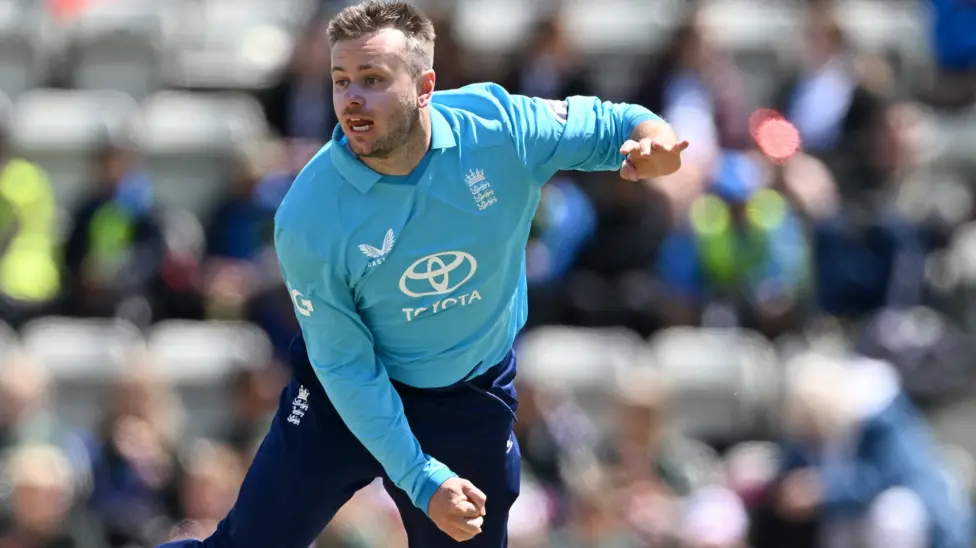
Leg-spinner Mason Crane could play for England for the first time in eight years after being recalled for the one-day international tri-series in Pakistan.
The 29-year-old won his only Test cap against Australia in Sydney in 2018 and is now given an opportunity in the series which also involves Sri Lanka next month.
Crane, who also played two T20 internationals in 2017, could also push his case in the fight to be England’s number one spinner in Test cricket.
Sam Curran and Adil Rashid both return after injuries, and uncapped pair James Coles and Henry Crocombe are included.
Jos Buttler is out with the hamstring injury he sustained last week, while Jacob Bethell is continuing his recovery from knee surgery.
Brydon Carse, who is under an investigation from the Cricket Regulator following an incident outside a nightclub in Derby in August, remains absent.
England are on a diet of white-ball cricket until three Tests in South Africa in December as they build up to the 50-over World Cup in southern Africa next year.
The tri-series in Pakistan involves the three teams taking part playing each other twice, with the top two advancing to the final. Following the trip to Pakistan, England play three one-day internationals and five T20s in Australia in November.
As England continue to shape their backroom staff following the arrival of Stephen Fleming as Test coach, Jeetan Patel, Mike Yardy, David Saker and Carl Hopkinson will assist white-ball head coach Brendon McCullum in Pakistan.
That means Marcus Trescothick, who took temporary charge of the Test team for the series against Pakistan in the home summer, misses the trip.
It is understood the make-up of the coaching staff is part of a plan to rotate the coaches – fielding coach Sarah Taylor and fast-bowling coach Tim Southee are also not going to Pakistan.
All of Trescothick, Taylor and Southee are likely to be part of England’s coaching team for other tours this winter.
England squad for tri-series in Pakistan:
Harry Brook (Yorkshire – captain), Gus Atkinson (Surrey), Sonny Baker (Hampshire), Tom Banton (Somerset), James Coles (Sussex), Jordan Cox (Essex), Mason Crane (Glamorgan), Henry Crocombe (Sussex), Sam Curran (Surrey), Liam Dawson (Hampshire), Ben Duckett (Nottinghamshire), Will Jacks (Surrey), Jamie Overton (Surrey), Adil Rashid (Yorkshire), Joe Root (Yorkshire), Josh Tongue (Nottinghamshire).
(BBC)
Latest News
I extend my heartfelt wishes to all the sons and daughters of our country for a Happy World Children’s Day – President

Children’s Day Message from President Anura Kumara Dissanayake:
“Children are the most valuable asset of a nation. Ensuring their physical and mental well-being and creating an environment conducive to their proper development is a primary responsibility of any government. Children’s imagination, aspirations and creativity will determine the shape and colour of the country tomorrow. The country we build for children must not merely be a country prepared to be handed over to them in the future; it must be a country that gives space to their dreams today, listens to their voices and provides opportunities for them to realise their potential.
For the best interests of children, we are taking the necessary steps to ensure equal access to education, guidance, social protection, opportunities for sport, leisure and recreation, proper nutrition and access to healthcare, while protecting children from all forms of violence and discrimination and safeguarding their rights.
Race, religion, economic status, geographical background or any other circumstance should not be a barrier to any child’s education or proper development. Every child should have equal and fair opportunities to realise their potential, pursue their dreams and create the future they wish for themselves. To this end, we have already begun the process of reforming the education system in Sri Lanka, transforming it towards a skills-based system suited to the new world, one that does not place a burden on parents or cause distress to children.
Our aim is to ensure that no child is left behind in the new Sri Lanka we are building, and to provide every child with opportunities for development in a safe environment. It should be emphasised that the fundamental objective of all the programmes being implemented, from expanding educational scholarships to securing the future of children growing up in child development centres and those in need of care, is to create a dignified and secure tomorrow for every child in the country.
It is the aspiration of every parent to give their children a better life than the one they themselves experienced. We are currently steering the country’s economy towards a correct and stable direction in order to provide children with a safe and happy childhood, free from the shadows of an unstable economy. At the same time, we have launched the national operation “A Nation United” (Ratama Ekata), bringing everyone together to free the younger generation from the menace of illicit drugs.
At a time when we are working towards the goal of building a safe and better country for children, I greatly appreciate the initiative of the Ministry of Women and Child Affairs in organising this year’s World Children’s Day celebrations under the theme “Strong Minds – Enriched Children”, declaring a National Children’s Day Week and conducting a range of meaningful programmes aimed at strengthening children’s rights, well-being, protection, education and freedom.
I extend my heartfelt wishes to all the sons and daughters of our country for a Happy World Children’s Day”.

England call up Crane and rest Archer for Pakistan series

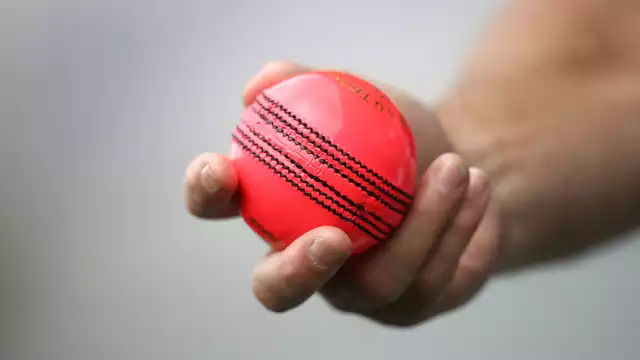
ICC introduces pink-ball daytime Test trial, new time-wasting penalties

Discussion on Anuradhapura Sacred City Development Plan

India enter Asian Games final after Kishan and Bumrah ride roughshod over Sri Lanka

I extend my heartfelt wishes to all the sons and daughters of our country for a Happy World Children’s Day – President

Sri Lanka bowl first in semi final clash against India

‘Dates have the highest sugar content to fight Coronavirus’

Sunday Island 27 December – Headlines

#SundayIsland 17th December – Headlines

Sunday Island – 28th March

Sunday Island Headlines – 21 March

Sunday Island – 21st February – Headlines
-

 Editorial6 days ago
Birth of a bad law
-

 News4 days ago
Police remove Thileepan statue in Jaffna
-

 Features7 days ago
Beyond traditional jobs: Why Sri Lanka needs to facilitate the gig economy
-

 News6 days ago
TIN mandatory for key transactions from Nov. 1
-
 Latest News7 days ago
Kusal, Wellalage star as Sri Lanka defend 322 in Headingley thriller
-

 Features4 days ago
The 22nd Amendment, constitutional recovery and illiberal slippage
-

 Features4 days ago
Of foreigners as CEOs of Lankan ventures
-

 News4 days ago
Sajith rejects Jt. Opp. protest sabotage claim; SJB TU chief demands remedial action