
News
SJB warns against counting foreign loans as part of forex reserves

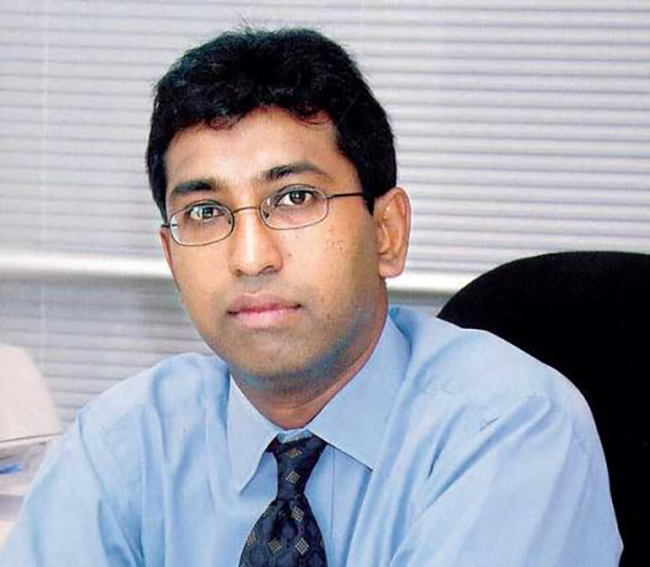
The SJB has cautioned the Wickremesinghe-Rajapaksa government against counting loans received from the IMF, World Bank and ADB as external buffers as they have to be paid back.
SJB MP Dr. Harsha de Silva said loans secured from whatever sources weren’t earned reserves. The former UNP State Minister and economist said so when we sought his opinion on the government declaration that with the IMF second tranche amounting to USD 337 mn and WB’s USD 250 mn loan official reserves were expected to pass USD 4 bn by end of next week.
The President’s Media Division (PMD) said that this figure was much higher than expected. The PMD issued the statement hours after SLPP leader Mahinda Rajapaksa, in a statement issued to the media declared that USD 10,000 million in new ISBs borrowed between 2015 and 2019 broke the back of our economy. The former President found fault with the Sirisena-Wickremesinghe administration.
The SJB MP said: “Generally, the net international reserves refers to gross usable reserves less short term drains. Now this is where the lies of the Rajapaksa regime led to a false sense of security on usable reserves. Why did Foreign Minister Ali Sabry, PC, announce on 12 April 2023 that the government was unable to meet two external debt payments amounting to approximately USD 200m even though former CBSL Governor Ajith Nivard Cabraal had claimed we had some USD 1.6 b in reserves?
Truth is the government apparently had only USD 20 m of usable reserves and not USD 1.6b. The USD 1.5b Chinese currency swap was not usable due to restrictions on imports cover. So if usable reserves have now increased due to import cover restrictions being met and the Chinese money is available for then one can say we are in a better place in terms of buffers.”
Commenting on funds received from various sources, the MP questioned the continuing practice of counting loans, whether from World Bank and ADB as external buffers. That is not the ideal. Because these need to be paid back and not earned reserves. Fact is most countries count such long term loans as reserves.
But there again the Rajapaksa was misled that when they lost the election in Jan 2015, USD 2.2b were short-term swaps and another USD 3.5b consisted of ‘hot money’ meaning foreigners investing in Treasury paper having converted USD in to LKR which could be reversed immediately depending on interest rate movements.
So of the then USD 8.2b forex reserves almost USD 6b was not stable. That is why counting short-term swaps and hot money is misleading. In fact, converting these large unstable reserves into long term reserves amounting to close to USD 6b is a major reason beyond rolling over some USD 5 billion during the Yahapalana government that saw large-scale borrowings through ISBs.
At the time Gotabaya Rajapaksa came in reserves consisted of less than USD 1b in such unstable reserves, down from almost USD 6b. Also given 2020 was an election year the CBSL had borrowed an additional USD 2.9b in ISB preparing for any potential market risk. In fact, if not for this move of building external buffers Sri Lanka would have gone bankrupt much earlier after that the government made serious policy blunders. As we all now know, the government kept using the reserves to pay back foreign loans after the country was downgraded by the rating agencies and doors to the international capital market were closed.
On the other side of the equation is the amount in short term drains, meaning the total amount of USD debt that needs to be paid by the government in usually one year.
So, if the government is comfortable on both counts then it’s ok to be a little confident. I don’t have the numbers to make that call. Having said that I must reiterate that ultimately it’s earned dollars not borrowed dollars that really matter.” (SF)









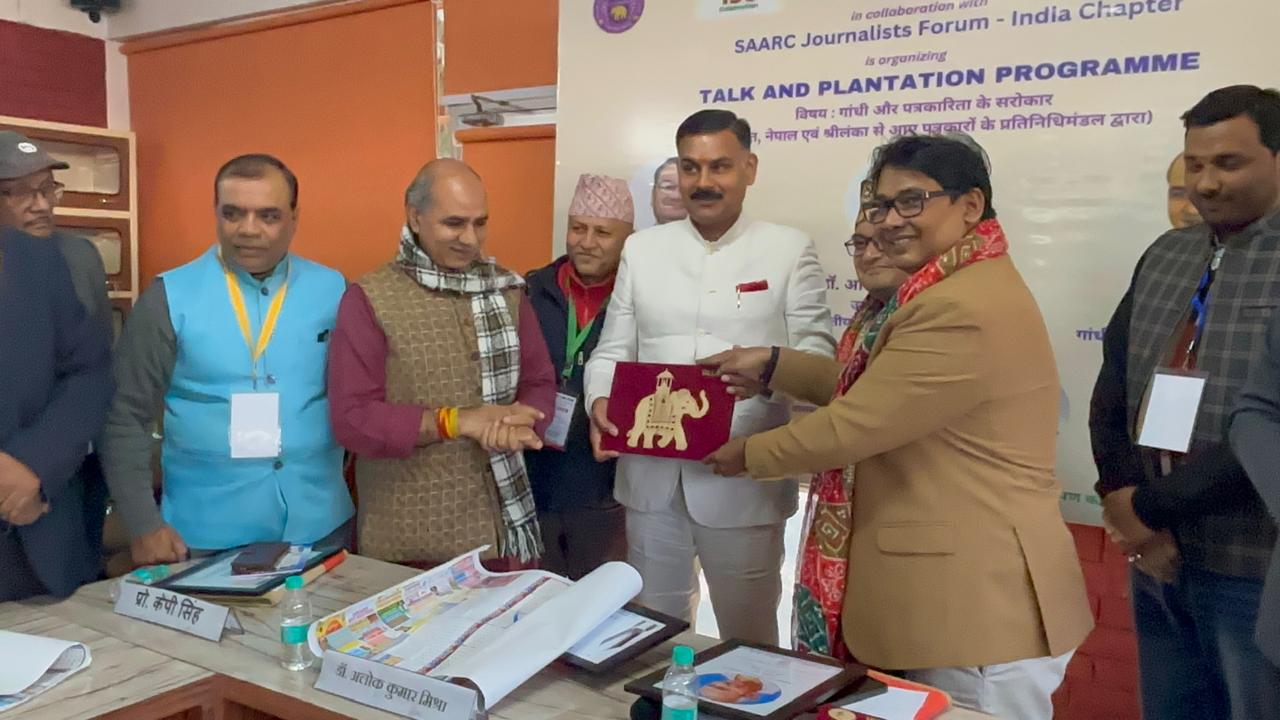
Members of the South Asian Journalists Forum have gathered at the University of New Delhi for a two day conference themed ‘Peace and Co-operation’.
Journalists from Bangladesh, Nepal, Sri Lanka and India are attending the conference hosted by the University of Delhi in collaboration with the India Chapter of SJF, and will deliberate on how the media can act as a catalyst for regional stability and mutual coexsistence.
A tree plantation campaign was also held at the Ghandi Bhawan premises of the University to mark the event and symbolize growing regional ties.
The Sri Lanka delegation is led by President of SJF’s Sri Lanka Chapter Rahul Samantha Hettiarachchi.

The Governor of the of Gujarat, Acharya Devvrat, along with the Deputy Chief Minister of Gujarat, Harsh Sanghvi, met with Prime Minister Dr. Harini Amarasuriya on Thursdy [February 05] at the Parliamentary Complex to discuss the arrangements related to the exposition of the Devnimori Sacred Relics of Lord Buddha, which have been brought to Sri Lanka under the patronage of Indian Prime Minister Narendra Modi and the Government of India.
These sacred relics of Lord Buddha were discovered during archaeological excavations conducted in the 1960s at the historic Devnimori site in Gujarat, the home state of Indian Prime Minister Narendra Modi. Until now, these relics had never been taken outside India. As a result of discussions held between President Anura Kumara Dissanayake and Indian Prime Minister Narendra Modi during his recent visit to Sri Lanka, the people of Sri Lanka have been granted this rare opportunity to venerate these sacred relics.
The exposition of the relics is being held for a period of seven days, from February 05 to February 11, at the Gangaramaya Temple in Hunupitiya, Colombo. Discussions were held between both parties regarding the arrangements related to this event.
The discussion was attended by Samar Nanda, Joint Secretary of the Indian Ministry of Culture; Dr. Satyanjal Pandey, Acting High Commissioner of India in Sri Lanka; Abhijit Halder, Director General of the International Buddhist Confederation; along with several others.
[Prime Minister’s Media Division]

The Indian Naval Ship (INS) GHARIAL made a port call in Colombo for operational turnarounds on 04 Feb 26. The Sri Lanka Navy welcomed the visiting ship in compliance with naval traditions.
Commanded by Commander Gaurav Tewari, INS GHARIAL is a vessel with a length of 124.8 meters.
During this visit, ten (10) Bailey Bridges, brought by ship, through the coordination of the High Commission of India in Sri Lanka, will be handed over to the Disaster Management Center. These bridges will provide temporary transportation links while bridges damaged across the island by adverse weather conditions are repaired.
The crew’s itinerary features scheduled goodwill activities with the Sri Lanka Navy, alongside visits to several tourist attractions across the island.

Sooryavanshi 175 makes India six-time Under-19 world champions

Mighty India meet multicultural USA in polarised World Cup

At least 31 killed, dozens wounded in Islamabad mosque blast

The SSC finally steps out of the sunshine and into the floodlights

SAARC journalists meet in New Delhi

Governor of Gujarat met with Sri Lanka PM to discuss exposition of Devnimori Relics

‘Dates have the highest sugar content to fight Coronavirus’

Sunday Island 27 December – Headlines

#SundayIsland 17th December – Headlines

Sunday Island – 28th March

Sunday Island Headlines – 21 March

Sunday Island – 21st February – Headlines
-

 Business7 days ago
Hayleys Mobility ushering in a new era of premium sustainable mobility
-

 Business4 days ago
SLIM-Kantar People’s Awards 2026 to recognise Sri Lanka’s most trusted brands and personalities
-
 Business7 days ago
Advice Lab unveils new 13,000+ sqft office, marking major expansion in financial services BPO to Australia
-
 Business7 days ago
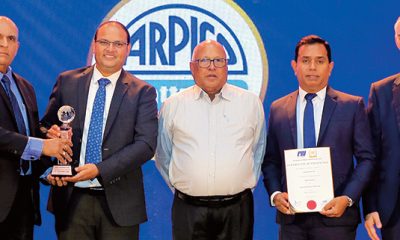
Arpico NextGen Mattress gains recognition for innovation
-
 Business6 days ago
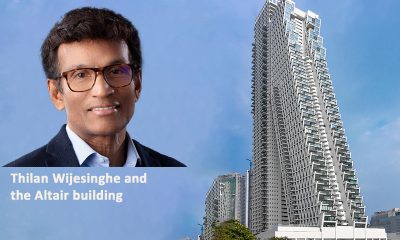
Altair issues over 100+ title deeds post ownership change
-

 Editorial7 days ago
Govt. provoking TUs
-

 Business6 days ago
Sri Lanka opens first country pavilion at London exhibition
-

 Business5 days ago
All set for Global Synergy Awards 2026 at Waters Edge