
Editorial
Silt and dregs


Monday 28th August, 2023
There are no signs of the skies opening up anytime soon to end the prevailing drought. The Meteorological Department announced yesterday that some parts of the country might experience scattered showers but there would be no heavy rains in most areas for a few more weeks. Many irrigation reservoirs have already dried up; farmers have suffered extensive crop losses as a result, and are struggling to find water even for drinking. Most of these tanks are said to have been affected by siltation over the years.
Some farmers’ organisations in the Ratnapura District have urged the government to take immediate action to dredge the irrigation reservoirs such as the Udawalawe tank and restore their capacities so that they will hold more water in the future. There are thick layers of silt, which could be used for manufacturing compost, they have said.
A spell of drought is the ideal time for removing silt from reservoirs and canals, as farmers have rightly pointed out. But it is a highly-specialised task that has to be carried out cautiously and scientifically under the supervision of engineers, environmental experts and geologists. Hardly anything is done scientifically in this country.
There is the danger of ruling party politicians making the most of the farmers’ call at issue to enrich themselves and their henchmen at the expense of the irrigation tanks and ecosystems linked to them. Those greedy characters are likely to move in with heavy machinery on the pretext of removing silt and helping farmers, and ruin the reservoir bunds and beds to make a killing. They have earned notoriety for causing widespread environmental destruction in the name of development projects. There have been several such instances during the past few years.
One may recall that in 2021, some environmental groups, the media, and farmers had to fight quite a battle to prevent a foreign company from dredging the Tissawewa haphazardly. The government chose to ignore public protests and the company concerned continued to use heavy machinery for the dredging operation. Finally, Director General of Archaeology Prof. Anura Manatunga intervened to stop dredging; invaluable artifacts are believed to be lying buried in the tank bed.
Haphazard dredging also endangered sensitive ecosystems in and around the Tissa tank, environmentalists said. It may be argued that not all reservoirs are located in areas of archaeological significance, but their ecosystems and safety should be factored in more than anything else when projects are launched to increase their capacities.
Last year, the government disregarded serious concerns expressed by many experts about a yuppification project that affected an ancient reservoir in Polonnaruwa; it ordered the removal of boulders along a section of the ralapanawa (stone liner) of the Parakrama Samudraya for the construction of a walking track, of all things. It was not clear from the urban development panjandrums’ gobbledygook whether a scientific study had been carried out and expert opinion sought prior to the launch of the project.
One may argue that there is nothing wrong with the construction of jogging tracks on river and canal banks or tank bunds, and the public has benefited from such projects in other parts of the country, but that must be done scientifically in consultation with experts.
There have been disturbing reports of politicians handing over tank rehabilitation projects to their henchmen who have no experience whatsoever in the field so that the latter could make money. Some of them have felled trees in and around tanks and sold them.
It behoves the farmers’ organisations and environmental groups to remain vigilant to prevent political dregs and their cronies from ruining the irrigation tanks and the environment under the guise of removing silt and helping the farming community.








Monday 1st June, 2026
The latest round of fuel price hikes in Sri Lanka came on Saturday night as global oil trading closed, with the price of crude posting its biggest one-month decline (20%) in six years and with international media reporting that the oil price drop had delivered some relief to consumers at the pump in many countries, such as Pakistan, Malaysia, Spain and Portugal. At this rate, Sri Lanka’s fuel prices may continue to soar even if US President Donald Trump behaves and the US and Iran agree to end the West Asia conflict early, paving the way for the reopening of the Hormuz chokepoint for international navigation.
However, it should be noted that global oil market volatility is not yet over. ExxonMobil’s Senior Vice President Neil Chapman has reportedly warned that energy prices may “explode upwards in the coming weeks, with crude oil prices rising to USD160 or more per barrel as dwindling reserve inventories finally bottom out”. This is an unnerving proposition. One dreads to think what the Ceylon Petroleum Corporation (CPC) and the government will do in such an eventuality.
President Anura Kumara Dissanayake recently claimed that fuel was sold below cost in this country; a litre of diesel cost the CPC as much as Rs. 720 but was priced at only Rs. 392. He also said the subsidies on diesel and petrol amounted to Rs. 100 and Rs. 20 per litre, respectively. It was obvious that the President was priming the public for another round of fuel price hikes, which were announced on Saturday night while the people were out viewing Vesak decorations. The CPC has reminded them of how painful the samsaric journey is.
The government insists that fuel prices must be cost reflective in keeping with IMF bailout conditions, but it has chosen to remain silent on whether it uses the same pricing formula as the previous governments for fuel price revisions. Government politicians and the CPC make contradictory claims on this issue. The public has a right to ascertain whether the fuel prices are cost reflective, as claimed by the Finance Ministry, or way above actual costs. Governments in this country have earned notoriety for price gouging, just like black marketeers. So, the CPC or the Finance Ministry ought to make public how the fuel price revisions are determined. This is something the Opposition ought to pressure the government to do.
It is being argued in some quarters that the government increases fuel prices to recover staggering losses arising from the use of diesel to keep the oil-fired power plants working to compensate for the Norochcholai generation loss caused by the fraudulent procurement of low-grade coal. This argument is tenable, given the colossal amounts of diesel being burnt to generate electricity. Opposition trade unionists have claimed that more than 800,000 litres of diesel are used daily to make up for the generation drop at Norochcholai.
Another ship has arrived, carrying substandard coal, and more diesel will have to be burnt to compensate for power generation losses it is bound to cause, the Opposition has warned. Following a revelation made by HSBC Group’s CEO, Georges Elhedery, in a fireside chat with Bloomberg TV that Sri Lanka had imported oil at USD 286 per barrel, the CPC admitted that it had bought three shipments of diesel between the last week of March and the second week of April at prices of between USD 288 and USD 281 per barrel. Was the CPC so desperate because it had to procure extra shipments of diesel to keep the oil-fired power plants running to prevent power cuts?
The JVP/NPP has had to increase fuel prices, which they promised to slash while out of power. It said it was capable of causing the country’s forex woes to disappear in no time, as its rise to power would trigger a huge inflow of dollars. The current Opposition is making similar claims. We have no shortage of ‘promising’ politicians.

The International Monetary Fund (IMF) has told Sri Lanka some home truths, the most disconcerting one being that economic recovery is beginning to lose momentum. It has attributed this situation to post-disaster disruptions, the West Asia conflict and rising global oil prices. These three factors are causing high inflationary risks, the IMF has said, warning that economic growth in 2026 could drop to 3% from 5% in 2025. Not that these facts were unknown to the government, the Opposition and the public, but dispassionate statements made by the IMF are credible and more impactful.
The parlous state of Sri Lanka’s economy is also due to several other factors, such as a sharp drop in tourism receipts, vehicle imports that helped revive the automobile sector and boost state revenue but took a heavy toll on foreign reserves, a huge increase in diesel consumption by oil-fired power plants to compensate for a generation loss caused by a coal procurement racket at Norochcholai, and staggering disaster recovery costs.
Problems like external pressures on the economy, caused by foreign conflicts, etc., are obviously beyond Sri Lanka’s control, but other causative factors could have been tackled much better. Vehicle imports should have been regulated properly, with a balance being maintained between revenue generation and the stability of foreign currency reserves.
The JVP-NPP government is apparently driven by a desire to brag that it has ‘filled the state coffers” and done much better than its predecessor on the economic front. It should have restricted vehicle imports and nonessentials much earlier at the first signs of trouble to ease mounting pressure on the rupee. Procrastination is the thief of forex. Measures taken to address the rupee and foreign currency crises must complement each other to help achieve the broader goal of economic stability and growth.
After weeks of dilly-dallying, the JVP-NPP government has taken some action to curtail the foreign exchange outflow. However, its efforts to reduce the national oil bill are far from satisfactory. Expenditure on fuel imports is the largest item in Sri Lanka’s import basket, comprising around 20% of the total import bill on average annually over the past 10 years, according to the Central Bank data. So, reducing the oil bill is half the battle in strengthening the country’s foreign currency reserves. The government should intensify its focus on increasing power generation from renewable sources and encouraging rooftop solar projects across the country while developing the public transport sector to reduce fuel consumption significantly.
The IMF can only assist in achieving economic stability, and sustained growth has to be achieved through a far-reaching reform drive. The biggest challenge before the JVP-NPP government is not holding the Opposition at bay but preparing the country for the task of straightening up the economy, instead of making more promises and promoting the “hand-out culture” in the name of social welfare. Most of all, corruption must be eliminated and austerity measures adopted in keeping with the promises of the JVP/NPP.
The IMF has reportedly indicated support for temporary fiscal easing in 2026 to accommodate relief measures linked to external shocks and reconstruction spending following Cyclone Ditwah, but the government is expected to return to stricter fiscal targets from 2027 onward. This kind of reprieve is popularly called an interval in hell. The Opposition had better take cognisance of the harsh economic reality and stop promising the public the stars and the moon in a bid to recover lost ground. It does not seem to have an alternative strategy to stabilise the economy and spur growth. If it knows how to do so, let it be urged to reveal its plan for the benefit of the country. Mere rhetoric won’t do.
While out of power, the JVP/NPP, too, pretended to have a panacea for all economic ills of the country and won elections. It is now struggling to make good on its election promises, most of which remain unfulfilled. The Opposition ought to stop trying to dupe the public into believing that more relief can be granted while the economy is in the current state.

Saturday 30th May, 2026
The Joint Opposition (JO) has submitted a petition to the Commission to Investigate Allegations of Bribery or Corruption (CIABOC), calling for the suspension of CIABOC Director General Ranga Dissanayake and a high-level probe into his allegedly arbitrary and biased conduct. It has claimed that Dissanayake is misusing his position to further the interests of the ruling NPP led by the JVP, and the integrity of the CIABOC investigations has been undermined by his political bias and arbitrary actions.
There are arguments for and against the Opposition’s campaign against the CIABOC DG. Dissanayake himself has denied the allegations against him as baseless, and it is being argued in some quarters that he is in the Opposition’s crosshairs because of the ongoing investigations into corrupt deals under the previous governments. The JO has cited in support of its petition against Dissanayake an affidavit the late SriLankan CEO Kapila Chandrasena submitted to court through his lawyers, claiming that Dissanayake intimidated him.
Allegations against Dissanayake have not been substantiated, but they have adversely impacted the image of the CIABOC. Hence the need for a thorough investigation into the charges contained in the JO’s petition, which is now in the public domain.
There are various allegations against many state officials in key positions. Some officials of the Attorney General’s Department, the police top brass and some secretaries to ministries have also been accused of misusing their authority to advance the government’s political agenda. Some public officials’ partiality and servility to the government in power severely erode public trust in the institutions they represent and make a mockery of the constitutional safeguards in place to ensure their independence. Constitutional provisions alone cannot depoliticise public institutions; state officials in key positions must assert their independence from politicians and be above reproach.
The JVP was instrumental in having the 17th Amendment to the Constitution introduced in 2001, paving the way for the establishment of the Independent Commissions to safeguard the independence of key state institutions vis-a-vis political interference. In 2015, it campaigned really hard to have the 18th Amendment replaced with the 19th Amendment to restore the 17th Amendment in all but name. In 2022, it joined forces with other Opposition parties and civil society groups to do away with the 20th Amendment and bring in the 21st Amendment, which revived the constitutional mechanisms the 19th Amendment had put in place to free the state service from the clutches of politicians.
But today the JVP-led NPP government stands accused of manipulating the Constitutional Council to elevate its loyalists among public officials to key positions in the state service and pressuring officials to toe its line. The Sri Lanka Association of Divisional Secretaries and Assistant Divisional Secretaries has protested against a controversial government decision to provide “Clean Sri Lanka” coordinators, who are said to be JVP cadres, with offices inside Divisional Secretariats. It has written to President Anura Kumara Dissanayake opposing the government move and warning that such deployment of “Clean Sri Lanka” operatives will only undermine the independence of the public service. The JVP/NPP is accused of trying to establish a parallel administration as part of a strategy to perpetuate its hold on power.
It is imperative that the CIABOC conduct a thorough probe into the JO’s allegations against DG Dissanayake, in a transparent manner. That is the only way it can clear its name, if at all. If the allegations at issue go uninvestigated, they will undermine the integrity of the CIABOC, and provide a fresh impetus to the Opposition’s campaign.

Showers will occur at times in the Western, Sabaragamuwa and North-western provinces and in Galle, Matara, Kandy and Nuwara-Eliya districts

Harsha flays govt. over plan to pass coal, Treasury losses to public

PM opens Vesak pandals

UNP challenges NPP move to amend Vihara – Devalagam Act

Fuel price increases: Bus and trishaw operators demand fare hike

Govt. halts e-passport project

‘Dates have the highest sugar content to fight Coronavirus’

Sunday Island 27 December – Headlines

#SundayIsland 17th December – Headlines

Sunday Island – 28th March

Sunday Island Headlines – 21 March

Sunday Island – 21st February – Headlines
-
 News2 days ago
IMF urges Lanka not to meddle with exchange rate
-
 News6 days ago
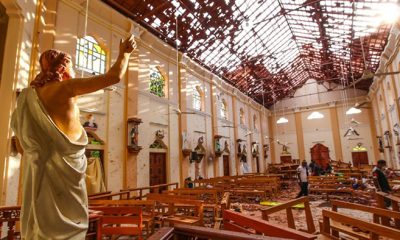
Easter Sunday carnage: Court told Maulana’s statement cannot be accepted without cross-examination
-

 News6 days ago
UK passport holder hiding here wants to have deportation order rescinded to leave without blemish
-
 Opinion6 days ago
Undermining the democratic political framework
-
 Business3 days ago
Sri Lanka’s construction industry losing ground while no one watches
-

 Features3 days ago
The Division Bell Mystery
-
 Midweek Review5 days ago
Israeli-US aggression won’t go unanswered -Iranian Ambassador
-
 News2 days ago
State of emergency extended