
News
SC ruling on economic crisis: Parliament also responsible, says Foreign Minister


By Shamindra Ferdinando
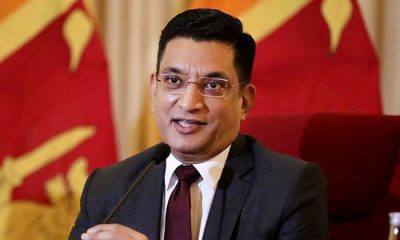
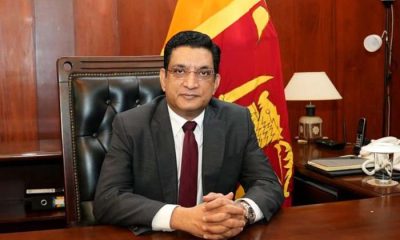
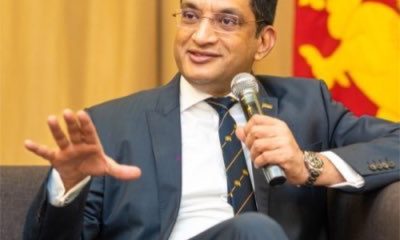
Foreign Minister Ali Sabry, PC, yesterday said that Parliament like other institutions should bear responsibility for the unprecedented economic crisis caused during President Gotabaya Rajapaksa’s administration.
Minister Sabry said so when The Island sought his response as regards the responsibility of Parliament for the developing situation against the backdrop of the country being bankrupted mainly due to overall mismanagement of the economy.
At the time of the eruption of public protests in early 2022, Minister Sabry served as the Foreign Minister of the Gotabaya Rajapaksa government.
Addressing the media at the President’s Media Centre (PMC), the SLPP National List MP dealt with the 2024 Budget presented by President Ranil Wickremesinghe, in his capacity as the Finance Minister.
Having compared the period leading to President Gotabaya Rajapaksa’s ouster with the significant improvements made under incumbent President Ranil Wickremesinghe’s resolute leadership, the top lawyer explained how successive governments ruined the economy by resorting to utterly irresponsible strategies.
The first time entrant to Parliament, following the last general election held in Aug. 2020, Minister Sabry emphasized how flawed tax strategies over the years caused the economic ruination. The Minister questioned the rationale in 80:20 ratio in indirect and direct taxes when the acceptable radio was 60:40 world over. The Minister went on to highlight the circumstances that led to the drop in revenue to just over 8 percent of the Gross Domestic Product (GDP) from 23% to 25% ahead of 2019/2020 crash.
Asked whether he had been present in the parliamentary chamber when a section of the ruling SLPP went berserk over a statement made by SJB and Opposition Leader Sajith Premadasa in respect of the landmark Supreme Court judgment on economic crisis and what was his response to such unruly behaviour, the Minister said that he was there.
The SC on Nov 14 in a 4 to 1 verdict declared that former President Gotabaya Rajapaksa, former Finance Ministers Mahinda Rajapaksa and Basil Rajapaksa, ex-Governors of the Central Bank Prof. W.D. Lakshman and Ajith Nivad Cabraal, ex-Finance Secretary S.R. Attygalle, Presidential Secretary Dr. P.B.J. Jayasundera and the then Monetary Board were responsible for the economic collapse.
They were directed to pay Rs 150,000 each to those who filed fundamental rights applications.
The Minister emphasized that he never condoned such conduct and he never behaved that way or intended to do so in the future. “That was one side of the issue. We see various interested parties interpret the SC ruling the way they want. I read this judgment entirely. The ruling doesn’t say there had been fraud and money robbed. Funds had been sent overseas and measures should put in place to recover the money. It doesn’t say so. The SC found fault with the respondents for their failure to take timely action to avert the crisis. One specific issue artificial measures to control Rupees. I have pointed this out even last year. The other issue was the tax cut. They were policy decisions. The third issue was the timing of the IMF intervention. The fallout of those decisions should be political.”
The Minister said that there was no harm in prosecuting if there were fraud and robbery. But the Rajapaksas had already taken responsibility for those decisions, Minister Sabry said, pointing out that Gotabaya Rajapaksa, who won a five-year term, had to quit, and the Prime Minister, too, had to go. The entire government had to be handed over. They have to face the people, the Minister said.
“We genuinely believed the government should have sought the IMF intervention at that time, the depreciation of the Rupee should have been allowed to some extent. Perhaps those who decide on policy may have felt they were right,” Minister Sabry, said reminding that Sri Lanka sought IMF interventions on 16 previous occasions.
Minister Sabry insisted that no one would come into politics if those who had been found fault for lapses on their part in respect of policy decisions were dealt with in terms of criminal liability. Reiterating that the fallout should be solely political, the Foreign Minister said, adding that in case someone engaged in fraud, corruption and crime he should bear criminal responsibility.





News
GMOA warns of trade union action unless govt. urgently resolves critical issues in health sector

Influx of substandard drugs is of particular concern
The Government Medical Officers’ Association (GMOA) has warned of renewed and intensified trade union action if the government fails to fulfil its promise to resolve the ongoing crisis in the health sector within the next few days.
GMOA Executive Committee member Dr. Prasad Colombage said his association was hopeful that commitments made by the government, including those formally stated by the Minister of Health in Parliament and recorded in the Hansard, would be implemented.
He called for urgent remedial action in view of the influx of substandard medicines into the country, patient deaths linked to such drugs, difficulties faced by doctors in prescribing medicines, and disruptions to patient care services caused by the continued migration of medical professionals. These factors, he warned, had placed patients’ lives at serious risk.
Dr. Colombage said discussions had already been held with all relevant authorities, including the President and the Minister of Health. He expressed hope that swift solutions would be forthcoming based on agreements reached at discussions. However, he cautioned that the GMOA would not hesitate to resort to strong trade union action if tangible progress was not seen in the coming days.
Meanwhile, the Federation of Medical and Civil Rights Professional Associations yesterday (01) handed over a special memorandum to President Anura Kumara Dissanayake, calling for immediate action to resolve the deepening crisis in the health sector.
Federation President, Consultant Dr. Chamal Sanjeewa, said Sri Lanka’s health system was currently facing a severe crisis and had sought an opportunity to hold discussions with the President on the matter.
The memorandum calls for the President’s direct and immediate intervention on several key issues, including the Indo–Sri Lanka health agreement, shortages of essential medicines including cancer drugs, continued allegations surrounding the administration of the Ministry of Health, reported irregularities at the National Hospital, Colombo, and the absence of an internationally accredited quality control laboratory for the National Medicines Regulatory Authority to test medicines. The Federation has also requested a meeting with the President to discuss these concerns in detail.
By Sujeewa Thathsara ✍️

Sri Lanka’s latest elephant census must result in immediate policy action, not remain a paper exercise, Centre for Environmental Justice (CEJ) Managing Director Dilena Pathragoda warned, as nearly 400 wild elephants have already died in 2025 alone amid escalating human–elephant conflict.
With the national elephant population estimated at around 5,879, Pathragoda said the figures would be meaningless unless they shape land-use planning, habitat protection and enforcement.
“As of mid-December, close to 397 elephants have died in 2025, mostly due to shootings, electrocution, train collisions and other human-related causes,” he told The Island. “When deaths continue at this scale, census numbers alone offer little reassurance.”
Official data show that 388 elephants died in 2024, while 2023 recorded a staggering 488 deaths, one of the highest annual tolls on record. Conservationists warn that the trend reflects systemic failure to secure habitats and elephant corridors, despite repeated warnings.
“An elephant census should not end with a headline figure,” Pathragoda said. “If these statistics do not influence development approvals, infrastructure planning and land-use decisions, they fail both elephants and rural communities.”
Elephant populations remain unevenly distributed, with higher densities in the Mahaweli, Eastern and North Western regions, while other areas face sharp declines driven by habitat fragmentation and unplanned development.
Pathragoda said recurring fatalities from gunshots, illegal electric fences, improvised explosive devices along with poisonings and rail collisions expose the limits of short-term mitigation measures, including ad hoc fencing projects.
“The crisis is not a lack of data, but a lack of political will,” he said, calling for binding conservation policy, transparent environmental assessments and accountability at the highest level.
He urged authorities to treat elephant conservation as a national governance issue, warning that failure to act would only see future censuses record further decline of these majestic animals.
“Elephants are part of Sri Lanka’s natural heritage and economy,” Pathragoda said. “Ignoring these warning signs will come at an irreversible cost.”
By Ifham Nizam ✍️

The Ministry of Education has yet to clarify whether school hours will be extended by 30 minutes from next Monday (05) under the proposed new education reforms, Ceylon Teachers’ Union (CTU) General Secretary Joseph Stalin has said.
Stalin told The Island that the Ministry should reconsider the planned reforms, warning that decisions taken without adequate study and consultation could have serious repercussions for nearly four million schoolchildren.
He said the Education Ministry had announced that education reforms would be implemented in Grades from 1 to Grade 6, but it had not said anything about the Grades above 6. This lack of clarity, he said, had created confusion among teachers, parents and students.
Stalin also noted that although learning modules had been issued, students are required to obtain photocopies based on the codes introduced in these modules. However, the Ministry had not revealed who would bear the additional financial burden arising from those costs, raising further concerns over the practical implementation of the reforms.
by Chaminda Silva ✍️

Showery condition is expected to enhance in the Eastern, Northern and Uva provinces during the coming days, due to the development of a low-level atmospheric disturbance to the East of Sri Lanka

GMOA warns of trade union action unless govt. urgently resolves critical issues in health sector

Elephant census urged as death toll nears 400

CTU raises questions about education reforms

Navy lauds foreign warships that came to assist in disaster relief ops here

It’s PC polls, stupid

‘Dates have the highest sugar content to fight Coronavirus’

Sunday Island 27 December – Headlines

#SundayIsland 17th December – Headlines

Sunday Island – 28th March

Sunday Island Headlines – 21 March

Sunday Island – 21st February – Headlines
-

 Sports4 days ago
Gurusinha’s Boxing Day hundred celebrated in Melbourne
-
 News2 days ago
Leading the Nation’s Connectivity Recovery Amid Unprecedented Challenges
-

 Sports5 days ago
Time to close the Dickwella chapter
-

 Features3 days ago
It’s all over for Maxi Rozairo
-

 News5 days ago
Environmentalists warn Sri Lanka’s ecological safeguards are failing
-
 News3 days ago
Dr. Bellana: “I was removed as NHSL Deputy Director for exposing Rs. 900 mn fraud”
-
 News2 days ago
Dons on warpath over alleged undue interference in university governance
-
 Features5 days ago
Digambaram draws a broad brush canvas of SL’s existing political situation