
Editorial
It’s PC polls, stupid


Friday 2nd Junuary, 2026
The SJB yesterday called upon the NPP government to hold the much-delayed Provincial Council (PC) polls soon. Its call is bound to go unheeded, for the JVP/NPP is not ready for an election. Having suffered a string of defeats in the cooperative society elections during the past several months, the government is trying every trick in the book to postpone the PC elections further. The outcome of last year’s local government polls is not something the JVP/NPP can be really proud of; its efforts to sweep the polls did not reach fruition although it managed to bag a majority of local councils.
A midterm electoral setback could be the undoing of a government however powerful it may be. The fate that befell the Mahinda Rajapaksa government following the Uva PC polls in September 2014 is a case in point. The UPFA won the Uva PC, but the number of its seats dropped from 25 to 19. The number of UNP’s seats increased from 7 to 13. The JVP, which had only one seat in the previous council, secured 02 in 2014. President Rajapaksa, in his wisdom, advanced a presidential election, and lost the presidency to Maithripala Sirisena in January 2015.
So, it is highly unlikely that the NPP government will hold the PC polls anytime soon. The Opposition is not strong enough to pressure the government politically to take a huge electoral gamble by holding an election.
It is doubtful whether the Opposition is really keen to face an election at this juncture despite its rhetoric. The SJB and other Opposition parties have closed ranks and defeated budgets in a considerable number of NPP-controlled local councils and won cooperative society elections. But their fragile unity is not going to survive an election that they will have to contest separately. A split in the anti-government vote will stand the JVP/NPP in good stead. However, the situation is likely to change if the UNP and the SJB come together to contest future elections.
What enabled the UNP to improve its electoral performance in the Uva Province in 2014 and gain a strategic opening to topple the Rajapaksa government a few months later was a rapprochement between two factions led by Ranil Wickremesinghe and Sajith Premadasa.
The SJB leaders who are demanding that the PC polls be held soon ought to tender an apology to the public for the role they played in postponing the PC elections indefinitely in 2017 while they were in the UNP-led Yahapalana government. The UNP and the SLFP, as Yahapalana allies, were wary of facing an election in 2017 and therefore amended the PC Elections Act to delay the PC polls. None of the political parties represented in Parliament at the time, including the UNP, the SLFP/UPFA, the ITAK, the SLMC, and the JVP, opposed the obnoxious amendment to the PC Elections Act. The current SLPP leaders were dissident members of the UPFA. The original amendment Bill was to provide for a quota of 30% for female candidates on the nomination papers submitted for the PC elections, but it was changed beyond recognition at the committee stage to facilitate the postponement of the PC polls. Article 78 (3) of the Constitution says, “Any amendment proposed to a Bill in Parliament shall not deviate from the merits and principles of such Bill.” But the aforesaid political parties took the bad amendment for granted; the PC polls were made to disappear, as it were.
The incumbent government has said the PC polls will be held under the Mixed Proportional (MP) system. The delimitation of electoral boundaries, which is a prerequisite for holding the PC polls under the MP system, will take about one year, according to the Election Commission. The only way to hold the PC election soon is to legislate for it to be conducted under the existing Proportional Representation system. If the SJB is serious about having the PC polls held soon, it should campaign for amending the PC Elections Act, in Parliament. Let it be urged to fish or cut bait.



Tuesday 20th October, 2026
A massive wave of youth-led and anti-austerity protests is sweeping across several European countries. It is driven by a host of issues including soaring cost of living, housing unaffordability, discontent with public services, and resentment at governments’ economic policies that are not beneficial to ordinary people. Protests in France, Italy, Belgium, Albania, Portugal and Spain are not part of a single, centrally organised movement, although the international media often lump them together. All of them however reveal a growing frustration over young people’s prospects and the increasing cost of living in Europe.
No country is immune from what social scientists describe as the cross-border diffusion of discontent and protests. Agitations could have a domino effect across national borders. We have witnessed waves of youth-led protests, in this part of the world, affecting Sri Lanka, Bangladesh, Nepal and India. Protesters brought down governments in Bangladesh and Nepal and ousted a Sri Lankan President, causing a subsequent regime change. One may recall that four African countries saw their governments or long-serving rulers fall during the Arab Spring uprisings of 2010–2012.
Main causes of unrest in Europe can be divided into three broad categories. People are facing an unbearable cost-of-living squeeze, with rising prices, expensive energy and housing costs exerting enormous pressure on household budgets. The youth have a diminishing confidence in the future; they are concerned about employment, education, housing and, above all, whether they can achieve financial independence. Then, there is growing public anger over government priorities which are widely considered misplaced.
In Belgium and France, austerity and public spending priorities have driven unions and students to the streets. In Albania, corruption allegations and demands for political accountability are key factors fuelling protests. In Portugal and Spain housing is a central grievance of protesters. The causative factors however are far more complicated.
What is unfolding in Europe portends trouble for the developing world, where people are facing much worse socio-economic problems than their European counterparts. Sri Lanka ranks 120th out of 130 countries in monthly minimum wages in US dollars, according to data compiled by Visual Capitalist from International Labour Organization (ILO) statistics. Its monthly minimum wage (USD 200) has placed it among the lowest globally and at the bottom among surveyed South Asian nations, behind Pakistan (68th at USD 570), Nepal (78th at USD 490), Bangladesh (89th at USD 379), and India (111th at USD 233). Sri Lanka has the highest rate of unemployment among young people with post-secondary education in the Asian economies covered by an International Monetary Fund (IMF) comparison, with about 43% of those aged 15–24 in this category unemployed. The cost of living is increasing, with taxes and tariffs remaining extremely high. Sri Lanka has the highest household electricity tariffs in South Asia.
When economic grievances deepen in a country, with public confidence in the political establishment eroding, people’s resentment tends to find expression in street protests. In 1953, an attempt by the then UNP government to reduce subsidies, which amounted to about 20% of its total expenditure, and the resultant increase in the price of rice led to a hartal that almost brought about a regime change. An austerity drive, among other things, led to the downfall of the United Front government in 1977. Shortages of essentials fuelled the 2022 Aragalaya.
The biggest challenge facing the JVP-NPP government is to find a way to ease the unbearable economic burden on the irate public while raising enough revenue to meet the targets set by the IMF. This is a high-wire act. Rhetoric, political theatre and more promises will be of little avail. People are crying out for relief. Pro-government demonstrations may give the rulers a false sense of security but they cannot help stem the tide of public anger.

Monday 19th October, 2026
Buddhist monks’ Satyagraha at Viharamahadevi Park, seeking the release of Ven. Galaboda Atte Gnanasara Thera from prison, took a dramatic turn on Saturday evening with a confrontation between protesters and the police. Ven. Balangoda Kassapa Thera, one of the monks leading the protest, was rushed to the Colombo National Hospital. Subsequently, he had himself moved to a private hospital, claiming that he feared for his life. He has been in the government’s crosshairs due to his active involvement in protests.
Satyagraha activists insist that a group of policemen led by an ASP roughed up Kassapa Thera. Police Spokesman ASP F. U. Wootler lost no time in denying the allegation, claiming that Kassapa Thera had ‘slipped and fallen’. The police cannot expect the discerning public to buy into their claims, and cynics say they do not believe anything until the police deny it. It may be recalled that ASP Wootler has been found guilty of violating fundamental rights of a lawyer and ordered to pay compensation from his personal funds.
He that hath an ill name is half-hanged, as the old saying goes. One may recall that when rugby player Wasim Thajudeen was found dead in his car in 2012, the police promptly claimed that he had died in an accident. They ruled out foul play. But subsequently they admitted that Thajudeen had been murdered. In 2018, the CID blamed former LTTE combatants for the killing of two policemen on duty in Vavunathivu and made some arrests. Later, they admitted that the National Thowheed Jamaath, which carried out the Easter Sunday bombings, had murdered the two constables. Thugs armed with clubs and iron rods freely operated in full view of the police during President Mahinda Rajapaksa’s government, and when this was taken up at a media briefing, the then Police Spokesman had the chutzpah to deny the allegation, claiming that they may have carried ‘sticks’ to ward off street dogs. So much for the police and their claims.
It is often said that the truth is the first casualty of war. The same holds true for other conflicts as well. So, we can’t expect both sides to the current dispute between Buddhist monks and the government to tell us the truth, the whole truth and nothing but the truth. Only a thorough, impartial investigation will help ascertain what really happened on Saturday evening at Viharamahadevi Park, leading to Kassapa Thera’s hospitalisation. The government must order a probe into the alleged assault incident.
Self-righteous Opposition politicians are trying to dupe the public into believing that the police neither committed excesses nor engaged in political work under their watch. Crackdowns on protests are not of recent origin, and the police have acted like storm troopers under successive governments. The police have a shameful history of doing dirty work for all governments and allowing ruling party thugs to operate alongside them during previous governments. But the fact that police excesses are not unprecedented does not justify suppressing people’s right to stage peaceful protests under the incumbent administration.
The JVP thrived on protests and capitalised on the 2022 Aragalaya to propel itself to power. At the height of the uprising, it also sought to lead protesters in a bid to capture Parliament, but failed. Today, the JVP/NPP is practising the very antithesis of what it preached and did while out of power. Many of the monks engaged in the current Satyagraha at Viharamahadevi Park campaigned hard for the JVP/NPP, enabling its swift rise to power, in 2024.
The police have urged the public to refrain from sharing unverified videos of Saturday’s incident via social media to discredit them. One cannot but agree that social media must not be abused to disseminate disinformation. But shouldn’t the police first take action against government propagandists who are carrying out social media disinformation campaigns with impunity?
Coercive measures the current administration adopts to discourage protests and the aggressive manner in which the police enforce them could offer a foretaste of what is to come if the proposed Protection of State from Terrorism law, criticised by human rights groups for its draconian features, if enacted.

A group of Buddhist monks and laypersons were staging a sit-in near the Presidential Secretariat at the time of going to press. The police obtained a court order yesterday morning prohibiting the protest on the grounds that it was being held in a high-security zone. Speculation was rife that the police would be able to disperse the protesters. However, all indications are that the campaign for the release of Ven. Galagoda Aththe Gnanasara Thera from prison is unlikely to end, and the current protest may be shifted to some other venue.
Ironically, the monks’ staged their sit-in at the cradle of Aragalaya, which paved the way for the JVP-NPP’s meteoric rise to power. What began to unfold near the Presidential Secretariat yesterday is more than a protest; it is a test of strength for the government, which may try every trick in the book to prevail in the current dispute.
Opinion may be divided on the protesting monks’ demand for a presidential pardon for Gnanasara Thera, but the current crisis has stemmed from the government’s mishandling of the decision to produe him in court in lay attire. The government first sought to justify the prison officers bringing him to court, dressed in a sarong and shirt. Then, it made an about-turn and changed the prison rules and regulations, allowing monks in jail to appear in court, wearing saffron robes. The Opposition and independent legal experts have argued that there was no need for President Anura Kumara Dissanayake to appoint a committee to review prison regulations, and the Minister of Justice could have simply directed the prison authorities to do what the committee took days to recommend. The government’s delayed action drove the protesters to launch a march from Kandy to Colombo and escalate their demand, calling for the immediate release of Gnanasara Thera. This is what happens when governments overestimate their strength, ignore the ground reality and refuse to take prompt action to resolve issues.
Sri Lankan governments with two-thirds majorities paradoxically become their own enemies. Impervious to reason, they act according to the whims and fancies of their leaders and take unnecessary risks much like drunk drivers recklessly speeding across unprotected level crossings. The SLFP-led United Front government (1970-77) succumbed to the arrogance of power and its two-thirds majority became its undoing, as it were. President J. R. Jayewardene’s government (1977-88) plunged itself as well as the entire country into chaos by misusing its supermajority. President Mahinda Rajapaksa suffered a painful pratfall in 2015 as his government misused its two-thirds majority, and President Gotabaya Rajapaksa had to head for the hills, together with his siblings, and resign although his government had mustered a supermajority. The incumbent government has not learnt from the predicament of its predecessors.
Political rhetoric may be effective in the short term, but it cannot help suppress the truth or obscure reality. At a recent meeting with a group of representatives of the Maha Nayake Theras, who argued that Gnanasara Thera should be allowed to wear his robe, President Anura Kumara Dissanayake said he did not want to issue an order making an exception for one individual while prison regulations remained unchanged and he would appoint a committee to look into the matter and make recommendations. The committee recommended that Buddhist monks and other members of the clergy serving jail terms be permitted to appear in courts in their robes. It was obvious that the President had the prison regulations amended primarily to benefit Gnanasara Thera, while extending the same benefit to other imprisoned monks. The President said something similar when he met a delegation of the Bar Association of Sri Lanka over his government’s move to raise the retirement ages of the superior court judge. He insisted that it was not for the benefit of any particular individual that the 22nd Amendment (22A) would be enacted. But it was obvious that although the government moved to increase the retirement ages of all judges subsequently, 22A was primarily intended to benefit one particular judge who was reaching the age of 65.
The government may have thought trouble would end for it with Gnanasara Thera’s return to prison, but his imprisonment has become an even bigger problem, with President Dissanayake coming under increasing pressure to grant him a presidential pardon. If he gives in, the government will face serious questions over its reversal of policy on presidential pardons and what its supporters may view as a capitulation to the very forces it pledged to defeat. He thus finds itself in a dilemma.

Implementation of Suraksha Student Insurance Program for the Year 2026/2027

Environmental laws will be enforced equally against everyone

President pays last respects to Most Venerable Kappetiyagoda Siri Wimala Thera

Shafali receives demerit point for breaching Level 1 of ICC code of conduct

Heavy showers about 100 mm are likely at some places in the Northern, North-central, Central, Eastern, North-western and Uva provinces

Molineux, Dunkley enter WPL 2027 auction with top base price of INR 50 lakh

‘Dates have the highest sugar content to fight Coronavirus’

Sunday Island 27 December – Headlines

#SundayIsland 17th December – Headlines

Sunday Island – 28th March

Sunday Island Headlines – 21 March

Sunday Island – 21st February – Headlines
-

 Features3 days ago
Kotahena:A Small Enclave, An Extraordinary Legacy
-

 News7 days ago
Sri Lanka, India caught in US-Iran ship crisis
-
 News4 days ago
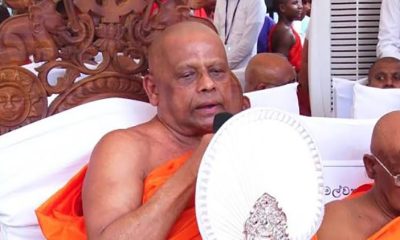
Asgiri Mahanayake calls for immediate release of Gnanasara Thera
-

 Latest News7 days ago
Missiles intercepted near Riyadh after Saudi coalition hits Yemen fuel depot
-
 Latest News7 days ago
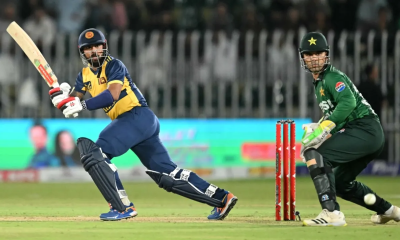
Kusal Mendis’ unbeaten 87 hands Sri Lanka consolation win
-

 News2 days ago
Record 1,600 students take Russian Classical Ballet examination in Sri Lanka
-
 News6 days ago
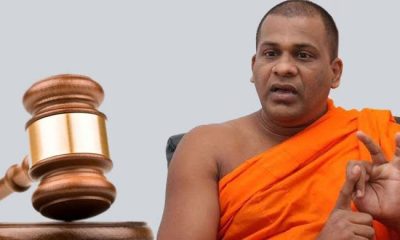
AC President recuses himself from hearing prison attire case pertaining to Gnanasara Thera
-

 Latest News7 days ago
Heavy showers above 100 mm are likely at some places in the Western, Sabaragamuwa, Southern, Central, and North-western provinces and in Anuradhapura district.