
News
SC ruling on economic crisis: Parliament also responsible, says Foreign Minister


By Shamindra Ferdinando
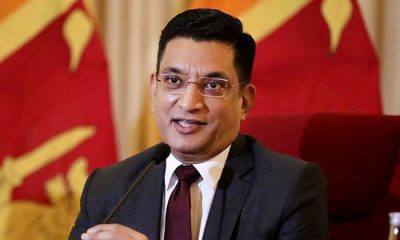
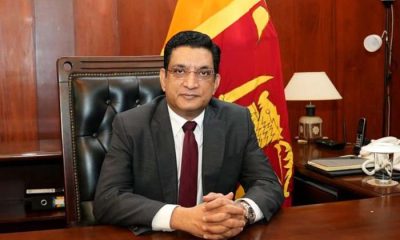
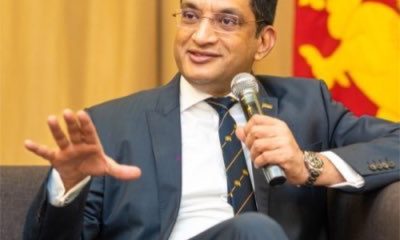
Foreign Minister Ali Sabry, PC, yesterday said that Parliament like other institutions should bear responsibility for the unprecedented economic crisis caused during President Gotabaya Rajapaksa’s administration.
Minister Sabry said so when The Island sought his response as regards the responsibility of Parliament for the developing situation against the backdrop of the country being bankrupted mainly due to overall mismanagement of the economy.
At the time of the eruption of public protests in early 2022, Minister Sabry served as the Foreign Minister of the Gotabaya Rajapaksa government.
Addressing the media at the President’s Media Centre (PMC), the SLPP National List MP dealt with the 2024 Budget presented by President Ranil Wickremesinghe, in his capacity as the Finance Minister.
Having compared the period leading to President Gotabaya Rajapaksa’s ouster with the significant improvements made under incumbent President Ranil Wickremesinghe’s resolute leadership, the top lawyer explained how successive governments ruined the economy by resorting to utterly irresponsible strategies.
The first time entrant to Parliament, following the last general election held in Aug. 2020, Minister Sabry emphasized how flawed tax strategies over the years caused the economic ruination. The Minister questioned the rationale in 80:20 ratio in indirect and direct taxes when the acceptable radio was 60:40 world over. The Minister went on to highlight the circumstances that led to the drop in revenue to just over 8 percent of the Gross Domestic Product (GDP) from 23% to 25% ahead of 2019/2020 crash.
Asked whether he had been present in the parliamentary chamber when a section of the ruling SLPP went berserk over a statement made by SJB and Opposition Leader Sajith Premadasa in respect of the landmark Supreme Court judgment on economic crisis and what was his response to such unruly behaviour, the Minister said that he was there.
The SC on Nov 14 in a 4 to 1 verdict declared that former President Gotabaya Rajapaksa, former Finance Ministers Mahinda Rajapaksa and Basil Rajapaksa, ex-Governors of the Central Bank Prof. W.D. Lakshman and Ajith Nivad Cabraal, ex-Finance Secretary S.R. Attygalle, Presidential Secretary Dr. P.B.J. Jayasundera and the then Monetary Board were responsible for the economic collapse.
They were directed to pay Rs 150,000 each to those who filed fundamental rights applications.
The Minister emphasized that he never condoned such conduct and he never behaved that way or intended to do so in the future. “That was one side of the issue. We see various interested parties interpret the SC ruling the way they want. I read this judgment entirely. The ruling doesn’t say there had been fraud and money robbed. Funds had been sent overseas and measures should put in place to recover the money. It doesn’t say so. The SC found fault with the respondents for their failure to take timely action to avert the crisis. One specific issue artificial measures to control Rupees. I have pointed this out even last year. The other issue was the tax cut. They were policy decisions. The third issue was the timing of the IMF intervention. The fallout of those decisions should be political.”
The Minister said that there was no harm in prosecuting if there were fraud and robbery. But the Rajapaksas had already taken responsibility for those decisions, Minister Sabry said, pointing out that Gotabaya Rajapaksa, who won a five-year term, had to quit, and the Prime Minister, too, had to go. The entire government had to be handed over. They have to face the people, the Minister said.
“We genuinely believed the government should have sought the IMF intervention at that time, the depreciation of the Rupee should have been allowed to some extent. Perhaps those who decide on policy may have felt they were right,” Minister Sabry, said reminding that Sri Lanka sought IMF interventions on 16 previous occasions.
Minister Sabry insisted that no one would come into politics if those who had been found fault for lapses on their part in respect of policy decisions were dealt with in terms of criminal liability. Reiterating that the fallout should be solely political, the Foreign Minister said, adding that in case someone engaged in fraud, corruption and crime he should bear criminal responsibility.






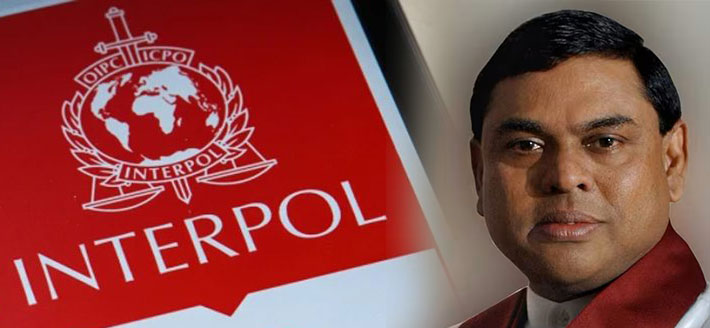
The Criminal Investigation Department (CID) and Police Headquarters are in the process of seeking INTERPOL assistance to secure the return of former Finance Minister Basil Rajapaksa to Sri Lanka, police sources said yesterday.
A senior police officer said steps were being taken to obtain international assistance to bring Rajapaksa back to the country to face court proceedings relating to two cases in which arrest warrants have been issued against him.
The Colombo Fort Magistrate’s Court last week and the Matara Chief Magistrate’s Court several weeks ago issued warrants for Rajapaksa’s arrest after he failed to appear before court.
Colombo Fort Magistrate Pasan Amarasena recently directed the CID’s Illegal Assets Investigation Division to arrest and produce Rajapaksa before court over allegations of misappropriating Rs. 7.8 million belonging to the Sri Lanka Tourism Promotion Bureau.
According to investigators, funds allocated to the Bureau in 2014 for promotional activities had allegedly been used to distribute 12,000 T-shirts during the Uva Provincial Council election, resulting in a financial loss to the Government.
The Magistrate also released former Tourism Promotion Bureau Managing Director Rumi Jaufer, who had been in remand custody, on two personal bail bonds of Rs. 1 million each and imposed a foreign travel ban on him. Investigators said charges had been filed under the Public Property Act.
Meanwhile, Matara Chief Magistrate Chaturanga Eranga Dissanayake issued a warrant on May 22 for Rajapaksa’s arrest over a case filed by the Police Financial Crimes Investigation Division regarding the purchase of a one-and-a-half-acre land plot at Brown’s Hill, Eliyakanda Road, Matara.
Rajapaksa’s counsel had informed court that the former minister was overseas receiving medical treatment and submitted medical reports in support of the request for his absence. However, the Magistrate, noting his repeated failure to appear before court, ordered the issuance of a warrant.
Rajapaksa is believed to be in the United States, where he has reportedly been receiving medical treatment. His exact location has not been disclosed publicly.
Meanwhile, Minister of Public Security Ananda Wijepala said the same legal measures used to bring back drug traffickers and organised criminals hiding overseas would be applied to former ministers and politicians wanted by courts.
Speaking at a media briefing in Kandy on Thursday, Wijepala said the law would be enforced equally without considering a person’s political status or position.
He said international mechanisms, including INTERPOL notices, would be used against former ministers and politicians abroad who had warrants issued against them.
A police source said the authorities were considering obtaining INTERPOL assistance in the case of Basil Rajapaksa. An INTERPOL Red Notice, if issued, would serve as a request to locate and provisionally arrest a person pending extradition proceedings, while the final decision on surrender would be taken according to the laws of the country where the individual is found.
by Norman Palihawadane and SK Samaranayake
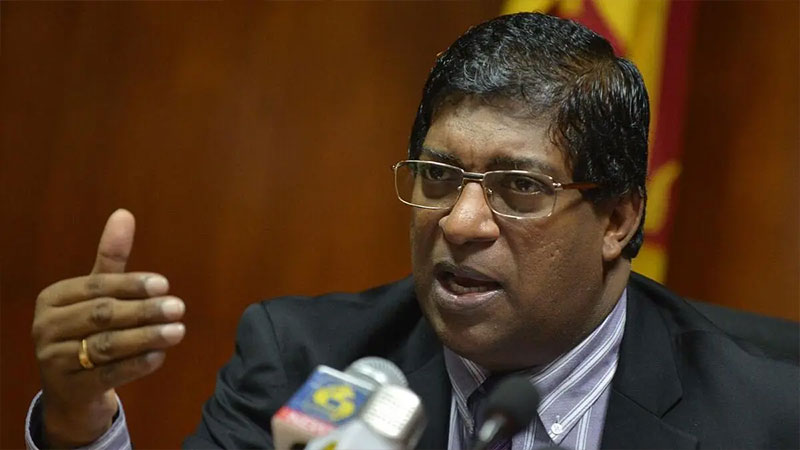
New Democratic Front (NDF) MP Ravi Karunanayake on Thursday warned against attempts by certain sections of society to incite racial and religious tensions under the guise of seeking justice for the victims of the 2019 Easter Sunday terror attacks.
Addressing a press conference in Colombo, Karunanayake called for a genuine and impartial investigation into the attacks, while cautioning that the tragedy should not be exploited to undermine communal harmony or derail ongoing investigations.
“There are attempts by some interested parties to create communal disharmony and sabotage opportunities for a genuine investigation into the Easter Sunday attacks,” he said.
Karunanayake, who identified himself as a member of the Catholic community, said he was deeply saddened by the conduct of certain individuals and groups seeking to exert influence and pressure on the investigative process.
“I am saddened to see the conduct of some of our religious leaders exerting influence and pressure on ongoing investigations,” he said, stressing that any inquiry into the attacks should be guided by the principles of justice and humanity rather than political or sectarian interests.
The MP said there was no justification for promoting racism or religious extremism in the country and urged all communities to work towards preserving the longstanding coexistence among Sinhalese, Tamils, Muslims, Burghers and Malays.
“We must return to a society where all communities live together with mutual respect and affection. Humanity must come before any religious identity, whether one is Catholic, Muslim, Hindu or Buddhist,” he said.
Karunanayake emphasized that the ultimate objective of any investigation should be to uncover the truth and deliver justice to the victims while safeguarding national unity.
“Hatred must be eliminated, not cultivated. Any investigation into the Easter Sunday attacks should be conducted in a manner that preserves the social fabric of the nation,” he said.
He reiterated his support for a credible and transparent investigation into the attacks, adding that justice could only be achieved through an independent process free from undue influence and attempts to inflame communal sentiments.

- Initial report detailed High Court Judge summoned another Judge regarding order.
- Writ application filed by three senior Bar members protecting Rule of Law.
- Dr. Romesh de Silva PC argued Judges cannot be questioned on judicial orders.
- Court issued interim order stopping steps on the summons.
- Attorney General later gave undertaking Judge would not be summoned as witness.
- Petitioners accepted relief; proceedings ended as principle accepted
In a first time occurrence in the history of the country, a High Court Judge, at the request of the Attorney General’s Department, issued summons on another High Court Judge in order to question him regarding the correctness and accuracy of an order made by him.
The matter arose in criminal proceedings instituted against Yoshitha Rajapaksa.
Thereafter, three senior members of the Bar instituted filed a writ application in the Court of Appeal seeking to quash the summons, stating that their objective was to protect the Rule of Law and the independence of the Judiciary. The Petitioners were President’s Counsel Uditha Egalahewa, President’s Counsel Farman Cassim and senior Attorney-at-Law Sugath Caldera.
The case was taken up on June 2 and Dr. Romesh de Silva, PC, appearing for the Petitioners and leading several President’s Counsel, submitted in the Court of Appeal that the application had been filed in the public interest to safeguard the Rule of Law and the independence of the Judiciary.
Counsel drew the attention of Court to the Constitution, which recognizes the independence of the Judiciary as an intangible heritage of the people of Sri Lanka. He submitted that Sri Lanka had consistently recognized and protected judicial independence.
Dr. de Silva expressed appreciation to the three Petitioners for having come forward to protect the Rule of Law and the independence of the Judiciary. He stated that it was the duty of the Bar to protect the judiciary, because Judges by nature of their office cannot defend themselves.
He submitted that a Judge could not be questioned regarding an order made by him in his judicial capacity. Counsel contended that judicial orders are subject to appeal and that, ultimately, orders of the Supreme Court are final and conclusive. He argued that no Judge, whether of a primary court or the Supreme Court, could be questioned regarding the correctness or accuracy of an order delivered in the exercise of judicial functions.
Counsel accepted that a judicial order itself may be subjected to scrutiny and analysis in an appropriate forum. However, he submitted that the Judge who delivered the order could not be questioned concerning its correctness.
Referring to the facts of the present case, Dr. de Silva submitted that the High Court Judge had been summoned to explain the basis upon which he had made the order in question. He maintained that, irrespective of the correctness of the order itself, the sole issue before Court was whether a Judge could be compelled to answer questions regarding an order delivered by him. Counsel submitted that such a course was totally impermissible.
State Counsel, in lengthy submissions, objecting to the interim order and notice informed Court that the intention behind summoning the Judge had been to question the Judge regarding the procedural steps adopted by him and to demonstrate that the order had been made contrary to law.
The Court of Appeal, comprising the President of the Court of Appeal Justice Rohantha Abeysuriya and Justice Priyantha Fernando, thereafter adjourned to consider the matter and subsequently issued an interim order preventing any further steps being taken pursuant to the summons that had been issued.
The interim order was made operative for a period of one week in order to afford the Attorney General an opportunity, if necessary, to make further submissions.
When the matter was next called on June 12, State Counsel informed Court that the Attorney General had reconsidered his position and would give an undertaking to the Court of Appeal that the High Court Judge would not be summoned to give evidence.
Upon a request made by Dr. de Silva and after hearing submissions, the Attorney General further undertook that the Judge’s name would be removed from the list of witnesses filed in the High Court.
The Petitioners took the position that the undertakings furnished by the Attorney General substantially granted the relief sought in the application and accordingly stated that the proceedings could be brought to an end, as the principle contended for by the Petitioners had been accepted.
Dr. de Silva thanked the Attorney General for his reconsidered position.
It is noted that the State Counsel who appeared on behalf of the Judge who had issued the summons had previously appeared as junior counsel for the State before that same Judge when the summons had originally been issued at the request of the State.
Dr. Romesh De Silva PC with
Mr. Ikram Mohommed PC
Mr. Manohara De Silva PC
Mr. Rohan Sahabandu PC
Mr. Sanjeewa Jayawardena PC
Mr. Saliya Peirs PC
Mr. N.R Sivendran AAL
Mr. Niran Anketell AAL
Mr. S.V Niles AAL
Mr.Pasindu Bandara AAL
Mr. Sahan Ginige AAL appeared for the Petitioners. Mr Oswald Perera State Counsel with Sajitha Bandara State Counsel appeared for the Attorney General and the second Respondent Hon Udesh Ranatunga under whose hand the Summons has been issued. Mr Chandaka Jayasundera PC appeared for Hon Sahan Mapa Bandara the third Respondent on 12th June 2026.

Tunisia out of World Cup after 0-4 defeat by Japan

Vance arrives in Switzerland for US-Iran talks

FFSL renews National Team Head Coach Abdullah Almutairi under “The Next Chapter” program

Gakpo, Brobbey doubles give Dutch 5–1 World Cup win

Trump vows Iran will not charge Strait of Hormuz tolls, but says US might

Showers will occur in the Western, Sabaragamuwa and North-western provinces and in Galle, Matara, Kandy and Nuwara-Eliya districts

‘Dates have the highest sugar content to fight Coronavirus’

Sunday Island 27 December – Headlines

#SundayIsland 17th December – Headlines

Sunday Island – 28th March

Sunday Island Headlines – 21 March

Sunday Island – 21st February – Headlines
-

 News7 days ago
Release of 2025 O/L results likely to be delayed
-

 Sports7 days ago
Tharanga set for high-profile javelin clash in Ostrava
-

 News7 days ago
Theft of USD 2.5 mn from Treasury: CoPF accused of complicity in NPP cover-up
-

 News6 days ago
Beijing Capital Airlines to resume flights to Colombo signalling boost to tourism
-

 Features5 days ago
Killing of Colombo’s ancient trees — a warning on UN’s World Desertification Day – 17 June
-

 Opinion7 days ago
Decoding Trump’s 12.5% “Forced Labor Tariff” on Sri Lanka
-

 Opinion7 days ago
Palm leaf manuscripts of Sri Lanka – Part V
-

 News2 days ago
Creditor not yet paid