
News
NAM means you can make independent decisions: Sabry

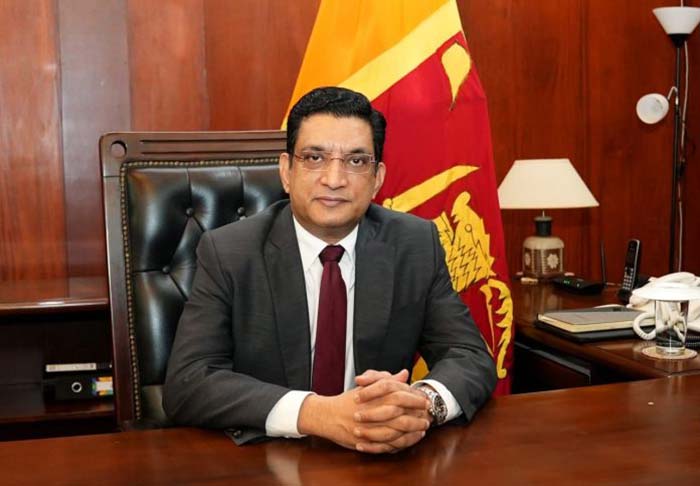
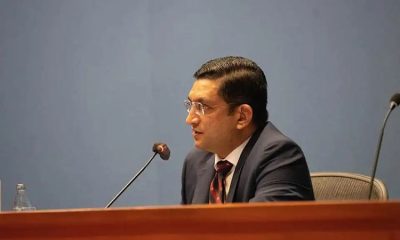
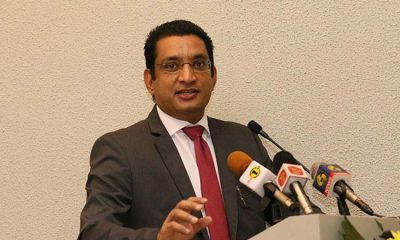
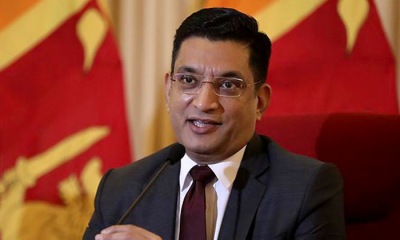
Foreign Minister Ali Sabry PC has said that in the emerging multipolar world, countries like Sri Lanka cannot afford to take sides and must be open to working with anyone.
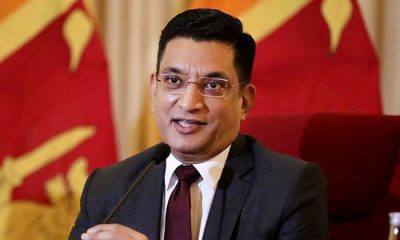
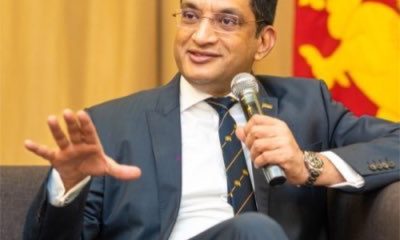
Minister Sabry made these observations when he delivered the opening address at the 3rd ‘LKI Foreign Policy Forum’, held on the theme ‘Reassessing Non-Alignment in a Polarised World’ the quarterly flagship event of the Lakshman Kadirgamar Institute of International Relations and Strategic Studies (LKI) held on 21 February 2024 at the LKI Lighthouse Auditorium. The event was attended by a representative gathering, comprising heads of diplomatic missions and international organisations, government officials, academics, business leaders, civil society, media practitioners, as well as students.
“Non-alignment means not becoming a bystander and it means that you are not forced or coerced into a camp to take sovereign decisions,” Sabry has said.
“And you take your own choices. Whether it is commercial, security, regional or otherwise. It is in this sense that Sri Lanka needs to have guidance and support to charter that course.
What is right for our country, what are the opportunities for us? What are the challenges in that while preserving our sovereignty to proceed with it? Across party lines, Sri Lanka is yearning to continue its greatest legacy of an independent and sovereign foreign policy. That is there to stay. But the modalities as to how we progress with that in a pragmatic manner in an ever-increasing polarized world is what we need to learn.”
Referring to the NAM Summit in Kampala, Uganda, in January 2024, the Foreign Minister highlighted the significance of the summit as an opportunity for NAM to assess global developments and review its functioning as the pre-eminent multilateral body of developing countries, and the challenges it faces. Responding to the Summit theme ‘Deepening cooperation for shared global affluence’, he noted that President Ranil Wickremesinghe in his address had noted that NAM’s membership was no longer a grouping of weak states, and that as a result of the rapid progress and economic advancement of some of the Asian, African and Latin American states, a majority of the 10 leading economies of 2050 will belong to this movement.
Observing that within NAM were rising aspirants for leadership status in global affairs, the President had emphasized that they must be prepared to give leadership, and that NAM must play a vital role as geo-strategic rivalries in political, economic, technological and military terms becomes more pronounced among former and new contenders for Major Power status.
The Minister noted that the recent Summit also served as a platform to discuss the challenges faced by NAM member states and particularly drew considerable attention to the humanitarian crisis in Gaza. Referring to the dire humanitarian situation in Palestine, Minister Sabry emphasised the importance of the NAM speaking in one voice when the very principles on which the Movement is based are challenged.
He expressed satisfaction with the outcome of the Summit, noting overwhelming support for all amendments proposed by Palestine to the outcome document. He reaffirmed Sri Lanka’s solidarity with the Palestinian people and its commitment to supporting them in their quest to achieve their inalienable rights.
Following the opening address, an engaging panel discussion moderated by Ambassador Ravinatha Aryasinha, Executive Director, LKI explored aspects related to non-alignment, with the participation of Ambassador Bernard Goonetilleke, Former Foreign Secretary and Chairman of the Pathfinder Foundation; Prof. Gamini Keerawella, Executive Director of the Bandaranaike Center for International Studies (BCIS); Dr. Paikiasothy Saravanamuttu, Executive Director of the Centre for Policy Alternatives (CPA) and Mr. Uditha Devapriya, Chief International Relations Analyst, Factum.








Text and Pic by Priyan de Silva
Director General of the Commission to Investigate Allegations of Bribery and Corruption (CIABOC) Ranga Dissanayake has questioned whether some promises contained in the National People’s Power (NPP) manifesto, A Thriving Nation – A Beautiful Life, could be fulfilled even if the government wanted to implement them.
Dissanayake raised the issue during a discussion following the release of the third biannual report on manifesto monitoring by the March 12 Movement, at the BMICH, on Wednesday.
He questioned whether the report had taken into account legal and institutional constraints affecting the implementation of certain pledges.
Citing the proposal to establish Anti-Corruption Investigation Offices in each district, Dissanayake said such offices could be established only with the agreement of CIABOC and that amendments to the Anti-Corruption Act would be necessary.
He also referred to the pledge to abolish the Executive Presidency, noting that successive governments had made similar commitments since 1994. He questioned whether there had been adequate consideration of where the powers vested in the Executive President would be transferred if the system were abolished.
On the proposal to establish a Public Prosecutor, Dissanayake questioned whether the Government intended to maintain the office alongside the Attorney General, who currently performs prosecution-related functions.
Executive Director of the Institute for Democratic Reforms and Electoral Studies (IRES) Manjula Gajanayake said Dissanayake’s remarks should be regarded as his personal views and not as Government policy.
Monitoring and Evaluation Consultants M. Thilakarajah and D.D. Mataharaarachchi presented the third-phase findings, covering January to June 2026.
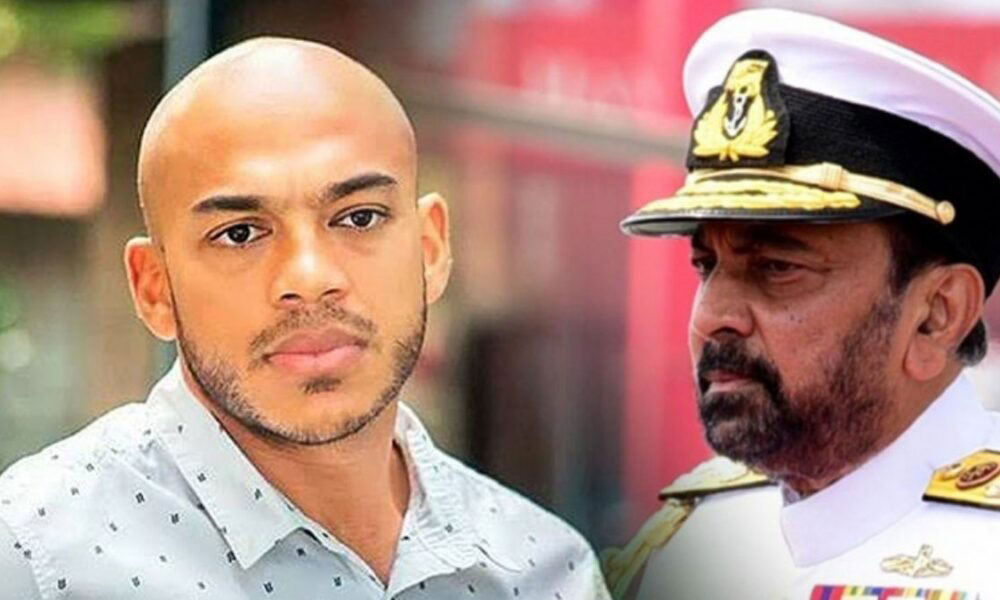
The corruption case filed by the Commission to Investigate Allegations of Bribery or Corruption (CIABOC) against former Navy Commander, Admiral of the Fleet Wasantha Karannagoda, and Yoshitha Rajapaksa was set for a pre-trial conference by the Colombo High Court.
The case was taken up before the Colombo High Court on Thursday (17), when the accused, who are currently out on bail, appeared before the court. After considering the submissions made, the court ordered that the case be called for a pre-trial conference.
The CIABOC had filed the case against the accused, alleging that a corruption offence was committed by sending Yoshitha Rajapaksa, son of former President Mahinda Rajapaksa, for training at the Royal Naval College in the United Kingdom despite him not having the required qualifications.

The Colombo Magistrate’s Court yesterday directed the Inspector General of Police (IGP) to conduct an investigation and submit a report on whether a statement made by former Minister Wimal Weerawansa at a political rally, in Anuradhapura, on September 12, amounted to contempt of court.
Deputy Solicitor General Janaka Bandara, appearing for the Commission to Investigate Allegations of Bribery or Corruption (CIABOC), made the request when a complaint filed against MP Namal Rajapaksa in connection with the Airbus issue was taken up.
Bandara also handed over to court a compact disc containing the relevant speech made by Weerawansa.
After considering the request, Colombo Chief Magistrate Asanga S. Bodaragama directed the IGP to conduct an investigation into the matter and submit a report to court.

Some NPP manifesto promises may be difficult to fulfil – CIABOC DG

Yoshitha and ex-Navy chief Karannagoda’s case fixed for PTC

Court orders probe into Wimal’s rally speech

Court to rule on Dilith’s writ petition on September 30

Shanakiyan urges urgent action over reported death sentence for Lankan in Saudi Arabia

Namal further remanded over Airbus probe

‘Dates have the highest sugar content to fight Coronavirus’

Sunday Island 27 December – Headlines

#SundayIsland 17th December – Headlines

Sunday Island – 28th March

Sunday Island Headlines – 21 March

Sunday Island – 21st February – Headlines
-

 News6 days ago
Gnanasara Thero absconding after SC ruling
-

 News7 days ago
Green Climate Fund (GCF) Regional Dialogue for East and South Asia will be held from 14 to 17 September 2026 at Cinnamon Life at City of Dreams Hotel, Colombo
-

 Opinion5 days ago
From Galkissa (Mount Lavinia) to Tambuttegama
-

 Latest News7 days ago
ITS Giuseppe Garibaldi’ departs Colombo
-

 Business6 days ago
HNB Finance strengthens Board with four independent directors
-

 News2 days ago
US embassy won’t comment on IGP’s probe into joint drug raid
-

 Sports6 days ago
Culture within cricket team worrying authorities
-

 Features5 days ago
Sri Lanka’s university crisis: Brain drain and union action demand urgent reform