
News
‘ Sathosa bosses brazenly manipulate Cabinet directive’

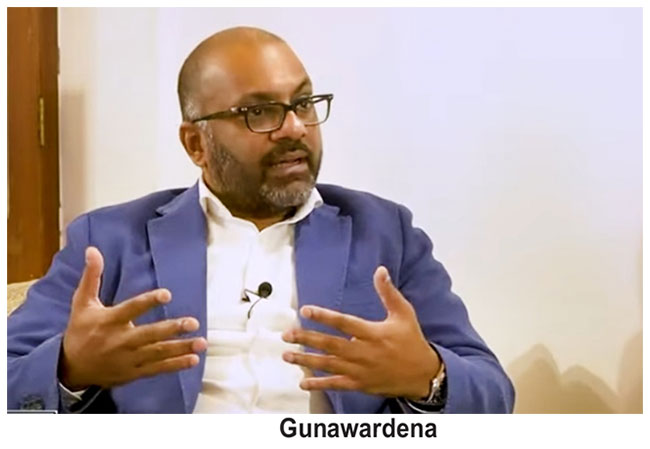
Bandula, Alagiyawanne respond to accusations
Garlic scam:
By Shamindra Ferdinando
Outgoing Executive Director of the Consumer Affairs Authority (CAA) Thushan Gunawardena says top Sathosa management brazenly manipulated a Cabinet directive, meant to ensure the steady supply of food items to Sathosa outlets, for the benefit of a few.
According to him, 56,000 kilos of garlic, released by Sri Lanka Ports Authority (SLPA) to Sathosa, was sold to a regular Sathosa supplier at Rs 135 a kilo. Sathosa management planned to buy back the same consignment at Rs 445 a kilo and then make available to consumers at about Rs 540 a kilo. The plan had gone awry due to unexpected raid carried out by then CAA, Gunawardena said, Sathosa sold the stock at such a low price on the basis of poor quality in spite of it being cleared by Quality Assurance officers, he said.
Inquiries revealed that private traders and supermarkets priced a kilo of garlic at Rs 600 to 630.
Responding to The Island queries, Gunawardena emphasised that many food consignments had been rerouted the same way. He said that such a massive fraud couldn’t have been carried out without political patronage. A container load of orid (Undu) had been among the consignments sold the same way, he said, insisting that Sathosa, and a selected group of suppliers worked together on the particular racket. “Politicians cannot be unaware of what is going on.”
Declaring that he would send his letter of resignation to CAA Chairman retired Maj. Gen. Shantha Dissanayake, later in the day, Gunawardena said that the country was definitely in the grip of an utterly corrupt system and, therefore he had decided to quit. “I tried my best to make a difference but realised the government lacked political will to take on corrupt elements. In fact, corruption is on the march. Waste, corruption, irregularities and negligence are the norm,” Gunawardena said.
Responding to another query, Gunawardena stressed that Trade Minister Bandula Gunawardana and Co-operative Services, Marketing Development and Consumer Protection State Minister Lasantha Alagiyawanne couldn’t absolve themselves of the responsibility for the pathetic situation at Sathosa.
Gunawardena declared that Sathosa was a den of corruption. The official alleged that he had not received the backing from Ministers Gunawardana and Alagiyawanne following the exposure of garlic deal.
According to Gunawardena, the consignment of garlic in two freight containers made available by the SLPA was declared fit for human consumption by Quality Assurance officers and through memo DGM (Procurement) Ms Chamila Asuramanna and Senior Manager (Logistics) R.S. Fernando informed.
The Assistant Manager (Quality Assurance) Mrs. Dulanjali Randeniwala while claiming that Sathosa had sufficient stocks of garlic at its warehouses had suggested what she called bulk sale or some other operation. The quality inspection had been carried out on September 7, 2021 at the CICT terminal. The two refrigerated containers had arrived at the Colombo Port on July 14, 2021.
Gunawardena said that the letter had been copied to Sathosa Chairman retired Rear Admiral Ananda Peiris, CEO Ranjith G. Rubasinghe, DGM (Finance) Susiri Perera and Senior Manager (Procurement) Lakshman Kumara. Therefore, the entire top Sathosa management was aware of the garlic consignment, Gunawardena said urging a wider investigation.
“What we really need is remedial measures at political level. Urgent intervention at the Cabinet level to prevent corruption and irregularities,” Gunawardena said, urging Parliament to look into the scandal.
DGM Finance Susiri Perera arrested by the police in connection with the fraud on 16 Sept. and produced before the Peliyagoda Magistrate was remanded till 21 Sept 21. He was among several persons taken into custody in this connection.
Trade Ministry spokesperson Mahesh Wickrema told The Island that Trade Minister Bandula Gunawardana would make a comprehensive statement in that regard in parliament on Wednesday (22). Wickrema said that the CAA had been gazetted under the State Minister Alagiyawanne’s ministry. Acknowledging that Sathosa had sold two container loads of garlic in violation of specific directives, Wickrema said that Gunawardana, in his capacity as the Trade Minister had directed a comprehensive inquiry into the garlic transaction.
State Minister Alagiyawanne told The Island that he, too, would make a statement in Parliament. The Gampaha District lawmaker denied all accusations made by the outgoing official Gunawardena pertaining to the clandestine sale of two container loads of garlic. Alagiyawanne said that he had not interfered with the CAA raid on Sathosa or tried to protect the culprits. CAA and Sathosa come under the purview of Alagiyawanne and Gunawardane, respectively.
Responding to a query, Alagiyawanne said that there was no doubt the issue at hand should be fully investigated. “Of course, the garlic deal was corrupt and wrongdoers should be punished,” the State Minister said.
In an interview with Chamuditha Samarawickrema in ‘Truth with Chamuditha’ on social media, Gunawardena said that President Gotabaya Rajapaksa’s election manifesto ‘vistas for prosperity and splendor’ was in tatters. In spite of repeated promises, the new government hadn’t been able to rein in those engaged in corruption.
Admitting that he was a political appointee, Gunawardena said that though President Gotabaya Rajapaksa had instructed them not to give in to political pressure under any circumstances, he realised the difficulty in taking a strong stand against corruption.
Responding to another query from the interviewer, Gunawardena said that both ministers, Gunawardena and Alagiyawanne reacted angrily when he suggested that Rs 400,000 obtained from CAA for World Consumer Rights Day was spent prudently. Gunawardena said that he didn’t want the funds being spent on promoting some politicians. When The Island raised this issue with State Minister Alagiyawanne, the SLFPer said that the proposal for the event was made by the CAA. The lawmaker strongly denied accusations that the funds were wasted on a political event.
Responding to Gunawardena’s accusation that the subject minister planned to enter agreements with cement, flour and milk food importers at the expense of consumers, State Minister Alagiyawanne said that an attempt was being made to depict the agreements as favourable to the importers.
Alagiyawanne said that the agreements stipulated the importers had to ensure uninterrupted supply of cement, flour and milk powder and continue with same prices for at least three months.
Alagiyawanne said that the ministry had also sought the suppliers consent to obtain commodities on credit for at least six month period due to serious shortage in foreign reserves.
Both Alagiyawanne and Wickrema said that though Gunawardena identified as Executive Director of CAA there was no such position in that outfit.
Gunawardena told the interviewer that he was under tremendous pressure to quit the job. “Yes. My life is in danger,” Gunawardena said. According to him, the CAA had failed in its duties and responsibilities. At the time, he had taken over there had been about 700 unopened files pertaining to complaints and various allegations since 2013.
All Ceylon Makkal Congress (ACMC) leader Rishad Bathiudeen served as the trade minister during Mahinda Rajapaksa’s second term and also during yahapalana administration. Chamal Rajapaksa succeeded Bathiudeen before Bandula Gunawardena was brought in August 2020.
Gunawardena said that his departure would pave the way for the appointment of a henchman. The institutions responsible for protecting the rights of the public neglected their duties for obvious reasons, the official said.
Actually, the Commission to Investigate Allegations of Bribery or Corruption (CIABOC) should intervene in this matter, Gunawardene said.
The government should be ashamed of what was going on in the country, he said, pointing out the reduction of duty on a kilo of sugar from Rs 50 to 25 cents by the Finance Ministry on Oct 13, 2020 had exposed the true state of affairs in the country. That scam proved beyond doubt that racketeers could get away with absolutely anything thereby making the much propagated slogan ‘one country, one law’ nothing but a farce.




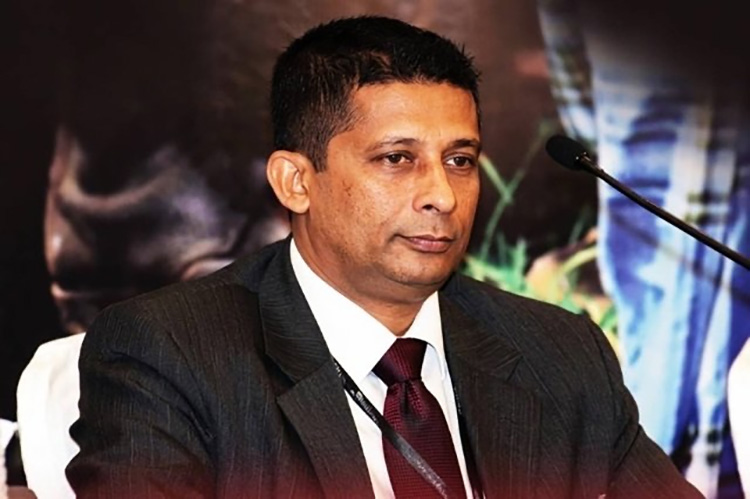
The government has chosen not to respond to questions raised by the United Nations Human Rights Council (UNHRC) regarding the detention of retired Maj. Gen. Suresh Sallay in connection with the ongoing investigations into the 2019 Easter Sunday attacks.
The Criminal Investigation Department (CID) arrested the ex-official in late February this year. The Special Rapporteur on the promotion and protection of human rights and fundamental freedoms while countering terrorism, the Working Group on Arbitrary Detention, the Special Rapporteur on the right of everyone to the enjoyment of the highest attainable standard of physical and mental health and the Special Rapporteur on the independence of judges and lawyers have jointly raised the issue on 20 July, 2026.
Drawing attention of President Anura Kumara Dissanayake to what they called alleged arbitrary detention of Sallay, former Director General of the State Intelligence Service (SIS) and former Director of Military Intelligence (DMI), under the Prevention of Terrorism Act (PTA), as well as allegations of torture and other cruel, inhuman or degrading treatment while in custody, resulting in the grave deterioration of his health, and imminent risks of retaliation through further torture and ill-treatment resulting in irreparable harm, should he be released from hospital and returned to custody, the UN sought the government explanation with a 60-day period.
The UN has stated: “This communication, and any response received from your Excellency’s Government, will be made public via the communications reporting website at the 60 days mark. Should your Excellency’s Government respond within 60 days, both the communication and the response, may be published before the 60 days mark. The communications and responses
will also be made available in the subsequent periodic report to be presented to the Human Rights Council.”
In the absence of the government’s response, the UN posted the letter, dated 20 July, 2026, addressed to President Dissanayake. The full letter can be accessed https://spcommreports.ohchr.org/TMResultsBase/DownLoadPublicCommunicationFile?gId=31125
News
Section of wartime KKS High Security Zone vacated to facilitate economic development in the area

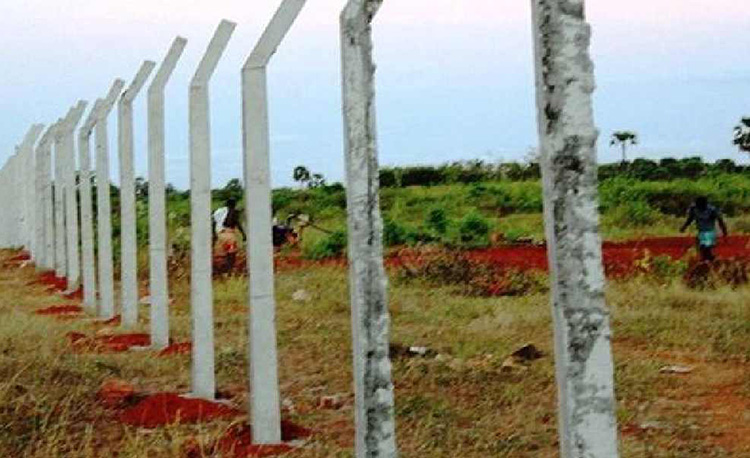
The Army, last week, vacated an area, within the wartime high security zone in the Jaffna peninsula. The Defence Ministry said that an extent of 187.56 acres of land, belonging to the Cement Corporation in Kankesanthurai, Jaffna, has been released by the military. The released land, located in Grama Niladhari Division J/233, Kankesanthurai West, within the Valikamam North (Tellippalai) Divisional Secretariat Division, had been utilised by the Sri Lanka Army since the middle of 1997.
The release of the 187.56-acre extent forms part of the initiative to make State land available for the proposed investment zone in Kankesanthurai, thereby facilitating future investment and economic development in the area.
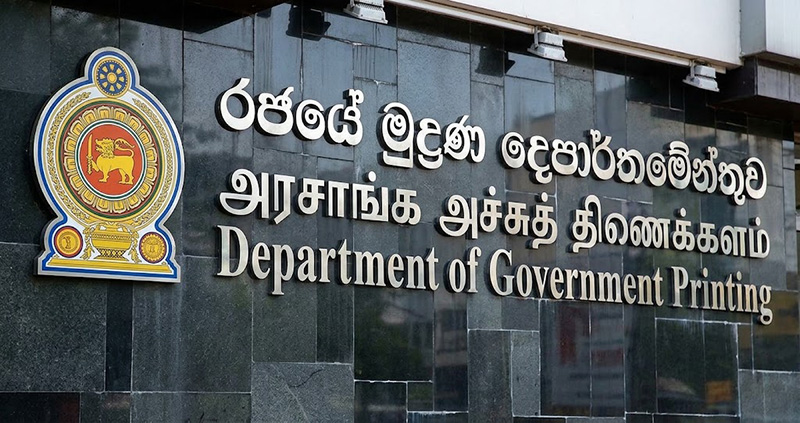
A complaint has been lodged with the Colombo Fraud Investigation Bureau against the Government Printer and the Secretary to the Ministry of Media regarding the online release of falsified documents bearing a forged Speaker’s certificate.
Attorney-at-Law Aruna Laksiri has lodged a complaint with the Colombo Fraud Investigation Bureau requesting legal action against the Government Printer of the Department of Government Printing (No. 118, Dr. Danister de Silva Mawatha, Colombo 08), Prasanna Jayaratne, and the Secretary to the Ministry of Mass Media (Asidisi Medura, 163, Kirulapone Mawatha, Polhengoda, Colombo 05), Dr. Anil Jasinghe.
The complaint alleges the commission of offences by forging and uploading falsified documents online using a forged Speaker’s certification, failure to perform statutory duties, and misappropriation of public property.
The complaint states that a copy of the English translation of the 22nd Amendment to the Constitution was downloaded and printed from the official website of the Government Printing Department (www.documents.gov.lk), which operates under the Ministry of Mass Media. On its outer cover and on page 1, the text “certified on 25th of September, 2026” is inscribed inside brackets.
The complaint pointed out that the Speaker has certified an English translation. Under Articles 23, 79, 83, and 80 of the Constitution, Parliament enacts laws and the Speaker certifies bills strictly in the Sinhala and Tamil languages; under the Constitution, therefore the Speaker cannot apply such certification to an English translation.

GS1 Lanka drives Sri Lanka’s shift to 2D barcodes

Geneva takes up Sallay’s case and govt. ignores opportunity to answer accusations

Section of wartime KKS High Security Zone vacated to facilitate economic development in the area

Lawyer lodges complaint against Govt. Printer, Media Ministry Secy.

Sri Lankan troops in joint anti-terrorist exercise in Russia

Nine Indian poachers brought to KKS with their boat

‘Dates have the highest sugar content to fight Coronavirus’

Sunday Island 27 December – Headlines

#SundayIsland 17th December – Headlines

Sunday Island – 28th March

Sunday Island Headlines – 21 March

Sunday Island – 21st February – Headlines
-

 Latest News5 days ago
Gold winner Tharanga gets brand-new Honda Vezel from SLAAJ
-

 Features5 days ago
Why Sri Lanka needs an Inclusive Civic Nationalism – urgently
-

 News4 days ago
US-assisted ‘Ice’ detection: NPC to examine IGP’s move to transfer drug-busting team
-

 Features6 days ago
Thailand’s biggest new global star …
-
 News6 days ago
First cases taken up by SC after enactment of 22A dismissed
-

 News5 days ago
Civil society activist accuses govt. of favouring Ven. Gnanasara
-

 Editorial6 days ago
Aftershocks of 22A
-

 Editorial3 days ago
Colombo Port drug bust: The plot thickens