
News
Prosecutions over Easter Sunday carnage: GL urges AG to initiate legal action

By Saman Indrajith
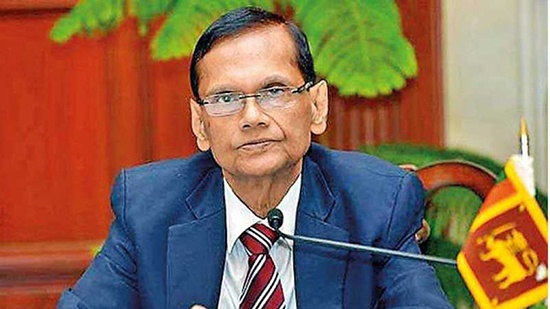
Education Minister Prof GL Peiris yesterday called on the Attorney General to initiate the process of prosecuting those responsible for the Easter Sunday carnage on the basis of the investigations that had already been concluded.
Participating in the adjournment debate on the report of the Presidential Commission of Inquiry on Easter Sunday terror attacks, the Minister said that 36 investigations had been completed and their files sent to the AG for legal action.
The Minister said: The Presidential Commission of Inquiry is not a court of law that decides who the offenders or wrongdoers are and impose punishments. A commission has no police powers to conduct investigations. However, the PCoI remaining within its mandate and terms of reference has done an outstanding job. The government is duty bound to implement the recommendations of the PCoI and there is no doubt about it. That is certain. There are some wrong wrong opinions being expressed about the Cabinet subcommittee chaired by Minister Chamal Rajapaksa. There was no independent probe by that subcommittee. It was entrusted with a separate task. The final report of the PCoI into the Easter Sunday attack contains many recommendations in hundreds of pages. That report is very complex. The government needed to decide which recommendations should be implemented on a priority basis.
“The Subcommittee was expected to instruct the government on the implementation of the PCoI report’s recommendations. There are some recommendations that could be implemented at once.
“If the Mawanella incident, where several Buddha statues were damaged, in my opinion had been properly investigated, the Easter Sunday catastrophe could have been averted. in the aftermath of that incident several persons were taken into custody. Unfortunately, they were released. We can apprehend the policemen who released them and take action against them. In addition, we can find who ordered the release of the suspects and take action against them.
“Regarding the Easter Sunday carnage affair, we must first ascertain the different tasks to be completed by the government, the Attorney General and courts. When these three are mixed there is confusion in the public mind. The government acts through the Police – the CID and the TID. In that regard a heavy load of work has been completed. Around 99 have been arrested for their involvements in the incidents and events that have links to the Easter Sunday carnage. Thirty-six investigations have been completed.
“I studied this report and observed that there are clear indications and details about the incidents and persons. Those are not general statements but very specific ones.
“Malcolm Cardinal Ranjith went before the court asking for an investigation into a suspected hoard of 6,000 swords and knives and to obtain a court order to ascertain the truth. The police could do the same even without a court order. The IGP has issued orders to detail two teams of policemen for the purpose. These weapons pose a threat. Therefore, they must be found, and the threat removed. They have been imported. Then who was involved in getting them released from the Customs. It is not an easy task to get a stock of 6,000 swords and knives through the Customs. There should have been a political involvement and the police are conducting investigations.
“The next issue is the suspected foreign involvement. Not even the LTTE had been able to carry out eight bomb attacks from Colombo to Batticaloa within two three hours. Who funded that process? Who facilitated them? Who aided and abetted them? To find answers for those questions the government is not only investigating the local persons but also people abroad to find their links. We have discussed the matter with foreign governments. Up to this point, we have made 54 arrests in five countries and got around 50 of them extradited to Sri Lanka. There is a process of getting the remaining persons extradited. There is a reference in the report to an incident in Qatar in October 2020, following which several persons were arrested. Some of them are not Sri Lankan citizens. Some of them who had links with them have gone to Australia, but they too have been traced and investigated. So, the government has performed well in the investigations to find those responsible for the crime as well as to ensure that there would be no recurrence of such incident.
“Then there are questions about the money trail of this affair. There is a question whether there had been pumping of funds from abroad for this attack and its preparations. There are important recommendations and a mentioning that a Turkish organization by the name of FETO sent funds to Sri Lanka. FETO is an armed insurgency organization against the Turkish government. The PCoI report mentions that organization too has channeled funds to those involved in the Easter Sunday attacks. This shows that the government has done its work, and nothing has been left behind.
“Thirty-six files of completed investigations have been sent to the Attorney General for further actions. Thereafter it is up to the Attorney General to proceed with prosecutions. The government and police have completed their investigations. The Attorney General should make an independent decision as to whether the available evidence is enough to institute legal actions. We as the government would ensure that the process would be cleared of politics so that no innocent person would be targeted, or no responsible person would be exculpated because of his rank or powers. The process is impartial. We do not instruct the Attorney General. We have no powers or need for that. It is not possible to file all those 36 cases at once. There are religious leaders demanding justice. We call on the Attorney General to act fast regarding the matters for which the cases could be filed in courts.
“The report also contains recommendations regarding the Madrasa schools. In this regard the Ministry of Education has a special responsibility. I think that there are around 365 registered Madrasas in the country. In addition, there are separate institutes under various names. There is a need to regulate them. Those who are under the age of 16 cannot go to such unregulated and unregistered institutes. That is illegal. We must find what is being taught there, who is giving funds to them and who is maintaining them.
“The government hopes to bring new laws regarding money laundering, extradition, terrorist funding etc., because the extant laws are not enough to address the complex challenges in the present times.”




News
Establishment of an Institutional Framework to Inagurate Upper Hydro Catchment Areas Management Authority

Policy approval of the Cabinet of Ministers was granted at their meeting held on 08.06.2026 to establish the Upper Hydro Catchment Areas Management Authority for identification and
execution of a formal and long – lasting remedy to secure the central hills including the upper hydro catchment areas enabling them to sustain amidst extreme weather conditions
due to natural calamities and human activities as well as to be used for the sustainable development of the country.
Accordingly, a concept paper has been prepared including
institutional structure, activities, powers, active subject area as well as administrative and coordination mechanism for the proposed authority by an expert technical committee appointed by the Secretary to the President.
Based on the said concept paper, the Cabinet of Ministers granted approval to the resolution furnished by the President to instruct the Legal Draftsman to prepare a draft bill including legal provisions required for the establishment of Upper Hydro Catchment Areas Management Authority.
News
Introduction of Flora and Fauna (Regulation of actions of the Indigenous Community within the nominated areas) Regulations
With the objective of securing the traditional livelihood and the eco system of the indigenous community, it has been recognized the necessity of introducing a formal regulation methodology to secure their engagement in livelihood activities by being more sensitive to the existing laws.
Thereby, the Fauna and Flora (regularizing) regulations under the Fauna and Flora Protection Ordinance (Authority 469) have been prepared so that nominated activities within the prescribed area to a member of the indigenous community
who has been registered for securing the rights acquired from law or custom or usage or traditional stance to execute an act within a certain state land that is fundamental to the survival of the indigenous community permission can be granted
Accordingly, the Cabinet of Ministers granted approval to the resolution furnished by the Minister of Environment to publish the said regulations in the government gazette notification and thereby submit to the Parliament for its concurrence.
Latest News
M. M. D. J. Senarathne, appointed Director General of the Department of National Botanical Gardens
The Cabinet of Ministers approved the resolution furnished by the Minister of Environment to appoint M. M. D. J. Senarathne, who is the senior most officer in Grade I of Sri Lanka Scientific Service se

Establishment of an Institutional Framework to Inagurate Upper Hydro Catchment Areas Management Authority
Introduction of Flora and Fauna (Regulation of actions of the Indigenous Community within the nominated areas) Regulations
M. M. D. J. Senarathne, appointed Director General of the Department of National Botanical Gardens

Harmanpreet Kaur steps down as India captain

Turkiye, Pakistan agree Saudi Arabia military deployment under Mecca pact

Rumesh Tharanga among nominees announced for World Athlete of the Year 2026

‘Dates have the highest sugar content to fight Coronavirus’

Sunday Island 27 December – Headlines

#SundayIsland 17th December – Headlines

Sunday Island – 28th March

Sunday Island Headlines – 21 March

Sunday Island – 21st February – Headlines
-

 Latest News7 days ago
Gold winner Tharanga gets brand-new Honda Vezel from SLAAJ
-

 News6 days ago
US-assisted ‘Ice’ detection: NPC to examine IGP’s move to transfer drug-busting team
-

 Features7 days ago
Why Sri Lanka needs an Inclusive Civic Nationalism – urgently
-

 Editorial5 days ago
Colombo Port drug bust: The plot thickens
-

 News7 days ago
Civil society activist accuses govt. of favouring Ven. Gnanasara
-
 Midweek Review7 days ago
Dappula’s Easter Sunday ‘grand conspiracy’ claim demolished
-

 Editorial7 days ago
When crime bosses rise above law and shrines
-
Editorial6 days ago
Drug busting, transfers and trust deficit