
News
Prez polls: Lawyer asks EC to reject proxies


Rejected MPs dominate nominations
By Shamindra Ferdinando
Attorney-at-Law Dasun Nagasena said that the Election Commission (EC) should reject nominations of proxy candidates for the 2024 presidential poll.
Lawyer Nagasena, who campaigns for Dr. Wijeyadasa Rajapakshe, PC of the National Democratic Front (NDF) candidate, said that the EC should prevent inexcusable waste of public funds by proxies joining the fray.
Nagasena said so in response to The Island query soon after the EC announced that 40 probable candidates paid the stipulated cash deposit by noon yesterday (14).
According to the lawyer, regardless of them paying cash deposits, the EC could refuse to accept their nominations. “Of the 40 candidates, the vast majority are either proxies or those who contest for personal benefits,” Nagasena said. The EC is scheduled to accept nominations today (15).
At the last presidential election, held in Nov 2019, 35 candidates contested the election that was won by Gotabaya Rajapaksa. Nagasena said unless the EC at least acted now, the number of candidates could be even higher than at the previous election.
According to EC Chairman R.M.A.L. Ratnayaka altogether 40 persons, 22 representing recognised political parties, one representing yet to be recognised political party (Ruhunu Janatha Peramuna) and 17 independent candidates paid cash deposits. According to the country’s supreme law, only sitting and former parliamentarians can obtain the services of unrecognized political party or any voter to pay cash deposit for them.
For the first time in presidential election history, a main candidate is contesting as an independent. UNP leader Ranil Wickremesinghe declared his intention to contest as an independent after failing to reach a consensus with the SLPP on a common agenda.
Lawyer Nagasena said that he raised the contentious issue of proxies in the fray with the EC. Asked to explain, Nagasena said that though he only named former Hambantota District parliamentarian K. Ananda Kularatne as being a proxy of President Wickremesinghe, in his letter to the EC, there were many others.
Examination of past presidential election results proved that except the two top candidates, all others had been dismal failures.
The EC said the following paid cash deposit: Ranil Wickremesinghe (Indpendent), Sarath Keerthiratne (Ind.), Oshala Herath (Abhinawa Niwahal Peramuna), A.S.P. Liyanage (Sri Lanka Kamkaru Pakshaya), Sajith Premadasa (Samagi Jana Balawegaya), P.W.S.K. Bandaranayake (Jathika Sanwardhana Peramuna), Wijeyadasa Rajapakshe (Jathika Prajathanrawadi Peramuna), K.K. Piyadasa (Ind), Sirithunga Jayasuriya (Eksath Samajawadi Pakshaya), Ajantha de Zoysa (Ruhunu Janatha Peramuna), K. Ananda Kularatne (Ind), Sarath Manamendra (Nawa Sihala Urumaya), Ven. Battaramulle Seelarathana Thera (Janasetha Peramuna), Ven. Akmeemana Dayaratne Thera (Ind.), Siripala Amarasinghe (Ind.), K.R. Krishan (Arunalu Janatha Peramuna), Sarath Fonseka (Ind.), Anura Kumara Dissanayake (Jathika Jana Balawegaya), Pani Wijesiriwardena (Samajawadi Samanatha Pakshaya), Anthony Victor Perera (Ind.), A.M. Illiyas (Ind), Marakkarala Manage Premasiri (Ind.), Anura Sydney Jayaratne (Ind.), D.M. Bandaranayake (Ind.), Priyantha Pushpakumara Wickramasinghe (Nawa Sama Samaja Pakshaya), M. Thilakaraja (Ind.), J.D.K. Wickremaratne (Ape Jana Bala Pakshaya), Roshan Ranasinghe (Ind.), Mahinda Dewage (Sri Lankawe Samajawadi Pakshaya), Anoj de Silva (Prajathanrawadi Eksath Janatha Peramuna), P. S. Ariyaneththiram (Ind.), A.M. Infas (Eksath Prajathanrawadi Sandhanaya), Dilith Jayaweera (Communist Party), Nuwan Bopage (Samajawadi Janatha Sansadhaya), Namal Rajapaksha (Samabima Pakshaya), Anuruddha Polgampola (Ind.), Namal Rajapaksa (Sri Lanka Podujana Peramuna), Janaka Ratnayake (Eksath Lanka Podujana Pakshaya), Lalith de Silva (Eksath Jathika Nidahas Peramuna) and Sarath Kumara Gunaratne (Ind.).
Lawyer Nagasena said that each proxy cost the taxpayers as much as Rs 25 mn. It would be the responsibility of the EC to put an end to the nonsense caused by proxies, he said.






Vast majority of wounded also non-convicts
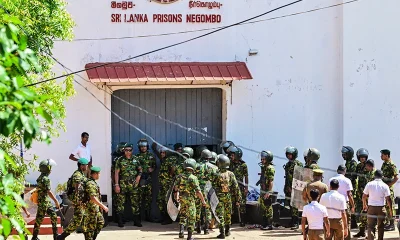
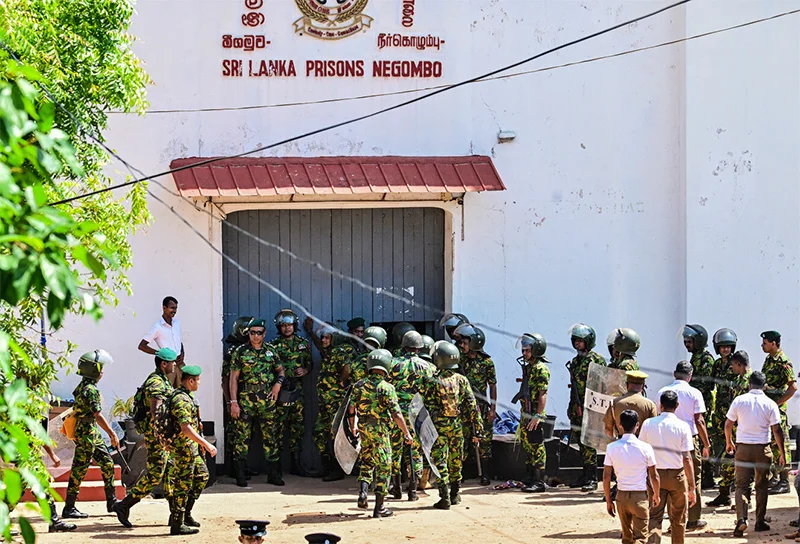
A file picture of the Negombo Prison during the recent riots
By Shamindra Ferdinando
The Department of Prisons yesterday (14) revealed that all inmates killed during the Negombo Prison riot were suspects. A senior official said so in response to The Island query. According to the official, among the wounded, too, the majority were suspects. The identities of the dead and the wounded inmates haven’t been officially released so far.
The official acknowledged that he, too, was surprised that convicts weren’t among the dead. Of them, two died on 5 July, 17 on the following day, within the Negombo Prison premises, and two after they were moved to other prisons. A top official of the Justice and National Integration Ministry explained the difficulties experienced in giving specific details due to the destruction of the relevant records.
The National Hospital yesterday reported that two wounded prison officers, warded there, succumbed to their injuries, raising the number of dead prison staff to 10.
The prison official and Committee for Protecting Rights of Prisoners (CPRP) asserted that the deaths and injuries, among the group of suspects held at the Negombo Prison, indicated that contrary to earlier reports Sunday’s flare-up and the subsequent violence seemed to have involved a section of the suspects and the prison personnel. CPRP pointed out as the Prisons Department has announced and already granted compensation to the tune of Rs 500,000 to prison personnel killed, the government should consider adequate compensation for suspects killed. The Justice Ministry official said that they were looking into this matter as well.
The Bar Association of Sri Lanka (BASL) in a statement issued on 8 July pointed out that the vast majority of those who had been held in remand custody weren’t convicted of any offence and continued to enjoy the presumption of innocence until proven guilty by a court of law. Sources pointed out that the BASL, as well as the Human Rights Commission of Sri Lanka (HRCSL) statements, issued on 8 and 10 July, didn’t make reference to suspects being among the dead.
Sources familiar with the situation at the Negombo Prison said that comprehensive investigation was required to establish the truth. Initially, the riot was blamed on suspects who allegedly set upon the convicts, alleging that the latter passed information to Prison authorities regarding their nefarious activities. Had that been the case, the dead should have included convicts but there were none, sources said.
Meanwhile, the Prisons Department is under investigation by the HRCSL over the refusal of the Chief Jailer of the Welikada Prison to allow the HRCSL team to visit the Prison on the night of 7 July, following the death of a suspect moved from the Negombo Prison. Alleging that the Chief Jailer’s action thwarted timely investigation of the allegation, the HRCSL has summoned Acting Commissioner General of Prisons, R. Prasad Hemantha Kumara, and the Welikada Chief Jailer, for an inquiry.
HRCSL has said that those who had been transferred to other prisons, following the incidents at the Negombo Prison had been ill-treated and deprived of medical treatment. The HRCSL has pointed out that deliberate delay on the part of the Prison authorities to provide medical treatment tantamount to taking revenge on the ex-Negombo inmates.
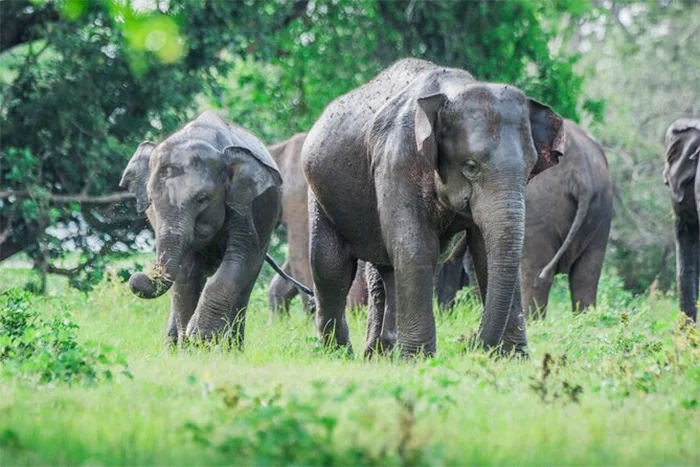
The death of 128 wild elephants during the first four-and-a-half months of 2026 has triggered renewed concern among Wildlife authorities and conservationists, who warn that unless urgent and science-based interventions are implemented, the country could be heading for another year of heavy elephant losses.
Figures released by the Department of Wildlife Conservation (DWC) show that 128 elephants died between January 1 and mid-May this year. Illegal electrocution, shooting, train collisions, poisoning, hakka patas (jaw bombs), and other human-elephant conflict-related incidents remain the leading causes of death.
A senior DWC official told The Island that the continued loss of elephants was a matter of grave concern.
She added:”Every elephant death is a significant loss to our wildlife heritage. We have intensified patrols, strengthened law enforcement and are working with local communities to minimise conflict. However, unless all stakeholders work together, reducing these deaths will remain a major challenge.”
The official said the Department was also investigating incidents involving illegal electric fences and firearms while expanding mitigation measures in identified conflict hotspots.
Chairman of the Centre for Environmental Justice (CEJ), Hemantha Withanage, said the latest figures underscored the urgent need to rethink existing strategies.
“Human-elephant conflict is not merely a wildlife issue. It is a land-use planning issue, an agricultural issue and a governance issue.
Scientific land-use planning, protection of elephant corridors and proper maintenance of electric fences are essential if we are to save both human lives and elephants,” Withanage said.
Wildlife experts noted that habitat fragmentation, encroachment into elephant ranges, expansion of cultivation, and unplanned development continue to intensify encounters between people and elephants.
They warned that unless preventive measures are accelerated, elephant deaths this year could once again reach alarming levels.
Sri Lanka is home to one of Asia’s largest remaining populations of wild Asian elephants, estimated at between 6,000 and 7,000.
However, it also records one of the world’s highest annual elephant mortality rates linked to human-elephant conflict.
The DWC reminded the public that killing an elephant is a serious offence under the Fauna and Flora Protection Ordinance and carries severe penalties, including imprisonment and substantial fines.
Conservationists have urged the Government to expedite the implementation of the National Action Plan on Human-Elephant Conflict, strengthen inter-agency coordination, improve habitat management and allocate greater resources to community-based conservation programmes.
With more than half the year still ahead, Wildlife authorities say the rising elephant death toll is a stark reminder that lasting solutions will require sustained political commitment, scientific planning and stronger cooperation between government agencies and affected communities.
By Ifham Nizam
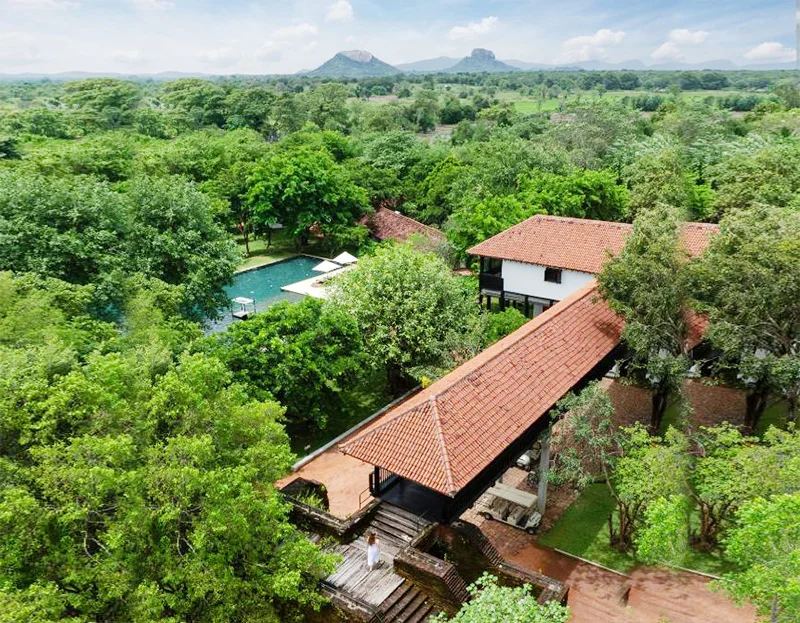
Sigiriya Jungles Resort & Spa will commemorate its 10th anniversary by hosting a community medical camp for residents of surrounding villages on August 11, reaffirming its long-standing commitment to community wellbeing and sustainable tourism.
The medical camp, scheduled from 8.00 a.m. to 4.00 p.m. at the resort premises, will provide BMI assessments, full blood tests, cholesterol screening, blood pressure checks, eye and dental examinations, medicines, and health awareness sessions aimed at promoting preventive healthcare and healthier lifestyles. The anniversary celebrations will continue later that evening in the presence of invited religious leaders, health officials and other dignitaries.
Founder and Chairman of Sigiriya Jungles Resort & Spa, Devindre Senaratne, said the initiative reflected the resort’s desire to create a meaningful and lasting impact on the community that has supported its journey over the past decade.
“Our greatest achievement is not measured by occupancy or awards, but by the happy guests and the relationships we have built over a decade. Seeing this positive impact is what really makes us happy,” he said.
Located in Sri Lanka’s Cultural Triangle, the purposefully designed 60-room resort has welcomed more than 250,000 guests since opening in 2016. Designed by architect Vinod Jayasinghe, a protégé of the late Geoffrey Bawa, the property is distinguished by its bridge inspired by the historic Bogoda Bridge and offers visitors convenient access to UNESCO World Heritage attractions, including Sigiriya, Dambulla, Polonnaruwa and Anuradhapura. The resort also conducts immersive experiences such as the Audangawa Village Tour and traditional Sri Lankan village cooking demonstrations at Archchi’s.
Over the past decade, Sigiriya Jungles has received several industry recognitions, including TripAdvisor Certificates of Excellence, consecutive TripAdvisor Travellers’ Choice Awards from 2020 to 2026, the Booking.com Traveller Review Award 2026, and certifications for Safe and Secure Hospitality Operations and International Food Safety Standards (ISO 22000).
The resort has also undertaken a range of community initiatives, including the construction of the Audangawa Village Temple, continued support for Moragaswewa Vidyalaya in Habarana, regular shramadana campaigns, local sourcing programmes and certified skills training. More than 650 individuals have been trained through the resort over the past decade, many of whom now serve in Sri Lanka’s tourism industry and overseas.
General Manager Chaminda Samaranayake said the resort remained committed to strengthening its sustainability agenda and is currently progressing towards Travelife certification.
“We are deeply grateful to our guests, staff, local communities, religious leaders, suppliers and partners who have helped shape these ten years. The next chapter will be guided by the same values that brought us here,” he said.

Bangkok pub fire death toll rises to 32 with 15 in intensive care

England vs Argentina: FIFA World Cup semifinal – Messi, Kane and prediction

ICC adds Super Series and Super 7 twist to 2027 ODI World Cup

Trump meets Iraq PM at White House, promises ‘a lot of deals’

A few showers may occur in the Western, Sabaragamuwa and North-western provinces and in Kandy, Nuwara-Eliya, Galle and Matara districts

Negombo Prison riot: No convicts among 21 inmates killed

‘Dates have the highest sugar content to fight Coronavirus’

Sunday Island 27 December – Headlines

#SundayIsland 17th December – Headlines

Sunday Island – 28th March

Sunday Island Headlines – 21 March

Sunday Island – 21st February – Headlines
-
 News6 days ago
Herath warns prospective migrant workers not to get fleeced by racketeers
-
 Features4 days ago
Prison riots and politics: NPP’s biggest challenge and Sri Lanka’s biggest opportunity
-

 Editorial5 days ago
What’s the world coming to?
-
 Foreign News6 days ago
Tensions erupt in Indian state after 11-year-old raped and murdered
-
 Features6 days ago
Devanesan Annan – in Memoriam
-

 News7 days ago
Negombo Prison riot: Ensuring protection of prisoners fundamental responsibility of the state – UN
-
Editorial6 days ago
Punishment in hellholes
-

 News6 days ago
Representatives of the Organization of Professional Associations (OPA) of Sri Lanka meet the Prime Minister