
News
Ampara District special Coordination Committee meeting chaired by the President

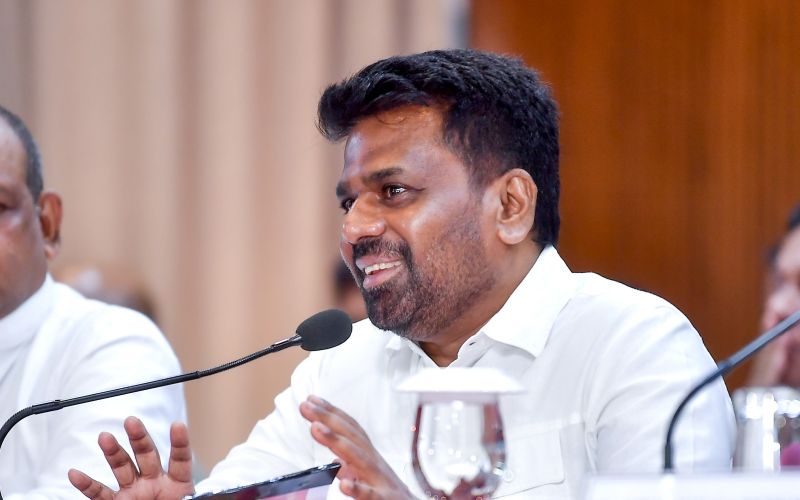
President Anura Kumara Dissanayake stated that a Special Committee, headed by the Deputy Inspector General of Police, will be established to protect lands in the Eastern Province.
The President highlighted that a number of issues have arisen in the region due to land grabs carried out through the misuse of political power, stressing that such practices will no longer be tolerated.
The President made these remarks while participating at the Special District Coordination Committee meeting in Ampara held on Friday (22) afternoon at the Ampara District Secretariat.
Drawing attention to coastal erosion affecting the Eastern coastline, the President instructed officials to develop a comprehensive plan to both protect the coastline and promote tourism in the region.
The President further noted that placing rocks and barriers is not a practical long-term solution to coastal erosion and instructed that urgent scientific studies be conducted to identify a sustainable and permanent solution, including consideration of the Oluvil Harbour and associated fisheries infrastructure.
Highlighting the tourism potential of the Eastern coastal belt, the President also stated that he had received reports of unequal treatment by public officials in the management of hotel operations in coastal areas and firmly instructed that such discrimination must not be allowed.
The President drew special attention to unauthorised land reclamation taking place in the Eastern Province and instructed the security forces to ensure that such activities are not permitted in the future.
Noting that 16 years have passed since the end of the conflict without a structured programme to resettle displaced persons in the region, the President instructed that urgent attention be given to developing and implementing a resettlement plan.
President Dissanayake further drew attention to the recurring flooding caused by the overflow of the Gal Oya, which affects several Divisional Secretariat areas including Ampara, Sammanthurai, Karaitivu, Addalachchenai, Kalmunai, Akkaraipattu, Irakkamam, Damana and Ninthavur. The President directed officials to conduct an urgent study to identify a permanent solution and confirmed that initial funding would be allocated for this purpose.
Discussions were also held regarding the current status of the Thirukkovil paddy storage facility and the continuation of operations at the Addalachchenai waste recycling centre.
Discussions were also held on the conservation of the Nuwaragala archaeological reserve and the development of tourism zones in Arugam Bay and Panama. Attention was further given to implementing a tourism development project in and around the Maduru Oya reserve, based on the indigenous villages in Henanigala South, Dehiattakandiya.
The committee also discussed restarting a drinking water project in the Lahugala area, which was initiated by the National Water Supply and Drainage Board approximately five years ago.
The President also paid special attention to the issues faced by sugarcane farmers in Hingurana. He noted that safeguarding sugarcane farmers within the industry is the responsibility of the relevant companies and stressed the need to engage in discussions on the emerging issues and reach an expedited solution.
Under the Kalmunai Urban Development Project, attention was drawn to the consolidation of all government institutions currently located in different places within the Kalmunai area into a single location. The President instructed officials to prepare and submit the relevant plans, noting that funding could be allocated in the forthcoming budget.
Discussions were also held on taking over and developing land with commercial value that had been allocated by the Sri Lanka Mahaweli Authority more than five years ago but where projects had not been implemented. The President directed that such lands be transferred to Divisional Secretaries or the District Secretary and developed under a structured programme for public benefit.
Discussions were also held on taking over and developing roads in the areas of Dehiattakandiya, Maha Oya and Padiyathalawa under the Road Development Authority and the Provincial Road Development Authority.
Special attention was also drawn to teacher vacancies in schools in the Ampara District and issues related to zonal education offices. The President emphasised that the establishment of administrative structures such as education offices and divisional secretariats is not a political exercise but an administrative function. He further stressed that such structures should be based on objective criteria such as geographical size and population, rather than ethnic considerations.
The President noted that LKR. 22,000 million has been allocated in the 2026 Budget for development projects in the Ampara District. Reviewing progress in ongoing projects in the sectors of roads, irrigation, drinking water supply and housing, he stressed that it is the responsibility of public officials to ensure that these funds are efficiently utilised within the relevant financial year to deliver timely benefits to the public.
The President also separately reviewed compensation and relief measures for the people of the Ampara District affected by Cyclone Ditwah, including compensation for loss of life, crop damage and losses in the livestock sector, as well as programmes for the fishing community, livelihood development initiatives and progress on partial and full housing damage compensation and resettlement programmes.
The President emphasised that the most affected by this disaster are economically vulnerable communities and therefore urged that housing construction and resettlement programmes be expedited without delay.
Co-Chairs of the Ampara District Coordinating Committee, Eastern Province Governor Professor Jayantha Lal Ratnasekera, Deputy Minister of Rural Development, Social Security and Community Empowerment, Wasantha Piyathissa, Members of Parliament, local authority Chairpersons and other public representatives, along with the Chief of Presidential Staff and Commissioner General of Essential Services, Prabath Chandrakeerthi, Defence Secretary Air Vice Marshal Sampath Thuyacontha (Retired), Ampara District Secretary Anupa Mangala Wickramarachchi and other government officials were present at the meeting.
(PMD)

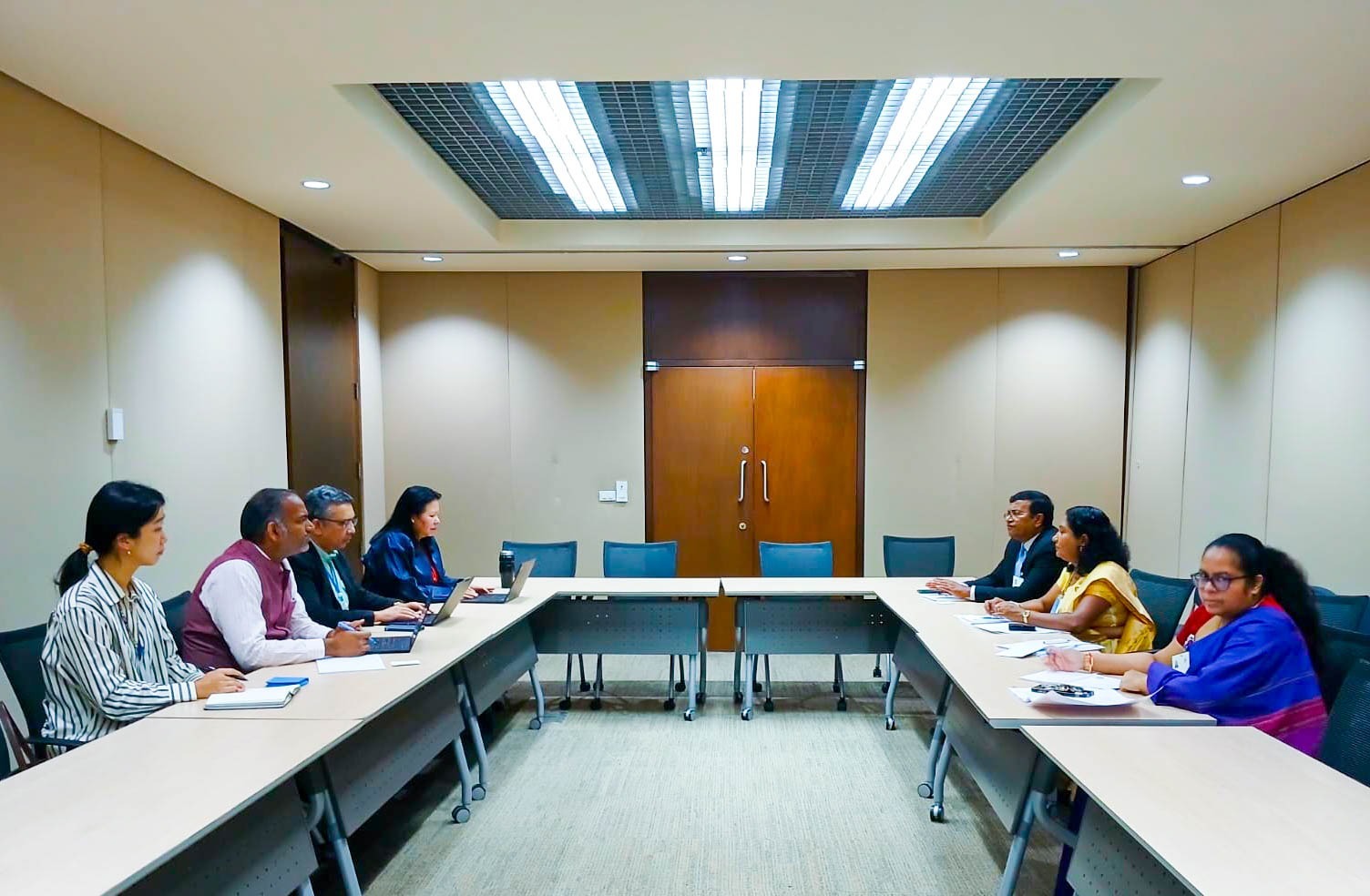
A special bilateral discussion was held on Thursday (02) morning at the United Nations Conference Centre (UNCC) in Bangkok, Thailand, between the Deputy Minister of Environment, Anton Jayakody, and regional representatives of the United Nations Environment Programme (UNEP).
The discussion began with an appreciation of the long-standing relationship between Sri Lanka and UNEP, particularly highlighting Sri Lanka’s role as a UNEA 8 Bureau member and a key partner in Global Environment Facility (GEF) projects. The meeting focused extensively on securing UNEP’s technical
and financial support to advance several of Sri Lanka’s national environmental priorities.
During the meeting, the Deputy Minister expressed Sri Lanka’s gratitude for the guidance provided by UNEP throughout the adoption process of the UNEA Youth Resolution. He outlined the national program currently being designed in Sri Lanka in alignment with the resolution. Under this initiative, attention was drawn to securing UNEP’s technical assistance, capacity-building support, and access to global funding mechanisms.
These resources will be utilized to formulate a “National
Environmental Literacy Index” to assess the environmental awareness of youth, establish “Youth Environmental Committees” spanning from the national to grassroots levels, set up university youth forums, and implement environmental promotion programs driven through sports
In addition, Sri Lanka requested UNEP’s assistance in upgrading its national air quality monitoring systems, enhancing data analysis, and developing policy guidelines.
The Deputy Minister also sought policy advisory services on Extended Producer Responsibility (EPR), technical expertise in plastic waste lifecycle management, and support for pilot projects aimed at minimizing single-use plastics and transitioning toward a circular economy.
Furthermore, the Deputy Minister noted that measures have been taken in collaboration with the Ministry of Transport to expedite sustainable e-mobility projects. He added that Sri Lanka anticipates UNEP’s support for the “Sustainable Cities Integrated Programme” under the country’s GEF 9 national
strategies. Reaffirming Sri Lanka’s active commitment to regional initiatives that foster environmental knowledge sharing among South Asian nations, it is expected that UNEP’s technical intervention during the upcoming GEF 9 financial cycle will continue to support Sri Lanka’s journey toward environmental resilience.

He is the only detainee at old Tangalle prison
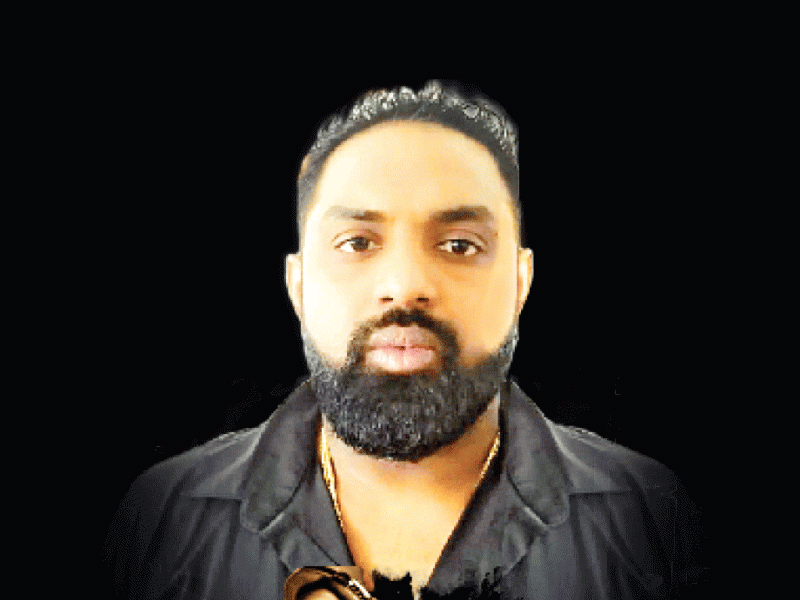
The Commission to Investigate Allegations of Bribery or Corruption (CIABOC) probing bribery allegations pertaining to the recent arrest of attorney-at-law Rakitha Rajapakshe, former SJB Horana organiser Charitha Abeysinghe and another person is expected to question drug dealer Nadun Chintaka Wickremaratne alias Harak Kata being held under the Prevention of Terrorism Act (PTA).
The CIABOC arrested Rakitha and Charitha Kumara Wasantha Abeysinghe and former Director of Airport and Aviation Services Warushahanndige Aruna Sri Chathuranga on 25 June over the Rs 200 mn bribery allegation. Produced before the Colombo Chief Magistrate court on the same day, they were remanded until 3 July.
Sources familiar with the case told The Island that Wickremaratne arrested in Madagascar on 1 March 2023 was brought to Sri Lanka on 14 March 2023, and after preliminary investigations he was detained at the old Tangalle prison. Wickremeratne has been accused of running a major narcotics smuggling operation.
Wickremaratne’s lawyer Udul Premaratne, having visited Wickremeratne, sought the intervention of the Human Rights Commission of Sri Lanka to ensure the latter’s safety.
As many as 90 police (terrorist Investigation Department) and the Special Task Force (STF) have been assigned to the Tangalle old prison where Wickremaratne remains the sole detainee.
The CIABOC, in a statement posted in Sinhala on its website on 25 June said that arrested persons received the money after having initially asked for Rs 500 mn and then reduced it to Rs 200 mn. The Rs 120 mn allegedly received has been described as an advance.
Sources said investigators would question Wickremaratne over his wife’s claim that she had paid Rs. 120 million.
In terms of the PTA, the detention orders can be issued only by the Defence Minister. At the time Wickremaratne was brought to Colombo, Ranil Wickremesinghe held the defence portfolio. According to legal sources, when the President also held the defence portfolio, the responsibility for issuing the detention orders was relegated to the Defence Secretary.
Maj. Gen. Kamal Gunaratne who served as the Defence Secretary during that period.
Sources said that Wickremaratne’s wife was yet to come back and his parents and a brother were believed to be the only visitors except for lawyers. One of the crucial issues was how Wickremaratne had communicated with his wife living abroad, sources said.
By Shamindra Ferdinando
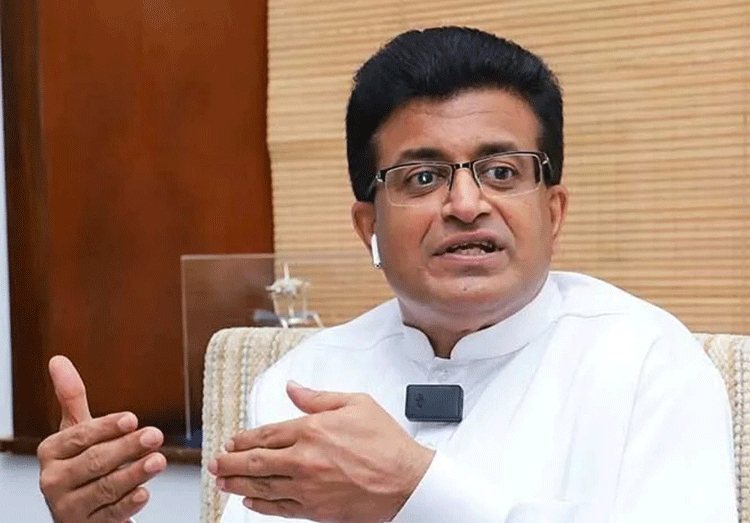
Pivithuru Hela Urumaya (PHU) leader and former Petroleum Minister Udaya Gammanpila yesterday (2) claimed that the price of a litre of Octane 92 petrol and auto diesel could be reduced by Rs 141 and Rs 126, respectively.
The former Energy Minister said that Rs 20 per litre price reduction declared by the Ceylon Petroleum Corporation (CPC) in respect of Octane 92 petrol and Rs 25 drop in litre of auto diesel price proved that the government fleeced the public.
Earlier, Samagi Trade Union Alliance convenor Ananda Palitha claimed that the price of litre of Octane 92 petrol and auto diesel could be reduced by Rs 115.
A litre of Octane 92 is sold at Rs 414 and a litre of auto diesel at Rs 382.
Pointing out that the CPC hadn’t reduced Octane 95 petrol and Super Diesel at least nominally, the former parliamentarian said that the CPC could reduce them by Rs 155 and Rs 149, respectively. A litre of petrol Octane 95 is sold at Rs 495 and a litre of Super Diesel at Rs 478.Gammanpila pointed out that the government had sharply increased prices when the Iran war entered the 12th day having claimed that that it had stocks for 35 days. (SF)

Wijesundara set for debut as injury-hit Sri Lanka struggle to make up XI

UNEP support pledged to strengthen Sri Lanka’s Environmental Priorities

Ronaldo scores as Portugal come back to win, Croatia denied by late VAR

Lister replaces injured Sears for ODI series in the West Indies

Showers will occur in the Western, Sabaragamuwa and North-western provinces and in Galle, Matara, Kandy, Nuwara-Eliya and Anuradhapura districts

CIABOC to question Harak Kata on Rs. 200 mn bribery allegation

‘Dates have the highest sugar content to fight Coronavirus’

Sunday Island 27 December – Headlines

#SundayIsland 17th December – Headlines

Sunday Island – 28th March

Sunday Island Headlines – 21 March

Sunday Island – 21st February – Headlines
-
 News4 days ago
LAWASIA warns against ad hoc initiative to increase judges’ retirement ages
-
 News6 days ago
Another 1,132 Sri Lankan Personnel to be deployed for United Nations Peacekeeping Missions
-
 News3 days ago
Chamuditha to seek removal of injunction on Youtube programme
-

 Business7 days ago
Month-end profit-takings drive stock trading; indices up
-
 Features3 days ago
Climate action to bring South Asia together
-
 Features6 days ago
People’s Bank expands digital banking network with 125th cheque deposit kiosk
-
 News3 days ago
CPRP alleges another death in custody, seeks protection for witness
-

 News6 days ago
FSP complains of irregularities in a Guinness World Record event held in Sri Lanka