
Life style
Rheumatoid Arthritis doesn’t stop at your joints; And neither should your treatment

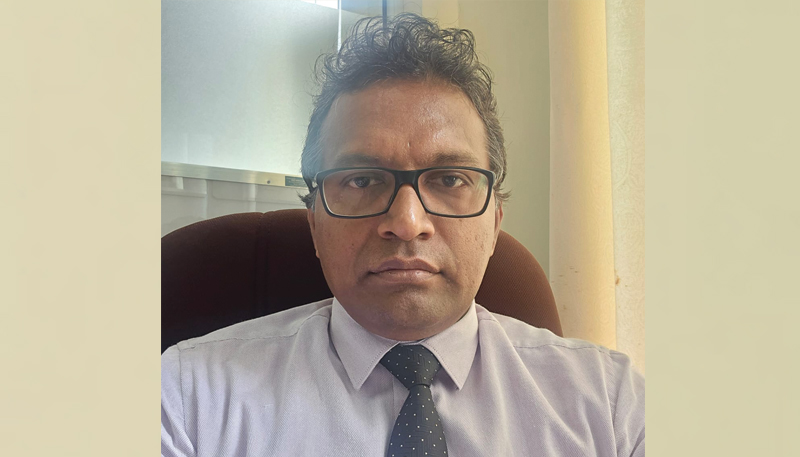
 By Dr. Aruna Caldera, Consultant Rheumatologist MBBS, MD, MRCP (UK), MRCP (Rheumatology)
The word arthritis comes from ancient Greek. “Arthron” means joints; “itis” means inflammation; so, arthritis means inflammation of joints. Arthritis is one of the commonest disease categories which effect man. Some forms of arthritis may not even require any form of specific treatment, whereas some may even kill you.
Among long-term arthritis conditions, the most serious is rheumatoid arthritis. This disease occurs due to genetic variations that cause the immune system to malfunction and produce antibodies against the joints, leading to joint damage. We call this process, auto immunity; in simple words, your immune system which is supposed to protect you, starts to work against you.
If proper treatment is not started on time, the progression of the disease will be extremely difficult. Without proper treatment, it can make life miserable and may even lead to premature death.
Rheumatoid arthritis is a chronic, systemic inflammatory disease. Joint involvement is only one part of it. In simple terms arthritis is not limited to the joints. This is why relying only on ointments or topical treatments can lead to extra-articular (other organ) damage some of which could be catastrophic and lead to premature death.
If untreated, inflammation damages the joints—causing deformities, cartilage loss, and involvement of more joints over time. Complications usually appear after 10–15 years. Those who don’t understand, or refuse to believe this, often rely on short-term fixes and, unfortunately, will suffer later.
Eventually, joint deformities can become so severe that a person may not be able to walk without aid, button clothes, dress themselves, go to the toilet independently, open a bottle, or even open a door.
There are several types of rheumatoid arthritis:
Classical rheumatoid arthritis:
Affects small joints (fingers, wrists) and large joints (elbows, ankles, knees). Symptoms include morning stiffness, joint pain, swelling, weak grip, and fatigue.
Palindromic rheumatism
: Sudden joint pain (and swelling) that disappears within hours or days. Many of these patients may later develop classical rheumatoid arthritis. However, treatment can reduce this risk of progression to classical type. Medication may be needed even when symptoms are absent.
Monoarticular rheumatoid arthritis:
Affects a single joint. It is often mistaken for other conditions like gouty arthritis or osteoarthritis. Without proper treatment, it can destroy the joint and later progress to classical rheumatoid arthritis. Commonly affects larger joints, like knees, ankles, hips, and shoulders.
Polymyalgic onset (proximal) rheumatoid arthritis:
Seen in older individuals and even could be missed by clinicians. Patients usually complain of stiffness in both shoulders rather than joint pain or swelling.
Most patients experience morning stiffness (difficulty moving joints after waking) and joint “gelling” (stiffness after rest). Stiffness can last from minutes to hours and is caused by inflammatory substances accumulating in joints during sleep and rest.
Other symptoms may include whole-body pain, fatigue, weight loss, mild fever, depression, fibromyalgia (generalised wide spread pains)
Rheumatoid arthritis affects the whole body. The effects on other organ systems are identified as” extraarticular manifestations”. Most organs can get involved in poorly controlled disease. Some of the common manifestations include,
Skin vasculitis rashes and skin nodules
Lung disease (interstitial lung disease)
Heart disease (ischemic heart disease)
Osteoporosis
Eye problems which can even cause blindness (uveitis, scleritis)
Nerve disorders (polyneuropathy, mononeuritis)
Dry mouth (Sjogren’s syndrome)
About 40% of patients may develop such complications. The only way to reduce them is timely treatment.
In addition to joint swelling, the whole hand may swell like wearing a boxing glove. Swelling in the wrist can compress the median nerve, causing carpal tunnel syndrome (numbness in fingers). Surgery should not be rushed—arthritis must be treated first.
The disease can even affect the upper spine (neck joints). Neck pain along with other joint pain should not be ignored. In simple terms, rheumatoid arthritis can affect almost any joint except most parts of the spine.
No blood test is required to suspect or even diagnose rheumatoid arthritis. In some patients the rheumatoid factor antibody test will never be positive (seronegative rheumatoid arthritis). Waiting for lab confirmation before starting treatment is an unwarranted delay.
Some tests may show abnormalities:
Rheumatoid factor antibodies, Anti-CCP antibodies, ANA may be positive
ESR and CRP may be elevated
Haemoglobin may be low (anaemia of chronic disease)
Platelets may be high
Blood tests are more useful for monitoring treatment and medication safety rather than initial diagnosis. One important fact we must realise is the titre of the antibody test positivity has no correlation to disease activity and we cannot use the antibody titres to evaluate the response to treatment.
There are treatments that can even bring the disease into remission in no time at all. However, patients who delay treatment, take insufficient doses of medicines, stop medication early, follow inconsistent treatment, or rely on unscientific treatment methods are unlikely to achieve this.
Proper treatment involves starting with stronger medications and gradually reducing it as the disease improves. Simply controlling symptoms, without addressing the disease progression, is not enough; that is why using pain killers and prednisolone only cannot prevent extraarticular manifestations.
The first goal is on-drug remission. After that, patients should continue medication for more than 12 months without symptoms before gradually tapering. Stopping/tapering medications too early often causes relapse, which is a major reason why many patients fail to recover. Some patients may relapse even after stopping medication, but modern treatments allow long-term control without harm and sustained, drug-free remission in other patients. Most novel therapies are available in Sri Lanka as well.
The medications used are called DMARDs (Disease-Modifying Anti-Rheumatic Drugs). These do not just control symptoms—they change the course of the disease. Most patients respond to conventional DMARDs, but if not, biologic or targeted synthetic DMARDs should be started early—not after joint damage occurs. These treatments are available in Sri Lanka. Without consulting rheumatologist, patients may not receive these advanced forms of novel treatments.
Having rheumatoid arthritis is like being trapped in a room with a venomous snake. As long as you stay alert, you can avoid harm—but if you ignore it, it will strike. The disease must be treated at any cost. The choice is yours. With proper treatment initiated early, you can live a normal life. Ignoring the disease will not make it go away. Misinformation by people who aren’t aware of the severity of the disease and medications used often causes patients to avoid ideal treatment, leading to worse outcomes.
There is no point worrying after diagnosis; see a specialist early and seek treatment. You can live a normal life. Even pregnant or breastfeeding mothers can be treated safely without harming the baby. The precious time you waste starting a DMARD will definitely impact the final outcome.


By Zanita Careem
With Sri Lanka tourism entering a new phase of growth, the Deputy Minister of Foreign Affairs, Foreign Employment and Tourism, Professor Ruwan Ranasinghe outlined the Government’s forward looking approach, stressing that Sri Lanka must move forward, and must move beyond short term promotional efforts and build a tourism industry backed by clear strategy, stronger planning and measurable results. At the recent Press Conference, held at the SLTPB, Sri Lanka Tourism launched two World Bank supported consultancy assignments to develop a national tourism strategy and global promotional campaign road map, as the country seeks to attract high spending visitors and generate greater economic reforms. The National Tourism strategy planning consultancy for 2026-2031 will prepare a five-year framework, covering a forward looking approach, centred on transforming tourism into a more competitive sustainable and high value sector. For Sri Lanka, this initiative marks an important shift towards strategic, sustainable and inclusive tourism development with the aim of giving greater economic opportunities to the people. The Deputy Minister said the country does possess the natural beauty, cultural heritage and hospitality needed to compete globally. What is required now, he emphasised, is a coordinated approach that brings together government, industry stakeholders and international expertise.
For Professor Ranasinghe the way forward is not simply about bringing more tourists to Sri Lanka but about creating greater value from every visitor, diversifying markets, encouraging investment, strengthening the tourism institutions and developing a destination that can complete confidentially on the world stage. His speech reflected a clear message, Sri Lanka has the attraction, diversity and potential to compete with the world’s best destinations, but must be driven by stronger strategy, sharper global marketing and co-ordinated action.
He emphasised that Sri Lanka has not lacked tourism plans in the past. Previous governments and tourism authorities had undertaken considerable work and developed important plans but the challenges was that these efforts had not given the strength, continuity and implementation mechanisms needed to produce the desired results. The new approach, he stressed, is about giving tourism greater teeth through stronger planning, better governance, targeted investment, sustainable development and a much aggressive presence in the international markets.
(Q) Why is the launch of the National Strategies Planning Consultancy a major milestone for Sri Lanka’s tourism industry?
(A) The launch marks a turning point because it introduces a structured, evidence-based framework for tourism development. For years, Sri Lanka focused primarily on increasing visitor numbers, but despite strong arrivals, revenue growth lagged. This consultancy, supported by the World Bank, ensures that future strategies emphasise value creation, sustainability, and inclusivity. It is the first time Sri Lanka’s tourism industry is being aligned with global best practices, institutional reforms, and a clear roadmap for implementation, making it a landmark initiative.
(Q) What are key priorities that the new national tourism strategy will focus on?
(A) The new strategy prioritises enhancing visitor spending and length of stay, reducing revenue leakage by strengthening local supply chains, modernising institutions and regulations, and embedding sustainability across all tourism activities. It also emphasises skills development through curriculum modernisation at SLOTH, digital transformation of tourism data systems, and diversification of tourism products to attract high-value segments such as wellness, eco-tourism, and cultural tourism.
(Q) What major gaps in Sri Lanka’s existing tourism strategy do you hope to address?
(A) Previous strategies were heavily arrival-driven, with limited focus on yield per visitor. There was weak differentiation among destinations, limited integration with local communities, and insufficient institutional coordination. The new plan addresses these gaps by embedding sustainability, strengthening provincial tourism bureaus, diversifying products, and ensuring that tourism revenue benefits local communities more directly.
(Q) What is the vision behind Sri Lanka’s new global promotional campaign road map?
(A) The vision is to reposition Sri Lanka as a premier global destination by highlighting its unique blend of culture, nature, and wellness. The campaign, developed with international expertise, will use data-driven marketing, influencer collaborations, and destination storytelling to reach high-value markets. It aims to move beyond generic promotion and instead create a strong, differentiated brand identity for Sri Lanka.
(Q) How will this campaign change the way Sri Lanka is positioned and marketed internationally?
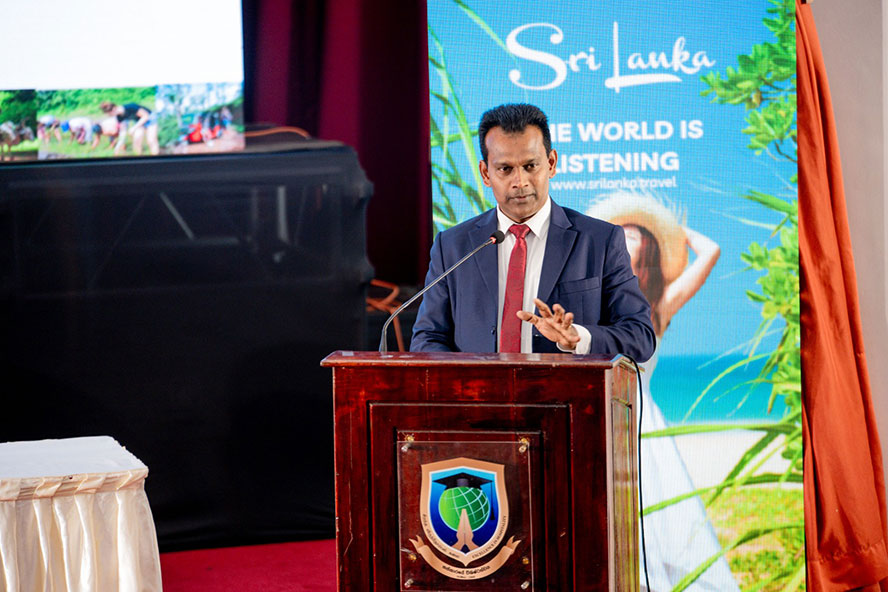
Professor Ruwan Ranasinghe: New international narrative for Sri Lanka
(A) Sri Lanka will be marketed not just as a tropical island but as a destination offering diverse, high-value experiences. The campaign will highlight wellness retreats, heritage tourism, eco-adventures, and community-based experiences. This repositioning will attract discerning travellers who seek authenticity and are willing to spend more, thereby increasing tourism’s contribution to the economy.
(Q) How will the Ministry ensure that the strategy does not remain another document, but is actually implemented?
(A) The consultancy includes costed action plans, institutional reforms, and monitoring mechanisms to ensure accountability. Stakeholder workshops and validation sessions will embed ownership across government, private sector, and communities. The Ministry is committed to ensuring that this strategy translates into tangible outcomes through structured implementation and regular progress reviews.
(Q) Are we ready to market Sri Lanka to the world at a much bigger level or do you first need to fix the gaps in the visitor experience before spending heavily on promotion?
(A) Both aspects must go hand in hand. While global promotion is essential to reposition Sri Lanka, the visitor experience must be strengthened to ensure repeat visitation and positive word-of-mouth. The strategy priorities service standards, infrastructure, and product diversification so that promotional spending translates into genuine value for visitors and communities alike.
(Q) What does the World Bank’s involvement bring to Sri Lanka’s tourism strategy that was missing from previous initiatives?
(A) The World Bank brings international expertise, credibility, and funding support. Its involvement ensures that Sri Lanka’s strategy is benchmarked against global best practices, with stronger institutional frameworks and better data systems. Unlike past initiatives, this partnership emphasizes sustainability, inclusivity, and value-driven growth, ensuring long-term resilience for the industry.
(Q) Will the World Bank’s expertise help Sri Lanka move from simply increasing tourist arrivals to attracting high-value tourists?
(A) Yes, the World Bank’s guidance is focused on shifting from volume-driven growth to yield-driven growth. By strengthening product development, diversifying markets, and embedding sustainability, Sri Lanka will attract high-value tourists who spend more, stay longer, and contribute positively to local communities and conservation efforts.
(Q) Will the new strategy place greater emphasis on sustainable and responsible tourism?
(A) Absolutely. Sustainability is at the heart of the new strategy. ECT-tourism, community-based tourism, and conservation initiatives will be scaled up to protect Sri Lanka’s fragile ecosystems and heritage. Responsible tourism practices will be embedded across the industry to ensure that growth does not come at the expense of the environment or local communities.
(Q) With the World Bank bringing international expertise to Sri Lanka’s tourism strategy, what is the one major transformation for the world to see in Sri Lanka as a tourism destination?
(A) The major transformation will be Sri Lanka’s repositioning as a high-value, sustainable destination. The world will see Sri Lanka move beyond being a volume-driven market to becoming a model of responsible tourism, where visitors enjoy authentic experiences while contributing to local prosperity and environmental conservation. This shift will redefine Sri Lanka’s global image and ensure long-term competitiveness.
By Zanita Careem
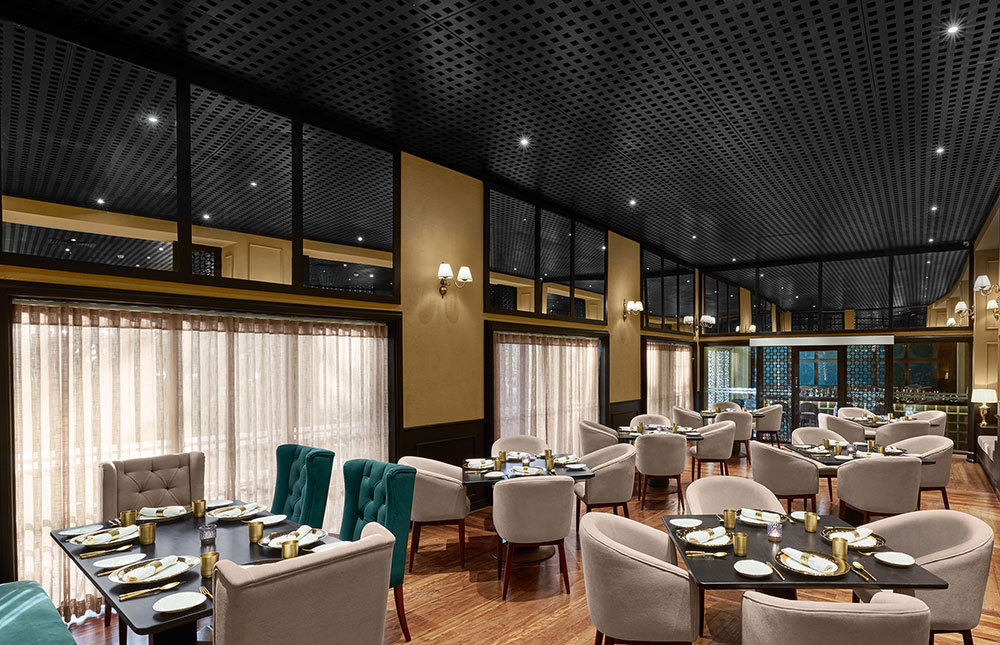
Behind every memorable dining experience is a chef whose passion transforms ingredients into something extraordinary. At Taj Samudra Colombo, the hotel’s Executive Chef, Sajesh Nair brings culinary artistry, precision and a deep understanding of flavours, curating dishes that are as refined as they are memorable.
With his passion for quality ingredients, attention to details and commitment to culinary excellence, Chef Nair continues to create flavours, turning the finest ingredients into culinary masterpieces, and transforming the dining table into a stage of indulgence.
Behind every memorable dining experience is a Chef who understands that food is more than what appears on a plate. For Chef Sajesh Nair cooking has been a lifelong journey, shaped by tradition, discipline, curiosity and a passion for authentic flavours.
With an impressive 30 years in the culinary tradition, including 17 years with Taj Hotels, Chef Sajesh Nair has built a career round creating a distinctive dining experience, while remaining deeply connected to the heritage of the cuisines he represented.
His journey with Taj has taken him through some of the group’s most prestigious properties. He was the Executive Chef at the celebrated Taj Falakruma, in Hyderabad, where he became particularly recognised for his expertise in Hyderabad and Nizami cuisine. “My philosophy was rooted in preserving traditional techniques while presenting them with refinement and creativity.” My passion for cooking began at an early age, “My journey was shaped by an early and lasting influence of my father.’’ It was through him that Sajesh developed an appreciation for food, discipline and dedication behind creating something truly special.

Turning ingredients into memorable experiences
His culinary credentials also came into spotlight when he led the team preparing an elaborate royal inspired menu for a high profile dinner at Taj Falakuma Palace, attended by Prime Minister Narendra Modi and Ivanka Trump.
At Taj Samudra Colombo, Chef Sajesh brought his wealth of experience to Sri Lanka’s hospitality scene. His culinary leadership extended to many restaurents, including the revamped Indian Restaurant Navaratne where he has created an experience, centred around cuisines from all parts of India. Adding depth to this culinary journey, Chef Sajesh philosophy fits naturally into the restaurant’s identity, offering guests an introduction to India’s culinary traditions while maintaining the standard of Taj hospitality. Navaratne has become more than an Indian restaurant, it’s a culinary passage to India with Sajesh Nair’s experience in helping bringing its flavours, traditions and stories to the table. Chef Sajesh Nair has a long Taj Hotel career and in Sri Lanka, as the Executive Chef of Golden Dragon – one of the hotel’s specialist restaurant, where he has brought his expertise and creativity to the kitchen, creating flavours that have delighted diners from all walks of life. His association with Golden Dragon, the Chinese restaurant, began in India where he worked at the restaurant as part of his early Taj Samudra hotel’s career. That experience gave him the exposure to the Chinese wider culinary techniques at the Golden Dragon Colombo.

Chef Sajesh Nair: Executive Chef, Taj Samudra, Colombo. Maestro behind flavours
At Taj Samudra Colombo, the Yumi Japanese restaurant is one of the hotel’s speciality dining outlets, His strength lies in creating dishes that balance authentic flavours with contemporary presentation, while his attention to detail and understanding of ingredients gave each creation its distinctive character. He embraced a wider gastronomic repertoire, mastering flavours and techniques from across the world. Chef Sajesh Nair’s culinary canvas extended beyond Indian cuisine. Nair’s role was not simply about mastering one cuisine but about creating different dining experience to suit different tastes. He curated extensive festive menus at Ports of Call and worked across the hotel’s speciality restaurants .
Chef Sajesh Nair’s journey extends beyond the restaurant kitchen with his career giving him opportunities to prepare food for celebrations, distinguished personalities and high profile guests in Sri Lanka and abroad. His work at the Golden Dragon and at the Yumi restaurent further reflect his versatility as a executive. Chef Nair led the culinary team at Taj Falaknuma Palace when a dinner was hosted for Narendra Modi.
Chef Nair and his team prepared the elaborate five-course royal Hyderabad/Nizami menu for Ivanka Trump during her Hyderabad visit. Mukesh Ambani and Ratan Tata both were among the prominent. Indian business leaders who attended the gala dinner. Among the distinguished personalities to experience Chef’s culinary artistry was Cherie Blair, who was among the guests at the glittering banquet at Taj Falaknuma Palace in Hyderbad during the 2017 Global Entrepreneurship Summit. He also curated menus for Mohamed Azharuddin’s wedding reception at Taj Mahal Palace. At this wedding he worked as a young Chef de Partie at the hotel where he won rave reviews. Later he steadily worked his way through the demanding hierachy of professional kitchens.
In Sri Lanka he has created menus for cricketers, both Sri Lankans and Indians. He was also the part of the team when he created various menus during PM Narendra Modi’s visit to Sri Lanka when he stayed at the Taj Samudra. He has also curated menus for all the higher profile personalities, like corporate clients and political figureheads, including the PM of Sri Lanka, Harini Amarasuriya.
From royal banquests in India to distinguished tables in Sri Lanka, Chef Sajesh Nair’s culinary journey is one marked by experience, versatility and an enduring passion for creating memorable dining experiences. His career reflects a Chef who has continually evolved with the times, while remaining rooted in the craft.
He quipped “For me food is more than what is served on a plate it is a way of connecting people.”
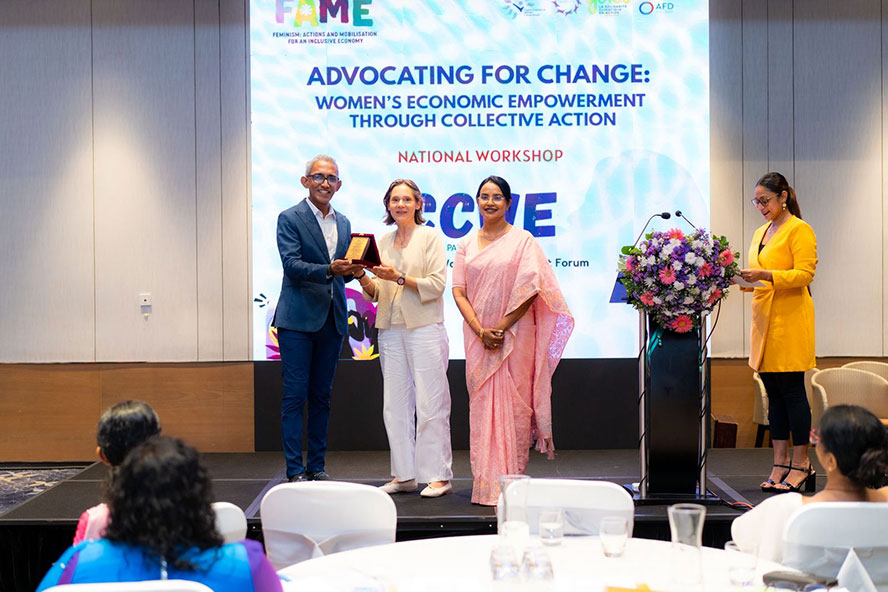
The Ceylon Chamber of Women Entrepreneurs (CCWE), in collaboration with the University of Kelaniya, brought together policymakers, development partners, private-sector leaders, academics, civil society organisations and women entrepreneurs at the National Workshop “Advocating for Change: Women’s Economic Empowerment through Collective Action.”
The workshop formed part of the FAME – Feminism: Action and Mobilisation for an Inclusive Economy Project, supported by the Agence Française de Développement (AFD), and focused on identifying practical pathways to create a more inclusive and enabling entrepreneurial ecosystem for women in Sri Lanka.
The national dialogue provided a platform to bring together policy-level perspectives with the experiences of women entrepreneurs and grassroots organisations, while presenting research evidence on the barriers, opportunities and institutional changes required to strengthen women’s participation in entrepreneurship and economic development.
Welcoming participants, Dr. Ayanthi Gurusinghe, President of the Ceylon Chamber of Women Entrepreneurs, emphasised that women’s economic empowerment cannot be achieved through isolated interventions or training programmes alone. She highlighted the importance of connecting women entrepreneurs with finance, technology, markets, knowledge, networks and policy-making institutions, while ensuring that the voices of women, at community level, are represented in national discussions. She noted that the purpose of “Advocating for Change” is to bring these different voices together and move from identifying challenges towards practical and sustainable solutions.
Dr. Gurusinghe further stressed the importance of collective action among government institutions, development partners, academia, the private sector, women’s chambers and community organisations to create meaningful economic opportunities for women across Sri Lanka.
Partnerships for Progress:
France’s Continued Support for Women’s Economic Empowerment, Matthieu John, Deputy Ambassador of the Embassy of France, highlighted the importance of partnerships in advancing inclusive economic development and reflected on the contribution of the FAME partnership in Sri Lanka.
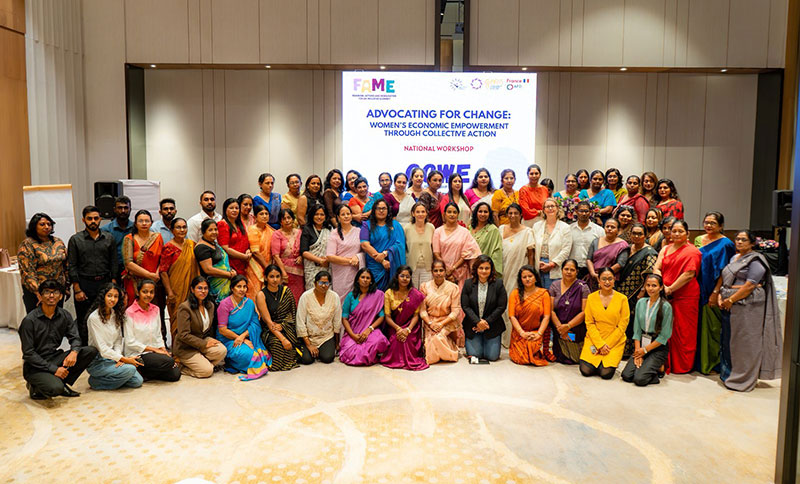
Together we rise: power of collective action
He emphasised the value of strengthening women’s participation in economic decision-making and creating opportunities that enable women not only to establish enterprises but also to build sustainable businesses capable of contributing to employment, innovation and economic growth.The participation of France and AFD in the programme reinforced the importance of international development partnerships that support locally led initiatives, research, advocacy and collective action for women’s economic empowerment.
Creating an Enabling Ecosystem for Women Entrepreneurs:
Delivering the keynote address, Yasas Hewage, Chairman of the Industrial Development Board (IDB), focused on the importance of creating an enabling ecosystem in which women entrepreneurs can move beyond micro and livelihood-based enterprises towards sustainable, growth-oriented businesses. He highlighted the role of enterprise-development institutions in providing entrepreneurs with access to technical knowledge, technology, productivity improvement, business-development services, finance and markets.
Hewage also emphasised that strengthening women-owned enterprises should be viewed not merely as a gender or social-development intervention, but as an important component of Sri Lanka’s wider industrial and economic development
The National Workshop concluded with a call for stronger coordination and continued collective action among government, development partners, financial institutions, academia, the private sector, women’s organisations and entrepreneurs.
Among the broader priorities emerging from the dialogue were the need to strengthen access to finance and markets; improve technology, digital and business-development support; create stronger pathways from micro-enterprise to sustainable business growth; strengthen institutional coordination; improve access to opportunities for women outside Colombo; and ensure that women entrepreneurs have a stronger voice in policy and economic decision-making.
CCWE emphasised that the dialogue is intended to contribute to a wider process of evidence-based advocacy for women’s economic empowerment, ensuring that recommendations are informed not only by research and institutional perspectives but also by the lived experiences of women entrepreneurs themselves.
The workshop reaffirmed a central message: Women’s economic empowerment is not solely a women’s issue—it is fundamental to Sri Lanka’s inclusive economic growth, industrial development and long-term prosperity.

Pakistan seek revenge, Sri Lanka eye another Asia Cup final

Trump says every adult American will get $5,000 if Republicans win midterms

Protesters mistake Pakistan’s U-19 team for asylum seekers in Portsmouth

Steps are being taken to provide accommodation facilities for 16,000 university students – Prime Minister

Showers will occur in the Western and Sabaragamuwa provinces and in Kandy, Nuwara-Eliya, Galle and Matara districts.


‘Dates have the highest sugar content to fight Coronavirus’

Sunday Island 27 December – Headlines

#SundayIsland 17th December – Headlines

Sunday Island – 28th March

Sunday Island Headlines – 21 March

Sunday Island – 21st February – Headlines
-
 News6 days ago
Namal remanded until Sept. 18 over Airbus deal investigation
-

 Latest News5 days ago
Tharanga creates history with Diamond League crown in Brussels
-

 News5 days ago
Dispute which triggered listed company director being detained at BIA resolved
-

 Features4 days ago
After the parade: What a traffic OIC’s walk-out tells us
-
 Opinion7 days ago
In Memory of Dr Upatissa Pethiyagoda
-

 Editorial6 days ago
Power vs Equality
-
Editorial4 days ago
Arrests as theatre
-
 Latest News6 days ago
SLPP MP Namal Rajapaksa arrested by CIABOC