
Latest News
Trump says every adult American will get $5,000 if Republicans win midterms

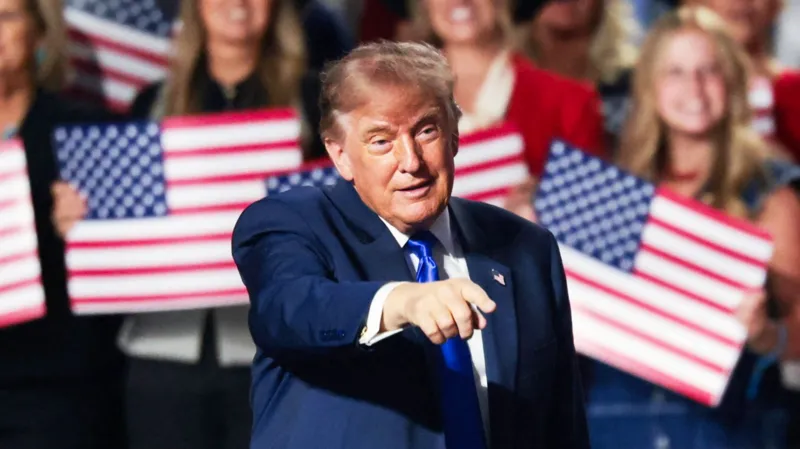
US President Donald Trump says he would offer every adult American a $5,000 (£3,700) payout if Republicans win both chambers of Congress in November’s midterm elections – a plan that would cost more than a trillion dollars.
The offer was made in a speech at the party’s first-ever convention in the middle of a US presidential term.
He gave no details on how it would work or be funded – saying only that the money would have to be spent in the US. Vice-President JD Vance has linked the plan to the revenue that Trump has raised for the US government using tariffs.
Democrats labelled it an “empty promise” and others questioned whether such a pledge was legal or feasible.
It may be the first time a US president offered such a payout to Americans, in the context of an election year plea to get out and vote.
The idea drew raucous applause at the convention and Trump seemed to relish the moment.
There are nearly 270 million American adults, meaning a $5,000 payout would cost the US government some $1.3 trillion.
Questions have begun to be raised about whether his plan is feasible – especially as prices rise in the US, partially as a result of the war that the US and Israel started with Iran in February.
Iran’s retaliation has included attacks against US bases and allies in the Gulf – but crucially it has largely closed the Strait of Hormuz, through which about a fifth of the world’s oil and liquefied natural gas used to transit.
The blockage has caused fluctuations in oil prices worldwide and Trump has faced pressure from his party to end the war.
On Wednesday, the US president warned his supporters that the war would not end until after the midterms and that oil prices would not come down until then.
He made the comments ahead of his speech in Texas, repeating it at the convention where he argued that short-term economic pain was worth it to prevent Tehran from developing nuclear weapons.
Trump’s long speech at the Republican convention in Dallas, Texas, touched on the core of the conflict – the impact on Americans’ standard of living. His pledge to increase their spending power drew raucous applause in the hall.
“If the Republicans win the House of Representatives and the United States Senate, both of them,” Trump said, “I will issue a dividend to every adult citizen in the United States of America for $5,000.”
“We don’t want you going to Canada to spend the money,” he said.
“We don’t want you going to China, to Germany. You got to spend the money in the United States of America.” It is not clear how the spending would be monitored.
The BBC has asked the White House for further clarification on how Trump’s plan would work.
One former Republican strategist and pollster said the promise should be firmly seen in the context of an election that is now less than two months away.
“It is an extraordinary promise, and I’m not sure where that money is going to come from – but it is campaign season,” Robert Moran told the BBC World Service’s Newsday programme.
Moran described it as a “novel solution to an interesting problem”, noting that the historical tendency was for the party of the president to lose seats in Congress during the midterm elections.
It is not the first time that Trump promised such payouts – he has previously proposed $2,000 cheques to be funded by tariff revenues.
Vice-President JD Vance indicated that these post-election payments could similarly be made possible by the money Trump has raised using his wide-ranging tariff programme.
“What the president is talking about is fundamentally a dividend for American workers,” Vance told Fox News.
“We’re taking in an extraordinary amount of revenue because the president of the United States is actually standing up to both foreign companies but also foreign countries who’ve been taking advantage of America’s workers.”
Vance went on to say: “I don’t think it’s a controversial idea.”
Other US politicians in the past have also promised economic rewards in return for electoral success.
For instance, Democrats in Georgia promised $2,000 relief payments if their party took control of the Senate at the height of the Covid-19 pandemic.
In the US, Congress authorises spending. The midterm elections, which will be contested on 3 November, will ultimately decide whether or not Trump’s Republican Party keeps its hold over both the House and Senate.
During his speech in Dallas, the president did not say whether he planned to ask Congress for such approval for the payments – which he dubbed “Trump Dividends”.
However, in addition to the overall cost to the US treasury, the latest proposal from the US president may raise legal questions.
Federal laws prohibit payments that are intended to influence voting.
The issue came to the fore ahead of the 2024 presidential election, during which billionaire Trump supporter Elon Musk offered cash incentives to registered voters in seven swing states who signed a certain petition.
However, some experts say the promise made by Trump during Wednesday’s speech may be seen as a pledge to cut taxes, which is legal.
John Day, a lawyer in New Mexico, said the plan would indeed be legal. It constituted a promise made to all adult citizens of the US during a campaign, rather than a “payment to individuals to try to get them to vote in a particular way”, he told the Associated Press.
Meanwhile, an election law expert who spoke to the New York Times said Trump’s promise would also be covered by the free-speech protection guaranteed under the First Amendment of the US Constitution.
[BBC]

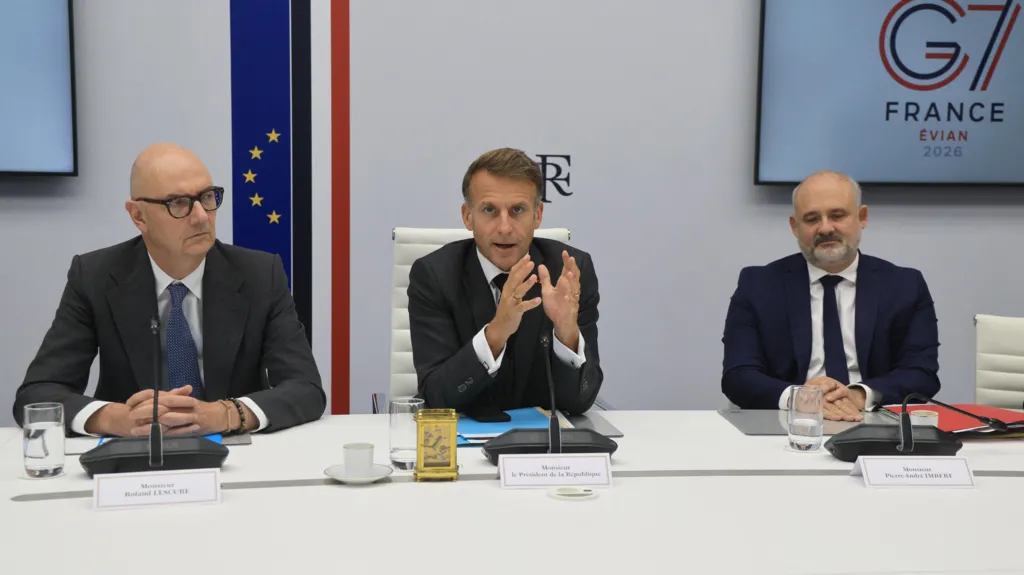
The G7 has agreed to release 100 million barrels of oil and diesel in a bid to ease supply pressures that have caused prices to skyrocket.
The group of advanced economies, including the US, said the move would include a “substantial release” of diesel in the coming days.
President Donald Trump had threatned to ban diesel exports in a move which would have eased pressure on prices for US consumers ahead of November’s midterm elections, but pushed up prices elsewhere.
In a joint statement, the G7 said member countries had now agreed to “refrain from export restrictions on energy and energy products” on one another.
The G7 includes the US, UK, Canada, Japan, Germany, Italy and France, with the EU also represented at its meetings.
Trump had warned he would ban diesel exports from the US if European countries did not agree to put more of their own stocks onto the market.
On Friday, he said on social media: “Europe has just agreed to release a massive amount of their heavily stocked Diesel Oil. The process will begin immediately.”
His Treasury Secretary Scott Bessent had argued US farmers, truckers, and businesses “should not be left carrying the burden” as prices soar.
Diesel is used heavily by the haulage industry and in agriculture, meaning rises in the cost of the fuel feed through into essentials such as food.
But, following a meeting of G7 leaders, French President Emmanuel Macron said the bloc had agreed to release reserves of “up to 100 million barrels” within four months under the coordination of the International Energy Agency (IEA).
The UK was represented at the meeting by Foreign Secretary Ed Miliband, who said the measures would “stabilise energy supplies, build resilience in supply chains and shield households and businesses from price shocks”.
Macron said the coordinated action would “bring down the prices of petroleum products, particularly diesel”. Highlighting the agreement not to pursue export bans, Macron said “President Trump, in particular, was very clear on this point”.
Speaking at the White House, Trump later said an export ban on diesel was “never really on the table”.
In the joint statement, G7 leaders said: “We will implement our commitments with a coordinated release through the IEA of 100 million barrels to begin immediately over four months, including a frontloaded substantial diesel release within the first 20 days by G7 members and partners.”
It is not yet clear which partner countries will release stocks, nor how quickly.
The 100 million barrels will comprise a mix of diesel and crude oil. The price of global benchmark Brent crude oil briefly dropped below $100 a barrel, but rose back to around $102 by Friday evening. Before the US and Israel invaded Iran, it was trading at around $73.
Matt Smith, director of commodities research at Kpler, said oil had risen again due to renewed strikes between Saudi Arabia and the Houthis in Yemen.
“Oil prices were selling off strongly due to the announcement of strategic stock releases in Europe, but they reversed course on rumours of Saudi Arabia planning an offensive into Yemen as it looks to re-establish a safe path via Bab-Al Mandeb,” he said.
European countries had pushed back against US threats to turn off American diesel, against a backdrop of the US-led war in the Middle East and reduced supplies from Russia and China.
The G7 leaders said they will also coordinate maintenance schedules to avoid multiple refineries being shut down at the same time, while encouraging countries with the capacity to do so to ramp up refining of diesel in particular.
Avoiding a ban on US diesel exports will offer significant relief to countries which are reliant on imports of the fuel, including the UK, where prices at the pump topped £2 a litre for the first time on Friday.
Over half of the UK’s diesel is imported, with 31% of those imports coming from the US.
(BBC)
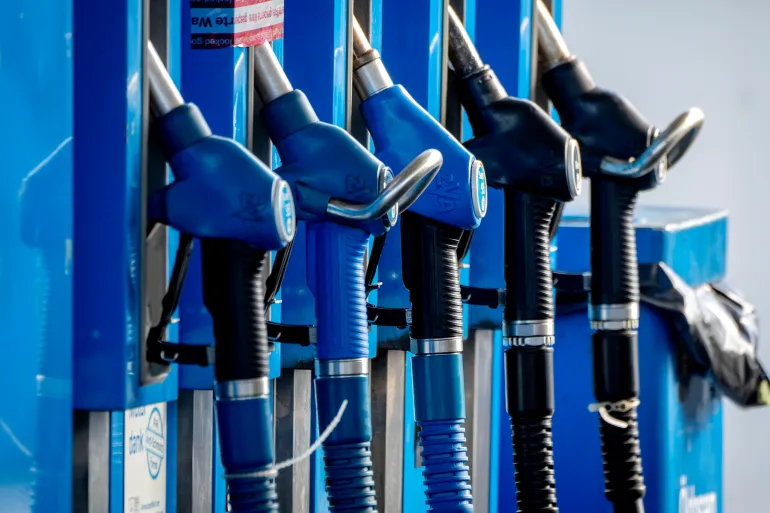
Th European Union “fully rejects” a US demand to release emergency diesel stocks as the fuel’s price soars in America and elsewhere amid the war with Iran.
The EU “fully rejects” the threat made by the US to ban diesel exports if Europe does not release more of its fuel stocks, according to European Commission spokesperson Anna-Kaisa Itkonen.
“A ban would not be beneficial to anyone. It would undermine our trust in the United States as a reliable partner,” she said, adding that the next EU’s Oil Coordination Group meeting is scheduled for October 15, but could be brought forward if needed.
On Thursday, President Trump said the US could ask European countries to release diesel reserves to rein in rising diesel prices due to the war on Iran.
His comments came after Treasury Secretary Scott Bessent urged Europe to “immediately” tap its reserves.
[Aljazeera]
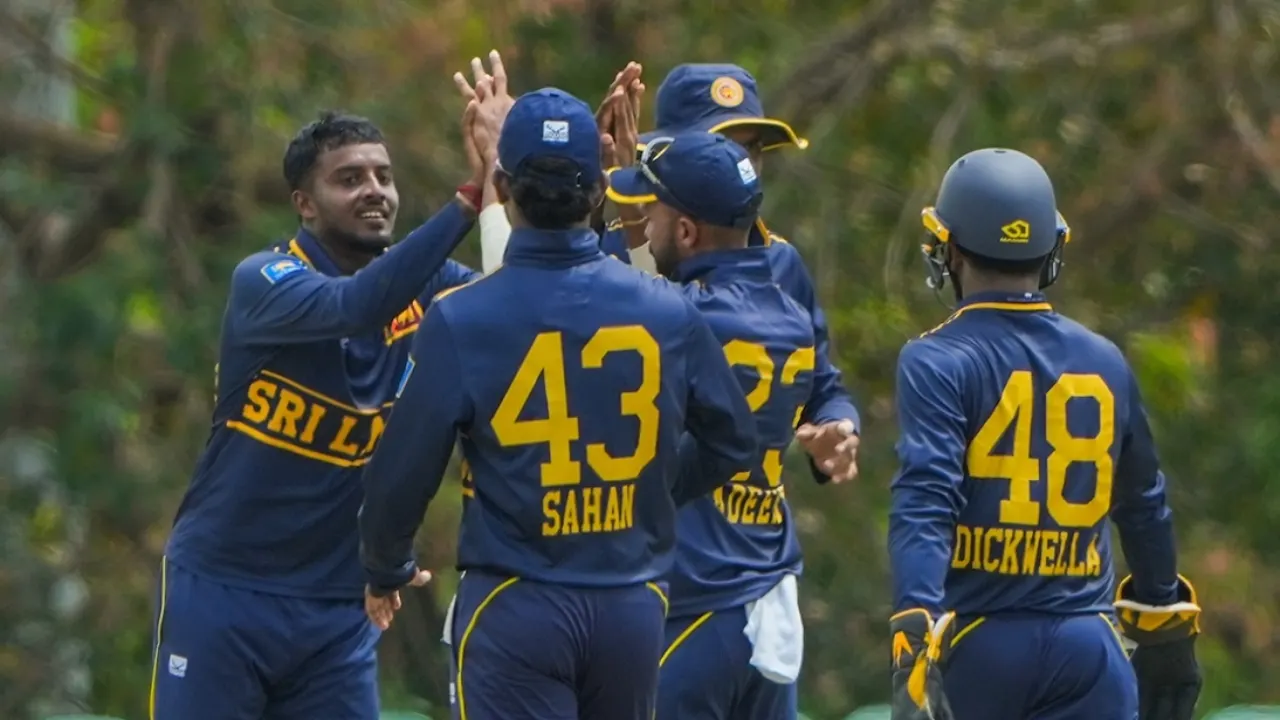
Opening batter Sineth Jayawardena has charged into the Sri Lanka T20I squad for the series against Pakistan, while Vijayakanth Viyaskanth has claimed the legspinner’s spot in the absence of the injured Wanindu Hasaranga. Seam-bowling allrounder Chamindu Wickremesinghe has also been named, as has batter Sahan Arachchige, while seamer Binura Fernando makes a return.
Omitted from the the squad were the likes of batter Charith Asalanka, fast bowler Dilshan Madushanka, ambidextrous spinner Tharindu Rathnayake, and batting allrounder Janith Liyanage.
Fast bowler Dushmantha Chameera was named in the squad, but his participation is subject to fitness.
Jayawardena, 21, has got his call-up because of an outstanding recent run in domestic T20s. In the past month, he has struck 101 off 52 and 82 off 32 for Tamil Union Cricket Club in the club T20 competition. He has played a single T20I, at the ongoing Asiad, but otherwise has never been part of a full-strength Sri Lanka side.
Others, such as Wickramasinghe, Arachchige, and Viyaskanth have earned their call-ups through years of performance at domestic level. Each of these players has appeared in T20 internationals for Sri Lanka before, but with the national team having had little success in this format in 2026, this inclusion represents their best chance yet to embed themselves within the side.
The three T20Is, which are all set to be played in Rawalpindi, will begin on October 9.
Sri Lanka squad :
Kamil Mishara, Sineth Jayawardena, Kusal Mendis (capt.), Lahiru Udara, Sahan Arachchige, Kamindu Mendis, Dasun Shanaka, Chamindu Wickramasinghe, Dunith Wellalage, Maheesh Theekshana, Vijayakanth Viyaskanth, Binura Fernando, Nuwan Thushara, Eshan Malinga, Dushmantha Chameera (subject to fitness)

G7 to release 100 million barrels of oil and diesel after Trump export ban threat

Showers above 75 mm are likely at some places in the Central, Sabaragamuwa, Western, Uva, North-western, Southern and North-central provinces and in Mannar district.

All set for Colombo rally against govt.’s tax policies

Yoshitha R money laundering trial postponed

Lankan troops test mettle in Russian war games

Tax burden drives thousands of doctors out of country: GMOA

‘Dates have the highest sugar content to fight Coronavirus’

Sunday Island 27 December – Headlines

#SundayIsland 17th December – Headlines

Sunday Island – 28th March

Sunday Island Headlines – 21 March

Sunday Island – 21st February – Headlines
-

 News5 days ago
Police remove Thileepan statue in Jaffna
-

 Features5 days ago
The 22nd Amendment, constitutional recovery and illiberal slippage
-

 Features5 days ago
Of foreigners as CEOs of Lankan ventures
-

 Latest News3 days ago
Gold winner Tharanga gets brand-new Honda Vezel from SLAAJ
-

 News5 days ago
Sajith rejects Jt. Opp. protest sabotage claim; SJB TU chief demands remedial action
-

 Features4 days ago
Thailand’s biggest new global star …
-

 Features3 days ago
Why Sri Lanka needs an Inclusive Civic Nationalism – urgently
-

 News4 days ago
First cases taken up by SC after enactment of 22A dismissed