
News
India pushes for direct link between Rameswaram and Talaimannar, FTA upgrade


India wants to upgrade the India-Sri Lanka Free Trade Agreement, signed in 2000 during Chandrika Bandaranaike Kumaratunga’s presidency.
Declaring that more than 65% of Sri Lankan exports use FTA benefits whereas only 5% of Indian exports use the same, Indian High Commissioner in Colombo, Santosh Jha, emphasised the urgent need to transform the FTA into a modern framework that delivers the full potential of the bilateral economic partnership.
Jha was addressing the Global Innovation & Leadership Summit “Sri Lanka & India Ties: A Civilisational Bond,” organised by Z Media & WION, in Colombo, recently.
Jha said: “We have spent too long talking about it (FTA); sometimes renaming it; but not actually moving with purpose and required political will to forge a new framework. I say this not to assign blame — but to note that every year of delay is a year of opportunity lost. Think of it, in the last six years, India has signed nine FTAs, covering trade with 38 countries.”
Jha dealt with the situation developing in West Asia where the unprovoked US-Israeli war against Iran has caused tremendous hardships all over the world.
“We are living through an extraordinary period of global turbulence. Supply chains, markets, and everything else available, as a leverage, are being weaponised, as never before. Geopolitical competition is reshaping trade, alliances and partnerships. Trust in global order is eroding; Utility of global institutions are in question. Wars and conflicts are proliferating; even if these wars are regional, nobody seems immune from its impact. Economic uncertainty in some form or another has become almost a permanent condition. And we are all struggling in different degrees to adapt, as nations.
In these circumstances, relationships built on shallow transactional foundations are the first to crack. They are the ones where a change of government, a shift in commodity prices, or a geopolitical tremor is enough to undo years of effort.”
Commenting on Indo-Lanka relations, Jha said: “Civilisational bonds are different. They are not dependent on who happens to be in office in any given year. They are not contingent on a favourable deal or a transaction. They are sustained by something far deeper and more durable: a shared sense of who we are and where we come from, and what we seek to build for ourselves.
When the world is uncertain, you turn to those you trust. And trust, real trust, is built over centuries, not decades. India and Sri Lanka have that in plenty. But we must not take it for granted. In fact, we should nurture it, build on it and use it to our mutual advantage.”
Jha underscored the need to connect India with Sri Lanka. Jha said: “Let me be direct. The distance between Colombo and Chennai by sea is roughly 300 kilometres. But the distance between Rameswaram and Talaimannar — the closest points of our two countries — is about 30 kilometres. Thirty kilometres. And yet, there is no direct road. No railway. No ferry service that runs at scale. No energy grid connection. No pipeline. It is, frankly, an anomaly. It is as if two neighbouring rooms are connected only through a corridor outside, even when there is a door that can be built between the two rooms, right in the shared wall of the two rooms. We need to open that door.”
Land connectivity via a bridge or tunnel across the Palk Strait has been discussed for decades. There are enough examples of such corridors across the world. The engineering is well understood. The economics are compelling. The benefits, wherever such bridges have been built, are unmistakable. But we continue to waver. But let me say clearly: the time for wavering is over. A fixed link between India and Sri Lanka would transform the economic geography of this entire region. It would make Sri Lanka a hub, it aspires to become, in a way that no port expansion or airport upgrade can achieve on its own.
Energy connectivity is equally transformative. India has made massive strides in renewable energy across solar, wind, nuclear and green hydrogen. Sri Lanka has its own targets. A submarine electricity interconnection between the two countries would give Sri Lanka access to affordable and clean power. It will also create a market for Sri Lanka’s energy exports and help realise its vast potential. In a power-hungry age of data centres, India’s demand for renewable energy will only increase; and Sri Lanka needs to fully understand that opportunity to forge ahead.
Beyond electricity, serious conversations must also take place about long-term energy supply arrangements, including the petroleum pipeline and the development of tank farms in a meaningful, sustainable way. It can provide Sri Lanka with price stability and energy security. Something that we know today after the West Asia crisis is at premium. These are not fantasies. They are projects that have been studied, scoped, and in some cases are ready for decision. India already has implemented similar projects with its other neighbours – Nepal, Bhutan and Bangladesh – who are benefitting not just by exporting their surplus power to Indian markets but also by enjoying a level of energy security, which would not have been possible otherwise in the current difficult global situation.




News
Sun directly overhead Galle, Angulugaha, Imaduwa, Telijjawila, Yatiyana and Tangalle about 12.08 noon today (07)


The sun is going to be directly over the latitudes of Sri Lanka from 28th of August to 07th of September due to its apparent southward relative motion.
The nearest places of Sri Lanka over which the sun is overhead today (07) are Galle, Angulugaha, Imaduwa, Telijjawila, Yatiyana and Tangalle about 12.08 noon.

By Norman Palihawadane
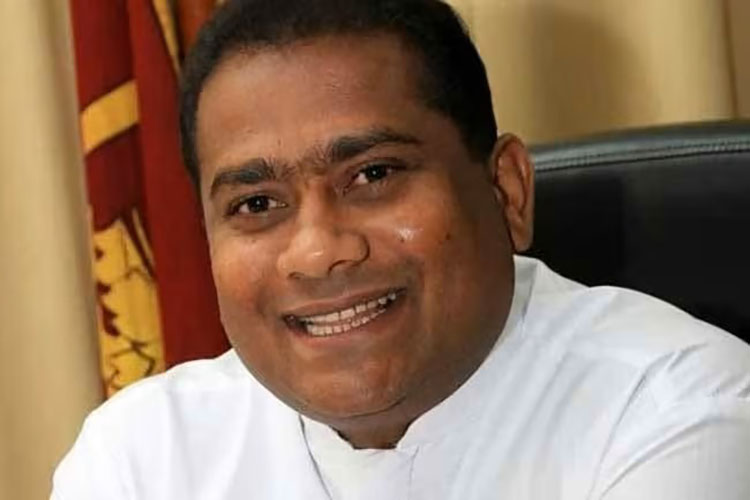
The CID recently found that former SLPP Deputy Minister Premalal Jayasekara, better known as ‘Choka Malli’, had left for Thailand when the Supreme Court imposed an overseas travel ban on him last Friday.
The CID discovered that Jayasekara had left Sri Lanka on August 31, while authorities were taking steps to enforce the travel restriction imposed by the Supreme Court. The Department has subsequently informed the Attorney General’s Department of the development.
The Supreme Court last Friday ordered Jayasekara, and two other men, to appear before court on October 21, and imposed a ban on their overseas travel.
The orders were made as the Supreme Court considered an appeal challenging the acquittal of the three men in connection with the 2015 murder of Shantha Dodangoda, also known as D.G. Sunil Perera.
The appeal was filed by Dodangoda’s wife against a decision of the Court of Appeal to acquit and release Jayasekara and the two other accused, who had previously been convicted and sentenced to death by the Ratnapura High Court.
Dodangoda was killed in a shooting in Kahawatta town, in the early hours of January 5, 2015, while a group of people were putting up decorations for an election rally in support of then common Opposition presidential candidate Maithripala Sirisena.
Two others, Karunadasa Weerasinghe and Mohamed Ilfan, were seriously injured in the shooting.
Following the incident, the Ratnapura High Court convicted Jayasekara, former Chairman of the Kahawatta Pradeshiya Sabha Wajira Darshana de Silva, and former Sabaragamuwa Provincial Council member Nilanta Jayakody, sentencing all three to death.
The Court of Appeal subsequently acquitted the three men and ordered their release.
The victim’s wife later challenged the acquittal before the Supreme Court.
The appeal was taken up before a Supreme Court bench, comprising Justice Preethi Padman Surasena and Justices Achala Wengappuli and Gihan Kulatunga.
During the proceedings, Deputy Solicitor General Janaka Bandara requested that the court impose overseas travel restrictions on Jayasekara and the other respondents.
The Supreme Court subsequently ordered all three to appear before the court on October 21 and imposed travel bans on them.
President’s Counsel Nalin Ladduwahetty, President’s Counsel U.R. de Silva and President’s Counsel Anuja Premaratne appeared for the respondents. President’s Counsel Saliya Peiris represented the aggrieved party.
Police sources said that the discovery that Jayasekara had already left for Thailand, on August 31, has raised concerns over the timing and enforcement of the travel ban.
Sources said that the CID had notified the Attorney General’s Department and was taking further action in relation to the development.
By Pradeep Prasanna Samarakoon
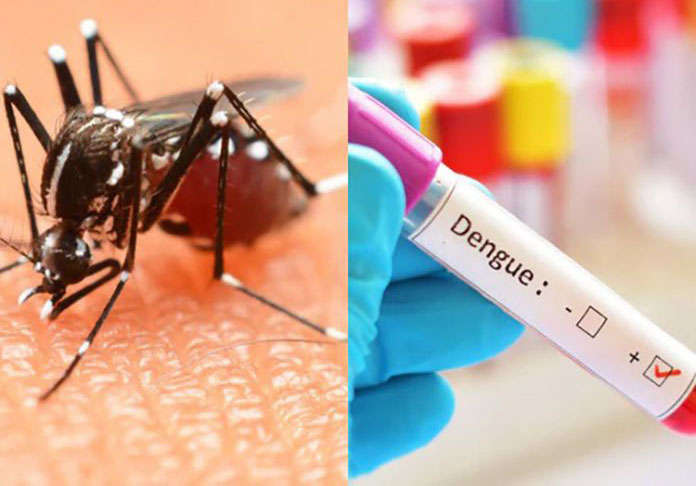
The number of deaths from dengue fever in Sri Lanka has risen to 73 this year, with 96,228 cases reported across the country so far, according to the Dengue Control Unit.
The latest figures indicate that dengue continues to pose a significant public health concern, with 737 new cases recorded during the first four days of September alone.
Dengue infections peaked in July, when 29,964 cases were reported, according to the latest data. June recorded the second-highest monthly total, with 21,533 cases, while 10,155 cases were reported in August.
Earlier in the year, 8,590 cases were recorded in May and 7,866 cases in January.The Western Province remains the worst-affected area, accounting for more than half of all dengue cases reported nationwide. A total of 50,851 cases have been recorded in the province, representing 52.84% of the country’s total.
The Southern Province has recorded 13,950 cases, followed by the Central Province with 8,818 cases and Sabaragamuwa Province with 7,925 cases.

Sun directly overhead Galle, Angulugaha, Imaduwa, Telijjawila, Yatiyana and Tangalle about 12.08 noon today (07)

Showers above 50 mm are likely at some places in the Uva and Eastern provinces.

Harshitha’s composed knock seals Sri Lanka’s semi-final berth

‘Choka Malli’ slips out of country before travel ban

Dengue death toll rises to 73

Ranil accuses govt. of undermining democracy

‘Dates have the highest sugar content to fight Coronavirus’

Sunday Island 27 December – Headlines

#SundayIsland 17th December – Headlines

Sunday Island – 28th March

Sunday Island Headlines – 21 March

Sunday Island – 21st February – Headlines
-

 News4 days ago
Denied of promotion to SC despite vacancies, justice Gurusinghe retires
-

 Latest News5 days ago
Grade 5 scholarship exam results released
-

 News4 days ago
22A: SC urged to suspend hearing, appoint full bench
-

 Midweek Review5 days ago
The local and global dynamics of Sri Lanka’s 22nd Amendment
-
 News4 days ago
Govt. seeks NATO assistance
-
 News2 days ago
Namal remanded until Sept. 18 over Airbus deal investigation
-

 News5 days ago
40 professional organisations and TU oppose proposed 22A
-

 News5 days ago
Ai-CHA expands Lankan footprint with new Negombo outlet