
News
Mirihana mayhem: NGO wants torture allegations probed

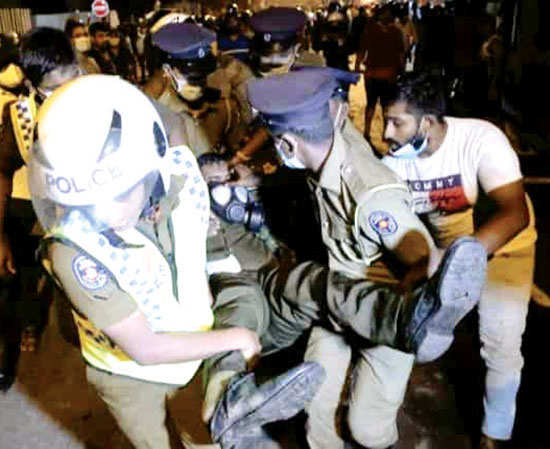
Sri Lanka Collective Against Torture (SLCAT) has said that every allegation of torture of persons, arrested at Mirihana, should be investigated and those responsible held accountable. Affected persons should be provided services for recovery and compensation, SLCAT said in a statement issued yesterday.
The following is the text of the statement: “People had gathered at Mirihana to exercise their basic civic right to highlight the devastating impact of the economic crisis which has led to countrywide power outages and a fuel shortage which has impacted essential services and the supplies of food and medicines.
During the last several weeks, at least three deaths of people, who stood in line waiting for LP gas deliveries or fuel supplies were recorded, and scuffles broke out as people clamoured to access essential supplies.
Emerging video footage of the protest shows, what appears to be, excessive and unprovoked use of force by the police against peacefully protesting persons, bystanders and journalists. For instance, there is footage of police following/chasing persons, who appear to be residents of the area in which the protest was being held and beating them. It has been reported that the use of rubber bullets and tear gas has caused injuries and had an adverse health impact on protestors and bystanders, including children, who accompanied their parents. The government justifies the use of force by pointing to the destruction of public property, but video footage indicates police disregarded acts of violence when they were taking place, although they were present at the site, such as a bus being set on fire. This gives credence to allegations that persons who were not protestors infiltrated the protests and caused violence to which law enforcement turned a blind eye.
By the morning of 1st April 2022, several arrested persons alleged they were beaten in police custody due to which they had sustained injuries. Some detained persons were noted having visible fresh injuries, including baton inflicted welts across their backs and experienced difficulty walking. Despite this, for more than 12 hours they were not provided medical care, which could constitute torture and appears to be part of the punishment inflicted on them (protestors) for participating in the protest. At the time of issuing this statement, close to half the number of persons arrested were hospitalised and could not be physically produced before court.
We reiterate that torture is forbidden under international human rights law, as well as Sri Lankan law, including the Constitution. It is also the right of detained persons to have access to a lawyer, which is in part to protect them from torture or inhuman, degrading treatment or punishment while in custody. Despite this, detained persons were prevented from consulting with lawyers, even nearly 24 hours after they were arrested, which violates their due process rights.
As part of its strategy to legitimize its crackdown on dissent, the government branded the protestors “extremists”, and thereafter a government minister referred to the protests as acts of terrorism, which illustrates a clear attempt to stifle people’s right to expression, peaceful assembly and association. These acts of the government have to be viewed in the context of the deterioration of the rule of law, which is exacerbated by the declaration of a state of emergency by the government on 1 April 2022 that provides wide powers to the executive to curtail rights. These developments raise grave concerns about the potential crackdown on freedom of expression and assembly and dissent, particularly in light of the history of the abuse of emergency powers by the executive in Sri Lanka. The denial by the police they arrested social activist Anuruddha Bandara on 1 April 2022, who was located hours later on 2 April 2022 by the Human Rights Commission at the very police station which denied he was arrested, is a case in point. The police have stated he has been arrested under Section 120 of the Penal Code, a vague and overbroad provision on ‘causing disaffection’ that has been used by successive governments to curtail freedom of expression and stifle dissent.
When officers of the state justify their actions on the basis of national security or protecting public order, they have the onus of proving the precise nature of the threat and security risk. The security and well-being of citizens, in particular their right to challenge their elected representatives and hold them accountable is part of ensuring the security of the country.
When this right is threatened, it undermines social cohesion and harmony. We reiterate that the right to dissent and peacefully protest to hold the government accountable and demand their rights is the inherent right of every citizen. This right must be respected by the government.
The SLCAT called for:
1. Every allegation of torture should be investigated and those responsible held accountable. Affected persons should be provided services for recovery and compensation.
2. Persons arrested and detained against whom there is no evidence of any involvement in unlawful activity should be discharged.
3. The government to respect the right of citizens to engage in peaceful protest and the right of the media.
4. The police to abide by legal standards governing the use of force, i.e. legality, necessity and proportionality.
5. The Human Rights Commission of Sri Lanka to conduct investigations into allegations of torture and issue at least its initial findings in an expeditious manner.
6. The government to publicly apologise for the treatment of protestors and by-standers at the incident of 31st March 2022 at Jubilee Post junction.



More than 1,600 students sat this year’s Russian Classical Ballet Examination, the largest number ever to take part in the examination in Sri Lanka. Exams were held in Colombo from 5, to 18, October and in Galle on 10 October.
Students aged four and above came from across the island, including Colombo, Galle, Gampaha, Negombo, Matara, Kelaniya, Panadura, Wattala, Kiribathgoda, Ratnapura, Kandy, Kurunegala, Bandarawela and Badulla. They are taught by 15 dedicated teachers trained in the Vaganova method, the renowned Russian system of classical ballet training.
They were examined by Dr. Oxana Karnovich of the Moscow State Academy of Choreography, a distinguished academic and curator.
The Russian School of Ballet and Dancing was established in 2001 by Michael Ustinov, Buddhapriya Ramanayake and Mrs Chandi Aluvihare, with Mrs Galina Pleshakova as its founding instructor. Today the School is led by Director Madam Maria Popova, Counsellor of the Embassy of the Russian Federation in Sri Lanka.


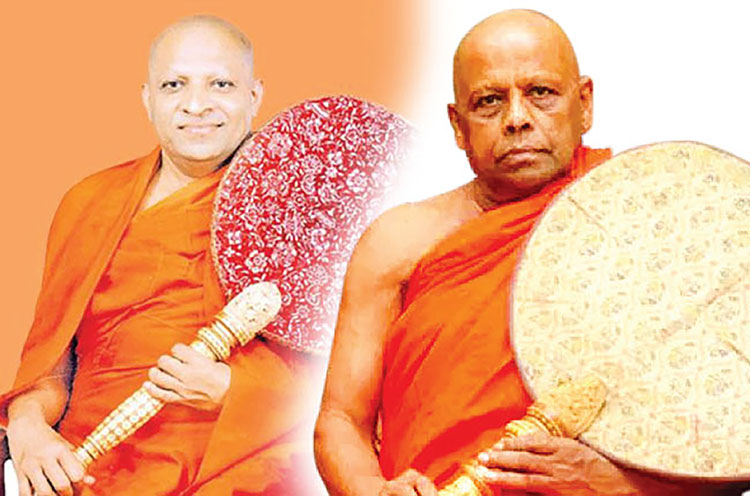
MONETABRIEF– Sri Lanka’s two most senior Buddhist chapters, Malwatte and Asgiriya, demanded special concessions for monks serving prison sentences, following the disrobing of convicted monk Ven. Galagodaatte Gnanasara in line with established procedures.
The chief prelate of the Asgiriya chapter, Most Venerable Warakagoda Sri Gnanarathana, told Prisons Commissioner Senaka Palletenna that Ven. Gnanasara, who is serving a six-year sentence for contempt of court, must be released immediately.
Prison authorities have no power to release or pardon convicts, but Palletenna told the monk in Kandy on Friday that he would convey his request to the relevant government authorities.
“There is no point in talking about this and that… The entire country has been shaken (??????? ) . He must be released,” the Asgiriya chief prelate said.
The Malwatte chief prelate, Most Venerable Thibbatuwawe Sri Siddhartha Sumangala, appeared to accept the court verdict against Ven. Gnanasara, but asked the prisons chief whether a separate section could be established for convicted monks.
Palletenna noted that a special ward for the clergy already existed at Welikada Prison.
At least 63 convicted Buddhist monks are currently incarcerated within Sri Lanka’s criminal justice system.
Meanwhile, a group of 34 Buddhist monks named in a Colombo Fort Magistrate’s Court order to vacate the vicinity of the Presidential Secretariat ended their protest and dispersed after lunch on Friday.The monks are demanding an unconditional pardon for Ven. Gnanasara, who has previously been imprisoned, making him a reconvicted prisoner.
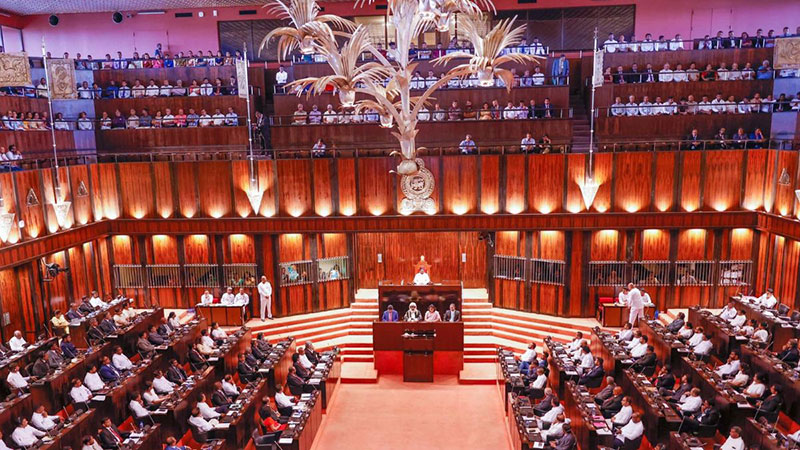
The debate on the no-confidence motion against Speaker Dr. Jagath Wickramaratne, submitted by the Samagi Jana Balawegaya (SJB), has been postponed indefinitely pending the Attorney General’s opinion on certain technical issues in the motion.
Government representatives raised the matter at a meeting of the Committee on Parliamentary Business, pointing out that several provisions of the motion required clarification and that the Attorney General’s advice should be obtained.
As obtaining the opinion would take time, the debate could not be scheduled for the next parliamentary week, parliamentary sources said.
Chief Opposition Whip Gayantha Karunatilaka said a date for the debate would be decided after the Attorney General’s advice was received.
Meanwhile, Parliament is scheduled to meet from October 20 to 23, Secretary General of Parliament Kushani Rohanadeera announced.
The parliamentary business for the week was finalised at a meeting of the Committee on Parliamentary Business held on Friday (16) under the chairmanship of Deputy Speaker Dr. Rizvie Salih.
On each sitting day, the period from 9.30 a.m. to 10 a.m. will be allocated for parliamentary business under Items 1 to 6 of Standing Order 22. Questions for Oral Answers will be taken up from 10 a.m. to 11 a.m., followed by questions under Standing Order 27(2) from 11 a.m. to 11.30 a.m.
On Tuesday, October 20, an Opposition-sponsored Adjournment Motion will be debated from 11.30 a.m. to 5.30 p.m.
On Wednesday, October 21, a resolution under the Public Debt Management Act and a Supplementary Estimate will be taken up for debate and approval from 11.30 a.m. to 5 p.m. The annual reports of five statutory institutions will subsequently be presented for approval without debate, while questions at the Adjournment Time will be taken up from 5 p.m. to 5.30 p.m.
On Thursday, October 22, the Second Reading debates on two Bills to amend the Poisons, Opium and Dangerous Drugs Ordinance (Bills Nos. 79 and 80) will be held from 11.30 a.m. to 5 p.m.
The annual reports of five statutory institutions will then be taken up for approval without debate, followed by an Opposition-sponsored Adjournment Motion from 5 p.m. to 5.30 p.m.
On Friday, October 23, the Second Reading debate on the Elimination of Rabies and Registration of Dogs Bill will be held from 11.30 a.m. to 5 p.m. A Government-sponsored Adjournment Motion will be debated during the final half-hour of the sitting.

Pakistan quicks seal win after Salman Agha ton sets tone

Record 1,600 students take Russian Classical Ballet examination in Sri Lanka

Half a million people join protests in France, but some turn violent

Deadly fire breaks out at Canada military base

Showers or thundershowers will occur in most parts of the island after 1.00 p.m.

Buddhist hierarchy demands prison perks for monk convicts

‘Dates have the highest sugar content to fight Coronavirus’

Sunday Island 27 December – Headlines

#SundayIsland 17th December – Headlines

Sunday Island – 28th March

Sunday Island Headlines – 21 March

Sunday Island – 21st February – Headlines
-

 Latest News6 days ago
Nissanka’s return headlines Sri Lanka’s Test squad against Pakistan
-

 Latest News7 days ago
Farhan and Sadaqat help Pakistan seal series in style
-

 Features7 days ago
Intake 16: 45 years of duty and honour
-
 News7 days ago
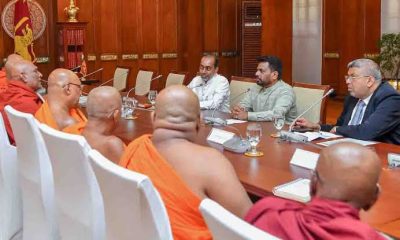
Malwathu Chapter issues statement on talks with President over Gnanasara Thera’s robes
-
 News7 days ago
CP alleges NPP has taken the blame for illegal US sanctions on Iranian vessels
-

 News5 days ago
Sri Lanka, India caught in US-Iran ship crisis
-

 Opinion7 days ago
How long can Sri Lanka remain silent on its demographic crisis?
-

 Latest News5 days ago
Kusal Mendis’ unbeaten 87 hands Sri Lanka consolation win