
Features
Gehenu Lamayi in Sri Lanka

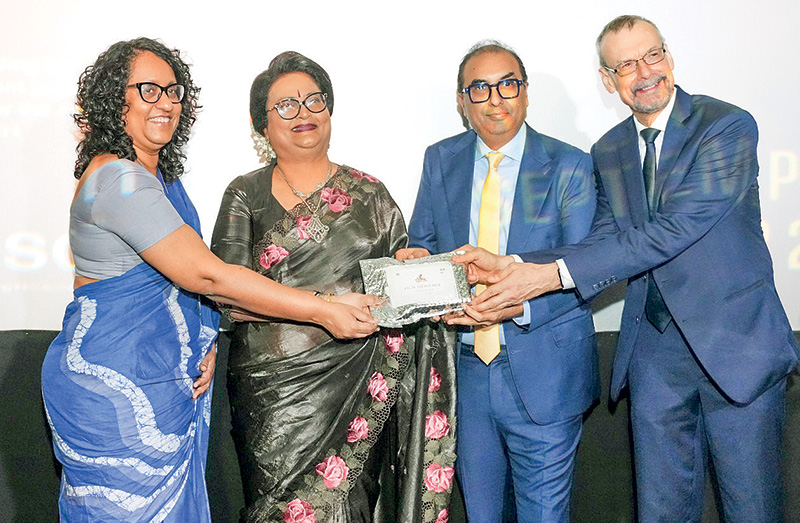
 By Uditha Devapriya
After what seems to have been an eternity, it was refreshing to hear a Prime Minister who knew what she was talking about and whom she was talking to. Last Friday, 26 September, Dr. Harini Amarasuriya was the Chief Guest at the Sri Lanka premiere of the 4K restoration of Gehenu Lamayi. Reflecting on the film, Amarasuriya noted its director Sumitra Peries as a trendsetter and a trailblazer. She went on to add that she was more than a director, arguing that she broadened our understanding of feminism in South Asia.
I thought the tribute was well articulated, because it touched on three points which scholars of the Sinhala cinema have missed out. The first is that Sumitra’s ascent as a film director followed a trajectory that was very different to all her contemporaries, bar none, in Sri Lanka and South Asia. Unlike the other distinguished figures of women’s filmmaking in the region, Sumitra was educated in the West as an editor and found employment in Sri Lanka as an editor and an assistant director. In this, as I noted in my tribute to Sumitra after her passing in 2023, she became a precursor to the likes of Mira Nair.
The second is that in her choice of source text for her first film, she deliberately overlooked the conventional choices of the day. When Lester Peries selected Golu Hadawatha as the first of three films he made for Ceylon Theatres, in 1968, Karunasena Jayalath tended to be viewed negatively by the country’s critical establishment. One of Sumitra’s overarching achievements – which almost no biographer or critic has commented on – was her ability to transform the most mundane, sentimental texts into living works of art. Jayalath’s novels resonated well with popular readers, and in Sumitra’s hands, Gehenu Lamayi became more than just a teenage romance, a morality tale of class and love.
The third point is Sumitra’s ability to even out the political and popular aspects of the story. Watching Gehenu Lamayi on the big screen, I was struck at some of the scenes which were suffused – there is no other word for it – by a feminine sensibility.
Note that very first sequence between Kusum, played by Vasanthi Chathurani, and Padmini, played by Shyama Ananda. The British filmmaker Mark Cousins, with whom I spoke about Sumitra, said that she “probed shyness and tentative love” well. That sequence with these two girls mingling with each other, which ends with another classmate describing Padmini as “almost Kusum’s partner”, showed how Sumitra was able to delve into a world and an experience – in a word, girl-girl friendships – which, as Prime Minister Amarasuriya noted in her speech, “none of her contemporaries could.”
When the film was screened in Mannheim, Germany, one critic commented on its “aura of pessimism” and its “unobtrusive photography.” Reflecting on the review with me – I think somewhere back in 2016 or 2017, when I had deep conversations with her – Sumitra noted that she had to restrain herself from being obtrusive with the camera.
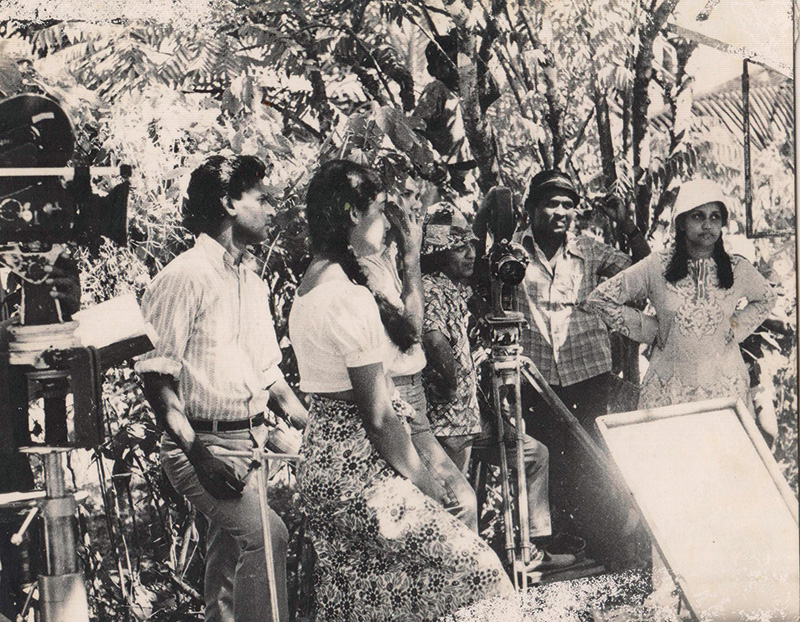
Sumitra Peries (right) filming Gehenu Lamayi. Courtesy Sumitra Peries
You see this tension throughout Gehenu Lamayi; it crops up in some of her other films as well, prominently Ganga Addara, where sequences that otherwise add very little value to the narrative – like the protagonist’s wedding – go on endlessly. Sumitra herself admitted that she had a tendency to “prettify everything.” But as Mark Cousins has noted, this only added layers and layers of depth to her work.
What distinguishes Gehenu Lamayi from Ganga Addara – the latter had the luxury of a rich producer and all the time and freedom Sumitra wanted – is how essentially innocent the former is. The latter is a bolder and more expressive work: emotions are not kept back, they gush out in torrents, sometimes in hysterics.
In Gehenu Lamayi, only the audience is privy to Kusum’s inner thoughts: almost no other character – except Padmini – pays much attention to what she is thinking and feeling. When Nimal’s mother, played by Chitra Vakishta (who also played Dhammi’s mother, incidentally, in Golu Hadawatha), discovers Kusum’s affair, and reproves her for it, Kusum cries by a tree; when Nimal’s mother comes back with a cup of tea and notices the tears, all she can say is, “How can you go on the road looking like that? Here, wipe those off.”
Ultimately, Gehenu Lamayi became to Sumitra’s career what Rekava was to Lester’s, Ahas Gawwa to Dharmasena Pathiraja’s, and Palagetiyo to Vasantha Obeyesekere’s. When you compare these debut works with their later films, you notice a rawness of style and vision, a somewhat jagged edge, which you don’t in their later years. Commenting on Ahas Gawwa, Regi Siriwardena noted its “inevitable technical roughnesses.” It’s like what Randall Jarrell wrote of Walt Whitman’s poetry: “[t]here are faults in this passage, and they do not matter.” Pauline Kael wrote the same of some of Brian De Palma’s early films.
I think this is applicable to Gehenu Lamayi as well. There is a certain slowness in the second half, especially in those scenes at the school, which might disarm younger audiences today. The dialogues, most of which I believe were taken from Jayalath’s novel, have a sentimental and highfalutin quality which only Jayalath was capable of. Yet ultimately, they do not matter. There is a wider social and political relevance in the narrative, which I feel transcends these limitations. I can do no more than quote the rest of Jarrell’s judgment on Whitman’s poetry; in his words, I think, we can find a true and honest reading of Sumitra’s film.
“… the serious truth, the complete realization of these last lines, make us remember that few poets have shown more of the tears of things, and the joy of things, and of the reality beneath either tears or joy.”
Uditha Devapriya is an independent researcher, writer, and columnist whose work spans art, culture, history and foreign policy. He is working on a study of Martin Wickramasinghe and an oral autobiography of the Sri Lankan director Sumitra Peries. Both are slated for publication in 2026. He can be reached at .


 ‘Adapt, shrink or die’ – thus runs the warning issued by the Trump administration to UN humanitarian agencies with brute insensitivity in the wake of its recent decision to drastically reduce to $2bn its humanitarian aid to the UN system. This is a substantial climb down from the $17bn the US usually provided to the UN for its humanitarian operations.
Considering that the US has hitherto been the UN’s biggest aid provider, it need hardly be said that the US decision would pose a daunting challenge to the UN’s humanitarian operations around the world. This would indeed mean that, among other things, people living in poverty and stifling material hardships, in particularly the Southern hemisphere, could dramatically increase. Coming on top of the US decision to bring to an end USAID operations, the poor of the world could be said to have been left to their devices as a consequence of these morally insensitive policy rethinks of the Trump administration.
Earlier, the UN had warned that it would be compelled to reduce its aid programs in the face of ‘the deepest funding cuts ever.’ In fact the UN is on record as requesting the world for $23bn for its 2026 aid operations.
If this UN appeal happens to go unheeded, the possibilities are that the UN would not be in a position to uphold the status it has hitherto held as the world’s foremost humanitarian aid provider. It would not be incorrect to state that a substantial part of the rationale for the UN’s existence could come in for questioning if its humanitarian identity is thus eroded.
Inherent in these developments is a challenge for those sections of the international community that wish to stand up and be counted as humanists and the ‘Conscience of the World.’ A responsibility is cast on them to not only keep the UN system going but to also ensure its increased efficiency as a humanitarian aid provider to particularly the poorest of the poor.
It is unfortunate that the US is increasingly opting for a position of international isolation. Such a policy position was adopted by it in the decades leading to World War Two and the consequences for the world as a result for this policy posture were most disquieting. For instance, it opened the door to the flourishing of dictatorial regimes in the West, such as that led by Adolph Hitler in Germany, which nearly paved the way for the subjugation of a good part of Europe by the Nazis.
If the US had not intervened militarily in the war on the side of the Allies, the West would have faced the distressing prospect of coming under the sway of the Nazis and as a result earned indefinite political and military repression. By entering World War Two the US helped to ward off these bleak outcomes and indeed helped the major democracies of Western Europe to hold their own and thrive against fascism and dictatorial rule.
Republican administrations in the US in particular have not proved the greatest defenders of democratic rule the world over, but by helping to keep the international power balance in favour of democracy and fundamental human rights they could keep under a tight leash fascism and linked anti-democratic forces even in contemporary times. Russia’s invasion and continued occupation of parts of Ukraine reminds us starkly that the democracy versus fascism battle is far from over.
Right now, the US needs to remain on the side of the rest of the West very firmly, lest fascism enjoys another unfettered lease of life through the absence of countervailing and substantial military and political power.
However, by reducing its financial support for the UN and backing away from sustaining its humanitarian programs the world over the US could be laying the ground work for an aggravation of poverty in the South in particular and its accompaniments, such as, political repression, runaway social discontent and anarchy.
What should not go unnoticed by the US is the fact that peace and social stability in the South and the flourishing of the same conditions in the global North are symbiotically linked, although not so apparent at first blush. For instance, if illegal migration from the South to the US is a major problem for the US today, it is because poor countries are not receiving development assistance from the UN system to the required degree. Such deprivation on the part of the South leads to aggravating social discontent in the latter and consequences such as illegal migratory movements from South to North.
Accordingly, it will be in the North’s best interests to ensure that the South is not deprived of sustained development assistance since the latter is an essential condition for social contentment and stable governance, which factors in turn would guard against the emergence of phenomena such as illegal migration.
Meanwhile, democratic sections of the rest of the world in particular need to consider it a matter of conscience to ensure the sustenance and flourishing of the UN system. To be sure, the UN system is considerably flawed but at present it could be called the most equitable and fair among international development organizations and the most far-flung one. Without it world poverty would have proved unmanageable along with the ills that come along with it.
Dehumanizing poverty is an indictment on humanity. It stands to reason that the world community should rally round the UN and ensure its survival lest the abomination which is poverty flourishes. In this undertaking the world needs to stand united. Ambiguities on this score could be self-defeating for the world community.
For example, all groupings of countries that could demonstrate economic muscle need to figure prominently in this initiative. One such grouping is BRICS. Inasmuch as the US and the West should shrug aside Realpolitik considerations in this enterprise, the same goes for organizations such as BRICS.
The arrival at the above international consensus would be greatly facilitated by stepped up dialogue among states on the continued importance of the UN system. Fresh efforts to speed-up UN reform would prove major catalysts in bringing about these positive changes as well. Also requiring to be shunned is the blind pursuit of narrow national interests.

 Hi! Great to be back after my Christmas break.
Thought of starting this week with egg white.
Yes, eggs are brimming with nutrients beneficial for your overall health and wellness, but did you know that eggs, especially the whites, are excellent for your complexion?
OK, if you have no idea about how to use egg whites for your face, read on.
Egg White, Lemon, Honey:
Separate the yolk from the egg white and add about a teaspoon of freshly squeezed lemon juice and about one and a half teaspoons of organic honey. Whisk all the ingredients together until they are mixed well.
Apply this mixture to your face and allow it to rest for about 15 minutes before cleansing your face with a gentle face wash.
Don’t forget to apply your favourite moisturiser, after using this face mask, to help seal in all the goodness.
Egg White, Avocado:
In a clean mixing bowl, start by mashing the avocado, until it turns into a soft, lump-free paste, and then add the whites of one egg, a teaspoon of yoghurt and mix everything together until it looks like a creamy paste.
Apply this mixture all over your face and neck area, and leave it on for about 20 to 30 minutes before washing it off with cold water and a gentle face wash.
Egg White, Cucumber, Yoghurt:
In a bowl, add one egg white, one teaspoon each of yoghurt, fresh cucumber juice and organic honey. Mix all the ingredients together until it forms a thick paste.
Apply this paste all over your face and neck area and leave it on for at least 20 minutes and then gently rinse off this face mask with lukewarm water and immediately follow it up with a gentle and nourishing moisturiser.
Egg White, Aloe Vera, Castor Oil:
To the egg white, add about a teaspoon each of aloe vera gel and castor oil and then mix all the ingredients together and apply it all over your face and neck area in a thin, even layer.
Leave it on for about 20 minutes and wash it off with a gentle face wash and some cold water. Follow it up with your favourite moisturiser.

 Superlatives galore were used, especially on social media, to highlight R&B singer Ne-Yo’s trip to Sri Lanka: Global superstar Ne-Yo to perform live in Colombo this December; Ne-Yo concert puts Sri Lanka back on the global entertainment map; A global music sensation is coming to Sri Lanka … and there were lots more!
At an official press conference, held at a five-star venue, in Colombo, it was indicated that the gathering marked a defining moment for Sri Lanka’s entertainment industry as international R&B powerhouse and three-time Grammy Award winner Ne-Yo prepares to take the stage in Colombo this December.
What’s more, the occasion was graced by the presence of Sunil Kumara Gamage, Minister of Sports & Youth Affairs of Sri Lanka, and Professor Ruwan Ranasinghe, Deputy Minister of Tourism, alongside distinguished dignitaries, sponsors, and members of the media.
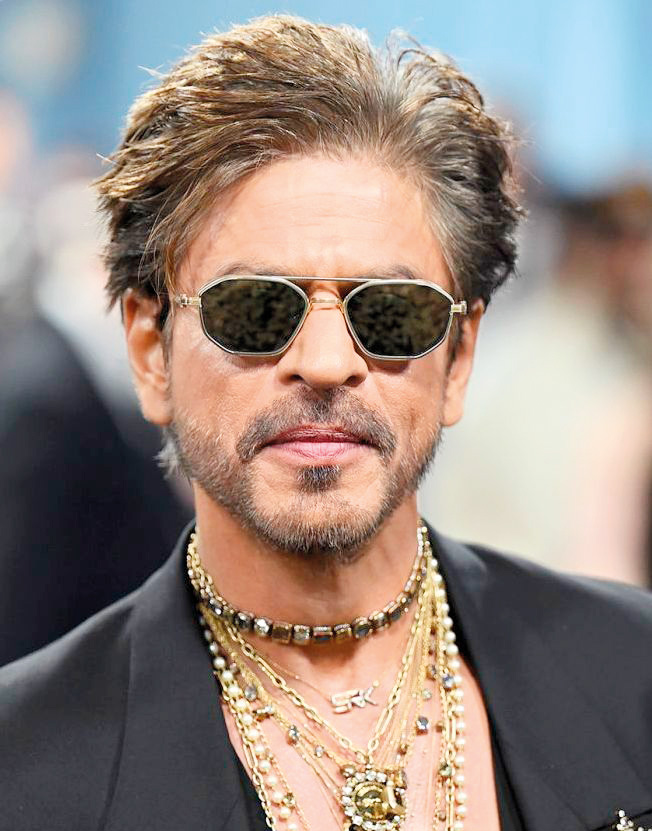
Shah Rukh Khan: Disappointed his fans in Sri Lanka
According to reports, the concert had received the official endorsement of the Sri Lanka Tourism Promotion Bureau, recognising it as a flagship initiative in developing the country’s concert economy by attracting fans, and media, from all over South Asia.

Nick Carter: His concert, too, was cancelled due to “Unforeseen circumstances
However, I had that strange feeling that this concert would not become a reality, keeping in mind what happened to Nick Carter’s Colombo concert – cancelled at the very last moment.
Carter issued a video message announcing he had to return to the USA due to “unforeseen circumstances” and a “family emergency”.
Though “unforeseen circumstances” was the official reason provided by Carter and the local organisers, there was speculation that low ticket sales may also have been a factor in the cancellation.
Well, “Unforeseen Circumstances” has cropped up again!
In a brief statement, via social media, the organisers of the Ne-Yo concert said the decision was taken due to “unforeseen circumstances and factors beyond their control.”
Ne-Yo, too, subsequently made an announcement, citing “Unforeseen circumstances.”
The public has a right to know what these “unforeseen circumstances” are, and who is to be blamed – the organisers or Ne-Yo!
Ne-Yo’s management certainly need to come out with the truth.
However, those who are aware of some of the happenings in the setup here put it down to poor ticket sales, mentioning that the tickets for the concert, and a meet-and-greet event, were exorbitantly high, considering that Ne-Yo is not a current mega star.
We also had a cancellation coming our way from Shah Rukh Khan, who was scheduled to visit Sri Lanka for the City of Dreams resort launch, and then this was received: “Unfortunately due to unforeseen personal reasons beyond his control, Mr. Khan is no longer able to attend.”
Referring to this kind of mess up, a leading showbiz personality said that it will only make people reluctant to buy their tickets, online.
“Tickets will go mostly at the gate and it will be very bad for the industry,” he added.

Machu Picchu train crash leaves one dead and dozens injured

I invite you to step into 2026 with renewed energy, hope, and determination – PM

Fairly heavy showers about 75 mm are likely at some places in the Central and Uva provinces and in Batticaloa and Ampara districts

National Audit Office reveals NHSL lapses

NPP’s CMC budget passed after four Opp. members switch allegiance

600MW hit to national grid as two Norochcholai units go offline

‘Dates have the highest sugar content to fight Coronavirus’

Sunday Island 27 December – Headlines

#SundayIsland 17th December – Headlines

Sunday Island – 28th March

Sunday Island Headlines – 21 March

Sunday Island – 21st February – Headlines
-
 News6 days ago
Street vendors banned from Kandy City
-

 Sports3 days ago
Gurusinha’s Boxing Day hundred celebrated in Melbourne
-

 News6 days ago
Lankan aircrew fly daring UN Medevac in hostile conditions in Africa
-
 News1 day ago
Leading the Nation’s Connectivity Recovery Amid Unprecedented Challenges
-

 Sports4 days ago
Time to close the Dickwella chapter
-

 Features6 days ago
Rethinking post-disaster urban planning: Lessons from Peradeniya
-

 Features2 days ago
It’s all over for Maxi Rozairo
-

 Opinion6 days ago
Are we reading the sky wrong?