
Features
From Violent Colombo to Peaceful Baghdad

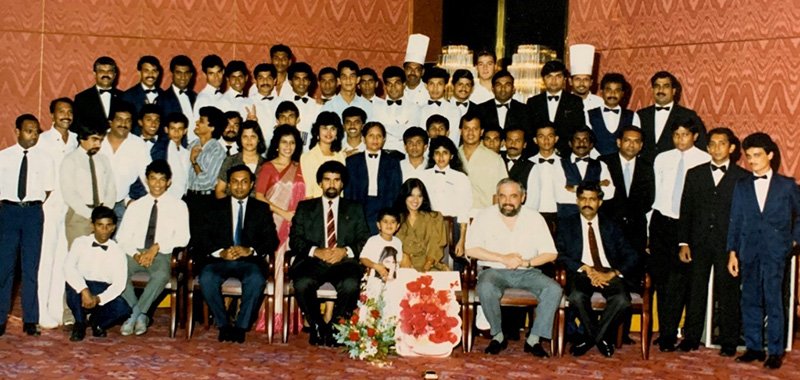
1.PASSIONS OF A GLOBAL HOTELIER
Dr. Chandana (Chandi) Jayawardena DPhil
President – Chandi J. Associates Inc. Consulting, Canada
Founder & Administrator – Global Hospitality Forum
chandij@sympatico.ca
Independent Sri Lanka has faced several disruptions over many decades. Despite short-lived ceasefires and the government’s attempts to encourage extremists to enter peaceful elections, by the late 1980s the government of Sri Lanka was fighting two wars – the LTTE civil war and the second wave of JVP insurgency. Stakeholders of tourism and hospitality industries continued to be resilient. However, by the late 1980s, the situation had deteriorated significantly, casting a shadow of uncertainty over the country’s future. My birth place Colombo had become a violent city with frequent deadly bomb explosions and killings.
In 1989, amidst the turmoil, I found myself at a crossroads in my career journey. As the Director of Food & Beverage at Le Meridien in Colombo, I harboured ambitions beyond the confines of familiarity. Guided by the belief that true growth lies beyond comfort zones, I sought opportunities on the global stage. That was uncommon for a hotelier from a developing country at that time.
Under the mentorship of Jean-Pierre Kaspar, the former General Manager of Le Meridien in Colombo, I envisioned a trajectory that transcended geographical boundaries. With his guidance, I embarked on a path of professional development, honing my skills in diverse settings from Singapore to Paris and London, laying the groundwork for my aspirations.
However, as I shared my ambitions with the new General Manager of Le Galadari Meridien Hotel, Paul Finnegan, I encountered unforeseen obstacles. Despite my eagerness to explore opportunities abroad, the prevailing circumstances constrained my options. Undeterred by setbacks, I resolved to forge ahead in pursuit of my global aspirations, bidding farewell to Le Meridien and Sri Lanka in search of new avenues aligned with my ambitious global career.
Then General Manager of Hotel Lanka Oberoi, Kawal Nain introduced me to Madan Mishra, Vice President for Oberoi in Iraq, and Regional Vice President & General Manager of Hotel Babylon Oberoi in Baghdad. Nain gave me a glowing recommendation. After the formal interview, Mishra invited me to an informal discussion at the London Grill at Hotel Lanka Oberoi, when he hosted my wife and me to dinner.
“As the operator of the three largest and best five-star hotels in Iraq, Oberoi has a key role to play in training hospitality workers and developing tourism in Baghdad and Mosul. Welcome to my top team” said Mr. Mishra as he shook my hand after I signed a two-year expatriate contract with Oberoi.
My boss at Le Meridien was surprised with my quick decision. Paul Finnegan told me, “Chandi, you have decided to leave a global five-star hotel company owned by Air France to join a small regional hotel chain run by an Indian company. That does not make any sense to me, unless you have an exceptionally good reason!” I rested my case by showing him my contract. I told him, “What Oberoi has offered me is five times my current salary at Le Meridien. If you match it and offer me an expatriate contract in another country, I will re-join Le Meridien.” Well, it eventually happened eight years later in 1997, when I opened Le Meridien in Jamaica as its General Manager.
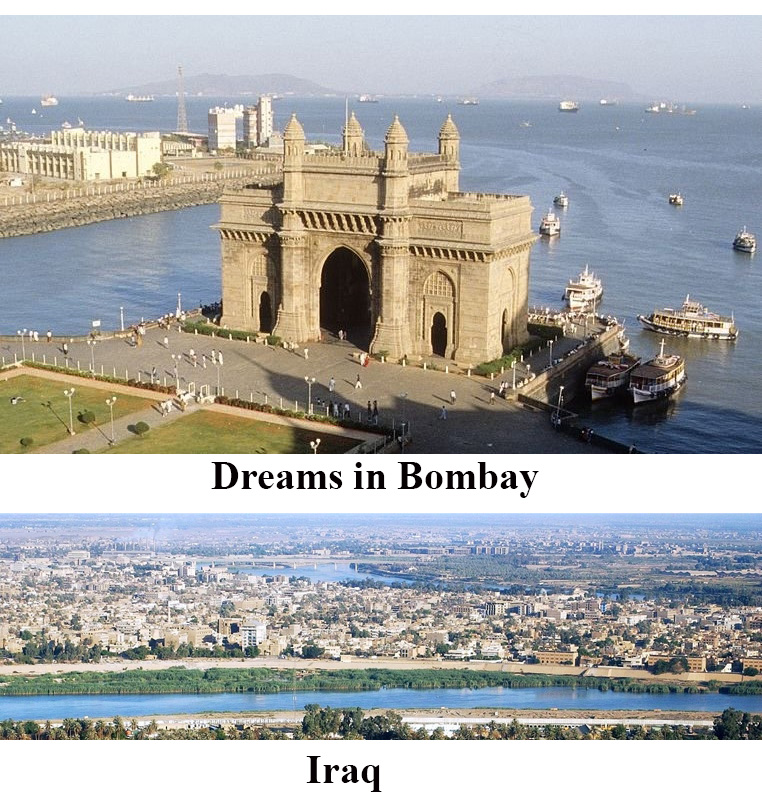
As at that time in Iraq they did not like to use the term ‘Director’, my title would be ‘Food & Beverage Manager’. “You know that over the last 17 years, Oberoi sent two dozens of promising Sri Lankan hoteliers for universally recognized two-year management program at the Oberoi School of Hotel Management in New Delhi. None of them reached the level of Food & Beverage Manager at Hotel Lanka Oberoi.
You would be the first Sri Lankan to hold this very senior position at an Oberoi hotel” Kawal Nain said, and then Madan Mishra explained, “Chandi, you would be our third ranking leader at Babylon Oberoi after me and the Resident Manager. You would be overall in charge of ten food and beverage outlets and banqueting, kitchens, and stewarding. Your team will include 160 employees from 10 countries. Seven of the managers reporting to you would be graduates of the Oberoi School of Hotel Management,” Madan Mishra said.
Mishra then added, “Out of 52 Sri Lankans I have recruited for Babylon Oberoi, you are one of two persons not from Hotel Lanka Oberoi. My friend, Mr. Nain thinks very highly of you, and I respect his judgement.” The other non-Oberoi person in the team was the IT Manager, who was married to Shirani Perera, the Oberoi-trained Executive Housekeeper chosen for Hotel Babylon Oberoi. Prior to our departure to Iraq, I was asked by my new boss to lead the team of 52 from different departments during our travels and until reaching the Hotel Babylon Oberoi in Baghdad.
After the Iran–Iraq War ended in August 1988, with the killing of 500,000 people over a period of eight years, there was optimism about the future of Iraq. It was the longest conventional war of the 20th century, with USA and the West backing Iraq. The year 1989 was important for Iraq, which focused on re-building the country targeting stability, the economy, human capital, and tourism. The country desperately needed external expertise to place those aspirations on a fast track.
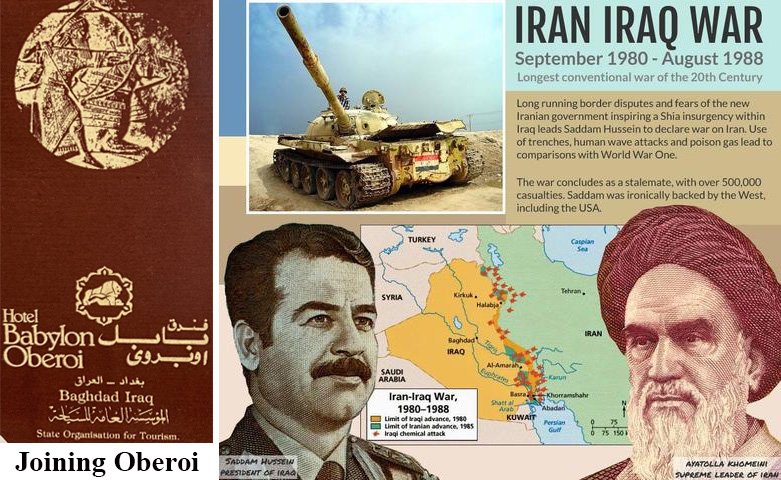
In May 1989, I embarked on a journey that would mark a pivotal chapter in my career. Departing from Colombo bound for Bombay (later renamed Mumbai), I found myself among 50 former employees from Hotel Lanka Oberoi. As the sole senior divisional head amidst this group of new recruits for Iraq, I naturally assumed a leadership mantle for the duration of our travels. My prior experience in India, gleaned during a two-week stint seven years earlier as a member of Sri Lanka’s national Judo team. This lent me a deeper familiarity with the country than my companions.
Following a night’s stay, graciously arranged by Oberoi Hotels in Bombay, we proceeded onward with a second flight to Baghdad. Despite the palpable anxiety shared by all 52 of us at the prospect of working in a war-torn region with a vastly diverse culture, we were happy with the high salaries offered to us. It swiftly became apparent to me that acclimatizing myself to three distinct cultures —Iraqi, Indian, and Oberoi— would be paramount. I resolved to make this adaptation my foremost priority and adjust my communication and leadership styles accordingly.
In the lead-up to our arrival in Bombay and during our brief sojourn in that vibrant metropolis, I embarked on a reflective exercise, drafting a concise yet strategic roadmap for my professional career goals. My key ambition was to ascend to the position of General Manager within an internationally renowned hotel chain in the coming years.
In addition, drawing upon my experience as a senior lecturer and my education in ‘Training Methodology’ on an ILO/UNDP Fellowship in Europe, I harboured aspirations of eventually returning to academia to obtain a globally recognized Ph.D. This ambition had already taken tangible form in the submission of a doctoral thesis proposal to the University of Surrey, in England where I had completed my master’s degree in international Hotel Management five years before.
Rounding out my handwritten plan before our descent into Iraq was a vision of eventually establishing an international consultancy firm specializing in hospitality management — an aspiration built upon the satisfaction derived from previous ad hoc consulting engagements.
The lands that now comprise Iraq have a rich historical tapestry, rooted in the ancient region of Mesopotamia, meaning ‘The land between the rivers’. This fertile territory, cradled by the Tigris and Euphrates rivers, nurtured a few of humanity’s earliest civilizations, including the Sumerians, Akkadians, Babylonians, and Assyrians.
Situated within the Fertile Crescent in the Middle East and Mediterranean — an arc of land of 11 modern-day nations spanning from Egypt to Iraq and Iran — this region played a pivotal role in the emergence of settled agricultural communities, dating back to the early ninth millennium BCE. Over millennia, Mesopotamia became a nexus of imperial power, experiencing successive dominions under Persian, Greek, and Roman rulership before becoming an integral part of the Islamic world after the seventh century.
In the aftermath of World War I, the modern nation-state of Iraq emerged from the former Ottoman provinces of Baghdad, Basra, and Mosul, under British colonial administration. Despite formal independence in 1932, Iraq remained under British influence during a disorderly era marked by monarchical rule and subsequent political upheavals.
The influence of the Arab nationalist and socialist Baath Party in 1968 heralded a period of relative stability, fuelled by substantial oil reserves, which enabled ambitious development initiatives and the creation of a formidable armed force. However, this stability in the country was eclipsed by the authoritarian reign of Saddam Hussein, who steered Iraq into disastrous conflicts, including the Iran-Iraq War (1980–1988), the Persian Gulf War (1990–1991), and the Iraq War (2003).
Geopolitically, Iraq is bordered by Iran to the east, Kuwait and Saudi Arabia to the south, Jordan and Syria to the west, and Türkiye, to the north. Despite its strategic location, Iraq possesses only a small coastline along the northern Persian Gulf, offering limited maritime access compared to its regional counterparts.
Iraq’s population has surged, surpassing 47 million — an exponential increase from its 1989 estimate of 17 million, akin to the population of Sri Lanka at that time. Since 1980, amidst three decades marred by conflict, there was a solitary year of peace in 1989 —a year that afforded me the opportunity to experience and engage with the complexities of Iraq first-hand.
Baghdad
Baghdad
Baghdad, a city steeped in vibrant history, was established in 762 AD along the caravan route bridging Asia and Europe. Its strategic position on the banks of the Tigris River propelled it to prominence as a cultural, commercial, and intellectual epicentre of the Islamic world. In 1921, Baghdad became the capital of Iraq.
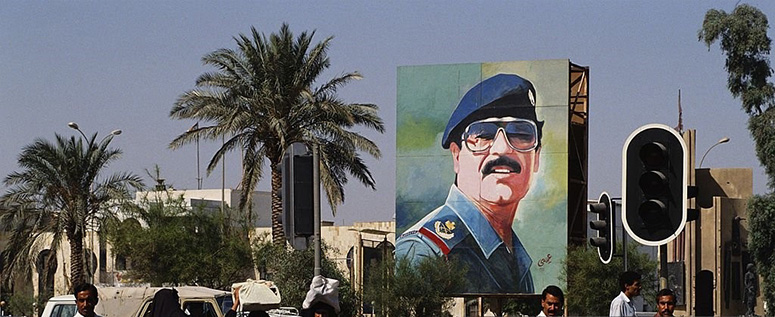
Despite the tumult of wars and disruptions, Baghdad remained a beacon of learning and commerce, drawing both local inhabitants and international visitors to the country. Its rich tapestry of history finds expression in myriad attractions, from museums and shrines to mosques and bustling souks, contrasted with modern-day amenities such as upscale boutiques and vibrant dining establishments. Upon our arrival at Baghdad International Airport, the prominent presence of large portraits of Saddam Hussein told their own story.
Hotel Babylon Oberoi
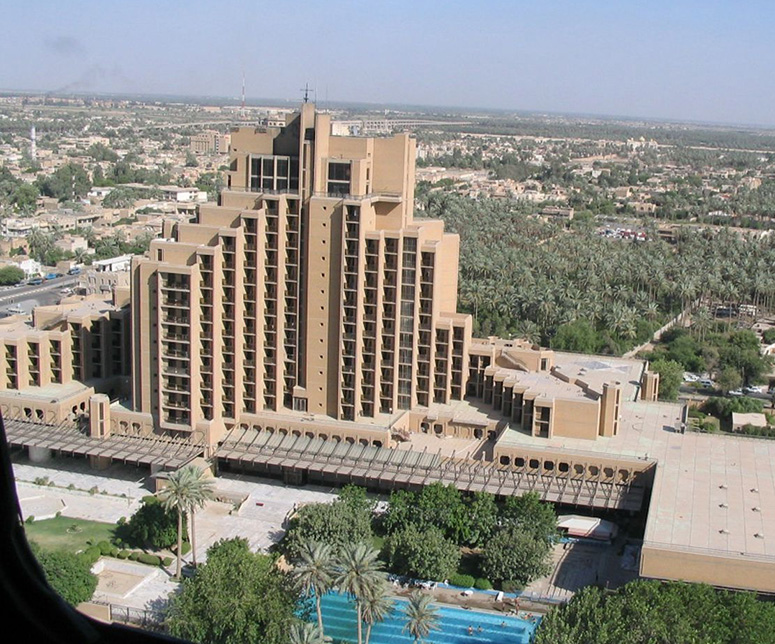
Nestled in one of Baghdad’s most coveted neighborhood, adjacent to the verdant expanse of the green zone and overlooking the famed Tigris River, Hotel Babylon Oberoi epitomized five-star luxury. Boasting 300 lavishly decorated rooms and suites, the hotel provided guests with unparalleled convenience and comfort in the heart of down-town Baghdad. Vibrant souks and iconic landmarks were mere minutes away, ensuring an enriching stay for discerning travellers seeking leisure and exploration.
The hotel’s distinctive pyramid architecture and expansive gardens paid homage to Baghdad’s Babylonian legacy, while its culinary offerings stregnthened its status as a premier dining destination. With ten food and beverage outlets, including six dining venues, the hotel provided an enormous gastronomic experience. From the allure of a bustling casino, and a lively nightclub, to the tranquillity of a rooftop bar and a chic lobby lounge, the hotel catered to every indulgence.
For corporate gatherings, weddings, and events, the hotel boasted an elegant ballroom and banquet rooms capable of accommodating up to 600 guests, ensuring a seamless blend of sophistication and functionality. Meanwhile, the outdoor Olympic-size pool, fitness centre, and spa facilities epitomized luxury and wellness, offering guests the pinnacle of relaxation and rejuvenation.
As preparations unfolded for my family’s imminent arrival, I found solace in the warm embrace of Iraqi and Indian management colleagues. With full-board family accommodation secured in a spacious two-bedroom suite overlooking the Tigris River, I embarked on my role as an expatriate manager with a strong sense of purpose.
While my primary focus remained on laying the groundwork for my burgeoning global career, I willingly assumed additional responsibilities at the request of the General Manager. Tasked with overseeing the welfare of 52 Sri Lankan employees, I embraced this role with enthusiasm, cognizant of the importance of fostering a supportive and inclusive work environment. As I settled into my new job, I reflected with satisfaction: “Here I am at age 35, finally as an expatriate manager, living in the luxurious confines of a five-star hotel in a foreign land.”











A recent discussion by former Environment Minister, Eng. Patali Champika Ranawaka on the Derana 360 programme has reignited an important national conversation on how Sri Lanka plans, builds and rebuilds in the face of recurring disasters.
His observations, delivered with characteristic clarity and logic, went beyond the immediate causes of recent calamities and focused sharply on long-term solutions—particularly the urgent need for smarter land use and vertical housing development.
Ranawaka’s proposal to introduce multistoried housing schemes in the Gannoruwa area, as a way of reducing pressure on environmentally sensitive and disaster-prone zones, resonated strongly with urban planners and environmentalists alike.
It also echoed ideas that have been quietly discussed within academic and conservation circles for years but rarely translated into policy.
One such voice is that of Professor Siril Wijesundara, Research Professor at the National Institute of Fundamental Studies (NIFS) and former Director General of the Royal Botanic Gardens, Peradeniya, who believes that disasters are often “less acts of nature and more outcomes of poor planning.”

Professor Siril Wijesundara
“What we repeatedly see in Sri Lanka is not merely natural disasters, but planning failures,” Professor Wijesundara told The Island.
“Floods, landslides and environmental degradation are intensified because we continue to build horizontally, encroaching on wetlands, forest margins and river reservations, instead of thinking vertically and strategically.”
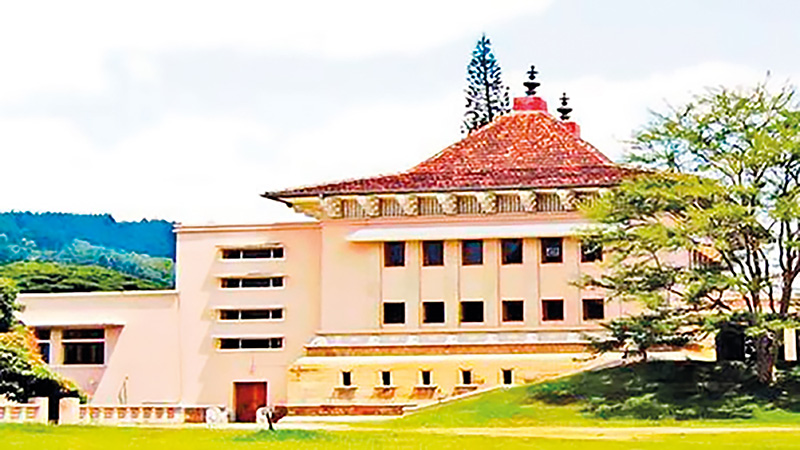
The former Director General notes that the University of Peradeniya itself offers a compelling case study of both the problem and the solution. The main campus, already densely built and ecologically sensitive, continues to absorb new faculties, hostels and administrative buildings, placing immense pressure on green spaces and drainage systems.
“The Peradeniya campus was designed with landscape harmony in mind,” he said. “But over time, ad-hoc construction has compromised that vision. If development continues in the same manner, the campus will lose not only its aesthetic value but also its ecological resilience.”
Professor Wijesundara supports the idea of reorganising the Rajawatte area—located away from the congested core of the university—as a future development zone. Rather than expanding inward and fragmenting remaining open spaces, he argues that Rajawatte can be planned as a well-designed extension, integrating academic, residential and service infrastructure in a controlled manner.
Crucially, he stresses that such reorganisation must go hand in hand with social responsibility, particularly towards minor staff currently living in the Rajawatte area.
“These workers are the backbone of the university. Any development plan must ensure their dignity and wellbeing,” he said. “Providing them with modern, safe and affordable multistoried housing—especially near the railway line close to the old USO premises—would be both humane and practical.”
According to Professor Wijesundara, housing complexes built near existing transport corridors would reduce daily commuting stress, minimise traffic within the campus, and free up valuable land for planned academic use.
More importantly, vertical housing would significantly reduce the university’s physical footprint.
Drawing parallels with Ranawaka’s Gannoruwa proposal, he emphasised that vertical development is no longer optional for Sri Lanka.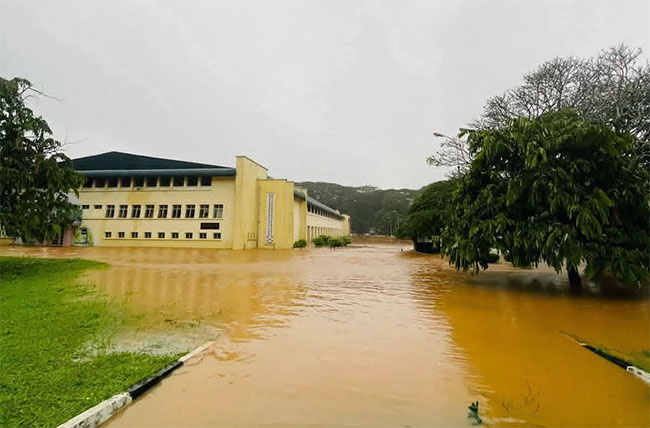
“We are a small island with a growing population and shrinking safe land,” he warned.
“If we continue to spread out instead of building up, disasters will become more frequent and more deadly. Vertical housing, when done properly, is environmentally sound, economically efficient and socially just.”

Peradeniya University flooded
The veteran botanist also highlighted the often-ignored link between disaster vulnerability and the destruction of green buffers.
“Every time we clear a lowland, a wetland or a forest patch for construction, we remove nature’s shock absorbers,” he said.
“The Royal Botanic Gardens has survived floods for over a century precisely because surrounding landscapes once absorbed excess water. Urban planning must learn from such ecological wisdom.”
Professor Wijesundara believes that universities, as centres of knowledge, should lead by example.
“If an institution like Peradeniya cannot demonstrate sustainable planning, how can we expect cities to do so?” he asked. “This is an opportunity to show that development and conservation are not enemies, but partners.”
As climate-induced disasters intensify across the country, voices like his—and proposals such as those articulated by Patali Champika Ranawaka—underscore a simple but urgent truth: Sri Lanka’s future safety depends not only on disaster response, but on how and where we build today.
The challenge now lies with policymakers and planners to move beyond television studio discussions and academic warnings, and translate these ideas into concrete, people-centred action.
By Ifham Nizam ✍️

At the initial stage of my six-year involvement in uplifting society through skill-based initiatives, particularly by promoting handicraft work and teaching students to think creatively and independently, my efforts were partially jeopardized by deep-rooted superstition and resistance to rational learning.
Superstitions exerted a deeply adverse impact by encouraging unquestioned belief, fear, and blind conformity instead of reasoning and evidence-based understanding. In society, superstition often sustains harmful practices, social discrimination, exploitation by self-styled godmen, and resistance to scientific or social reforms, thereby weakening rational decision-making and slowing progress. When such beliefs penetrate the educational environment, students gradually lose the habit of asking “why” and “how,” accepting explanations based on fate, omens, or divine intervention rather than observation and logic.
Initially, learners became hesitant to challenge me despite my wrong interpretation of any law, less capable of evaluating information critically, and more vulnerable to misinformation and pseudoscience. As a result, genuine efforts towards social upliftment were obstructed, and the transformative power of education, which could empower individuals economically and intellectually, was weakened by fear-driven beliefs that stood in direct opposition to progress and rational thought. In many communities, illnesses are still attributed to evil spirits or curses rather than treated as medical conditions. I have witnessed educated people postponing important decisions, marriages, journeys, even hospital admissions, because an astrologer predicted an “inauspicious” time, showing how fear governs rational minds.
While teaching students science and mathematics, I have clearly observed how superstition acts as a hidden barrier to learning, critical thinking, and intellectual confidence. Many students come to the classroom already conditioned to believe that success or failure depends on luck, planetary positions, or divine favour rather than effort, practice, and understanding, which directly contradicts the scientific spirit. I have seen students hesitate to perform experiments or solve numerical problems on certain “inauspicious” days.
In mathematics, some students label themselves as “weak by birth”, which creates fear and anxiety even before attempting a problem, turning a subject of logic into a source of emotional stress. In science classes, explanations based on natural laws sometimes clash with supernatural beliefs, and students struggle to accept evidence because it challenges what they were taught at home or in society. This conflict confuses young minds and prevents them from fully trusting experimentation, data, and proof.
Worse still, superstition nurtures dependency; students wait for miracles instead of practising problem-solving, revision, and conceptual clarity. Over time, this mindset damages curiosity, reduces confidence, and limits innovation, making science and mathematics appear difficult, frightening, or irrelevant. Many science teachers themselves do not sufficiently emphasise the need to question or ignore such irrational beliefs and often remain limited to textbook facts and exam-oriented learning, leaving little space to challenge superstition directly. When teachers avoid discussing superstition, they unintentionally reinforce the idea that scientific reasoning and superstitious beliefs can coexist.
To overcome superstition and effectively impose critical thinking among students, I have inculcated the process to create a classroom culture where questioning was encouraged and fear of being “wrong” was removed. Students were taught how to think, not what to think, by consistently using the scientific method—observation, hypothesis, experimentation, evidence, and conclusion—in both science and mathematics lessons. I have deliberately challenged superstitious beliefs through simple demonstrations and hands-on experiments that allow students to see cause-and-effect relationships for themselves, helping them replace belief with proof.
Many so-called “tantrik shows” that appear supernatural can be clearly explained and exposed through basic scientific principles, making them powerful tools to fight superstition among students. For example, acts where a tantrik places a hand or tongue briefly in fire without injury rely on short contact time, moisture on the skin, or low heat transfer from alcohol-based flames rather than divine power.
“Miracles” like ash or oil repeatedly appearing from hands or idols involve concealment or simple physical and chemical tricks. When these tricks are demonstrated openly in classrooms or science programmes and followed by clear scientific explanations, students quickly realise how easily perception can be deceived and why evidence, experimentation, and critical questioning are far more reliable than blind belief.
Linking concepts to daily life, such as explaining probability to counter ideas of luck, or biology to explain illness instead of supernatural causes, makes rational explanations relatable and convincing.
Another unique example that I faced in my life is presented here. About 10 years ago, when I entered my new house but did not organise traditional rituals that many consider essential for peace and prosperity as my relatives believed that without them prosperity would be blocked. Later on, I could not utilise the entire space of my newly purchased house for earning money, largely because I chose not to perform certain rituals.
While this decision may have limited my financial gains to some extent, I do not consider it a failure in the true sense. I feel deeply satisfied that my son and daughter have received proper education and are now well settled in their employment, which, to me, is a far greater achievement than any ritual-driven expectation of wealth. My belief has always been that a house should not merely be a source of income or superstition-bound anxiety, but a space with social purpose.
Instead of rituals, I strongly feel that the unused portion of my house should be devoted to running tutorials for poor and underprivileged students, where knowledge, critical thinking, and self-reliance can be nurtured. This conviction gives me inner peace and reinforces my faith that education and service to society are more meaningful measures of success than material profit alone.
Though I have succeeded to some extent, this success has not been complete due to the persistent influence of superstition.
by Dr Debapriya Mukherjee
Former Senior Scientist
Central Pollution Control Board, India ✍️


 Australian Prime Minister Anthony Albanese has done very well to speak-up against and outlaw race hate in the immediate aftermath of the recent cold-blooded gunning down of several civilians on Australia’s Bondi Beach. The perpetrators of the violence are believed to be ardent practitioners of religious and race hate and it is commendable that the Australian authorities have lost no time in clearly and unambiguously stating their opposition to the dastardly crimes in question.
The Australian Prime Minister is on record as stating in this connection: ‘ New laws will target those who spread hate, division and radicalization. The Home Affairs Minister will also be given new powers to cancel or refuse visas for those who spread hate and a new taskforce will be set up to ensure the education system prevents, tackles and properly responds to antisemitism.’
It is this promptness and single-mindedness to defeat race hate and other forms of identity-based animosities that are expected of democratic governments in particular world wide. For example, is Sri Lanka’s NPP government willing to follow the Australian example? To put the record straight, no past governments of Sri Lanka initiated concrete measures to stamp out the evil of race hate as well but the present Sri Lankan government which has pledged to end ethnic animosities needs to think and act vastly differently. Democratic and progressive opinion in Sri Lanka is waiting expectantly for the NPP government’ s positive response; ideally based on the Australian precedent to end race hate.
Meanwhile, it is apt to remember that inasmuch as those forces of terrorism that target white communities world wide need to be put down their counterpart forces among extremist whites need to be defeated as well. There could be no double standards on this divisive question of quashing race and religious hate, among democratic governments.
The question is invariably bound up with the matter of expeditiously and swiftly advancing democratic development in divided societies. To the extent to which a body politic is genuinely democratized, to the same degree would identity based animosities be effectively managed and even resolved once and for all. To the extent to which a society is deprived of democratic governance, correctly understood, to the same extent would it experience unmanageable identity-bred violence.
This has been Sri Lanka’s situation and generally it could be stated that it is to the degree to which Sri Lankan citizens are genuinely constitutionally empowered that the issue of race hate in their midst would prove manageable. Accordingly, democratic development is the pressing need.
While the dramatic blood-letting on Bondi Beach ought to have driven home to observers and commentators of world politics that the international community is yet to make any concrete progress in the direction of laying the basis for an end to identity-based extremism, the event should also impress on all concerned quarters that continued failure to address the matters at hand could prove fatal. The fact of the matter is that identity-based extremism is very much alive and well and that it could strike devastatingly at a time and place of its choosing.
It is yet premature for the commentator to agree with US political scientist Samuel P. Huntingdon that a ‘Clash of Civilizations’ is upon the world but events such as the Bondi Beach terror and the continuing abduction of scores of school girls by IS-related outfits, for instance, in Northern Africa are concrete evidence of the continuing pervasive presence of identity-based extremism in the global South.
As a matter of great interest it needs mentioning that the crumbling of the Cold War in the West in the early nineties of the last century and the explosive emergence of identity-based violence world wide around that time essentially impelled Huntingdon to propound the hypothesis that the world was seeing the emergence of a ‘Clash of Civilizations’. Basically, the latter phrase implied that the Cold War was replaced by a West versus militant religious fundamentalism division or polarity world wide. Instead of the USSR and its satellites, the West, led by the US, had to now do battle with religion and race-based militant extremism, particularly ‘Islamic fundamentalist violence’ .
Things, of course, came to a head in this regard when the 9/11 calamity centred in New York occurred. The event seemed to be startling proof that the world was indeed faced with a ‘Clash of Civilizations’ that was not easily resolvable. It was a case of ‘Islamic militant fundamentalism’ facing the great bulwark, so to speak, of ‘ Western Civilization’ epitomized by the US and leaving it almost helpless.
However, it was too early to write off the US’ capability to respond, although it did not do so by the best means. Instead, it replied with military interventions, for example, in Iraq and Afghanistan, which moves have only earned for the religious fundamentalists more and more recruits.
Yet, it is too early to speak in terms of a ‘Clash of Civilizations’. Such a phenomenon could be spoken of if only the entirety of the Islamic world took up arms against the West. Clearly, this is not so because the majority of the adherents of Islam are peaceably inclined and want to coexist harmoniously with the rest of the world.
However, it is not too late for the US to stop religious fundamentalism in its tracks. It, for instance, could implement concrete measures to end the blood-letting in the Middle East. Of the first importance is to end the suffering of the Palestinians by keeping a tight leash on the Israeli Right and by making good its boast of rebuilding the Gaza swiftly.
Besides, the US needs to make it a priority aim to foster democratic development worldwide in collaboration with the rest of the West. Military expenditure and the arms race should be considered of secondary importance and the process of distributing development assistance in the South brought to the forefront of its global development agenda, if there is one.
If the fire-breathing religious demagogue’s influence is to be blunted worldwide, then, it is development, understood to mean equitable growth, that needs to be fostered and consolidated by the democratic world. In other words, the priority ought to be the empowerment of individuals and communities. Nothing short of the latter measures would help in ushering a more peaceful world.

Australia seize handy lead after Josh Tongue five-for on 20-wicket day

Showers may occur in the Northern, Eastern and Uva provinces and in Polonnaruwa, Matale and Nuwara-Eliya districts

Lankan aircrew fly daring UN Medevac in hostile conditions in Africa

Lanka to observe National Safety Day today

Street vendors banned from Kandy City

Police fully armed with breathalyser test kits during season of cheer

‘Dates have the highest sugar content to fight Coronavirus’

Sunday Island 27 December – Headlines

#SundayIsland 17th December – Headlines

Sunday Island – 28th March

Sunday Island Headlines – 21 March

Sunday Island – 21st February – Headlines
-

 News4 days ago
Members of Lankan Community in Washington D.C. donates to ‘Rebuilding Sri Lanka’ Flood Relief Fund
-

 Latest News6 days ago
Landslide early warnings issued to the districts of Badulla, Kandy, Kurunegala, Matale and Nuwara-Eliya extended till 8AM on Sunday (21)
-

 News5 days ago
Air quality deteriorating in Sri Lanka
-

 Business6 days ago
Browns Investments sells luxury Maldivian resort for USD 57.5 mn.
-

 Editorial7 days ago
Cops as whipping boys?
-

 News2 days ago
British MP calls on Foreign Secretary to expand sanction package against ‘Sri Lankan war criminals’
-
 Features6 days ago
Hatton Plantations and WNPS PLANT Launch 24 km Riparian Forest Corridor
-

 News5 days ago
Cardinal urges govt. not to weaken key socio-cultural institutions