
News
Police clamp down on Traffic light beggars, warn public against donations

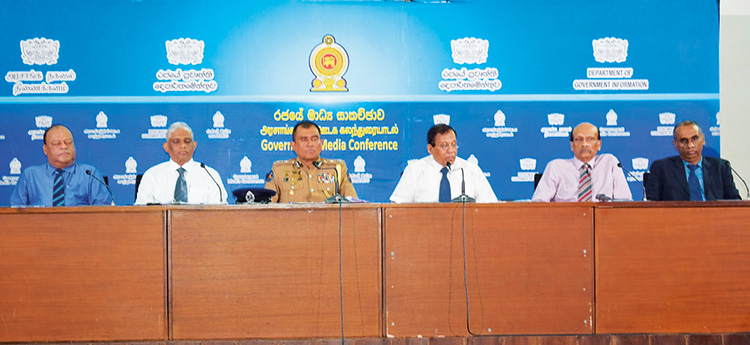
Initiative launched to combat beggar menace at traffic lights in Colombo
The persistent issue of beggars crowding around traffic lights in Colombo, causing inconvenience to motorists and pedestrians alike, has prompted concerted action from authorities and stakeholders. Despite the socio-economic challenges underlying the situation, recent developments have underscored the urgent need for intervention to alleviate the growing menace.
Reports indicate that the presence of beggars, often accompanied by traders, has escalated to intolerable levels, particularly at traffic light intersections throughout the city. At a monthly meeting of the Executive Committee of the Automobile Association of Ceylon last July, concerns were raised regarding the worsening situation and its detrimental impact on road safety and public convenience.
Beggars resorting to disruptive tactics such as banging on car windshields, feigning accidents, and causing traffic congestion have exacerbated the problem. Recognizing the gravity of the issue, the Association on Road Safety convened a forum comprising key stakeholders to devise effective strategies for resolution.
A Special Sub-Committee, spearheaded by the Association’s Moderator, facilitated discussions among various stakeholders, including representatives from the Road Development Authority, Sri Lanka Tourism Authority, Colombo Municipal Council, National Child Protection Authority, Department of Social Services, and Sri Lanka Police.
Following thorough deliberations, it was determined that proactive measures, including public awareness campaigns, were necessary to address the issue comprehensively. Consequently, the Automobile Association of Ceylon, in collaboration with relevant authorities, developed multilingual advisory messages and video clips to educate motorists about the hazards of giving alms at traffic lights.
The initiative, titled “Refrain from Helping Beggars near Traffic Colour Lights,” was officially launched at a press conference held on April 29th, 2024, at the Ministry of Mass Media Auditorium. The event saw the participation of stakeholders and media officials, signaling a unified effort to combat the beggar menace and uphold the city’s image and cultural integrity.
Speaking at the inauguration, representatives expressed gratitude for the collective efforts and expertise dedicated to the project’s success. They urged continued support from all stakeholders to ensure the effective implementation of the initiative and maintain traffic light areas free from obstruction and inconvenience.
As Colombo strives to mitigate the challenges posed by urban beggary, initiatives like these underscore the importance of collaborative action and public awareness in fostering safer and more orderly urban environments.










By Shamindra Ferdinando
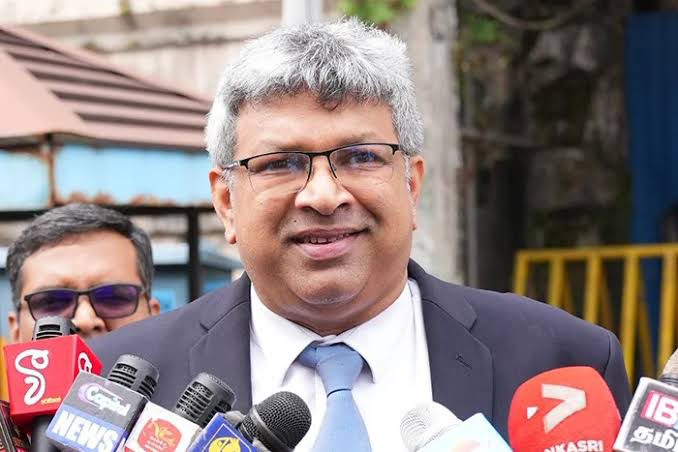
Justice and National Integration Minister Harshana Nanayakkara said yesterday that the government would proceed with both the 22nd Amendment to the Constitution, and the Judicature (Amendment) Bill, because the government could not achieve its goal by increasing the retirement ages of a section of the judges.
The Attorney-at-Law declared that the government would go ahead with both Bills, whatever the obstacles. The Minister was responding to The Island query whether the government would go ahead with the Judicature (Amendment) Bill that hadn’t been so far challenged in the Supreme Court, pending the decision on the controversial 22nd Amendment facing tough legal challenge.
Nanayakkara emphasised the importance of the enactment of both Bills. The 22nd Amendment seeks to increase the retirement ages of Supreme Court judges to 67 from 65 and Court of Appeal judges from 63 to 65. The Judicature (Amendment) Bill seeks to increase the retirement ages of the High Court judges to 63 from 61, and that of the District court judges and and Magistrates to 62.
Minister Nanayakkara said that the enactment of both Bills simultaneously would make a significant contribution to improve the overall situation, particularly dealing with a backlog of 1.1 million cases.
Joint Opposition and the Bar Association of Sri Lanka (BASL), too, acknowledged that petitions against the Judicature (Amendment) Bill were yet to be filed.

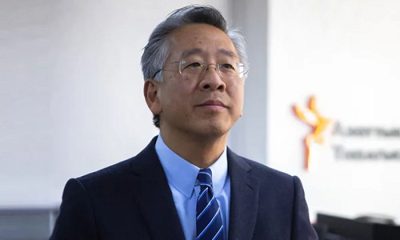
U.S. Ambassador-designate Eric Meyer arrived in Colombo on the evening of August 22, 2026, to assume duties as his country’s next Ambassador to Sri Lanka., the embassy said.
Ambassador-designate Meyer expressed his enthusiasm for the opportunity to serve as the 29th U.S. Ambassador to Sri Lanka, stating: “It is an honour to represent the United States in Sri Lanka. I look forward to building on the strong foundation between our two democracies to advance a U.S.-Sri Lanka partnership that creates new opportunities for American businesses, furthers our shared security interests, and delivers greater prosperity for both Americans and Sri Lankans.”
Prior to his assignment in Sri Lanka, he served as Chargé d’Affaires, a.i., at the U.S. Mission to Norway and, before that, as Senior Bureau Official for the Bureau of South and Central Asian Affairs at the Department of State.
By Shamindra Ferdinando
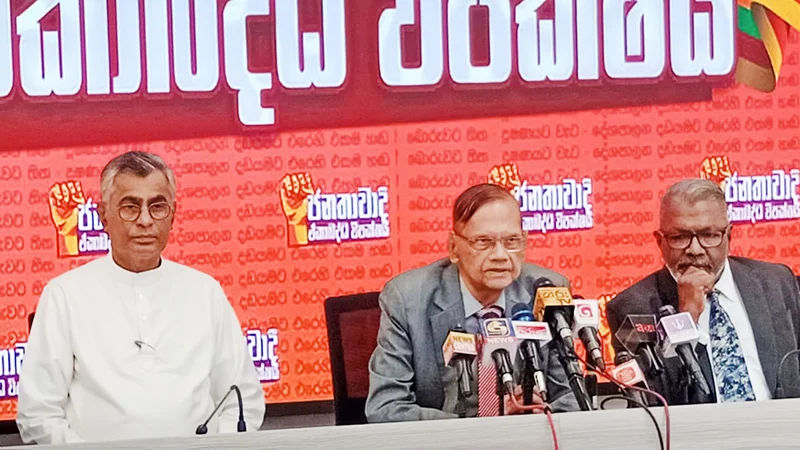
The Joint Opposition yesterday questioned Justice and National Integration Minister Harshana Nanayakkara’s recent declaration that a referendum wouldn’t be held to decide the fate of the 22 Amendment.
Former External Affairs Minister Prof. G. L. Peiris took exception to Nanayakkara’s statement. Addressing the media at former President Ranil Wickremesinghe’s Flower Road Office, Prof. Peiris said that the Supreme Court was still in the process of receiving petitions against the 22n Amendment to the Constitution.
In fact, petitions could be filed over a period of two weeks from the day the amendment bill was presented to parliament, Prof. Peiris said. Minister Nanayakkara tabled the bill on 18 August.
The convenor of the Joint Opposition asked how Minister Nanayakkara predicted that there wouldn’t be a referendum even before the end of the two week period allocated for the public to submit petitions. The Supreme Court decision would be made known to the Speaker within three weeks, Prof. Peiris said, declaring that the Justice Minister shouldn’t consider the Supreme Court as a rubber stamp of the government.
The former parliamentarian emphasized that the NPP government couldn’t under any circumstances intervene in the process undertaken by the Supreme Court. Referring to the growing number of petitions filed against the 22 Amendment, Prof. Peiris said that all petitioners agreed that the matter should be decided at a referendum.
Prof. Peiris alleged that the Justice Minister ruling out a referendum was contempt of court. He reiterated the call for all sitting Supreme Court judges to hear the petitions. Commenting on three Amendments before the Supreme Court namely the 22 Amendment to extend the retirement ages of superior court judges, Judicature (Amendment) Bill to extend the retirement ages of High Court, District Court and Magistrate court judges and amendments to the Anti-Corruption Act, Prof. Peiris alleged that the government was creating an environment to divide the available Supreme Court judges to deal with all three, simultaneously.
Prof. Peiris said that this was done deliberately to manipulate the process to facilitate the government initiative. Although the Supreme Court consists of 17 judges, including the Chief Justice, four vacancies remained for several months.
The ex-minister appreciated the clergy representing all faiths declaring opposition to the 22 Amendment.

BCCI AGM set for September 18 in Mumbai

Three franchises sold in Afghanistan Premier League T20

Showers above 75 mm are likely at some places in the Western, Sabaragamuwa and North-western provinces and in Kandy, Nuwara-Eliya, Galle and Matara districts

Govt. determined to press ahead with 22A: Justice Minister

U.S. Ambassador designate to Sri Lanka Eric Meyer here

GL alleges Justice Minister committed contempt of court by ruling out referendum

‘Dates have the highest sugar content to fight Coronavirus’

Sunday Island 27 December – Headlines

#SundayIsland 17th December – Headlines

Sunday Island – 28th March

Sunday Island Headlines – 21 March

Sunday Island – 21st February – Headlines
-
 News5 days ago
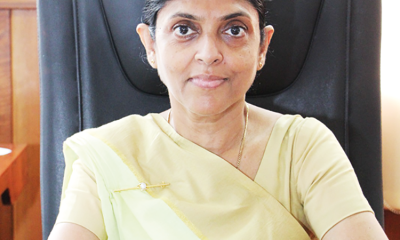
Country’s first woman Surveyor General appointed
-

 Business4 days ago
SriLankan Airlines makes ShakthiSAT Mission possible for talented Sri Lankan student
-

 Sports6 days ago
Tharanga, Weber headline stellar Lausanne javelin field
-

 Features5 days ago
Medical education in Sri Lanka: Then and now
-
 Business6 days ago
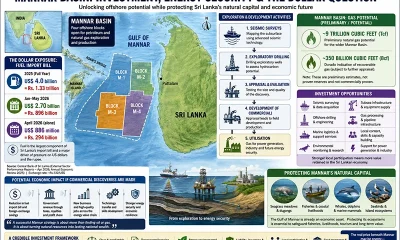
Mannar’s offshore opportunity: the dollar question behind Sri Lanka’s oil and gas search
-

 Latest News5 days ago
Imran Khan moved to private hospital amid deteriorating health
-

 Latest News5 days ago
Government has declared 21, 22 and 23 August 2026 as national days of mourning
-
Latest News4 days ago
Tharanga edges out Chopra in 88m javelin battle