
Life style
Fairness at a cost:Ugly truth behind whitening creams

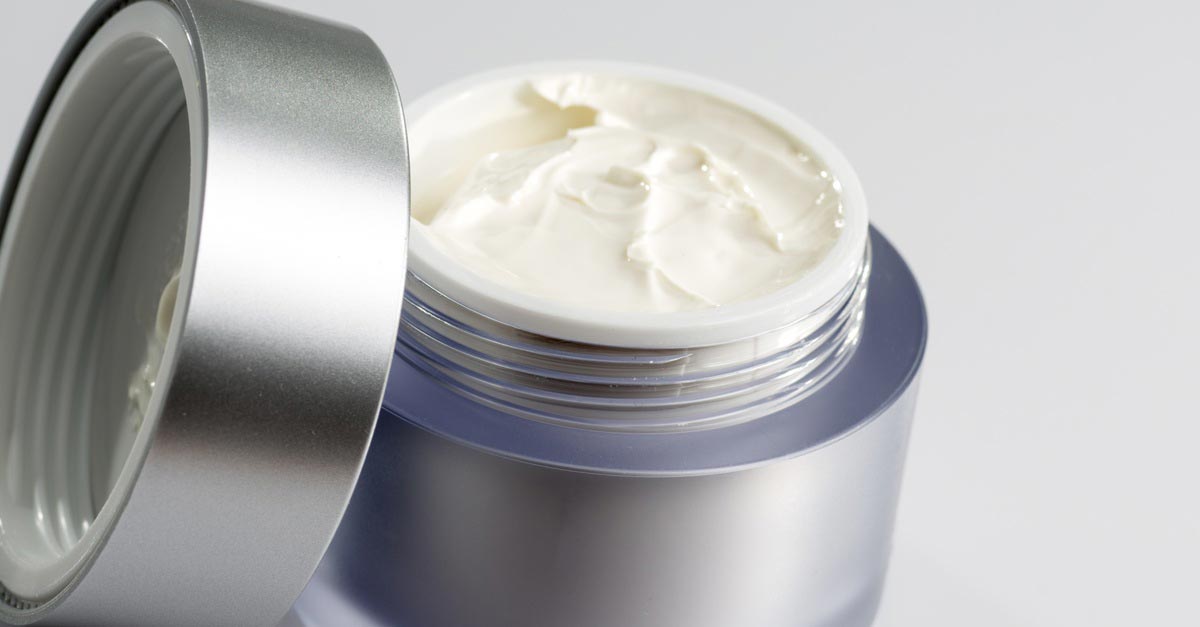
In a market saturated with promises of a brighter, fairer and flawless skin Dr. Nishantha Pathirana, Consultant in Dermatology, Army hospital is calling for caution, awareness and a serious rethink of beauty standards. With decades of experience in dermatology and aesthetic medicine, he spoke to the ‘Sunday Island’ about the risks, myths surrounding fairness creams in Sri Lanka. “We see many patients suffering from thinning skin pigmentation disorders, sensitivity and even acne, all triggered by these whitening creams. His message is simple, understand your skin, protect it from the sun, hydrate well, eat smart and consult a qualified dermatologist before trying out any treatment.
In the age of skin positivity and inclusive beauty, the fairness cream industry thrives. Walk into any beauty aisle or scroll through online skin care ads, and you’ll still find rows of creams, serums and soaps from night creams to face washes and even sunscreens promising instant fairness, shelves are filled with products that prey on security. What’s driving this persisting obsession?
Today, there is a belief that being lighter gives you a better chance-whether in love, in the job market or simply in being accepted says Dr. Nishantha Pathirana
Doctor warns people should understand that most of these creams contain harmful ingredients, like steroids, mercury or others which are harmful to the skin. Long term use can lead to permanent skin damage, or pigmentation issues.
 Q: Why do Sri Lankans prefer fair skin?
The preference for fair skin in Sri Lanka — as in many South Asian societies — is shaped by a combination of historical, cultural, social, and economic factors. Here’s a breakdown of why this bias exists:
Colonial Legacy
Sri Lanka was colonized by the Portuguese, Dutch, and British over several centuries. During colonial rule, lighter skin was associated with power, privilege, and superiority.
This established a hierarchy where Europeans (with fair skin) were at the top and locals (often darker-skinned) were seen as lower status. That legacy lingers in perceptions of beauty and status.
Cultural and Religious Influence
In ancient South Asian literature and folklore, fair skin was often idealized. For instance, many gods and heroes in Hindu and Buddhist stories are described as being radiant or light-skinned.
The idea of beauty being linked to purity or divinity often included a preference for lighter tones.

Class and Caste Associations
Historically, upper castes or higher social classes were often less exposed to the sun due to indoor lifestyles, resulting in lighter skin.
Darker skin came to be (unfairly) associated with manual labor, poverty, or lower status. These associations still persist subtly in social attitudes.
Media and Advertising
In Sri Lankan media, like much of South Asia, has long promoted lighter-skinned models and actors, reinforcing the idea that fair skin is more attractive or desirable.
Fairness creams and skin-lightening products are heavily marketed, often using slogans that link fair skin to success, confidence, and romantic desirability.
Global Beauty Standards
Western beauty standards, often emphasizing lighter skin, have been globalized. Through movies, fashion, and social media, these ideals influence local preferences.
However, this is beginning to change with more global awareness around colorism and representation.
Marriage and Social Expectations
In traditional matchmaking (including arranged marriages), families often prefer fair-skinned brides and grooms. Matrimonial ads still frequently list “fair” as a desirable quality.
This puts pressure, especially on women, to conform to lighter-skinned ideals.
Q: Do you see this reflected in your patients?
Yes, at least 25% of my patients ask for a fairer skin
What is the medical news on fairness creams and skin bleaching products?
Here’s what’s new in fairness creams and skin-bleaching products — including health risks, recent studies, and regulation updates:
Health Risks — Particularly in South Asia
Steroid Contamination and self-prescribing
In Lucknow, India, dermatologists report a surge in skin damage—as many as 80% of patients with pigmentation or fairness concerns had used over-the-counter creams promoted by social media before seeking help. These often contain steroids, leading to fungal infections, skin thinning, rashes, and lasting scars.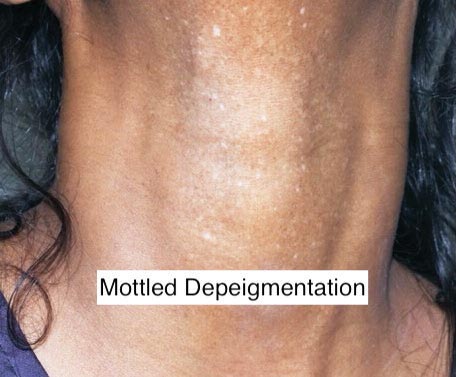
Mercury Toxicity and Kidney Damage
A major study in Bangladesh found that 22 out of 26 skin lightening creams exceeded the safe mercury limit
In Sri Lanka, dermatologists report a notable increase in kidney disease linked to these creams—sometimes outpacing cancer. Symptoms include stretch marks, discoloration of nails and palms—occurring even before long term effects like cancer manifest .
Indian researchers from Kerala also documented cases of nephrotic syndrome (membranous nephropathy) tied to fairness cream use: heavy metals, particularly mercury levels up to 10,000× above safe levels, were found in blood and urine samples. 68% of cases in one cohort involved skin cream use.
Other Harmful Ingredients
These products often contain other risky agents: hydroquinone, corticosteroids, and kojic acid. Long-term use can cause skin ochronosis (dark patches), glaucoma, hypertension, immune suppression, and increased skin infections.
Q: What are the short-term and long term risks using fairness creams?
Fairness creams (also known as skin-lightening or skin-brightening creams) often promise lighter, more even-toned skin. However, many of these products—especially unregulated or over-the-counter ones—can pose serious short-term and long-term health risks, depending on their ingredients and usage patterns.
Common Active Ingredients in Fairness Creams:
Hydroquinone, Mercury compounds, Corticosteroids (like betamethasone, clobetasol), Arbutin, Kojic acid
Niacinamide (generally safe, but often combined with harsher agents)
Short-Term Risks
These often appear within weeks to months of regular use:
Skin Irritation
Redness, itching, burning sensation
Especially with hydroquinone or kojic acid
Allergic Reactions
Rash, swelling, contact dermatitis, caused by fragrances or harsh chemicals
Photosensitivity
Increased risk of sunburn due to skin thinning, Common with hydroquinone or corticosteroids
Steroid Acne
Corticosteroids in creams can cause acne breakouts
Temporary Skin Lightening
Uneven results, “patchy” depigmentation
Long-Term Risks
These develop with prolonged or heavy use, especially of unregulated products:
Skin Thinning (Atrophy), Fragile, easily bruised skin—common with long-term steroid use
Ochronosis
Paradoxical darkening of the skin with prolonged hydroquinone use
Mercury Poisoning
Found in some illegal creams, Symptoms: mood changes, kidney damage, tremors, memory issues
Hormonal Imbalance
From corticosteroids absorbed through the skin, can lead to weight gain, menstrual irregularities, or cushing’s syndrome
Increased Risk of Skin Infections
Due to immune suppression from steroids
Psychological Dependence
Body image issues or addiction to skin lightening

Dr. Nishantha Pathirana
Skin cancers
Q: How often do you treat patients suffering from damage caused by these products?
This is so frequent at least I do see 5-6 cases a day after using various whitening agents.
Some fairness creams are marketed as herbal or natural. Are they safe?
Fairness creams that are marketed as herbal or natural may seem safer, but “natural” doesn’t always mean safe or effective. Here are some important considerations:
What “Herbal” or “Natural” Might Really Mean
These terms are not strictly regulated in many countries, so a product labeled “herbal” might still contain synthetic chemicals, preservatives, or steroids.
Even genuine natural ingredients can cause side effects or allergic reactions, especially on sensitive skin.
Potential Risks of Herbal Fairness Creams
Undisclosed Steroids or Mercury:
Some so-called natural creams have been found to contain harmful steroids or mercury, which can cause skin thinning, acne, or long-term pigmentation issues.
Mercury, in particular, can cause kidney damage and neurological problems with prolonged use.
Photosensitivity:
Ingredients like citrus extracts or essential oils can make your skin more sensitive to sunlight, increasing the risk of sunburn or hyperpigmentation.
Lack of Efficacy:
Many herbal creams claim to “lighten” or “brighten” skin but often offer no real results beyond temporary moisturization or superficial effects.
Irritation or Allergic Reactions:
Natural ingredients like neem, sandalwood, or turmeric may cause rashes or dermatitis in some individuals.
Q: What is your take on Ayurvedic or home-made remedies? Are they effective or dangerous?
When it comes to ayurvedic and home remedies most of the ingredients are time tested and well known. When these things are used consistently one can see the improvement in skin colour but those are too not free of side effects since those too can cause above side effects.
Q: Are fairness injections and IV drips like glutathione safe and effective or are they medically approved?
Fairness injections and IV drips like glutathione are marketed for skin lightening or “brightening,” but their safety and effectiveness are controversial and depend on multiple factors.
Q: What Are fairness Injections?
These usually involve IV administration of glutathione, sometimes combined with vitamin C or other antioxidants, marketed to lighten skin by reducing melanin production.
Q: Do They Work?
Glutathione is a powerful antioxidant found naturally in the body. It can affect melanin production in lab settings, but:
Evidence for systemic (whole-body) skin lightening through IV glutathione is limited and inconsistent.
Some people may notice temporary lightening or “brightening” of their skin tone, but this is not guaranteed, and long-term effects are unclear.
The FDA (U.S.) and WHO do not approve glutathione IV for skin whitening due to insufficient evidence and safety concerns. In Sri Lanka too it has not been approved to be used for cosmetic purposes.
Safety Concerns
Unregulated use: Many clinics offer these drips without proper oversight or medical standards.
Dosage risks: High doses or frequent use may lead to kidney or liver damage, thyroid issues, or rare skin disorders (e.g., Stevens-Johnson syndrome).
Unknown interactions: Especially risky for those with pre-existing health issues or on medication.
IV risks: Any intravenous treatment has inherent risks — infection, phlebitis, and allergic reactions.
Q: Is Glutathione Safe?
Oral glutathione supplements or those obtained from diet (e.g., in fruits and veggies) are generally safe but less potent for skin effects.
Glutathione is used medically for certain conditions like chemotherapy side effects or liver detox, under supervision.
The bottom Line is that not recommended for cosmetic use unless prescribed and administered by a licensed medical professional.
Efficacy is unproven, and risks may outweigh benefits—especially in the absence of strong scientific backing.
The pursuit of skin lightening can also raise concerns around colourism and mental well-being. It’s worth reflecting on motivations and considering safer skincare alternatives (like sunscreen, hydration, and topical agents).
Q: What is your message for people keen to improve their complexion?
First and foremost the person should understand their skin type ( Your skin type, dry or normal, sensitive or non-sensitive)
Select the products carefully which suits their skin as per the skin type.
Self-medication must be avoided an should take the opinion/ advice from a qualified personnel at the earliest when some is having any skin irritations
Maintain hydration well. (avoid using artificial drinks and carbonated water)
Balanced diet and regular workouts to maintain optimum BMI
Take plenty of antioxidants
Use the sunscreen of more than 50 SPF regularly especially when someone is getting exposed to direct or indirect sunlight. People who are working on light based devices may use a tinted sunscreen to avoid harmful effects of the screen.


Ramani Fenando’s new Image and Etiquette Academy
In a world where first impressions speak before words, Sri Lanka’s beauty icon Ramani Fernando has taken a bold step beyond the salon chair to shape confidence from within. Her newly launched Etiquette and Image Academy is designed to refine not only appearance, but presence, poise and personal power.
Step into a space where confidence meets sophistication, Ramani Fernando Academy is redefining how Sri Lankans approach personal branding ,offering a unique blend of ettiquette, style and communication mastery.
Her newly launched personal branding and EtiquetteAcademy was unveiled in a simple ceremony at the Galle Face hotel. This marks a bold and timely step into the realm of confidence leadership, presence and modern social grace.
Colombo’s social elite, corporate leaders, fashion insiders and longtime clients gathered in celebration of a vision that seeks to shape not just appearance but cofidence building.
Ramani, in her opening speech, said “our courses are carefully designed to meet with international standards, ensuring participants recieve training that meets both local and global expectations.
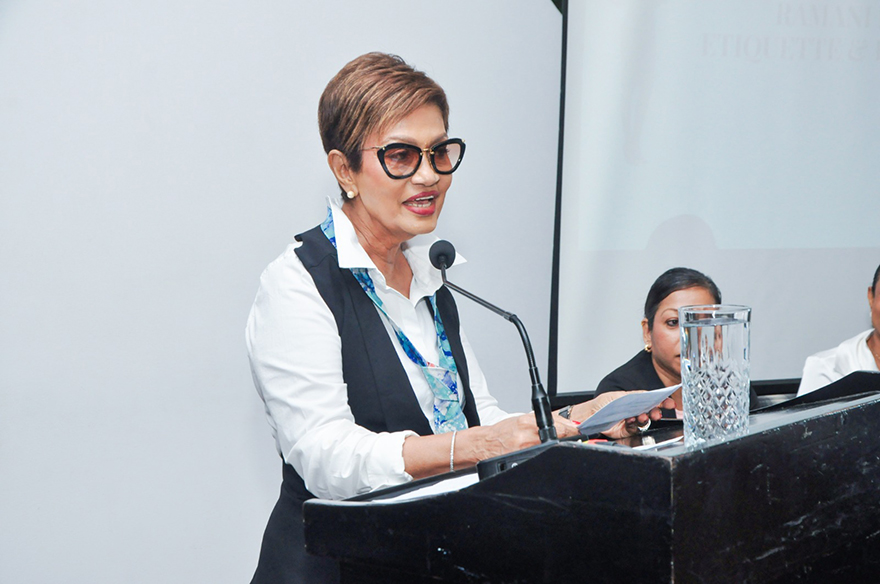
Ramani Fernando – shaping confidence
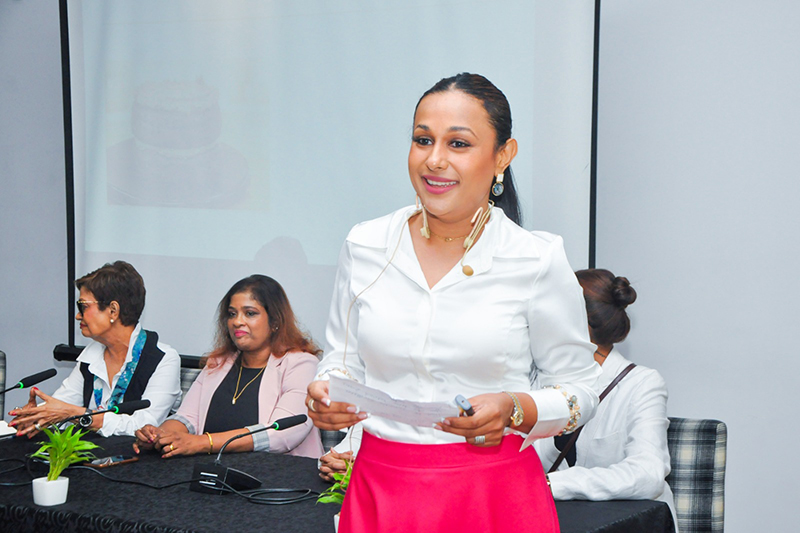
Professional face of etiquette training
Faith Launders who is the Director of Etiquette and Protocol in the Academy pointed out this personal branding and etiquette programmes will help participants cultivate grace, confidence and refined personal style through expert guidance. A former Miss Sri Lanka beauty queen, with experience in aviation, will contribute a creative and professional lens to the Academy’s curriculam.

Invitees from the world of fashion gathered to celebrate the occasion

Carolyn Jurie

Chalana at the helm of beauty
She brings professionalism, poise and a strong commitment to cultivate confidence and promote refined social skills among students. Known for her approachable style and inspiring presence, she strives to create an inclusive learning space where students can transform into confident individuals to navigate life with dignity and elegance.
For decades, Ramani has been a transformative force in Sri Lanka’s beauty industry.
and now this venture signals a natural evolution from external refinement to the art of personal distinction.
The programme blends traditional etiquette with contemporary relevance, offering personal branding and professional image building both in social and corporate etiquette. These are some of the programmes:
= Communication skills and body language, grooming, style and wardrobe alignment.
= Digital image and social media conduct.
= Platforms or in social events the ability to command attention with confidence has to become an important tool.
In today’s hyper connected world, impressions are formed in seconds often long before a handshake, whether in boardrooms, diplomatic circles or in the media.
The teaching staff consists of industry experts trainers amd adminitrators led by othe senior professionals
The Managing Director, Lakmini Lenagala, Training and Administrative Manager, Ramono, Navaratnarajah, Personal Assistant, Merisha Aserappa and Chalana Munasinghe are all industry professionals who have experience, theoretical knowledge and practical skills.
They are experienced instructors with hands on expertise in grooming, etiquette, image building and communication.
While the vision of the Personal Branding and Etiquette Academy belongs to Ramani Fernando, its strength lies in the collective expertise of the professionals who bring the programmes to life.
By bringing together specialists from diverse fields, the Academy offers participants a rare opportunity to refine every dimension of their public and private persona under one roof.
Sessions cover skin care, hair, make up, wardrobe planning and colour coordination.
Communication and public speaking recognising that presence is also conveyed though voice and expression, the Academy offers training in articulation tones, posture and body language.
The training also includes table manners, event conduct, professional courtesy and cross cultural awareness. This Etiquette Academy us designed for both women and men offering guidance on grooming, communication, professional conduct and social confidence.
The Academy acts as a transformative space – one that equips individuals not merely to succeed but to stand out with authencity and grace. The institution reflects Ramani Fernando’s belief that true elegance is a way of being not simply a way of dressing!.
By Zanita Careem
Pix by Thushara Athapatu

World Wildlife Day 2026:
He arrived at the Elephant Transit Home in Udawalawe on March 23, 2024, barely eight months old. Kalo had spent an unknown number of days trapped at the bottom of an abandoned well near Galenbidunuwewa in Sri Lanka’s Anuradhapura District, separated from the herd he had lost. When wildlife officers from the Department of Wildlife Conservation pulled him out, they found a frightened calf, but also something else: resilience.
Today, nearly two years after his rescue, Kalo is no longer the fragile elephant calf who arrived at the Transit Home alone. He is growing steadily, eating well, and has fully integrated into a group of calves preparing for eventual release. His progress is measured not only in size, but in behaviour like social bonding, herd interaction, and independent foraging skills that will determine his readiness for life beyond human protection. Since his arrival, Kalo has grown from 125 kilograms to over 300 kilograms. The wounds he sustained before rescue have fully healed, and he is no longer on any specific medical treatment instead routine management only. He is, by every measure, active, playful, and thriving.
The Elephant Transit Home, also known as Ath Athuru Sevana, has operated within Udawalawe National Park since 1995. It is not an orphanage in the traditional sense. There are no rides, no performances, no human dependency. Human contact is limited strictly to feeding and veterinary care. The rest of the time, the calves are left to bond with one another.
That philosophy is intentional. Elephants are deeply social animals, and calves that grow too attached to humans struggle to survive in the wild. The daily play, the hierarchy, and the formation of peer bonds are all part of a structured rehabilitation process designed to prepare them for rewilding.
Since its establishment, more than 200 orphaned elephants have passed through the Elephant Transit Home. Over 100 have been successfully released back into the wild. In July 2025 alone, six young elephants were returned to Udawalawe National Park during the facility’s 26th release. If all continues as planned, Kalo will follow that path in 2029.
On May 8, 2024, less than two months after Kalo’s rescue, Sun Siyam Pasikudah formalised its long-term commitment to his care through the CarePhant initiative under Sun Siyam Care. The resort pledged ongoing monthly contributions to support Kalo’s nutrition, veterinary care, and daily rehabilitation needs through to his planned release.
Sun Siyam Care is the group’s overarching sustainability programme that integrates environmental stewardship, biodiversity conservation, community engagement, and long-term socio-economic value creation across all Sun Siyam Resorts in the Maldives and Sri Lanka. Through Sun Siyam Care, we invest in initiatives that protect marine and terrestrial ecosystems, reduce waste and single-use plastics, improve resource efficiency, support renewable energy and local sourcing, and promote awareness and participation among guests and communities alike. Kalo’s journey from rescue to rewilding is one example of how Sun Siyam Care extends beyond hospitality, connecting responsible tourism with meaningful environmental and wildlife conservation impact.
“We are delighted to embark on the CarePhant project and become stewards of Kalo’s well-being. Sri Lanka’s elephants are not just a conservation issue; they are part of the living identity of this island, and we feel a genuine responsibility to play our part in protecting them,” said Arshed Refai, General Manager, Sun Siyam Pasikudah.
For Chaminda Upul Kumara, Sustainability Project Manager at Sun Siyam Resorts, the commitment reflects the deeper purpose of Sun Siyam Care. “Conservation is not a single moment. It is a process that requires patience and consistency. With Kalo, we committed to being part of that journey from rescue to release. Every month of support is an investment in his return to the wild,” said Upul.
In the month that marks World Wildlife Day, observed on 03rd March, Kalo’s story serves as a reminder that conservation is not abstract. It is individual. It is long term. And it depends on partnerships between public institutions and responsible private sector actors. In a landscape where habitat loss and human–elephant conflict continue to threaten Sri Lanka’s wild elephant population, sustained commitments like CarePhant demonstrate how responsible tourism can contribute to tangible, measurable conservation outcomes.
Sun Siyam Pasikudah, which holds Travelife Gold Certification and operates under the broader Sun Siyam Care sustainability framework, integrates conservation, local sourcing, and community engagement into its daily operations. The CarePhant project builds on that foundation by linking responsible hospitality directly to wildlife protection.
Three years from now, in 2029, Kalo is expected to walk beyond the protective boundaries of the Elephant Transit Home and into Udawalawe National Park as a young wild elephant. Every veterinary check, every month of nutritional support, and every bond formed within his herd brings him closer to that moment.
“When Kalo walks back into the forest in 2029, it will mark the completion of a journey that began in crisis but was sustained through commitment,” added Arshed Refai. “We are proud that Sun Siyam Care is part of that long-term promise.”
Until then, Kalo continues doing what young elephants at Ath Athuru Sevana are meant to do: growing, learning, and preparing quietly for a life in the wild.

The High Commission of the Islamic Republic of Pakistan and the Pakistani community based in Sri Lanka celebrated the 86th National Day of Pakistan with traditional flavour and resolve to make Pakistan a strong, vibrant and progressive democratic welfare state.
The day commemorates a defining moment that led the foundation for the creation of Pakistan.
The ceremony commenced with the raising of their national flag, fluttering proudly against the morning sky, symbolising faith, unity and discipline, the ideals upon which the nation was built. Dignitaries, members of the diplomatic corps, community leaders and guests gathered in silence as the national anthem resonated creating an atmosphere charged with emotion and national pride .
Cultural elegance added a distinctive charm to the occasion, with traditional attire and warm exchanges reflecting the rich heritage of Pakistan. Guests were later invited to partake in light refreshments, providing an opportunity for cordial interacton and celebration.
Acting High Commissioner of Pakistan, Zunaira Latif unfurled the Pakistani flag to the tune of Pakistan’s national anthem in a ceremony held at the Pakistan High Commission
The National Day of Pakistan is celebrated on 23rd March every year in remembrance of the historic 1940 resolution passed in Lahore, calling for a separate homeland for Muslims of the subcontinent that ultimately led to the creation of Pakistan on August 14, 1947.
Special messages by the President and the Prime Minister of Pakistan were readout, in which both the leaders highlighted the importance of the day and paid tributes to Quaid-e-Azam Muhammad Ali Jinnah.
The Acting High Commissioner of Pakistan in her message on the occasion said that Pakistan and Sri Lanka continue to maintain their traditionally close and mutually beneficial relations, based on mutual respect and trust. She said that the strength of the Pakistan – Sri Lanka relationship lies in diversified engagement in many fields such as trade, defence, science, culture, and education. She also extended sincere greetings and best wishes on behalf of the government and people of Pakistan to the government and people of Sri Lanka.
-

 News4 days ago
Tariff shock from 01 April as power costs climb across the board
-

 News2 days ago
2025 GCE AL: 62% qualify for Uni entrance; results of 111 suspended
-
 News5 days ago
Inquiry into female employee’s complaint: Retired HC Judge’s recommendations ignored
-

 Features6 days ago
When seabed goes dark: The Persian Gulf, cable sabotage, and race for space-based monopoly
-

 Features5 days ago
New arithmetic of conflict: How the drone revolution is inverting economics of war
-

 Business3 days ago
Hour of reckoning comes for SL’s power sector
-

 Editorial2 days ago
Search for Easter Sunday terror mastermind
-

 Sports5 days ago
Sri Lanka’s 1996 World Cup heroes to play exhibition match in Kuala Lumpur