
News
ETCA, Indo-US strategy detrimental to Lanka’s independence – Wimal

By Shamindra Ferdinando
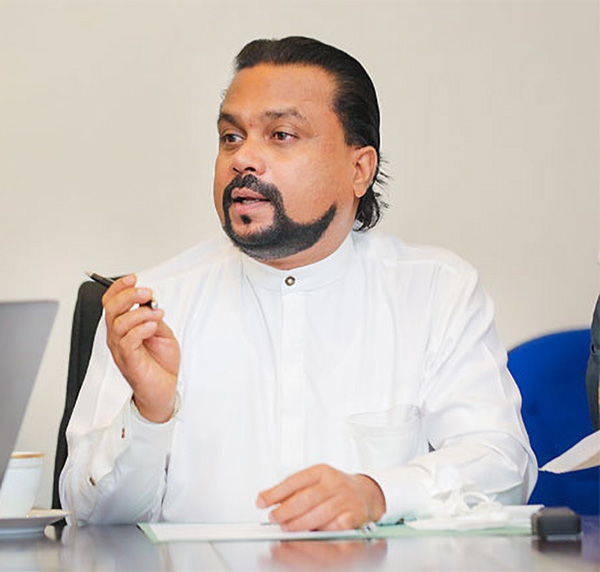
National Freedom Front (NFF) leader Wimal Weerawansa says the proposed Economic and Technology Co-operation Agreement (ETCA) with India should be examined in the context of India’s geopolitical strategy in respect of Sri Lanka.
Referring to a recent declaration by SLPP MP Rear Admiral (retd.) Sarath Weerasekera that the government parliamentary group hadn’t been consulted on the proposed agreement discussed at any level though Cabinet spokesman Bandula Gunawardena announced finalisation of the ETCA by March this year, dissident SLPP MP Weerawansa alleged that New Delhi was tightening its grip on Sri Lanka.
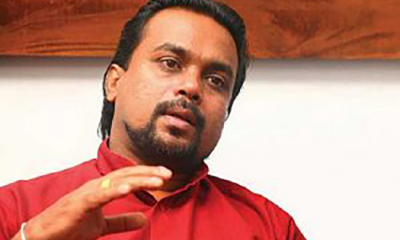
In a brief interview with The Island, following JVP leader Anura Kumara Dissanayake’s visit to India, Weerawansa discussed a range of issues, including the IMF’s intervention, US-India strategy pertaining to post-war Sri Lanka and what he called a murderous tax regime meant to heap further burden on those struggling to make ends meet.
Pointing out that the ETCA would be an extension of the Free Trade Agreement (FTA) the two countries signed during President Chandrika Bandaranaike Kumaratunga’s tenure, MP Weerawansa warned of unprecedented catastrophe if President Ranil Wickremesinghe was allowed to go ahead with his agenda.
MP Weerawansa asked whether bankrupt Sri Lanka struggling to cope with rising unemployment could open the service sector to India, thereby further aggravating the problems here. The NFF parliamentary group consists of six MPs, including National List member Mohammed Muzammil.
Acknowledging the financial assistance to the tune of USD four billion provided in the wake of the economic-political-social crisis in 2022, MP Weerawansa questioned whether India was taking advantage of the situation here to rapidly advance its expansionist policy.
Responding to another query, MP Weerawansa said that the Wickremesinghe-Rajapaksa government should be held responsible for facilitating the Indian project.
Alleging that the Indian take-over of Sri Lanka was being blatantly carried out in the name of the much-touted India’s ‘Neighbourhood First’ policy and her maritime vision SAGAR (Security and Growth for All in the Region), the former minister urged political parties to examine and compare the situation here and the developing situation in the Maldives following the election of China-backed Mohamed Muizzu as the new Maldivian President in last September.
Indian-backed Ibrahim Mohamed Solih suffered defeat at the presidential poll, thereby dealing a significant blow to the overall New Delhi’s strategy there, MP Weerawansa said, adding that some Sri Lankans had been deceived, perhaps willingly by Indian declaration that Indians should choose Sri Lanka as their next travel destination. Indian action was meant to undermine the tourism industry in the Maldives, MP Weerawansa said, New Delhi should never be allowed to pursue such corrosive strategies.
Commenting on the recent launch of Unified Payment Interface (UPI) services in Sri Lanka and Mauritius, the NFF leader alleged that in the name of strengthening financial connectivity India was taking over the smaller economy. If the incumbent government went ahead with ETCA, the consequences would be far reaching and the damage to the country’s independence, cherished for over two millennia, irreparable.
The former minister said that the IMF remedies wouldn’t help the country to regain economic stability though the government depicted the USD 2.9 bn bailout package as the panacea for all our ills. As a result of steep increase in electricity tariffs and unbearable tax regime the local industries couldn’t compete with foreign companies, MP Weerawansa said. The President backed by the SLPP seemed bent on undermining the national economy.
One-time JVP propaganda secretary said that the current JVP leadership contributed to the developing strategy. Their recent high profile visit to India close on the heels of their US tour late last year revealed the ugly truth. Those ex-members of the military and police who had pledged their support to the JVP should be mindful of the developments taking place on the political front as India sought to consolidate its regional supremacy.
Referring to an Indian submarine visiting Colombo port on the day before Independence Day this year, MP Weerawansa said that a section of the influential India media declared that it was a huge diplomatic victory for India over China in Sri Lanka as it happened in the aftermath of Sri Lanka imposing one-year moratorium on Chinese research vessels visiting her ports.
In spite of continuing turmoil in every sector, the government sought to protect the interests of the affluent. Quoting a recent UNDP survey, MP Weerawansa pointed out that just 10% of the rich shared 64% of the gross national income. According to the UNDP, 50% of the population, struggling to make ends meet, shared just four percent of the gross national income.
It would be a grave mistake on the part of the down-trodden to believe the ruling class, having learnt a bitter lesson in the wake of unconstitutional change of power in 2022, was likely to look at issues at hand in a humane manner.
The ex-minister also dealt with issuing of freehold titles to farmers by an utterly irresponsible and scheming government. Alleging that a significant number of farmers would mortgage their land because of wide scale poverty/indebtedness, MP Weerawansa said that the rising cost in paddy production also due to VAT (Value-Added Tax) on tools and other essentials would cause farmers to give up cultivation.
“We would end up importing rice to meet the growing paddy shortfall,” MP Weerawansa said, adding that a strategic rethinking was necessary to identify challenges and reach consensus on a common programme to stabilize the country. The IMF package wouldn’t save us, the NFF leader said, reminding Sri Lanka sought such interventions on 16 previous occasions.
The former firebrand JVPer said that Speaker Mahinda Yapa Abeywardena was yet to respond to his specific allegation that US Ambassador Julie Chung, during the violent protest campaign in Colombo on July 09, 2022, asked him to take over the presidency, regardless of Constitutional provision that deemed the Premier should be the successor.







On the apparent northward relative motion of the sun, it is going to be directly over the latitudes of Sri Lanka from 05th to 15th of April in this year.
The nearest areas of Sri Lanka over which the sun is overhead today (13th) are Pesalai, Mankulam and Nedunkerny about 12:11 noon.
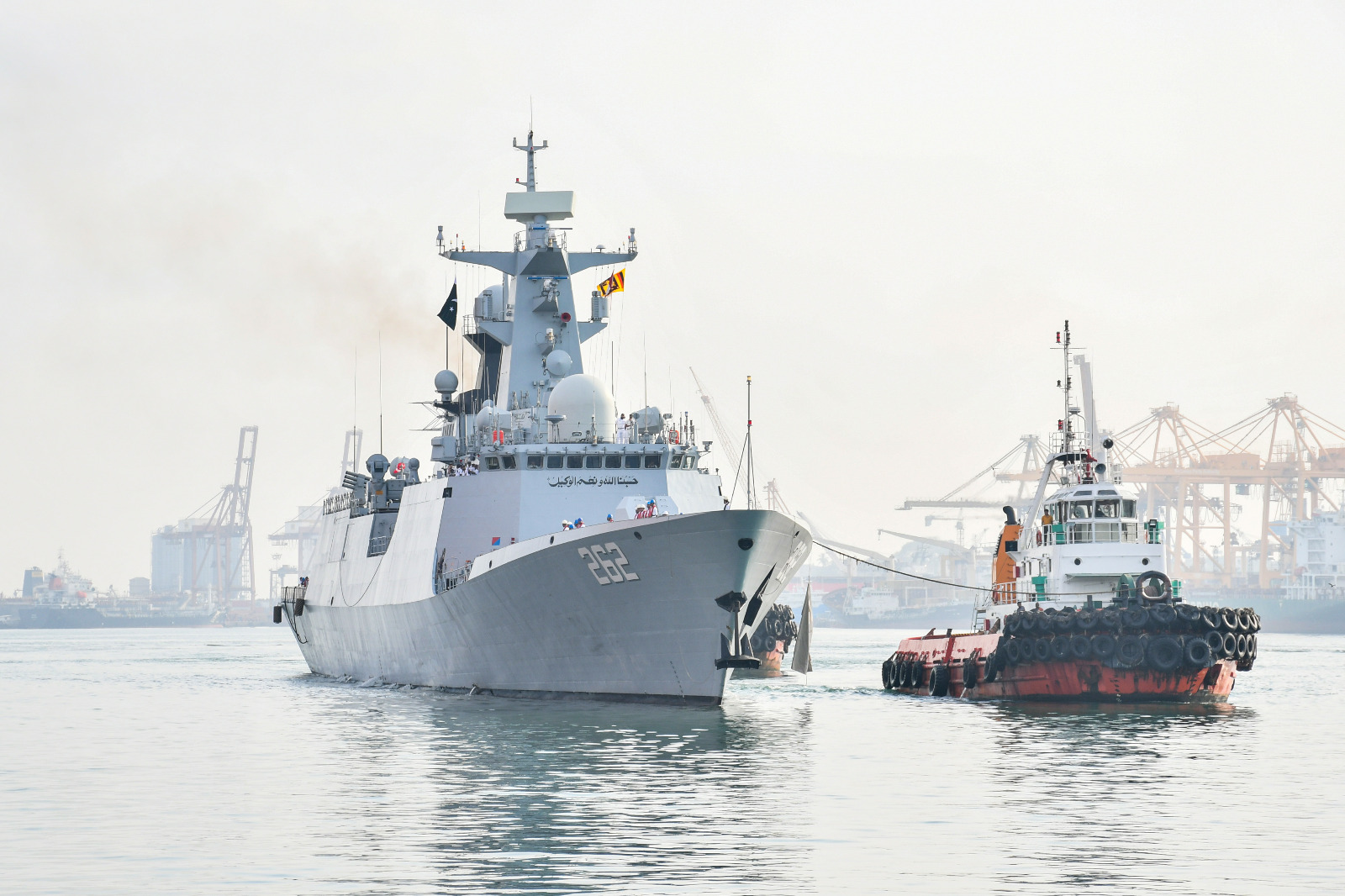
The Pakistan Navy Ship (PNS) TAIMUR and ASLAT arrived at the Port of Colombo on a goodwill visit on 12 Apr 26.
The visiting ships were welcomed by the Sri Lanka Navy in
compliance with naval traditions.
The duo of ships is commanded by Captain NIAMAT SAEED KHAN (PNS TAIMUR) and Captain NADIR MATEEN AFRIDI (PNS ASLAT).
Meanwhile, the ships are expected to conduct a Bilateral Naval Exercise LION STAR V with the Sri Lanka Navy in Colombo seas.
Latest News
Heat index likely to increase up to ‘Caution level’ at some places in the Northern, North-central, North-western, Western, Sabaragamuwa, Southern and Eastern provinces and Monaragala district


Warm Weather Advisory
Issued by the Natural Hazards Early Warning Centre at 3.30 p.m. on 11 April 2026, valid for 12 April 2026
The Heat index, the temperature felt on the human body is likely to increase up to ‘Caution level’ at some places in the Northern, North-central, North-western, Western, Sabaragamuwa, Southern and Eastern provinces and Monaragala district.
The Heat Index Forecast is calculated by using relative humidity and maximum temperature and this is the condition that is felt on your body. This is not the forecast of maximum temperature. It is generated by the Department of Meteorology for the next day period and prepared by using global numerical weather prediction model data.

Effect of the heat index on human body is mentioned in the above table and it is prepared on the advice of the Ministry of Health and Indigenous Medical Services.
ACTION REQUIRED
Job sites: Stay hydrated and takes breaks in the shade as often as possible.
Indoors: Check up on the elderly and the sick.
Vehicles: Never leave children unattended.
Outdoors: Limit strenuous outdoor activities, find shade and stay hydrated.
Dress: Wear lightweight and white or light-colored clothing.
Note: In addition, please refer to advisories issued by the Disaster Preparedness & Response Division, Ministry of Health in this regard as well. For further clarifications please contact 011-7446491.

Showers above 75 mm are likely at some places in the Western, Sabaragamuwa, Central, Southern and North-western provinces.

Sun directly overhead Pesalai, Mankulam and Nedunkerny about 12:11 noon

PNS TAIMUR & ASLAT arrive in Colombo

Sanju Samson and Jamie Overton deliver first points for Chennai Super Kings

Arya, Prabhsimran and Shreyas help Punjab Kings ace another 200-plus chase

Beauty of Sri Lanka in focus: Global showcase blends art, diplomacy and conservation

‘Dates have the highest sugar content to fight Coronavirus’

Sunday Island 27 December – Headlines

#SundayIsland 17th December – Headlines

Sunday Island – 28th March

Sunday Island Headlines – 21 March

Sunday Island – 21st February – Headlines
-

 News6 days ago
Lankan-origin actress Subashini found dead in India
-

 News4 days ago
AG: Coal procurement full of irregularities
-

 News1 day ago
CEB orders temporary shutdown of large rooftop solar systems
-

 Business3 days ago
Israeli attack on Lebanon triggers local stock market volatility
-

 Business4 days ago
Hayleys Mobility introduces Premium OMODA C9 PHEV
-

 Business3 days ago
HNB Assurance marks 25 years with strategic transformation to ‘HNB Life’
-

 News6 days ago
UN Regional Director launches SL’s first Country Gender Equality Profile during official visit
-

 Sports4 days ago
DS to face St. Anthony’s in ‘Bridges of Brotherhood’ cricket encounter