
News
ETCA, Indo-US strategy detrimental to Lanka’s independence – Wimal

By Shamindra Ferdinando
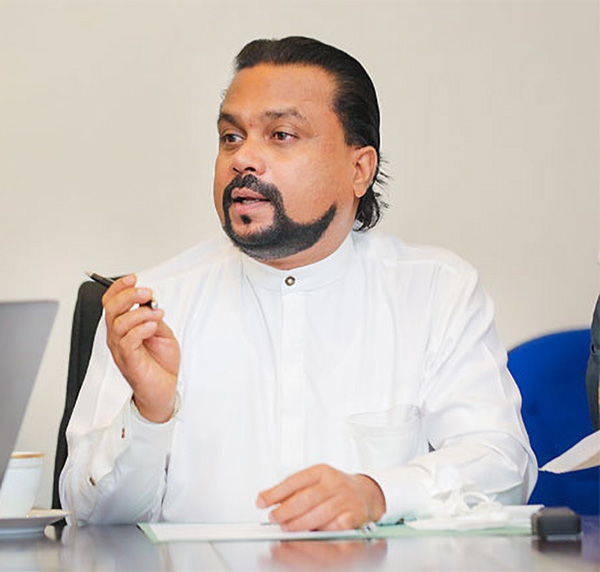
National Freedom Front (NFF) leader Wimal Weerawansa says the proposed Economic and Technology Co-operation Agreement (ETCA) with India should be examined in the context of India’s geopolitical strategy in respect of Sri Lanka.
Referring to a recent declaration by SLPP MP Rear Admiral (retd.) Sarath Weerasekera that the government parliamentary group hadn’t been consulted on the proposed agreement discussed at any level though Cabinet spokesman Bandula Gunawardena announced finalisation of the ETCA by March this year, dissident SLPP MP Weerawansa alleged that New Delhi was tightening its grip on Sri Lanka.
In a brief interview with The Island, following JVP leader Anura Kumara Dissanayake’s visit to India, Weerawansa discussed a range of issues, including the IMF’s intervention, US-India strategy pertaining to post-war Sri Lanka and what he called a murderous tax regime meant to heap further burden on those struggling to make ends meet.
Pointing out that the ETCA would be an extension of the Free Trade Agreement (FTA) the two countries signed during President Chandrika Bandaranaike Kumaratunga’s tenure, MP Weerawansa warned of unprecedented catastrophe if President Ranil Wickremesinghe was allowed to go ahead with his agenda.
MP Weerawansa asked whether bankrupt Sri Lanka struggling to cope with rising unemployment could open the service sector to India, thereby further aggravating the problems here. The NFF parliamentary group consists of six MPs, including National List member Mohammed Muzammil.
Acknowledging the financial assistance to the tune of USD four billion provided in the wake of the economic-political-social crisis in 2022, MP Weerawansa questioned whether India was taking advantage of the situation here to rapidly advance its expansionist policy.
Responding to another query, MP Weerawansa said that the Wickremesinghe-Rajapaksa government should be held responsible for facilitating the Indian project.
Alleging that the Indian take-over of Sri Lanka was being blatantly carried out in the name of the much-touted India’s ‘Neighbourhood First’ policy and her maritime vision SAGAR (Security and Growth for All in the Region), the former minister urged political parties to examine and compare the situation here and the developing situation in the Maldives following the election of China-backed Mohamed Muizzu as the new Maldivian President in last September.
Indian-backed Ibrahim Mohamed Solih suffered defeat at the presidential poll, thereby dealing a significant blow to the overall New Delhi’s strategy there, MP Weerawansa said, adding that some Sri Lankans had been deceived, perhaps willingly by Indian declaration that Indians should choose Sri Lanka as their next travel destination. Indian action was meant to undermine the tourism industry in the Maldives, MP Weerawansa said, New Delhi should never be allowed to pursue such corrosive strategies.
Commenting on the recent launch of Unified Payment Interface (UPI) services in Sri Lanka and Mauritius, the NFF leader alleged that in the name of strengthening financial connectivity India was taking over the smaller economy. If the incumbent government went ahead with ETCA, the consequences would be far reaching and the damage to the country’s independence, cherished for over two millennia, irreparable.
The former minister said that the IMF remedies wouldn’t help the country to regain economic stability though the government depicted the USD 2.9 bn bailout package as the panacea for all our ills. As a result of steep increase in electricity tariffs and unbearable tax regime the local industries couldn’t compete with foreign companies, MP Weerawansa said. The President backed by the SLPP seemed bent on undermining the national economy.
One-time JVP propaganda secretary said that the current JVP leadership contributed to the developing strategy. Their recent high profile visit to India close on the heels of their US tour late last year revealed the ugly truth. Those ex-members of the military and police who had pledged their support to the JVP should be mindful of the developments taking place on the political front as India sought to consolidate its regional supremacy.
Referring to an Indian submarine visiting Colombo port on the day before Independence Day this year, MP Weerawansa said that a section of the influential India media declared that it was a huge diplomatic victory for India over China in Sri Lanka as it happened in the aftermath of Sri Lanka imposing one-year moratorium on Chinese research vessels visiting her ports.
In spite of continuing turmoil in every sector, the government sought to protect the interests of the affluent. Quoting a recent UNDP survey, MP Weerawansa pointed out that just 10% of the rich shared 64% of the gross national income. According to the UNDP, 50% of the population, struggling to make ends meet, shared just four percent of the gross national income.
It would be a grave mistake on the part of the down-trodden to believe the ruling class, having learnt a bitter lesson in the wake of unconstitutional change of power in 2022, was likely to look at issues at hand in a humane manner.
The ex-minister also dealt with issuing of freehold titles to farmers by an utterly irresponsible and scheming government. Alleging that a significant number of farmers would mortgage their land because of wide scale poverty/indebtedness, MP Weerawansa said that the rising cost in paddy production also due to VAT (Value-Added Tax) on tools and other essentials would cause farmers to give up cultivation.
“We would end up importing rice to meet the growing paddy shortfall,” MP Weerawansa said, adding that a strategic rethinking was necessary to identify challenges and reach consensus on a common programme to stabilize the country. The IMF package wouldn’t save us, the NFF leader said, reminding Sri Lanka sought such interventions on 16 previous occasions.
The former firebrand JVPer said that Speaker Mahinda Yapa Abeywardena was yet to respond to his specific allegation that US Ambassador Julie Chung, during the violent protest campaign in Colombo on July 09, 2022, asked him to take over the presidency, regardless of Constitutional provision that deemed the Premier should be the successor.







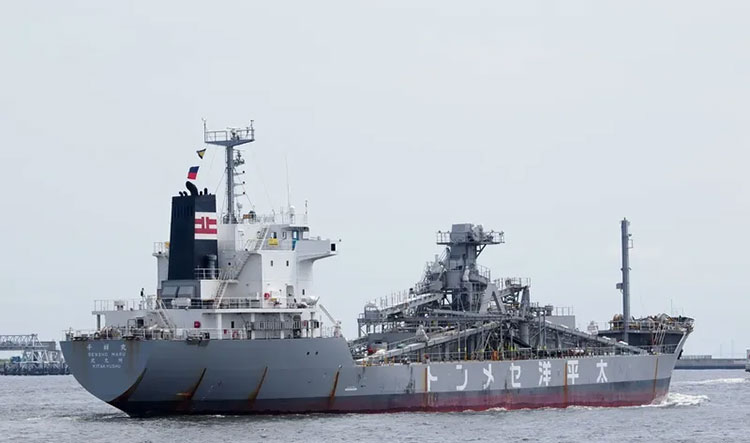
… bribe giver departs Colombo port
The Merchant Shipping Secretariat (MSS) is investigating a complaint received from the Captain of an Indonesian flagged vessel Sensho that he had to pay an official USD 5,000 bribe to facilitate what our sources called port state control inspection.
Sources said that the cement carrier arrived at the Colombo Port, on Friday, and departed after having passed the rigorous inspection. Responding to queries, sources said that after paying the bribe, the vessel’s Captain has lodged complaints with MSS and the Commission to Investigate Allegation of Bribery or Corruption (CIABOC).
In spite of the government’s high profile anti-corruption drive there seemed to be fresh cases, sources said, adding that MSS had received a comprehensive complaint. The vessel had departed Colombo for Jeddah, sources said.
“The issue at hand is whether there have been unreported cases of MSS personnel receiving bribes,” sources said, acknowledging that the Captain, instead of immediately bringing the demand for USD 5,000 bribe to the MSS, had paid it and departed Colombo. (SF)
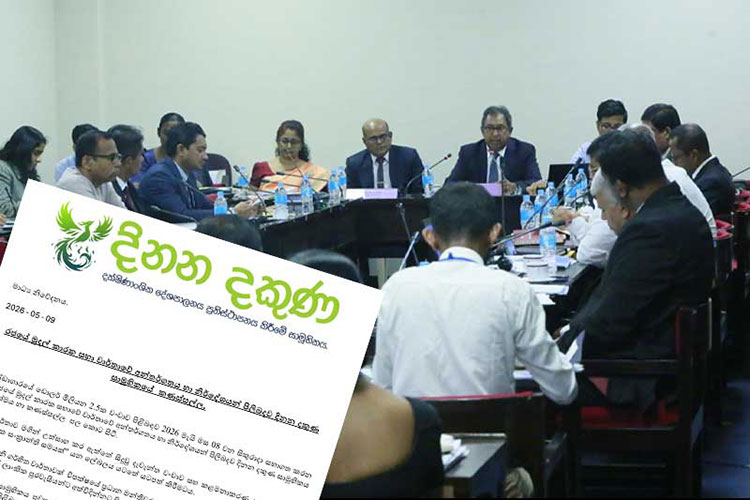
An opposition political group, styled as Dinana Dakuna, has accused the Committee of Public Finance (COPF) of protecting the masterminds behind the USD 2.5 mn theft from the Treasury.
Commenting on the recent COPF report on the theft, the group has alleged that the all-party parliamentary grouping made an attempt to shift the blame to the Central Bank as part of a cover-up. It has described the COPF report as a deliberate attempt to suppress the truth.
The group said that the COPF conveniently asserted that the theft took place due to the inexperience of officers concerned, thereby diverting the attention from those who perpetrated it.
An alleged attempt to portray the collapse of the administrative set-up that led to the USD 2.5 mn theft as a human resource problem, has also been questioned by Dinana Dakuna.
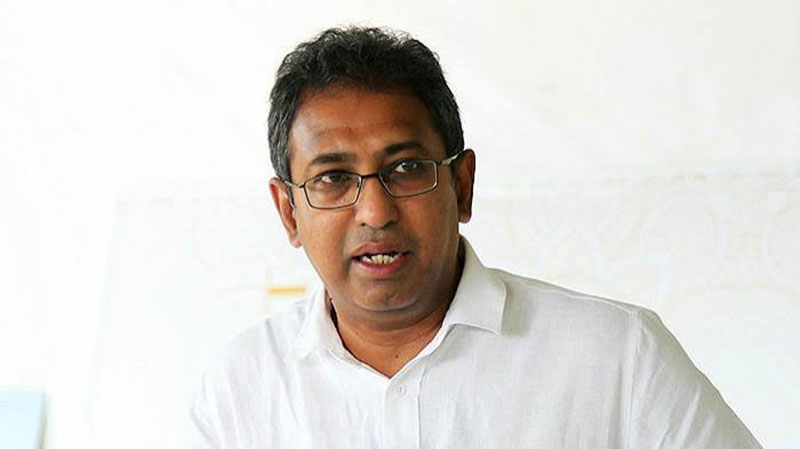
The country was losing so much revenue due to the controversial liquor bottle security sticker scam that if tangible measures were taken to stop the fraud, they could fund about eight projects on the scale of the Suwaseriya ambulance service, Chairman of the Committee on Public Finance (COPF) and Colombo District MP Dr. Harsha de Silva said on Saturday.
Addressing the media in Colombo, Dr. de Silva described the security sticker, introduced for alcoholic beverages, as a “major scam” and called on the government to act responsibly when the current tender is renewed in 2027.
The former State Minister said the security sticker system had originally been introduced with the legitimate objective of improving tax compliance and preventing excise duty evasion in the liquor industry. However, he alleged that the manner in which the programme is currently being implemented was resulting in significant losses to the State.
According to Dr. de Silva, the government pays an Indian company US$8 for the digital printing of every 1,000 security stickers, although the actual cost of printing the same quantity is only about 12 US cents.
“The money being lost through this scheme is sufficient to finance around eight Suwaseriya-type projects,” he said, highlighting, what he described as, the excessive cost burden borne by the State.
Dr. de Silva noted that the high taxes imposed on alcoholic beverages had created incentives for manufacturers, distributors and liquor outlet owners to evade taxes, making a security sticker mechanism a necessary regulatory tool.
He said the proposal to introduce security stickers was first put forward during the Yahapalana administration in 2016.
The tender process commenced in 2017, was concluded in 2018 and the system was eventually implemented in 2023. The COPF Chairman said his Committee had recently undertaken an extensive review of excise revenue and the operation of the security sticker programme.
During the inquiry, it emerged that the Excise Department still lacked a computerised system capable of recording and managing data, related to the stickers, despite their importance to government revenue collection.
Dr. de Silva further said that Excise Department officials, who appeared before the Committee on Public Finance, had maintained that no fraud was taking place in relation to the sticker programme.
However, he expressed concern over the subsequent seizure of a stock of security stickers, in Malabe, only days after those assurances had been given.
He questioned whether stickers recovered during raids were genuine labels, legally obtained from the authorised supplier, or counterfeit versions, printed illegally, arguing that either possibility pointed to serious shortcomings in a system intended to guarantee security and traceability.
Dr. de Silva also referred to media reports concerning the company awarded the security sticker tender and allegations of fraudulent activities linked to the firm in several other countries.
He urged authorities to ensure greater transparency and accountability in the management of the programme and to carefully scrutinise the tender process when it comes up for renewal next year.

Showers will occur in the Western, Sabaragamuwa and North-western provinces and in Kandy, Nuwara-Eliya, Galle and Matara districts

Merchant Shipping Secretariat probes bribery scandal

Theft of USD 2.5 mn: Dinana Dakuna claims COPF trying to protect mastermind

COPF chief slams security sticker scam

CAA urged to protect soap users

Man who resisted search shot and arrested

‘Dates have the highest sugar content to fight Coronavirus’

Sunday Island 27 December – Headlines

#SundayIsland 17th December – Headlines

Sunday Island – 28th March

Sunday Island Headlines – 21 March

Sunday Island – 21st February – Headlines
-
 Business1 day ago
‘Giving up was never an option’: The fisherman who fought back after losing millions in SL
-
 Features1 day ago
Two memorable excerpts from a former SLAF commander’s memoir
-
 Latest News2 days ago
Davis cup Asia/Oceania Group IV 2026 to be held in Colombo from 20th to 25th July
-
 Features1 day ago
Erdoğan’s New Republic
-
 Life style1 day ago
Taste of the Swiss Alps comes to Colombo
-
 Features5 days ago
Dirty Money
-
 News2 days ago
Dengue outbreak gallops ahead: Infections surpasses 73,455, leaving 50 dead
-
 News2 days ago
Evidence recorded in money laundering case against Yoshitha Rajapaksa