
News
ETCA, Indo-US strategy detrimental to Lanka’s independence – Wimal

By Shamindra Ferdinando
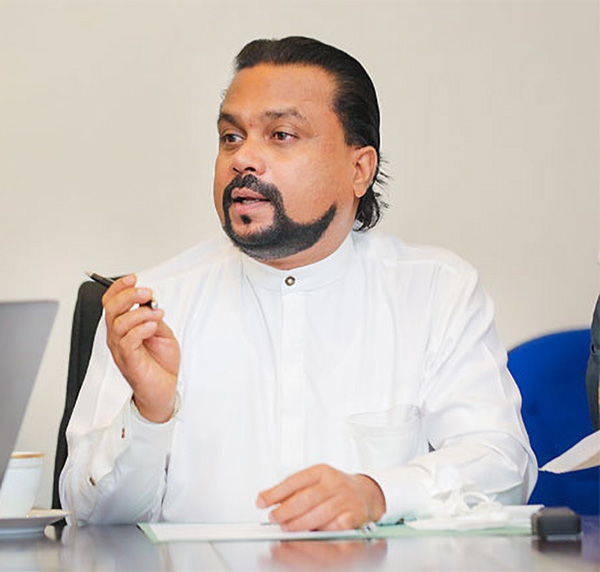
National Freedom Front (NFF) leader Wimal Weerawansa says the proposed Economic and Technology Co-operation Agreement (ETCA) with India should be examined in the context of India’s geopolitical strategy in respect of Sri Lanka.
Referring to a recent declaration by SLPP MP Rear Admiral (retd.) Sarath Weerasekera that the government parliamentary group hadn’t been consulted on the proposed agreement discussed at any level though Cabinet spokesman Bandula Gunawardena announced finalisation of the ETCA by March this year, dissident SLPP MP Weerawansa alleged that New Delhi was tightening its grip on Sri Lanka.
In a brief interview with The Island, following JVP leader Anura Kumara Dissanayake’s visit to India, Weerawansa discussed a range of issues, including the IMF’s intervention, US-India strategy pertaining to post-war Sri Lanka and what he called a murderous tax regime meant to heap further burden on those struggling to make ends meet.
Pointing out that the ETCA would be an extension of the Free Trade Agreement (FTA) the two countries signed during President Chandrika Bandaranaike Kumaratunga’s tenure, MP Weerawansa warned of unprecedented catastrophe if President Ranil Wickremesinghe was allowed to go ahead with his agenda.
MP Weerawansa asked whether bankrupt Sri Lanka struggling to cope with rising unemployment could open the service sector to India, thereby further aggravating the problems here. The NFF parliamentary group consists of six MPs, including National List member Mohammed Muzammil.
Acknowledging the financial assistance to the tune of USD four billion provided in the wake of the economic-political-social crisis in 2022, MP Weerawansa questioned whether India was taking advantage of the situation here to rapidly advance its expansionist policy.
Responding to another query, MP Weerawansa said that the Wickremesinghe-Rajapaksa government should be held responsible for facilitating the Indian project.
Alleging that the Indian take-over of Sri Lanka was being blatantly carried out in the name of the much-touted India’s ‘Neighbourhood First’ policy and her maritime vision SAGAR (Security and Growth for All in the Region), the former minister urged political parties to examine and compare the situation here and the developing situation in the Maldives following the election of China-backed Mohamed Muizzu as the new Maldivian President in last September.
Indian-backed Ibrahim Mohamed Solih suffered defeat at the presidential poll, thereby dealing a significant blow to the overall New Delhi’s strategy there, MP Weerawansa said, adding that some Sri Lankans had been deceived, perhaps willingly by Indian declaration that Indians should choose Sri Lanka as their next travel destination. Indian action was meant to undermine the tourism industry in the Maldives, MP Weerawansa said, New Delhi should never be allowed to pursue such corrosive strategies.
Commenting on the recent launch of Unified Payment Interface (UPI) services in Sri Lanka and Mauritius, the NFF leader alleged that in the name of strengthening financial connectivity India was taking over the smaller economy. If the incumbent government went ahead with ETCA, the consequences would be far reaching and the damage to the country’s independence, cherished for over two millennia, irreparable.
The former minister said that the IMF remedies wouldn’t help the country to regain economic stability though the government depicted the USD 2.9 bn bailout package as the panacea for all our ills. As a result of steep increase in electricity tariffs and unbearable tax regime the local industries couldn’t compete with foreign companies, MP Weerawansa said. The President backed by the SLPP seemed bent on undermining the national economy.
One-time JVP propaganda secretary said that the current JVP leadership contributed to the developing strategy. Their recent high profile visit to India close on the heels of their US tour late last year revealed the ugly truth. Those ex-members of the military and police who had pledged their support to the JVP should be mindful of the developments taking place on the political front as India sought to consolidate its regional supremacy.
Referring to an Indian submarine visiting Colombo port on the day before Independence Day this year, MP Weerawansa said that a section of the influential India media declared that it was a huge diplomatic victory for India over China in Sri Lanka as it happened in the aftermath of Sri Lanka imposing one-year moratorium on Chinese research vessels visiting her ports.
In spite of continuing turmoil in every sector, the government sought to protect the interests of the affluent. Quoting a recent UNDP survey, MP Weerawansa pointed out that just 10% of the rich shared 64% of the gross national income. According to the UNDP, 50% of the population, struggling to make ends meet, shared just four percent of the gross national income.
It would be a grave mistake on the part of the down-trodden to believe the ruling class, having learnt a bitter lesson in the wake of unconstitutional change of power in 2022, was likely to look at issues at hand in a humane manner.
The ex-minister also dealt with issuing of freehold titles to farmers by an utterly irresponsible and scheming government. Alleging that a significant number of farmers would mortgage their land because of wide scale poverty/indebtedness, MP Weerawansa said that the rising cost in paddy production also due to VAT (Value-Added Tax) on tools and other essentials would cause farmers to give up cultivation.
“We would end up importing rice to meet the growing paddy shortfall,” MP Weerawansa said, adding that a strategic rethinking was necessary to identify challenges and reach consensus on a common programme to stabilize the country. The IMF package wouldn’t save us, the NFF leader said, reminding Sri Lanka sought such interventions on 16 previous occasions.
The former firebrand JVPer said that Speaker Mahinda Yapa Abeywardena was yet to respond to his specific allegation that US Ambassador Julie Chung, during the violent protest campaign in Colombo on July 09, 2022, asked him to take over the presidency, regardless of Constitutional provision that deemed the Premier should be the successor.




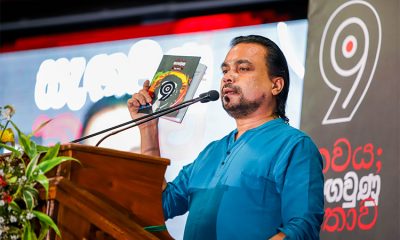

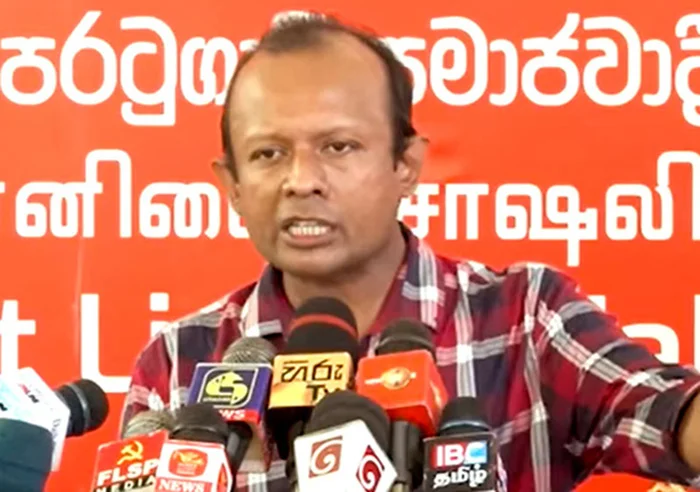
The Frontline Socialist Party (FSP) yesterday accused the government of seeking to use the proposed Protection of the State from Terrorism Act (PSTA) to suppress popular political activity, claiming that some of its provisions were more repressive than those of the Prevention of Terrorism Act (PTA).
FSP Education Secretary Pubudu Jayagoda told a media briefing, in Nugegoda, that the definition of terrorism in the Bill was so broad that it could be used to label almost any form of popular political activity as terrorism.
He said the Bill’s approach to defining terrorism was based largely on attempts to compel a government, or an international organisation, to do, or refrain from doing something, rather than on internationally recognised criteria, such as killings, causing serious bodily harm, kidnapping or acts intended to spread terror among the public.
Jayagoda also alleged that the Bill transferred substantial powers from the judiciary to the executive, while extending powers of arrest, investigation and detention to the armed forces, in addition to the police.
He claimed that the government had sought to portray the Bill as a replacement for the PTA while retaining or introducing provisions that could facilitate political victimisation and repression.
The FSP also questioned the government’s decision to proceed with the Bill, despite having previously sought public views on an earlier draft.
Jayagoda said a draft had been published earlier this year, with the period for public submissions ending on February 28, but the Bill subsequently gazetted was essentially the same draft with some provisions rearranged.
Jayagoda also referred to a letter reportedly sent by Attorney-at-Law Saliya Peiris, a member of a Committee, chaired by President’s Counsel Rienzie Arsecularatne, that had been appointed to draft the legislation. He said Peiris had stated, in the October 06 letter, that changes had been made to the draft prepared by the Committee.
“This means that even the Committee, appointed to prepare the Bill, was a deception,” Jayagoda alleged.
He said that the PSTA was fundamentally similar to the Anti-Terrorism Bill introduced by the previous government, in 2023, which the National People’s Power (NPP) opposed and challenged in court.
“If the NPP opposed that Bill then and is now bringing the same legislation before Parliament, the government must explain its position,” he said.
Jayagoda called on NPP MPs to oppose the PSTA in Parliament and urged trade unions and other groups to build a broad public movement against the legislation.
He challenged the government to an open debate on the Bill.
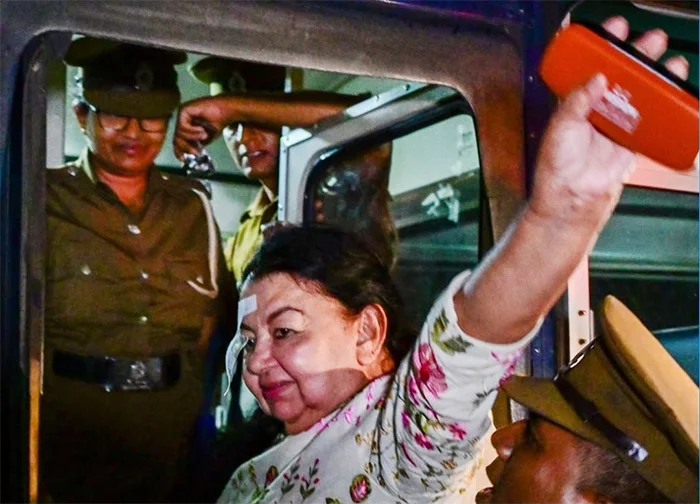
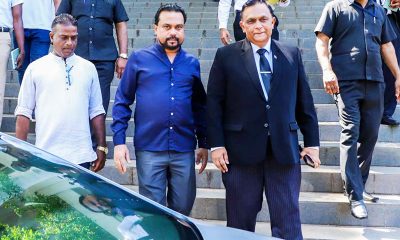
Former First Lady Shiranthi Rajapaksa was yesterday remanded until 13 October after being produced before the Colombo Magistrate’s Court following her arrest by the Commission to Investigate Allegations of Bribery or Corruption (CIABOC).
Shiranthi, wife of former President Mahinda Rajapaksa, was arrested at her residence on Poorwarama Road, Kirulapone, after CIABOC officers recorded a statement from her for nearly two hours.
According to the CIABOC, the arrest was made over allegations that Rs. 10 million obtained from the National Savings Bank through the Siriliya Saviya organisation was misappropriated.
The money was allegedly obtained to provide a Computed Tomography (CT) scanner to the children’s hospital. Investigators allege that the scanner was not provided and that the funds were instead unlawfully used.
CIABOC is investigating alleged offences under the Public Property Act and corruption-related provisions in connection with the transaction and other financial activities involving Siriliya Saviya, which was headed by Rajapaksa.
Rajapaksa returned to Sri Lanka on Monday night on a flight from Malaysia after travelling overseas for medical treatment. She left for Singapore on 16 September after being admitted to a private hospital in Colombo on 15 September following an illness.
She had been due to appear before the Financial Crimes Investigation Division (FCID) on 13 October in connection with its investigation into the financial affairs of Siriliya Saviya.
Meanwhile, her lawyers filed an anticipatory bail application before the Maligakanda Magistrate’s Court on Monday, seeking an order preventing her arrest in connection with the FCID investigation.
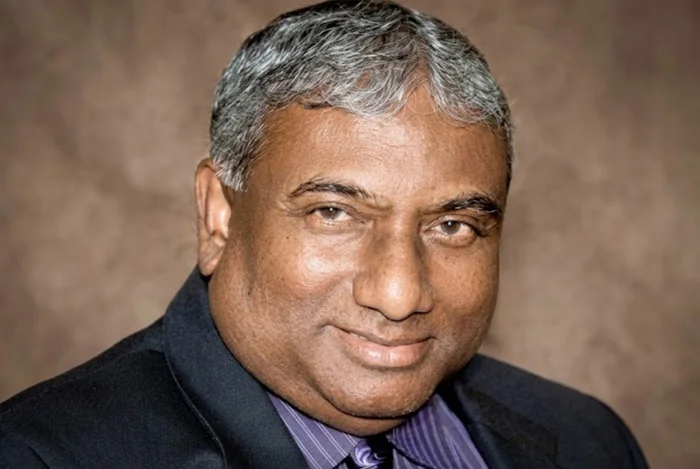
Former National Savings Bank (NSB) Chairman Pradeep Kariyawasam was yesterday granted bail by the Colombo Magistrate’s Court following his arrest by the Commission to Investigate Allegations of Bribery or Corruption (CIABOC).
Kariyawasam, husband of former Chief Justice Shirani Bandaranayake, was arrested in connection with the Bribery Commission’s investigation into the ‘Siriliya Saviya’ account linked to former First Lady Shiranthi Rajapaksa.
The investigation concerns financial activities involving the Siriliya Saviya initiative, which was headed by Rajapaksa, wife of former President Mahinda Rajapaksa.
CIABOC is continuing investigations into the alleged financial irregularities relating to the account.

Showers above 100 mm are likely at some places in the Western, Sabaragamuwa, Central, Uva and Southern provinces and in Anuradhapura district

PSTA worse than PTA: FSP

Shiranthi R remanded until 13 Oct.

Former NSB Chairman Kariyawasam granted bail

Katchatheevu row: India SC urges fishermen to avoid Sri Lankan waters

Remembering Juvenal, Coke, Acton and Machiavelli

‘Dates have the highest sugar content to fight Coronavirus’

Sunday Island 27 December – Headlines

#SundayIsland 17th December – Headlines

Sunday Island – 28th March

Sunday Island Headlines – 21 March

Sunday Island – 21st February – Headlines
-

 Editorial6 days ago
Colombo Port drug bust: The plot thickens
-

 Features4 days ago
The first woman in the foreign service or Ceylon Overseas Service it was then called
-

 Editorial5 days ago
Fuelling discontent and protest
-

 News3 days ago
Geneva takes up Sallay’s case and govt. ignores opportunity to answer accusations
-

 Latest News5 days ago
Tharindu Rathnayake, bowlers secure Asian Games Bronze for Sri Lanka
-
 Foreign News5 days ago
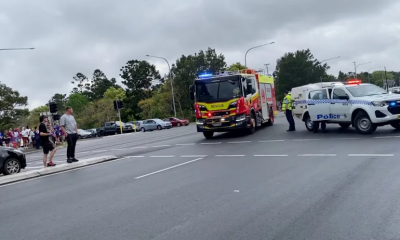
Ten injured after car crashes into rugby supporters in Australia
-

 Features3 days ago
Sri Lanka Cricket Bill: Governance reform is not yet a cricket strategy
-

 News4 days ago
Nearly 20 Iranian tankers stranded off Lanka amid US sanctions