
Latest News
English language should be a tool to broaden opportunities, not to widen social disparities – Prime Minister

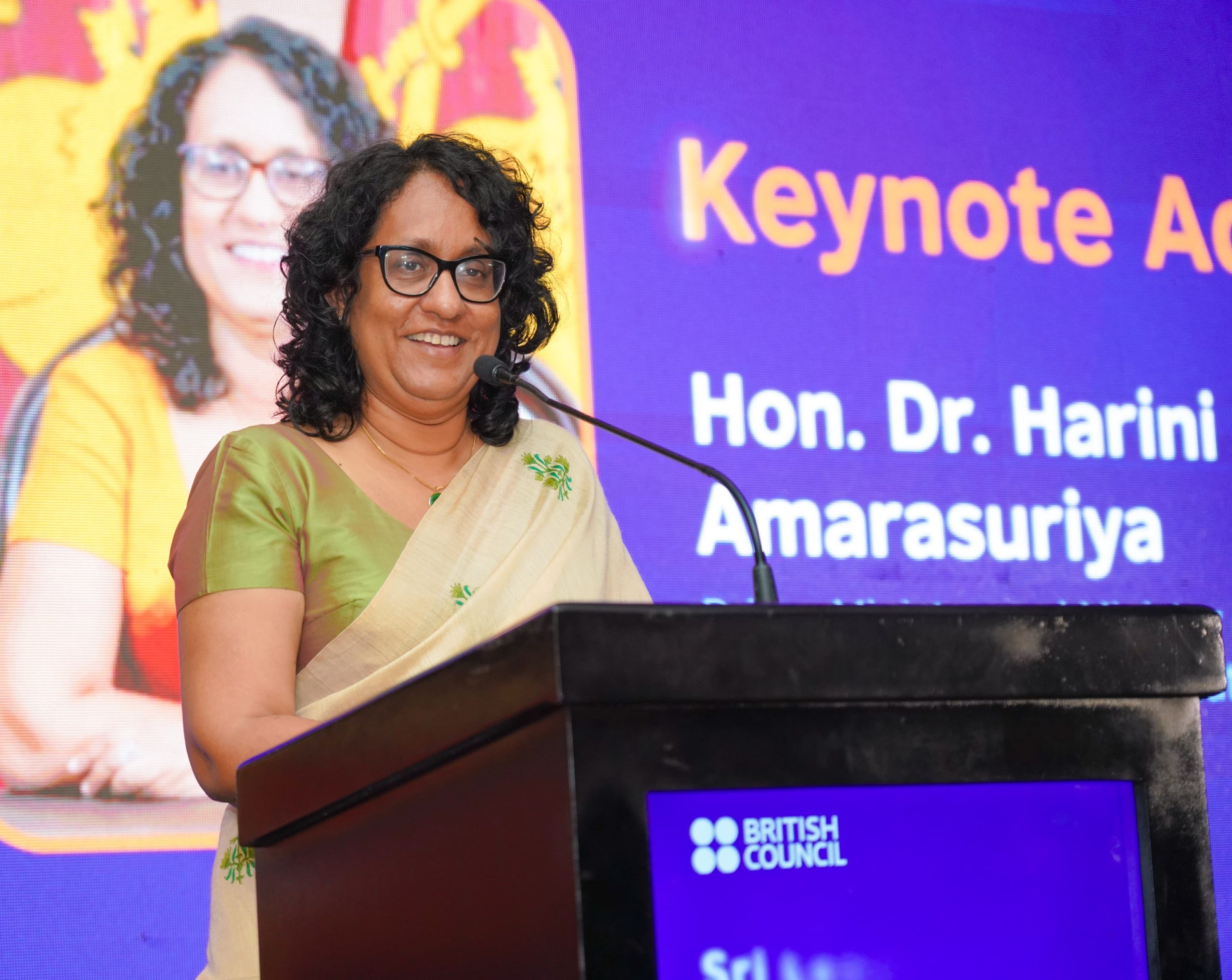
Prime Minister, Dr. Harini Amarasuriya stated that teaching English as a language should serve as a means to broaden opportunities, not as a tool to create social disparities, and the government is ready to implement practical English teaching approaches through the upcoming education reforms.
The Prime Minister made these remarks while delivering the keynote address at the Sri Lanka Education Conference 2025, organized by the British Council in Colombo on Tuesday [June 3].
The Prime Minister emphasized the need for wide-ranging cooperation to build an inclusive and equitable education system aligned with future needs. Therefore, the government is in need of the support of national and provincial government officials, Ministry of Education representatives, development partners, private sector stakeholders, teachers, and school leaders.
The primary goal of the new initiative is to ensure fair access to English education by creating opportunities for all students, fostering inclusivity, and promoting quality. Key aspects include empowering teachers and institutions, strengthening English-medium instruction, and enhancing digital tools for innovation and learning.
It must be brought to attention that how every student in Sri Lanka should be prepared for the advancing future. I strongly believe that we must move away from the mindset of ’being enslaved by the English language’ and instead promote it as a socially beneficial tool.
Learning the English language should be promoted as a means of expanding opportunities, not as a contributor to social disparities. It is important to ensure that access to English education is not determined by social class, geography, or family background, and should ensure that everyone is provided with equal opportunities.
The government plans to introduce new education reforms in 2026, and within them, English language will not merely be treated as an exam subject. Instead, students will be encouraged to actively use the language through speaking and writing skills.
It is important that the teachers also play an active role in reducing students’ anxiety around language use, and students should be encouraged to understand that being understood by others or foreigners is sufficient when speaking English. The assessment methods for English should also be revised. These aspects are considered key components of the upcoming education reforms.
Plans are also in place to strengthen teacher education systems, enhance pre-service and in-service training, modernize curricula, and implement continuous professional development programs to equip teachers for delivering the new syllabi effectively.
Given the increasing demand for English-medium education, the government aims to expand the number of English-medium schools from 825 to at least 1,000. Additionally, steps are being taken to increase the number of bilingual teachers and provide training to those already in service.
Digital technology is rapidly transforming the teaching and learning landscape. However, disparities still exist between students who have unlimited access to these tools and those who cannot afford any. Bridging this digital divide is a key responsibility of the government and is a focus of the new education reforms. The government is ready to train teachers in the use of the latest technological tools to ensure students have equal access to them.
The Prime Minister further emphasized the need to be mindful of the risks in the digital world and reiterated that delivering quality education to schoolchildren through new education reforms requires collective support from all sectors.
The event was attended by Secretary to the Ministry of Education Nalaka Kaluwawala and the respective officials of the Ministry, representatives of the British Council, language scholars, teachers, and a large number of schoolchildren.

[Prime Minister’s Media Division]

Latest News
Landslide Early Warnings issued to the Districts of Kandy, Kegalle, Matale and Ratnapura

The Hational Building Research Institute (NBRI) has issued landslide early warnings to the Districts of Kandy, Kegalle, Matale and Ratnapura valid from 2200 hrs on 03rd October upto 2200 hrs on 04th October 2026.
Accordingly,
LEVEL II (AMBER) landslide early warnings have been issued to the Divisional Secretaries Divisions and surrounding areas of Udu Dumbara and Minipe 8n the Kandy district, Dehiowita in the Kegalle district, and Ambanganga Korale and Matale in the Matale district.
LEVEL I (YELLOW) landslide early warnings have been issued to the Divisional Secretaries Divisions and surrounding areas of Rambukkana in the Kegalle district, Rattota in the Matale district, and Eheliyagoda in the Ratnapura district.

The head of Turkiye’s football refereeing body and four other officials have been placed in pretrial detention by a court as part of a corruption investigation, the state news agency Anadolu reports.
Ferhat Gundogdu, head of the Central Referees Committee, and six others appeared before a judge over allegations of manipulation of the referee administration process, Anadolu said on Saturday.
They appeared on Friday before a judge at Istanbul’s Caglayan courthouse on several charges, including forgery of official documents, breach of trust and illegal acquisition of personal data, the report said.
The judge remanded five people in custody and granted the other two conditional release, Anadolu said.
It was the latest scandal to shake football in Turkiye, coming exactly a year after the Turkish Football Federation (TFF) suspended 149 referees on charges of illegal betting.
On Thursday night, police from the illegal betting and sports crime unit also detained Yasin Kol, a referee from Turkiye’s top-flight Super Lig, as well as an assistant referee, media reports said.
Justice Minister Akin Gurlek said prosecutors are examining claims about “interference in the processes of referee classification, assignments, scoring and appointments as well as the exams on rules”.
During raids on Tuesday, police searched the VAR room at TFF’s headquarters in Istanbul. Observers said the investigation was likely linked to last year’s betting scandal and would have implications for the federation.
“It does seem to be a continuation of 2025, and it looks like it will continue further,” sports journalist Ayhan Sensoy told the AFP news agency.
Sensoy, who wrote a 2024 book on the issue called The Gambling Pit, said it was unlikely that federation bosses “have any chance of staying in office”.
So far, the TFF has not directly addressed the arrests as its top officials are due to fly home on Saturday after attending Friday night’s Belgium-Turkiye UEFA Nations League clash in Liege, which Turkiye lost 3-0.
[Aljazeera]
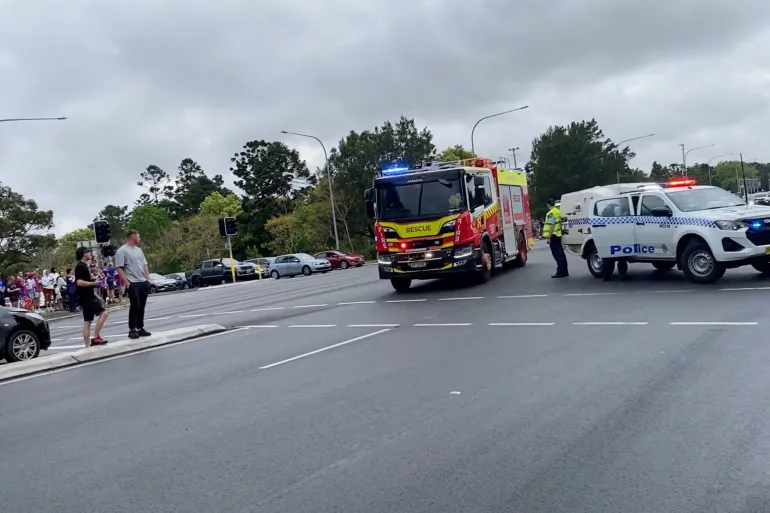
A car has crashed into a crowd of rugby league supporters in the eastern Australian city of Newcastle, injuring 10 people, including three children.
New South Wales police said on Saturday that two of the injured – a five-year-old girl and a 67-year-old man – were in a critical condition and the other eight were in stable condition in hospital.
Police said they had arrested the 18-year-old man driving the vehicle and were investigating what happened. They said the crash was not believed to be related to “terrorism”.
The crowd had gathered to farewell the local rugby league side, the Newcastle Knights, ahead of their grand final against the Sydney Roosters on Sunday.
Newcastle Lord Mayor Gavin Morris said the driver, a rugby league fan, had lost control of his vehicle and had been taken into custody.
“He was revving the car, he was excited, he was a supporter, he was there for the joy of the moment,” Morris told the national broadcaster ABC.
“Somehow he lost control of the car … and he’s gone into the crowd,” he added.
Prime Minister Anthony Albanese said: “My thoughts are with everyone injured or involved in the horrible incident this morning in Newcastle.”
“Rugby league brings people together, and this should have been a weekend of excitement and pride for Newcastle fans,” he wrote in a social media post.
[Aljazeera]

Showers or thundershowers will occur at several places in the most part of the island after 1.00 p.m

Geneva takes up Sallay’s case and govt. ignores opportunity to answer accusations

Section of wartime KKS High Security Zone vacated to facilitate economic development in the area

Lawyer lodges complaint against Govt. Printer, Media Ministry Secy.

Sri Lankan troops in joint anti-terrorist exercise in Russia

Nine Indian poachers brought to KKS with their boat

‘Dates have the highest sugar content to fight Coronavirus’

Sunday Island 27 December – Headlines

#SundayIsland 17th December – Headlines

Sunday Island – 28th March

Sunday Island Headlines – 21 March

Sunday Island – 21st February – Headlines
-

 Latest News5 days ago
Gold winner Tharanga gets brand-new Honda Vezel from SLAAJ
-

 Features5 days ago
Why Sri Lanka needs an Inclusive Civic Nationalism – urgently
-

 News4 days ago
US-assisted ‘Ice’ detection: NPC to examine IGP’s move to transfer drug-busting team
-

 Features6 days ago
Thailand’s biggest new global star …
-

 News6 days ago
First cases taken up by SC after enactment of 22A dismissed
-

 News5 days ago
Civil society activist accuses govt. of favouring Ven. Gnanasara
-

 Editorial3 days ago
Colombo Port drug bust: The plot thickens
-

 Editorial6 days ago
Aftershocks of 22A